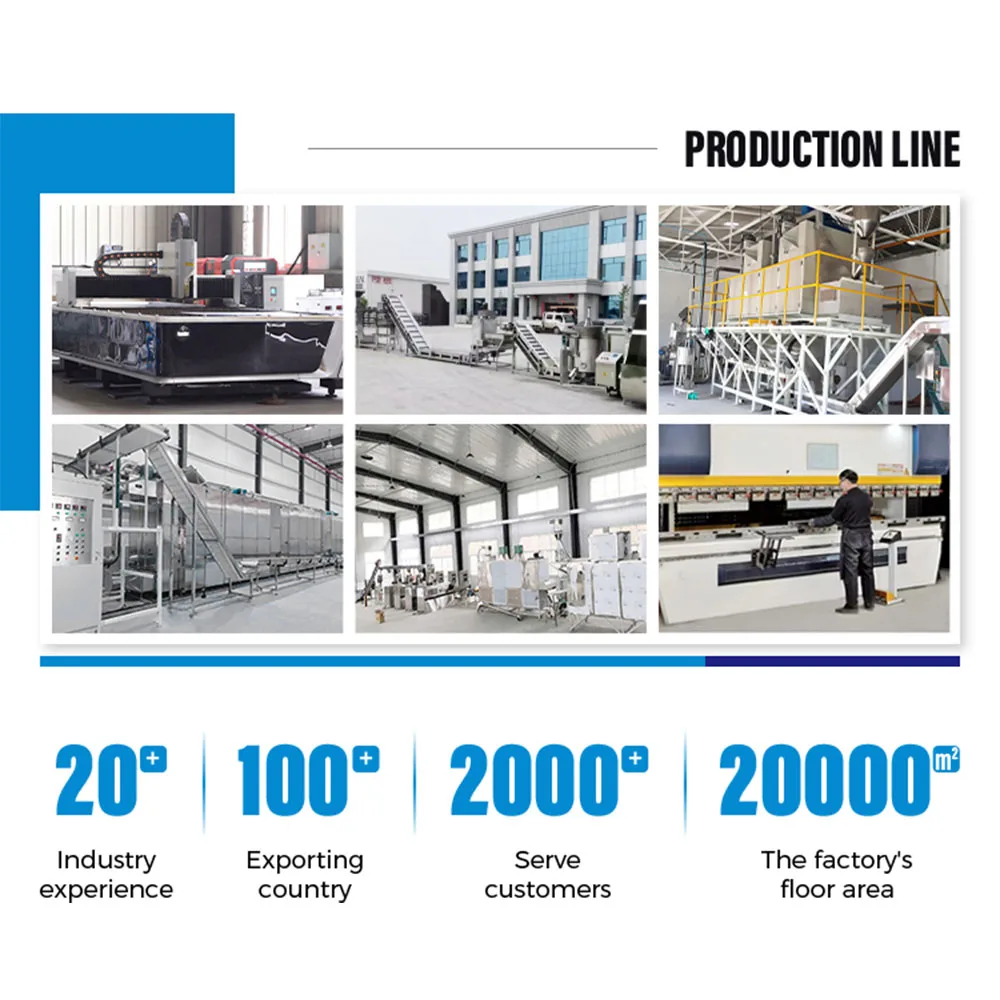
On-site installation, commissioning schedule, and operator training included with single-supplier accountability.
Description
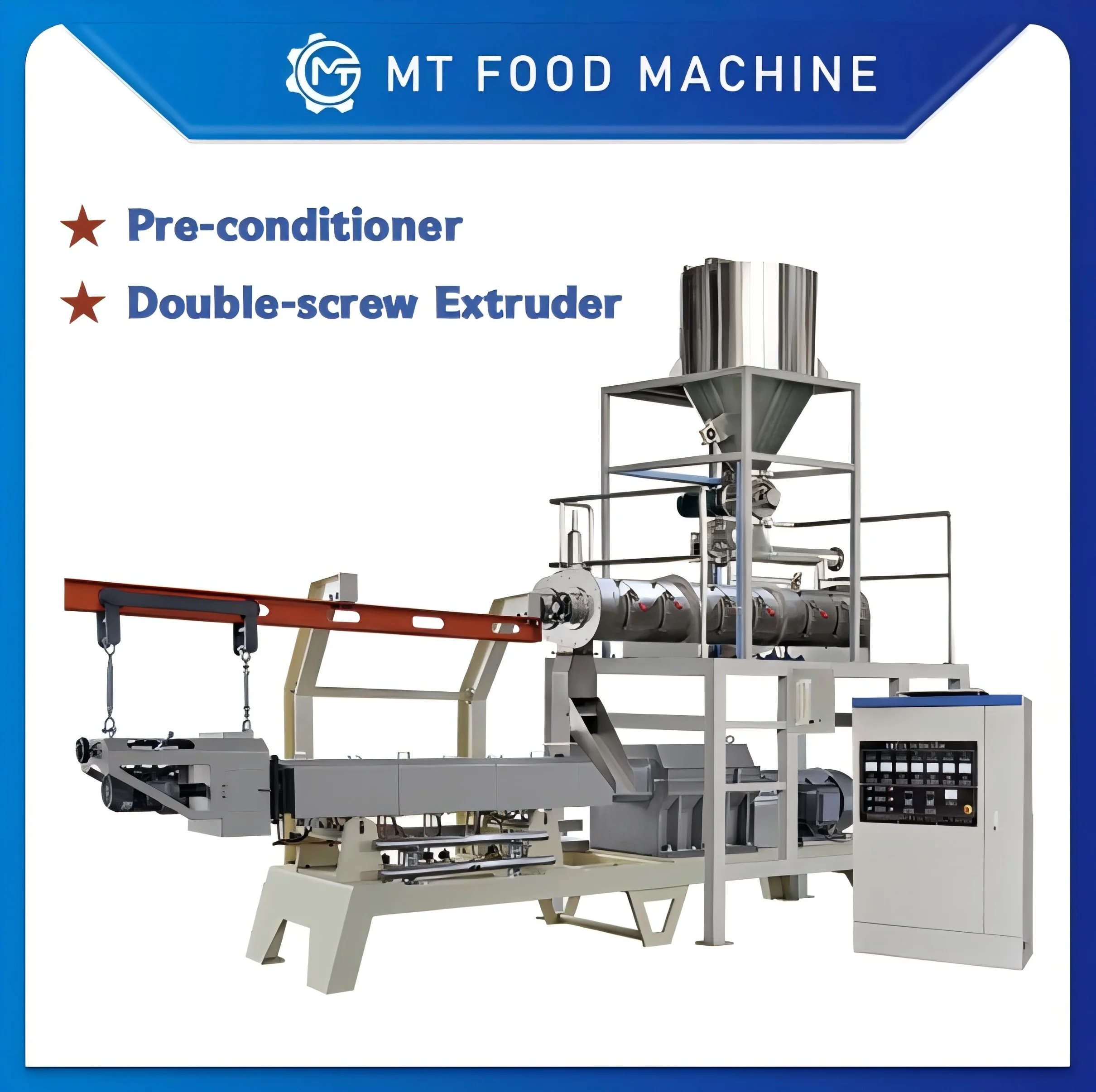
Matched throughput from batching to packing — The MT135 line is configured as a single-supplier turnkey project, so extruder output, dryer residence time, and coating drum capacity are calculated together rather than sourced from disconnected vendors.
Technical Specifications
| Parameter | Value |
|---|---|
| Model | MT135 |
| Product Type | Multi-Species Pet Food Processing Line |
| Extruder Type | Twin-screw |
| Output Capacity | 2.5–3.0 t/h (basis not stated in source — confirm raw material formulation, moisture content, and kibble size) |
| Alternative Output Rating | up to 550 kg/h (basis not stated in source — confirm formulation and product format) |
| Control System | PLC Controlled |
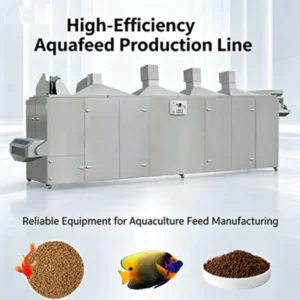
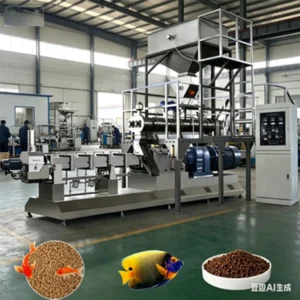
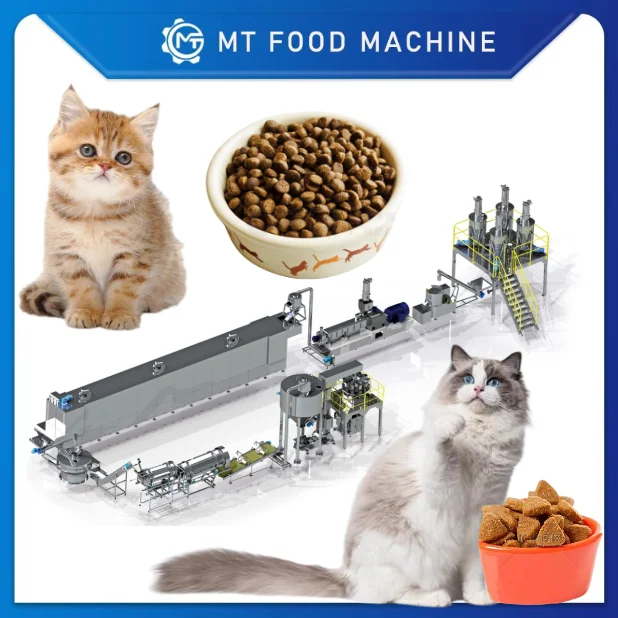
| Line Stations | Batching, extrusion, drying, coating/flavouring, cooling, packing |
| Application Range | Cat, dog, fish, bird, and cattle feed |
| Assembly State | Complete processing line |
| Certification | CE; ISO (confirm certificates applicable to this specific line) |
Application Suitability
| Application | Material or Output |
|---|---|
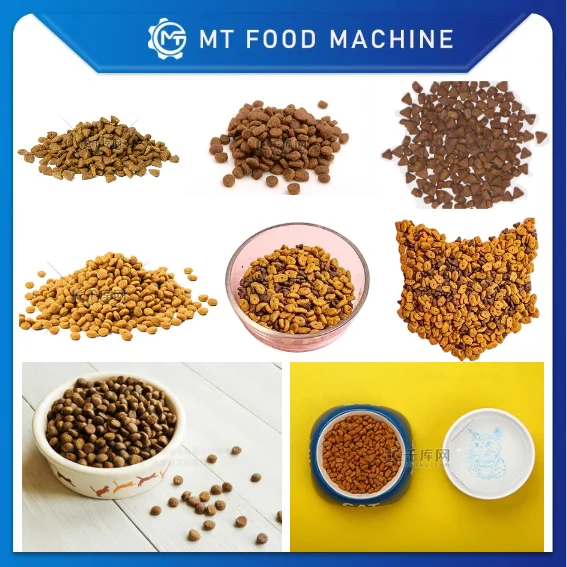
| Dry kibble for cats and dogs | Poultry meal, corn, rice, fish meal, vitamin premix blends |
| Floating and sinking aquatic feed | Soybean meal, starch binders, fish oil, mineral supplements |
| Bird feed pellets | Millet, sunflower meal, grain blends with fat coating |
| Cattle feed pellets | Bran, crushed grain, molasses-based formulations |
Why Nominal Capacity Figures Mislead Turnkey Buyers
A pet food processing line turnkey quoted at a headline tonnage often cannot sustain that output on the buyer’s actual formulation. The MT135 capacity is verified through in-house trial runs on customer-supplied raw material before the line ships.
I spent a week on a factory floor in Thailand reworking screw elements and barrel temperature zones after a client switched to a high-fresh-meat recipe mid-commissioning. The extruder had been rated on a standard corn-and-poultry-meal blend, but the new formulation collapsed expansion and dropped output below the dryer’s design throughput. Every downstream station sat idle while we rebuilt the process window [NEED_CITE: formulation impact on twin-screw extruder output and expansion]. That gap between the quotation sheet and the production floor is where turnkey projects stall.
Throughput Matching Across Every Station
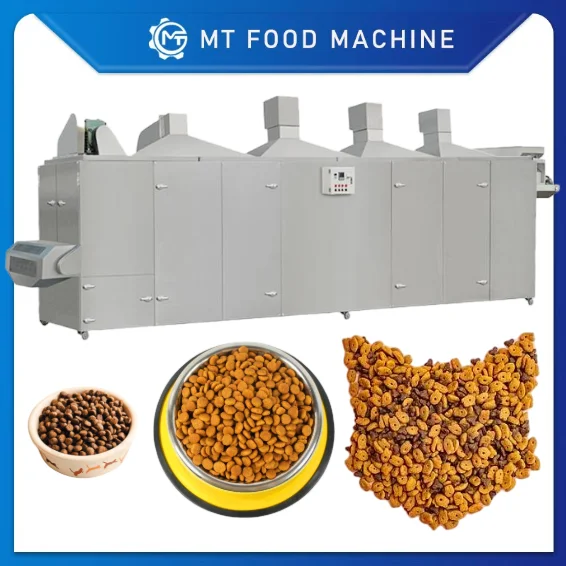
A pet food processing line turnkey is only as reliable as its weakest link between stations. The MT135 is configured so that the extruder discharge rate, dryer belt speed and residence time, and coating drum batch cycle are calculated against one another before the layout is finalised. When one station runs faster than the next can accept, product piles up, moisture migrates, and kibble density drifts outside specification.
Screw Configuration and Die Design for Formulation Flexibility
The twin-screw assembly on the MT135 is not a generic off-the-shelf build. Screw element sequence, compression ratio, and die aperture are specified against the buyer’s raw material profile and target kibble density. A high-starch recipe demands a different shear and residence profile from a high-protein, high-fat formulation, and the die geometry controls expansion rate and final piece weight. Getting this wrong at the quotation stage means corrective machining after the line is already on the water [NEED_CITE: screw element configuration impact on extrudate density and texture].
Reading the Specs That Matter for Multi-Species Production
The PLC control system governs barrel temperature zones, screw speed, and feeder rates from a single interface, which is critical when the same line switches between floating fish feed and dense dog kibble within one shift. Twin-screw extrusion allows a broader moisture and fat tolerance than single-screw alternatives, making it practical to run aquatic and terrestrial feed recipes without a full screw rebuild between batches. The complete station sequence — batching through extrusion, drying, coating, cooling, and packing — means that utility loads for steam, compressed air, and electrical circuits are mapped together, so the buyer can plan transformer capacity and piping before the equipment arrives rather than discovering shortfalls during commissioning.
The Hidden Cost of Mismatched Line Configuration
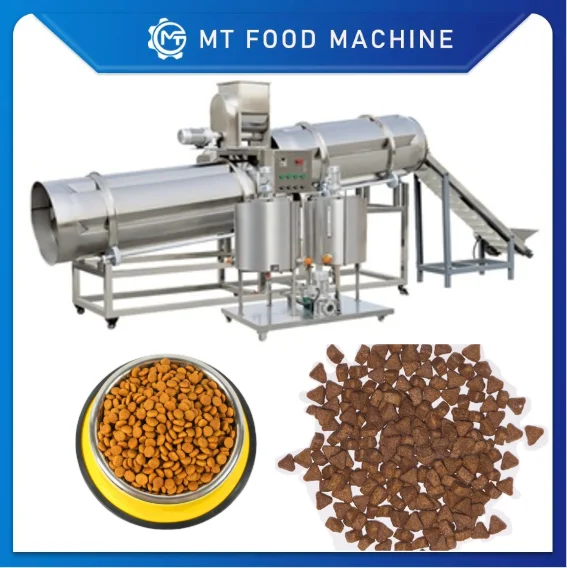
When the dryer is undersized relative to extruder output, kibble exits with residual moisture above the safe storage threshold, and mould complaints follow within weeks of dispatch. An undersized coating drum forces the operator to slow the entire line to achieve uniform fat and flavourant coverage, erasing whatever capacity advantage the extruder offered. These mismatches rarely surface in a quotation comparison because each vendor quotes their station in isolation [NEED_CITE: downstream bottleneck effects on extruded pet food quality].
Why This Line Is Sourced as One Project
Throughput is calculated across every station rather than assembled from separate purchase orders, so no single vendor can point at another when output falls short. Screw and die configuration is recorded against the buyer’s specific formulation, not copied from a reference build. The in-house testing workshop runs the customer’s actual raw material before shipment, producing a trial report that documents real output, kibble density, and expansion behaviour. Twin-screw expertise spans pet food, aquatic feed, snacks, and cereal applications, so process knowledge transfers across product categories. Pre-sales consultation carries through to on-site installation, commissioning, and ongoing wear-part supply under one accountability line.
Documentation & Verification
- Line layout and capacity calculation showing throughput at each MT135 station
- Trial run report on customer raw material confirming actual kibble density and output
- Screw and die configuration record matched to buyer’s formulation
- Electrical schematic with voltage and frequency confirmation for the target market
- CE declaration of conformity and ISO certificate for the supplied line
Installation, Commissioning & Support
- Foundation plan and utility routing prepared against the MT135 station footprint and PLC cabinet placement
- Dedicated electrical circuit sized to the confirmed motor loads and control system voltage
- Extruder barrel and screw assembly verified on-site after transport to ensure alignment
- First production run supervised with temperature and speed parameters logged per recipe
- Operator training covers PLC recipe switching between kibble formats and aquatic feed
- Wear parts list with initial screw elements and die plates shipped alongside the line
What to Prepare Before Requesting a Quotation
To scope a pet food processing line turnkey accurately, share the target formulation with moisture and fat percentages, the kibble size range, and the daily production target in tonnes. Confirm the workshop voltage, frequency, and preferred HMI language so that the electrical design and control interface are locked before fabrication begins.
Frequently Asked Questions
Q: How is the MT135 output capacity verified before shipment?
A: The line runs a trial on the buyer’s actual raw material in the manufacturer’s testing workshop. Output, kibble density, and expansion behaviour are recorded in a report. Capacity figures on the quotation are then adjusted to reflect the tested formulation rather than a generic reference recipe.
Q: How is throughput matched between the extruder, dryer, and coating drum?
A: Each station’s design capacity is calculated against the extruder discharge rate for the buyer’s recipe. Dryer belt speed and residence time, plus coating drum batch cycle, are specified so no station forces the others to idle or accumulate product.
Q: What screw configuration is used for different kibble shapes and densities?
A: Screw element sequence and die aperture are selected based on the buyer’s formulation and target piece weight. High-starch recipes use a different compression and shear profile from high-protein blends, and the die geometry controls final expansion and density.
Q: What does on-site commissioning include for the MT135 line?
A: An engineer supervises first production runs, logs barrel temperature and screw speed per recipe, and trains operators on PLC recipe switching. Wear part replacement intervals and daily maintenance checkpoints are covered before the engineer leaves the site.
Q: How are spare screw elements and dies supplied?
A: A wear parts list is included with the first shipment, specifying screw elements, die plates, and seals recommended for the buyer’s formulation. Replacements are ordered against the recorded screw configuration so fit and process behaviour remain consistent.
Related products
-
1.0-1.2t/h High Capacity Multi-Species Fish Feed Processing Line to Produce Fish Food
¥45,000.00 Select options This product has multiple variants. The options may be chosen on the product page -
100-200kg/h Capacity PLC Controlled Multi-Species Cat Food Processing Line
¥34,000.00 Select options This product has multiple variants. The options may be chosen on the product page -
Premium Pet Food Processing Equipment Dog Cat Feed Making Machine
¥9,500.00 Select options This product has multiple variants. The options may be chosen on the product page -
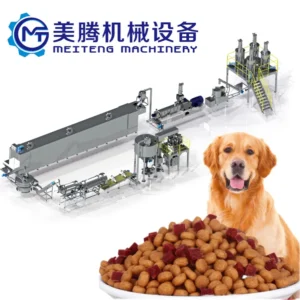
High Capacity Pet Food Extrusion Production Line Suitable for Dog. Cat. Bird. Fish and Cattle Feed
¥9,500.00 Select options This product has multiple variants. The options may be chosen on the product page