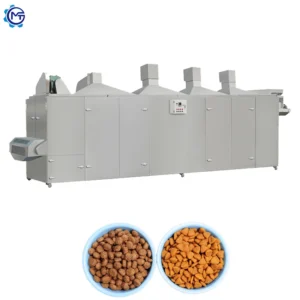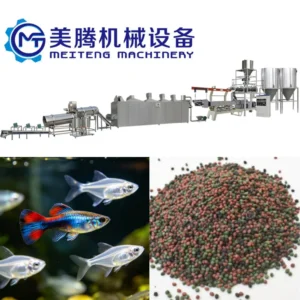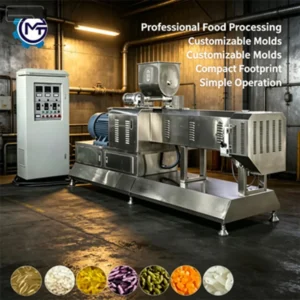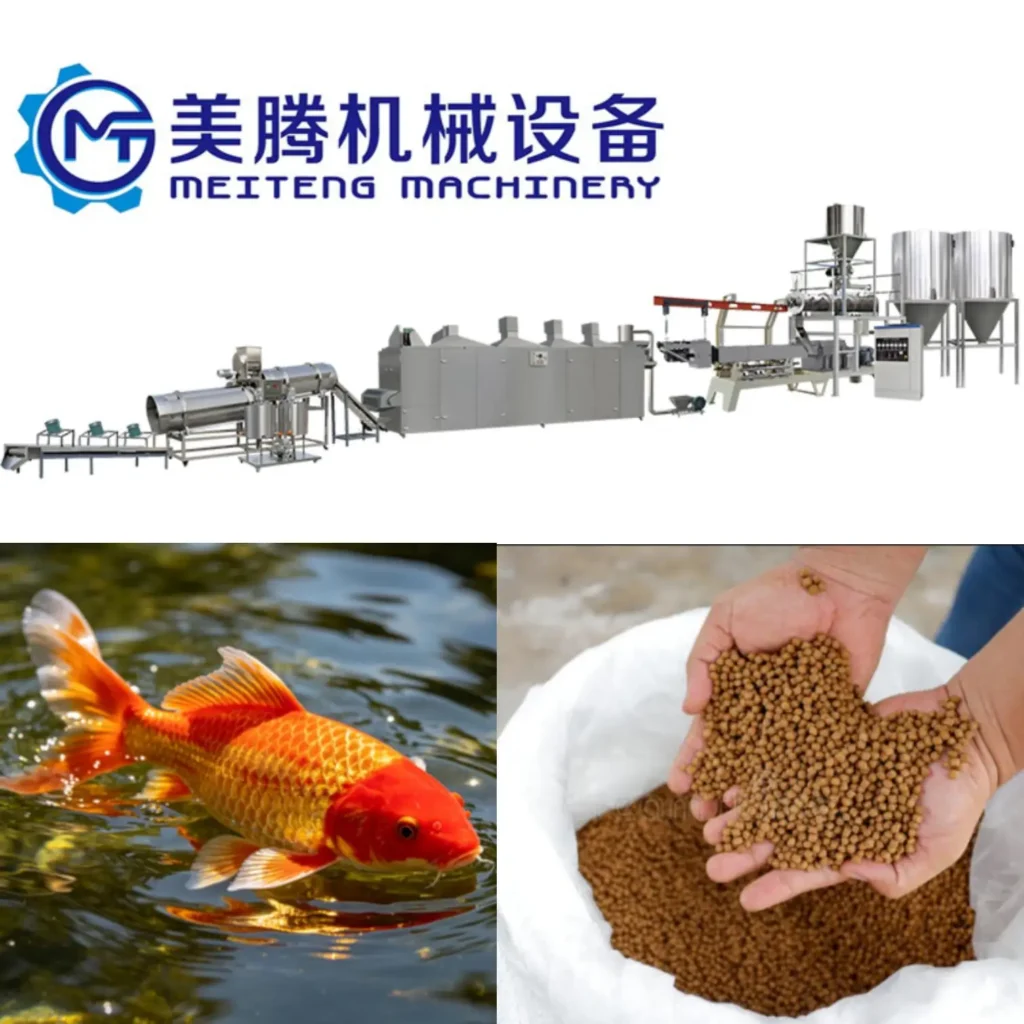

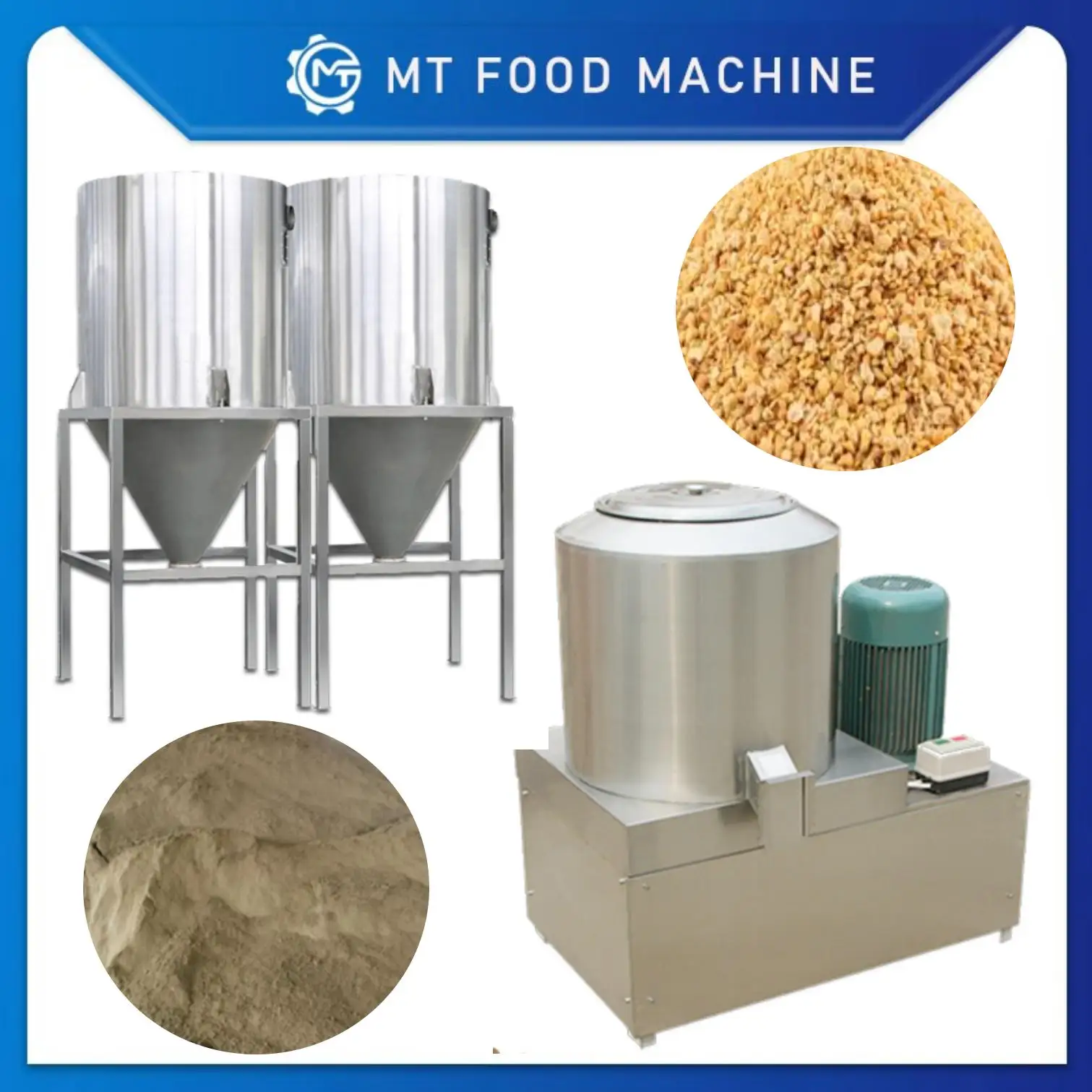
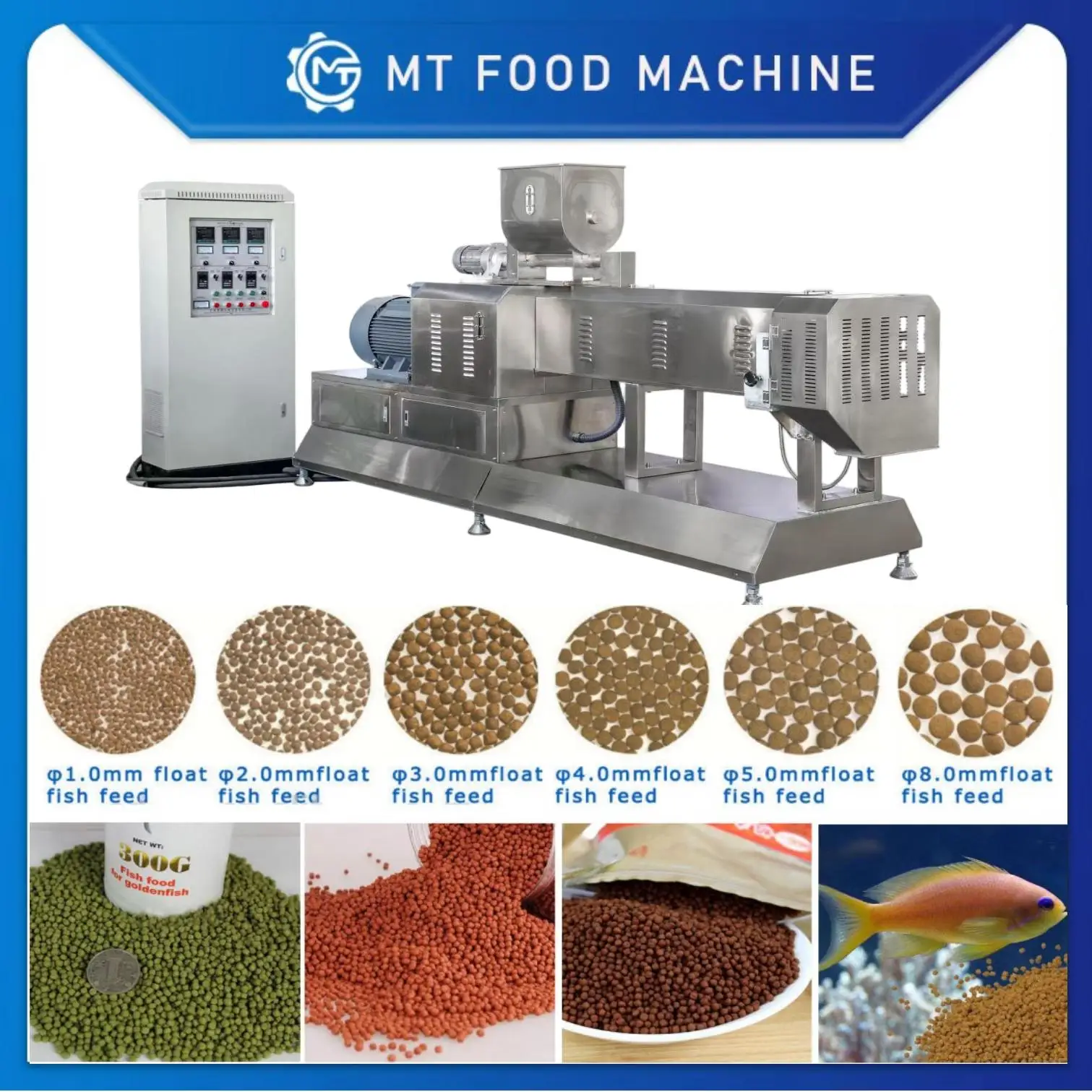


Twin-Screw Fish Feed Extrusion Production Line, PLC & MCC Control, 304 Stainless Steel Contact Parts — engineered for floating and sinking aquaculture pellets across trout, salmon, catfish, tilapia and shrimp. Screw configuration and interchangeable die design are matched to your raw material formulation and target pellet density, with throughput verified at every station from batching through packing. Backed by in-house trial runs on your actual formulation before shipment, complete line layout documentation, and on-site commissioning support.
Description
Throughput-Matched Engineering — Every station from batching to packing is sized by one team to the extruder’s actual output, preventing the dryer or coater bottleneck that stalls unmatched lines.
Technical Specifications
| Parameter | Value |
|---|---|
| Product Type | Fish Feed Extrusion Production Line |
| Output Capacity | 1.0–1.5 t/h (basis not stated in source — confirm raw material formulation, moisture content, pellet diameter) |
| Extruder Type | Twin-screw extruder |
| Construction Material | 304 stainless steel (food contact parts) |
| Control System | PLC and MCC (source value — verify against manufacturer catalog) |
| Line Stations | Batching → Mixing → Extrusion → Drying → Cooling → Coating/Flavouring → Packing |
| Screw Configuration | Matched to raw material and target pellet density (custom per order) |
| Die Configuration | Interchangeable dies for multiple pellet diameters |
| Assembly State | Complete turnkey line (multiple stations) |
| Certification | CE, ISO |
Application Suitability
| Application | Material or Output |
|---|---|
| Floating aquaculture feed | Trout and salmon pellets requiring low-density expansion and high fat coating |
| Sinking aquaculture feed | Catfish and tilapia pellets requiring high-density extrusion with controlled gelatinisation |
| Shrimp feed production | Fine-ingredient formulations requiring precise moisture and shear control in the barrel |
| Dry pet food kibble | Corn, meat meal, and vitamin premix blends configurable through die and screw changes |
Why Voltage Verification Must Precede the Quotation
A control cabinet built for the wrong frequency will stall a newly installed line for weeks.
I spent years debugging extrusion lines across Southeast Asia and saw complete installations sit idle because the local grid ran at 60Hz while the electrical panel was wound for 50Hz. Transformers had to be sourced locally or shipped in, and the fish feed production line turnkey project lost its entire commissioning window. That is not a supplier defect — it is a specification gap that happens when voltage is treated as an afterthought [NEED_CITE: voltage and frequency standards by export market]. When you invest in a twin-screw aquaculture feed line, the first conversation should lock in your site’s exact electrical parameters before any schematic is drawn.
Barrel Temperature Zones and Pellet Density Control
The twin-screw extruder in this fish feed production line turnkey configuration allows independent barrel zone heating. For floating pellets aimed at trout or salmon, the barrel profile must hold enough heat to gelatinise starch fully while the die releases pressure sharply, creating the expansion that keeps the pellet buoyant. For sinking feed targeting catfish, the same extruder runs a different temperature curve and screw pitch, compressing the dough more tightly before it exits the die.
Screw Configuration Dictates What Your Formulation Can Become
The screw elements — kneading blocks, conveying sections, and reverse-flight segments — are arranged to match the fat, protein, and starch ratios in your specific formulation. A shrimp feed recipe high in fine marine protein needs a screw layout that builds shear without generating excessive heat, protecting heat-sensitive additives. Every screw and die combination is documented in a configuration record tied to your raw material profile, so replacements reorder the exact same geometry [NEED_CITE: twin-screw element geometry and feed formulation matching].
How Extruder Parameters Shape the Final Pellet
The twin-screw design gives this line the ability to process a wide range of ingredient particle sizes and moisture levels, unlike single-screw units that demand uniform feed stock. The length-to-diameter ratio of the screws determines how long the material stays in the barrel, which directly affects starch gelatinisation and, consequently, pellet durability in water. Interchangeable dies allow operators to shift pellet diameter across a range without stopping the line for retooling. The PLC and MCC control system records setpoints for each recipe, so switching from floating salmon feed to sinking tilapia feed relies on stored parameters rather than operator guesswork.
The Hidden Cost of a Dryer That Cannot Keep Pace
An extruder rated at a nominal output means nothing if the downstream dryer cannot remove moisture fast enough. When the dryer is sourced separately and sized to the extruder’s brochure number rather than its real-world throughput, wet pellets pile up, clump in the cooling conveyor, and develop mould before coating. The coater then receives an inconsistent feed, leaving some pellets over-greased and others under-coated — a defect your buyers will reject at the pond [NEED_CITE: aquaculture feed pellet durability and moisture standards]. Matching every station to the extruder’s verified output eliminates this cascade.
What One Engineering Team Delivers for This Line
The batching system, extruder, dryer, coater, and packing station are all specified under a single line layout, meaning throughput calculations account for moisture loss in drying and weight gain in fat coating. Screw and die geometry are chosen against your raw material sample, not copied from a generic build. Before shipment, the line runs your formulation in the in-house testing workshop, generating a documented trial report. All food-contact surfaces use 304 stainless steel, and the electrical schematic is confirmed to your local voltage before the panel is wired.
Documentation & Verification
- Line layout showing throughput calculations matched across every station
- Trial run report produced on your raw material formulation before dispatch
- Screw and die configuration record tied to your target pellet specification
- Electrical schematic with voltage and frequency confirmed to your market
- CE declaration of conformity and ISO certificate for customs clearance
- Operation and maintenance manual with illustrated wear parts list
Installation, Commissioning & Support
- Foundation plan sized to the full line footprint including batching silos and packing station
- Dedicated power circuit specification matching the PLC and MCC control system voltage
- Modular station assembly with pre-labelled connections for faster on-site wiring
- First-run commissioning covering screw speed, barrel zones, and die pressure tuning
- Operator training on recipe switching between floating and sinking pellet formats
- Wear parts inventory covering screws, dies, and dryer screen panels for initial operation
Preparing Your Inquiry
To move from concept to a firm line proposal, share your target species, pellet diameter range, and whether you need both floating and sinking output. Confirm your facility’s available floor space, ceiling height, and local voltage and frequency so the electrical design starts correctly. If you have an existing ingredient formulation or a specific raw material source, send a sample for the in-house testing workshop to run before the quotation is finalised.
Frequently Asked Questions
Q: How is the output capacity verified on my specific formulation?
A: The capacity figure is based on particular raw material conditions that must be confirmed. We run your actual formulation in the testing workshop, measure throughput at the packing station, and document the results in a trial report before the quotation is finalised.
Q: Can one extruder produce both floating and sinking pellets?
A: Yes. The twin-screw configuration allows operators to change screw elements, die geometry, and barrel temperature profiles to shift between floating and sinking output. Each recipe’s parameters are stored in the PLC for repeatable batch production.
Q: What does the in-house trial run report include?
A: It records the screw and die configuration used, barrel temperature settings, throughput measured at each station, pellet density and durability test results, and any formulation adjustments recommended before full-scale production begins.
Q: How do you prevent the dryer from bottlenecking the extruder?
A: The dryer is sized to handle the extruder’s verified output after accounting for moisture removal requirements. Throughput matching is calculated across every station during the layout phase, not based on nominal machine ratings alone.
Q: What documentation supports customs clearance and commissioning?
A: You receive the CE declaration, ISO certificate, electrical schematic, line layout, trial run report, and an operation manual. These documents cover both import requirements and the technical detail your local electricians need during installation.
Related products
-
MT70 100-200kg/h Dog & Cat Pet Food Processing Line with 380V 50Hz Three Phase Power
¥35,000.00 Select options This product has multiple variants. The options may be chosen on the product page -
MT135 Brand 2.5-3.0t/h PLC Controlled Multi-Species Cat Food Processing Line
¥55,000.00 Select options This product has multiple variants. The options may be chosen on the product page -
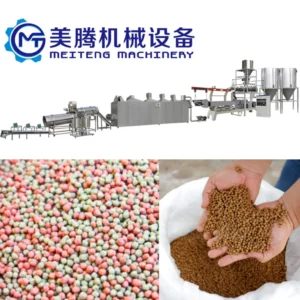
2-3t/h High Capacity Multi-Species Fish Feed Processing Line to Produce Fish Food
¥55,000.00 Select options This product has multiple variants. The options may be chosen on the product page -
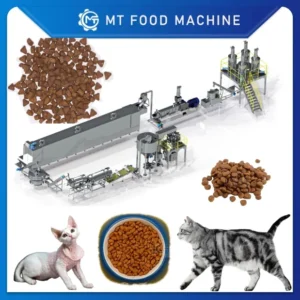
MT100 Brand 1.5-2.0t/h PLC Controlled Multi-Species Cat Food Processing Line
¥45,000.00 Select options This product has multiple variants. The options may be chosen on the product page