

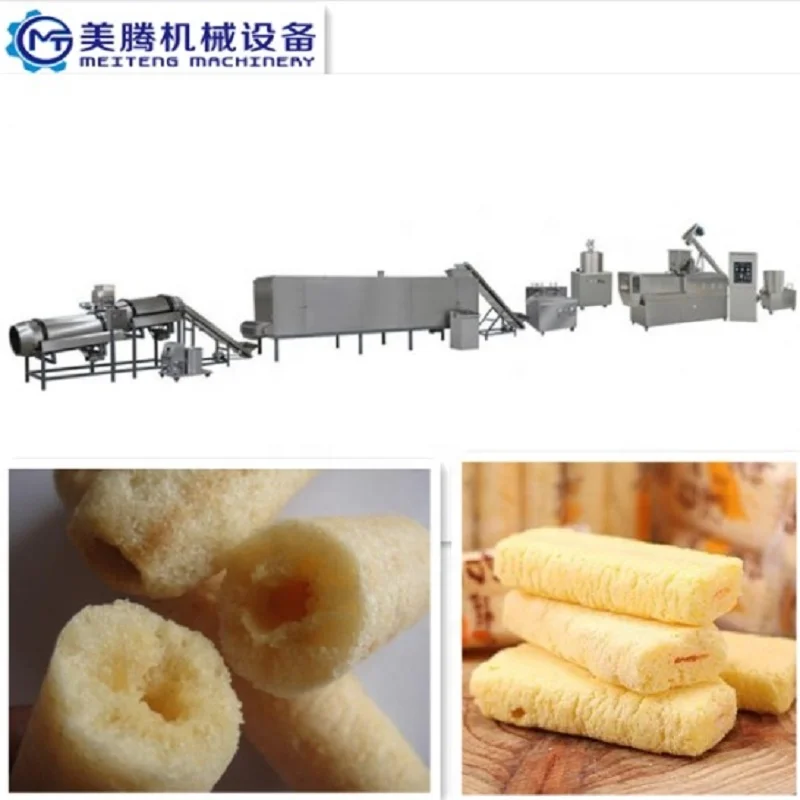
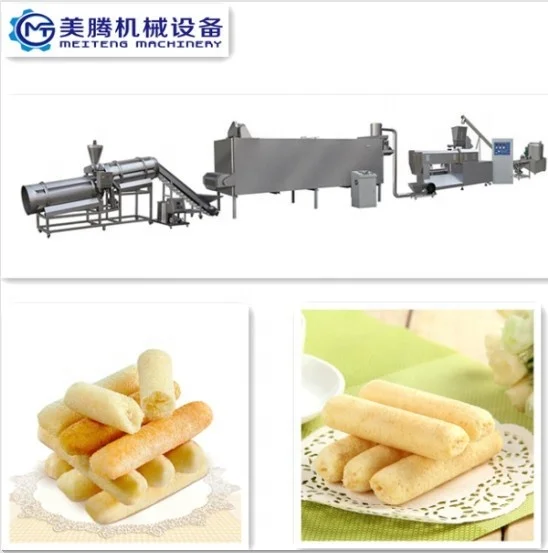
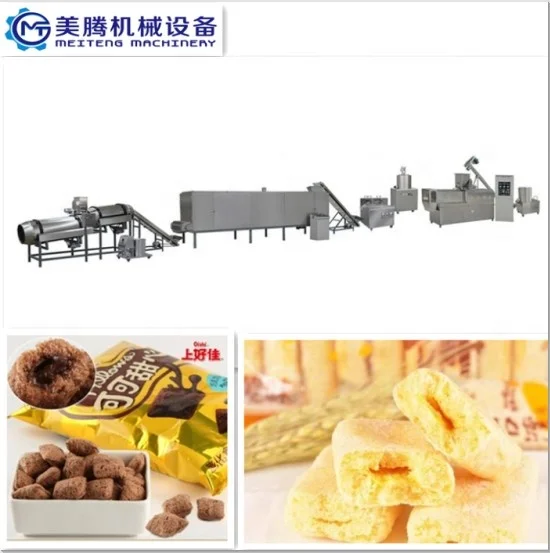
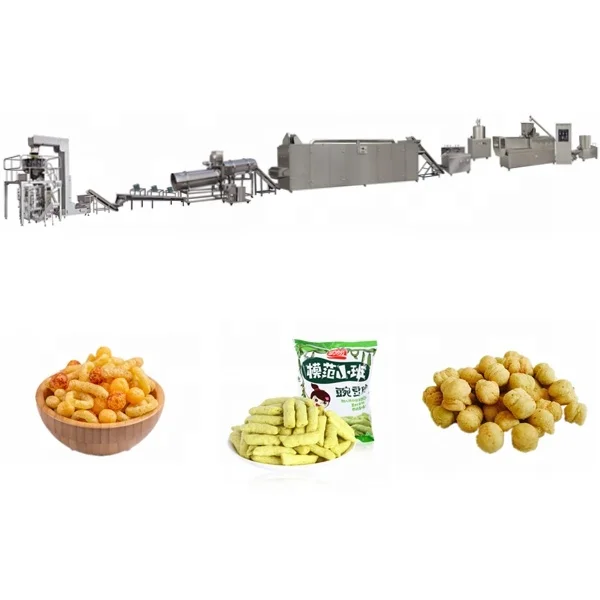
MT70 Twin Screw Snack Extrusion Production Line, 100–120 kg/h, PLC Control — designed as a complete turnkey project from material batching through extrusion, drying, coating, cooling and packing. Each station is throughput-matched under a single layout, with screw and die configuration specified to your cereal-based formulation and target snack shape. Available in MT70 / MT85 / MT75 capacity tiers to scale the entire downstream line proportionally. Delivered with trial run on your raw material before shipment, full line capacity calculation, and on-site commissioning with operator training.
Description
Throughput-matched turnkey line design — every station from material batching through extrusion to packing is balanced to the extruder’s verified output on your raw material, not quoted from a generic capacity table.
Technical Specifications
| Parameter | Value |
|---|---|
| Product Type | Twin Screw Extrusion Puffed Snack Production Line |
| Models Available | MT70 / MT85 / MT75 |
| Screw Type | Twin-screw |
| Installed Power | 130 kW (MT70) / 180 kW (MT85) / 220 kW (MT75) |
| Power Consumption | 95 kW (MT70) / 120 kW (MT85) / 130 kW (MT75) |
| Output Capacity | 100–120 kg/h (MT70) / 200–300 kg/h (MT85) / 300–500 kg/h (MT75) (basis not stated in source — confirm raw material formulation, moisture content and die configuration) |
| Overall Dimensions | 21 × 1.5 × 2.2 m (MT70) / 25 × 1.5 × 2.2 m (MT85) / 28 × 1.5 × 2.2 m (MT75) |
| Raw Materials | Corn, rice, wheat, oat, barley flour and similar cereal powders |
| Line Stations | Material batching → Extruding → Drying → Coating / Flavouring → Cooling → Packing → Stacking |
| Control System | Automatic PLC with MCC |
| Dryer Heating Source | Gas or Electric |
| Coating System | Double tumble for sugar melting, elevator, coating drum, spraying nozzle |
| Screw Construction | Special material, anti-grinding, self-cleaning performance |
| Lubrication | Automatic lubricating and cooling function |
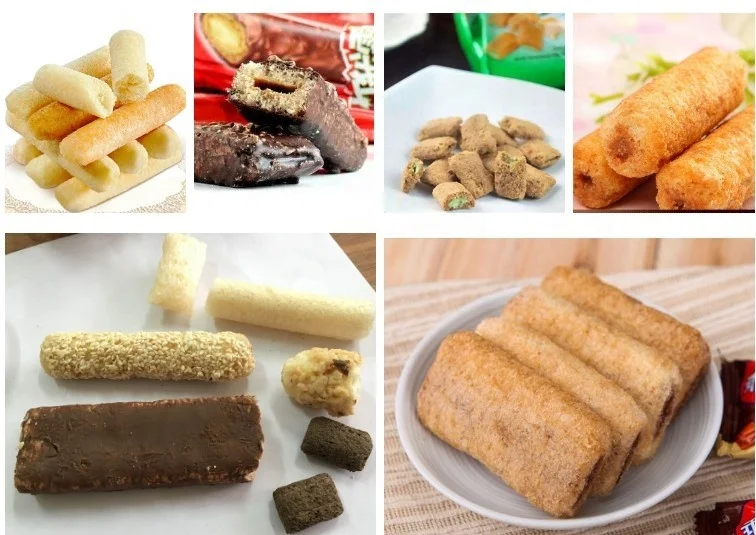
| Product Shapes | Cheese ball, tube, stick, ring, fruit loop, star, wheel, flower, heart and other shapes by changing die |
| Layout | Customized to buyer’s factory size |
| Voltage & Frequency | Customized to local requirement |
| Certification | CE |
Application Suitability
| Application | Material or Output |
|---|---|
| Corn puff snack production | Corn flour and corn grits extruded into cheese balls, rings and tubes |
| Fruit loop and cereal ring line | Mixed cereal flour (wheat, oat, barley) formed into rings and loops |
| Stick and tube snack format | Rice and wheat flour blends cut into sticks, stars and wheels |
| Coated sweet snack line | Extruded cereal pieces tumbled with sugar slurry in double coating drum |
| Multi-shape snack pilot run | Single extruder with interchangeable dies for heart, flower and custom shapes |
What "300 kg/h" Leaves Out About Snack Line Capacity
A twin screw snack extrusion production line turnkey is only as fast as its slowest downstream station, and capacity quoted without raw material and moisture conditions is a number without meaning.
When I started on the assembly floor, I watched extruders get bolted onto lines where the dryer could not handle the moisture load coming off the barrel. The result was always the same: the extruder ran at half speed because the operator was waiting for the dryer to catch up. Years later in technical sales, I saw a bicolor chip customer order a line based on the sample brochure capacity. Their corn flour had a different moisture content from our trial material. The twin-screw extruder produced hard, rough-cut pieces and the actual output dropped to roughly half of what the nameplate said. We resolved it only after running their material in our testing workshop and reconfiguring the screw combination and die plate. [NEED_CITE: raw material moisture content effect on extruder throughput and product density]
Throughput Balancing Across Every Station in the Line
Designing a snack line as one project means matching the extruder output to the dryer evaporation rate, the coating drum residence time and the cooling conveyor speed. If the extruder runs at a capacity that the dryer cannot handle, moisture stays trapped in the product and shelf life collapses. A twin screw snack extrusion production line turnkey built under one supplier avoids this mismatch because the same layout calculation covers every station from batching through packing.
Utility Planning and Phased Installation for Snack Extrusion Projects
Before any equipment ships, the factory needs confirmed electrical load, gas supply for the dryer, compressed air for the coating nozzles and floor loading calculations for the heaviest stations. The MT70 line draws 95 kW during operation while the MT75 pulls 130 kW, and the dryer heating source switches between gas and electric depending on local utility costs. A phased installation schedule lets the contractor prepare foundations, run cable trays and set up ventilation before the main extruder arrives on site. [NEED_CITE: industrial food line utility planning standards for extrusion facilities]
Reading the Screw, Die and Power Specifications
The twin-screw configuration handles cereal flour blends with varying starch and protein content, and the screw elements are built from anti-grinding material with self-cleaning geometry so residue does not build up between batches. Installed power ranges from 130 kW on the MT70 to 220 kW on the MT75, which correlates to the torque available for pushing denser doughs through smaller die openings. Die design directly controls product shape — switching from a ring die to a star die changes the expansion ratio and the final bulk density of the snack. The automatic PLC coordinates barrel temperature zones, screw speed and feeder rate so that batch-to-batch variation stays within tolerance.
The Hidden Cost of Mismatched Line Configuration
Ordering an extruder without verifying that the downstream coating drum and dryer are sized for the same throughput leads to production bottlenecks that surface only during commissioning. I have seen projects delayed by weeks because the voltage and frequency were not confirmed before production started — the control panel arrived wired for a supply the factory did not have. When the screw and die configuration is copied from a generic build rather than matched to the buyer’s specific cereal blend, the snack texture misses the market expectation and reformulation becomes an expensive trial-and-error exercise. [NEED_CITE: cost of line reconfiguration after failed commissioning in food extrusion projects]
Why Procure the Complete Line From One Supplier
The entire station sequence — batching, extruding, drying, coating, cooling, packing and stacking — is designed under one layout so throughput is balanced at every point rather than assembled from separate vendors with mismatched capacities. Screw configuration and die design are specified to your raw material formulation and target snack shape before production begins. An in-house testing workshop runs trial production on your actual cereal flour blend so product development happens before shipment, not after installation. Pre-sales consultation covers factory layout engineering, and on-site installation includes commissioning and operator training running in parallel with trial production. Voltage, frequency and control language are confirmed and documented before the line enters production.
Documentation & Verification
- Line layout drawing with throughput balance calculation for every station from batching to packing
- Screw and die configuration record matched to your cereal flour blend and target snack shape
- Trial run report on your raw material conducted in the testing workshop before shipment
- Electrical schematic with voltage, frequency and PLC language confirmed against your local supply
- Factory test record documenting actual output under your specified formulation and moisture condition
Installation, Commissioning & Support
- Floor loading and foundation plan customised to your factory dimensions and the 21–28 m line footprint
- Dedicated electrical circuit sized for 95–130 kW operating draw with confirmed voltage and frequency
- Gas or electric dryer heating source configured to your local utility availability and cost structure
- PLC commissioning with parameter setting for barrel temperature, screw speed and feeder synchronisation
- Operator training on screw combination changeover and die swap procedures during trial production runs
- Wear parts list covering screw elements, die plates and coating nozzles with recommended replacement intervals
What to Prepare Before Requesting a Quotation
To size the line correctly, share your cereal flour formulation with moisture content, the target snack shapes and daily output requirement. Provide your factory floor dimensions and ceiling height so the layout can be adapted to your space. Confirm the local voltage, frequency and preferred PLC operating language before production starts.
Frequently Asked Questions
Q: How is output capacity verified across the complete line and not just the extruder?
A: Capacity is calculated by balancing the extruder output against the dryer evaporation rate, coating drum residence time and cooling conveyor speed. A trial run on your actual raw material in the testing workshop confirms what the line produces under your specific formulation, moisture content and die configuration.
Q: How is the line layout adapted to my factory footprint?
A: The layout is customised to your floor dimensions and ceiling height. Utility connections — electrical load for 95–130 kW operation, gas supply for the dryer, compressed air for coating nozzles and floor loading — are mapped to each station before installation begins.
Q: What does the commissioning schedule look like?
A: Installation is phased so foundations and utilities are ready before equipment arrives. Commissioning covers PLC parameter setting, trial production on your raw material and operator training on screw changeover and die swaps, all running before handover.
Q: How is throughput matched between the extruder and downstream stations?
A: The dryer, coating drum and cooling conveyor are each sized to handle the extruder output at the configured capacity. This prevents any single station from bottlenecking the line and is verified during the in-house trial run before shipment.
Q: What voltage and control language options are confirmed before production?
A: Voltage and frequency are configured to your local electrical supply standard. The PLC operating language is selected during the specification stage and documented in the electrical schematic so the control panel matches your operators’ requirements on arrival.
Related products
-

Puff Corn Snacks Food Line Puffed Rice Ball Production Making Equipment Machines
¥10,565.00 Select options This product has multiple variants. The options may be chosen on the product page -

Automatic Puffed Food Snack Machine Electric Corn Puffs Snacks Making Machinery New Condition Flavorful Puff Snack Production
¥7,550.00 Select options This product has multiple variants. The options may be chosen on the product page -

Full Automatic Crispy Maize Chocos Corn Flakes Breakfast Cereals Processing Production Line Industrial Equipment
¥1,000.00 Select options This product has multiple variants. The options may be chosen on the product page -

Automatic High Productivity Puffed Corn Snacks Extruder Production Equipment New Condition Puff Snack Food Making Machine
¥11,050.00 Select options This product has multiple variants. The options may be chosen on the product page


