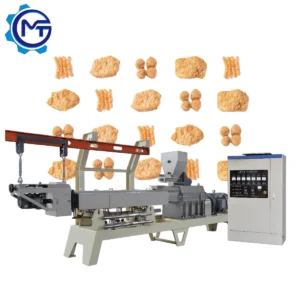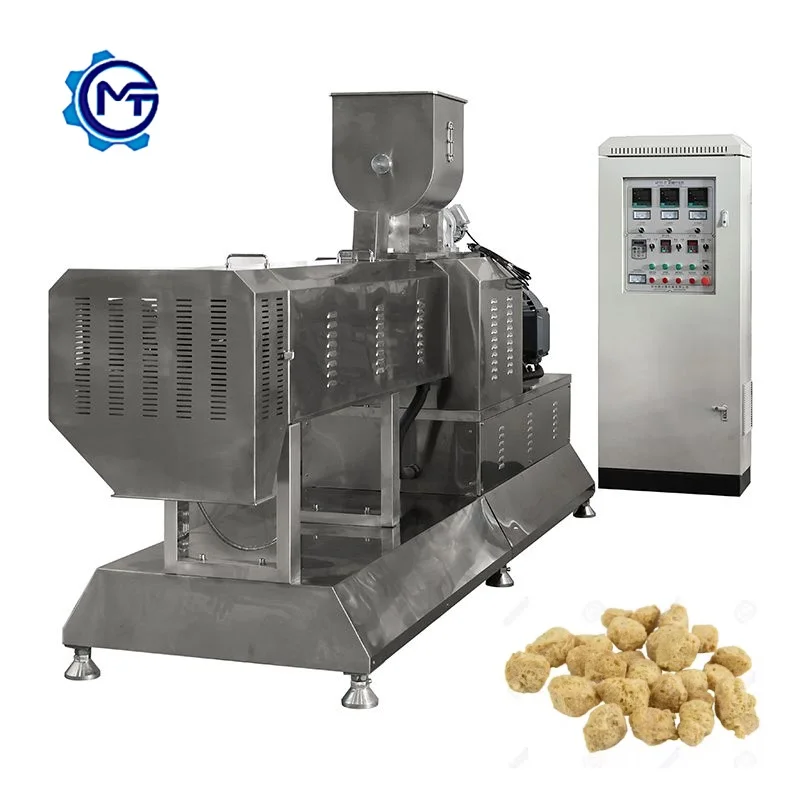
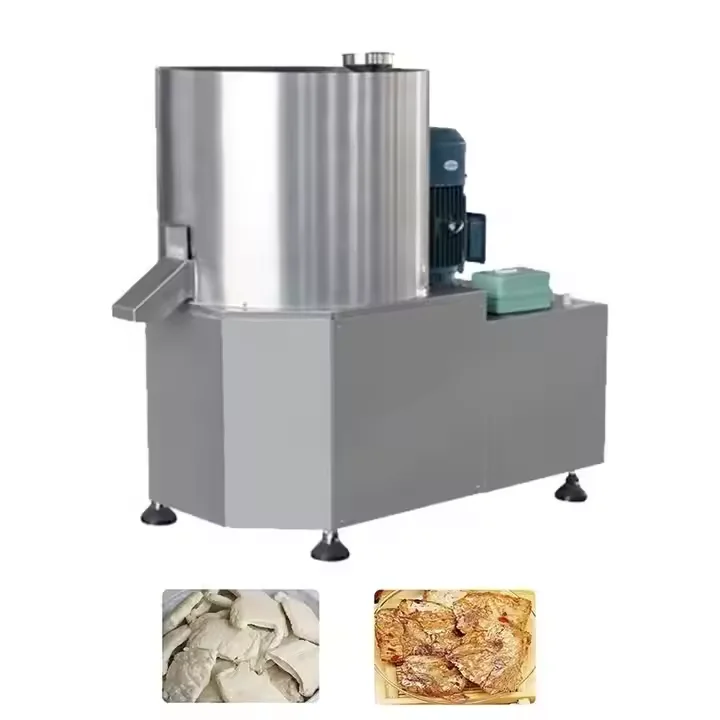
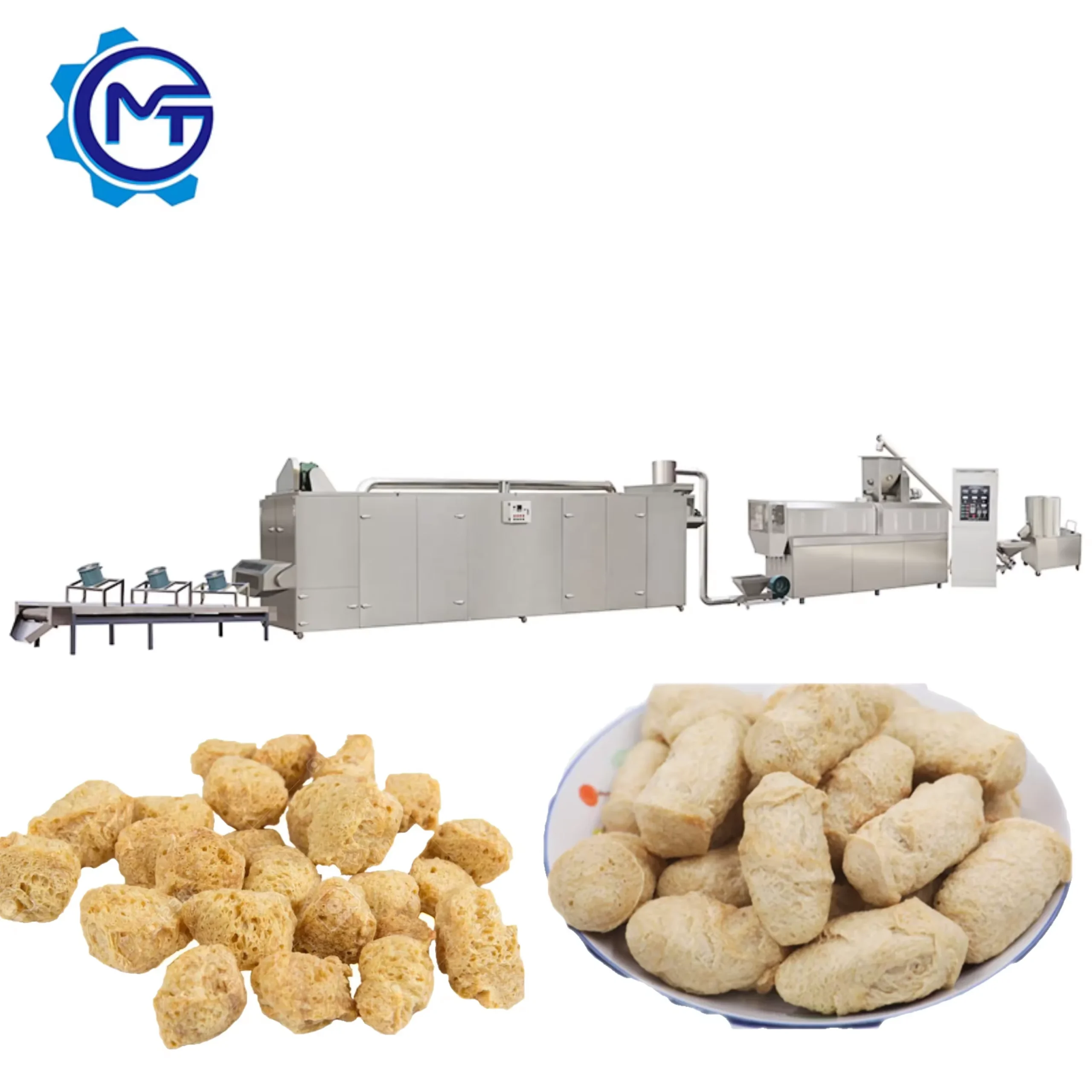
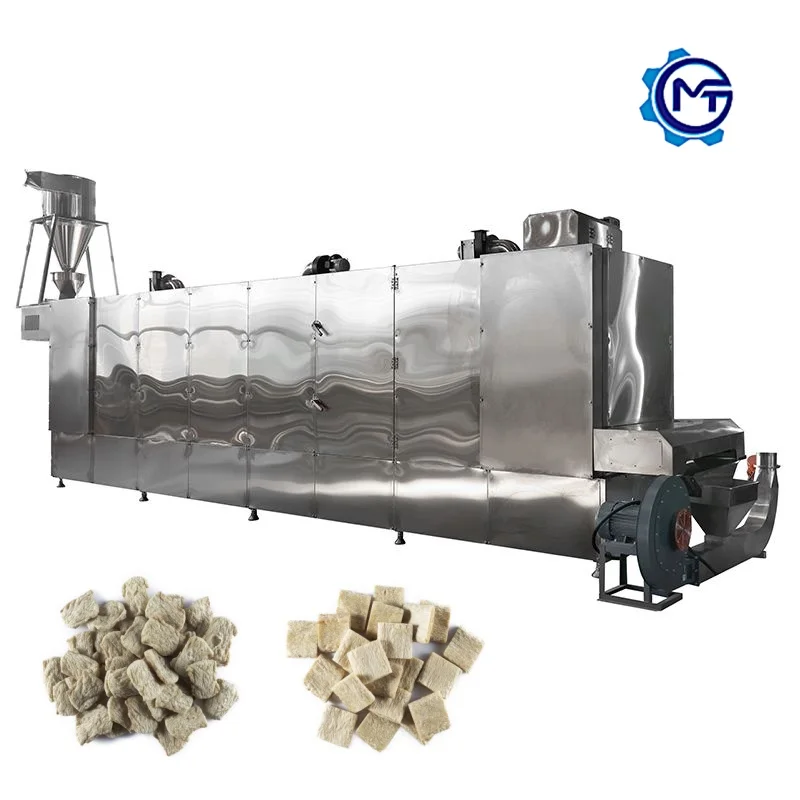
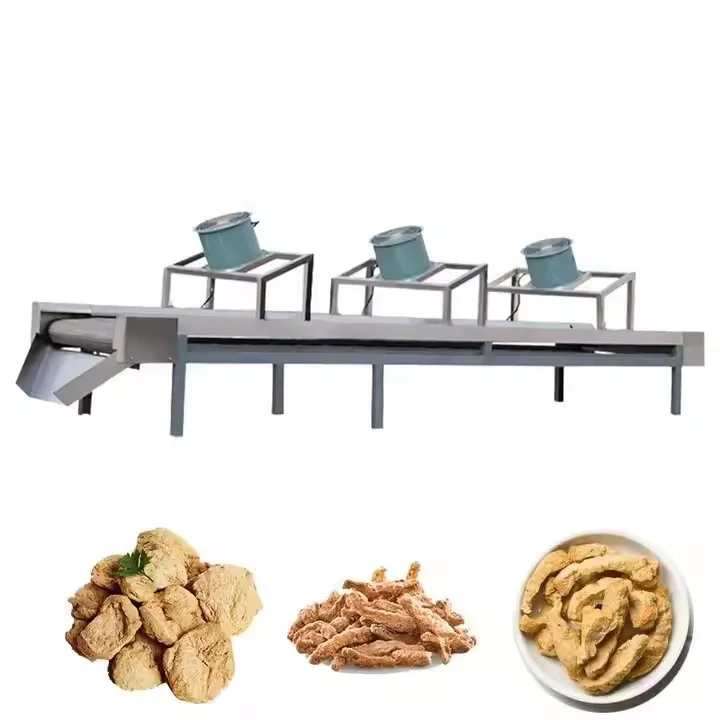
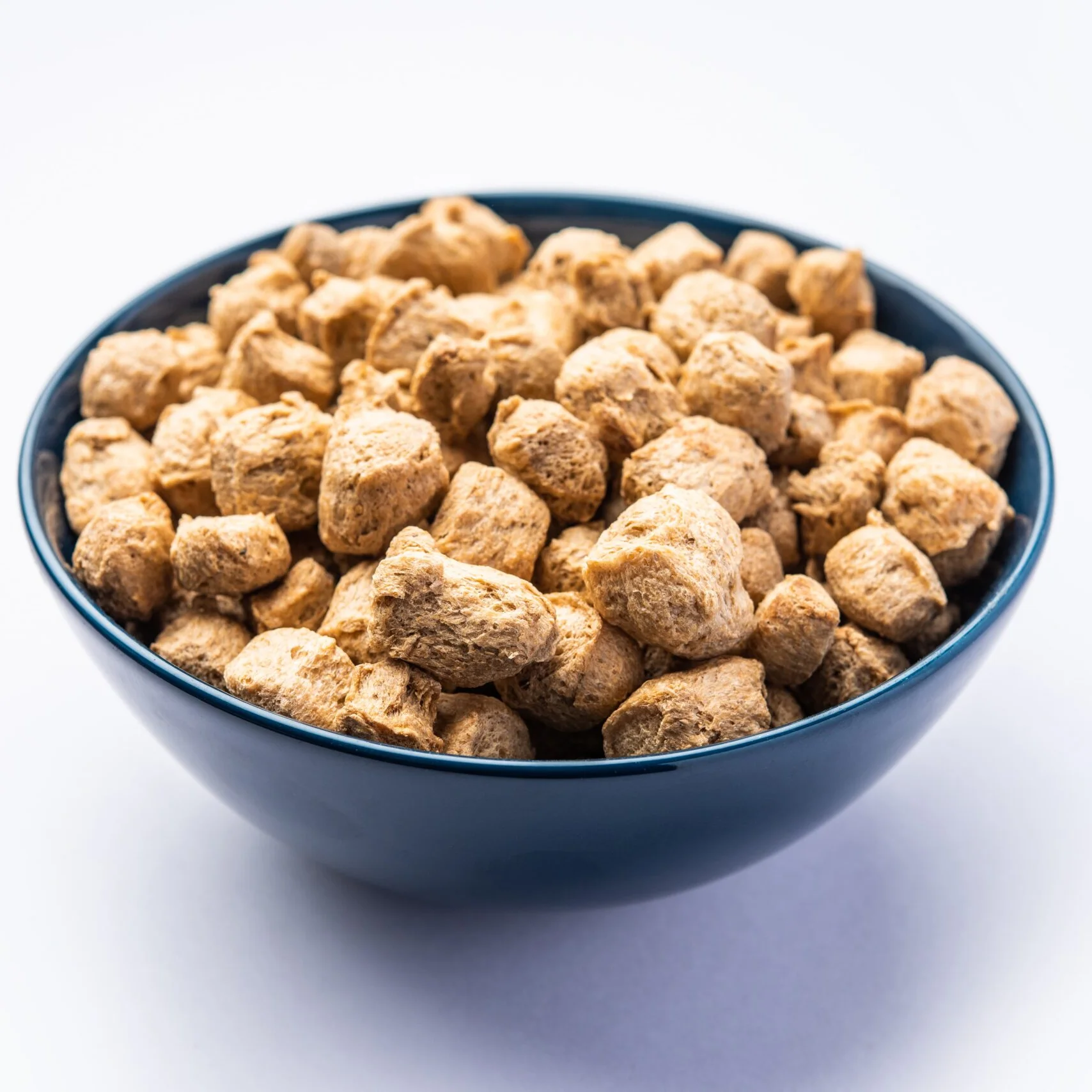
MT65 / MT70 / MT75 / MT85 Twin Screw Extruder for Textured Soy Protein Production Line, PLC & MCC Control, Multi-layer Dryer — configured as a complete turnkey line from batching through cooling with every station throughput-matched to eliminate bottlenecks.
- Screw configuration and die design specified to your raw material and target fiber structure
- Multi-layer dryer with selectable heating source (fuel / gas / electricity) and adjustable parameters
- CE and ISO certified across the full assembly
One supplier delivers layout planning, in-house trial runs on your defatted soya flour or flakes before shipment, and on-site commissioning with operator training.
Description
Single-supplier turnkey integration — Every station from batching through cooling is throughput-matched on one layout, eliminating the bottlenecks that plague multi-vendor extrusion lines.
Technical Specifications
| Parameter | Value |
|---|---|
| Product Type | Twin Screw Extruder for Textured Soy Protein Production Line |
| Available Models | MT65, MT70, MT75, MT85 |
| Screw Configuration | Twin screw, segment design |
| Installed Power | 84 kW (MT65) / 160 kW (MT70) / 190 kW (MT75) / 210 kW (MT85) |
| Actual Power Consumption | 59 kW (MT65) / 120 kW (MT70) / 140 kW (MT75) / 140 kW (MT85) |
| Output Capacity | 100–150 kg/h (MT65) / 150–200 kg/h (MT70) / 150–200 kg/h (MT75) / 250–300 kg/h (MT85) (basis not stated in source — confirm raw material and moisture) |
| Main Motor Power | 22 kW / 30 kW / 45 kW |
| Mixer Capacity | 20–30 kg / 70–80 kg / 170–180 kg per batch |
| Mixer Contact Material | Stainless steel 304 |
| Dryer Type | Multi-layer, round-trip, double pitch roller chain drive |
| Dryer Heating Options | Fuel, gas, or electricity selectable |
| Control System | PLC and MCC available |
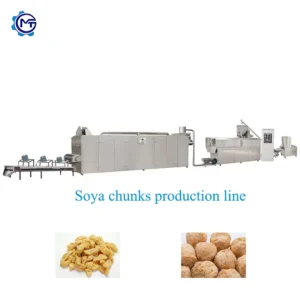
| Line Stations | Mixer → Screw Conveyor → Twin Screw Extruder → Air Conveyor → Multi-layer Dryer → Cooling Machine |
| Standards | CE, ISO |
| Warranty | 1 year |
Application Suitability
| Application | Material or Output |
|---|---|
| Textured soy protein (TVP/TSP) chunks and slices | Defatted soya flour, low-temperature soya flakes |
| Soy nuggets for food service and retail | Soybean meal blends, soy protein concentrate |
| Plant-based meat blocks with layered fiber structure | Soy and peanut dregs blended with binders |
| Vegetable meat analogues for frozen food formulation | Custom protein-starch blends |
Why Nominal Line Capacity Fails on Real Raw Material
A production line rated at 250 kg/h on one soy flour will stall at half that rate when the protein content shifts by just a few percentage points.
Procurement teams regularly receive quotations stating a textured soy protein production line turnkey capacity based on standard laboratory-grade defatted soya flour. Once the line ships and the buyer feeds locally sourced soybean meal — with different protein levels, fiber content, and residual oil — the extruder cannot maintain target throughput, and the downstream dryer sits half-empty. This gap between quoted and actual output is the single largest source of commissioning disputes in plant-based protein projects [NEED_CITE: extrusion throughput variance with raw material composition]. The capacity number on a specification sheet means nothing without the raw material assay that produced it.
Layout Engineering That Prevents Station Mismatch
The textured soy protein production line turnkey layout positions each station — mixer, screw conveyor, twin screw extruder, air conveyor, multi-layer dryer, and cooling machine — so that no single unit throttles the others. When the extruder output climbs, the dryer belt speed and cooling conveyor length scale proportionally, preventing material pile-ups that degrade product texture.
Trial Runs on Your Raw Material Before Shipment
Every screw combination and die plate is first tested in the in-house workshop using the buyer’s own defatted soya flour or soya flakes. This pre-shipment validation confirms fiber structure, moisture profile, and real throughput, so commissioning on-site becomes verification rather than product development [NEED_CITE: benefits of factory acceptance testing for extrusion lines].
What the Specs Actually Mean for Fiber Formation
Twin screw geometry determines how soy protein molecules align under heat and shear. The segmented screw design allows reconfiguration of conveying, kneading, and metering zones to match the specific protein-starch ratio in the feed. Main motor power ranging from 22 kW to 45 kW provides the torque necessary to maintain screw speed under the high-viscosity conditions typical of concentrated soy blends. Multi-layer dryer heating — selectable between fuel, gas, and electricity — stabilizes product moisture at a level that preserves the layered fiber structure without case-hardening the outer surface. PLC and MCC control ensures that batch-to-batch parameters remain locked once the correct formulation is established.
The Hidden Cost of Sourcing Stations Separately
When an extruder vendor and a dryer vendor quote independently, neither takes responsibility for the throughput gap between their equipment. Buyers discover during installation that the dryer residence time is insufficient for the extruder’s actual output, forcing a mid-project equipment swap that delays commissioning by weeks [NEED_CITE: turnkey versus multi-vendor project risk in food processing]. The same applies upstream: an undersized mixer cannot feed the extruder continuously, causing intermittent starvation that breaks fiber continuity in the final product.
Why Procurement Teams Choose This Line
Throughput matching across every station eliminates the negotiation loop between separate equipment vendors, since one supplier engineers the full chain from batching to cooling. Screw configuration and die design are specified against the buyer’s target product — nuggets, chunks, or slices — rather than copied from a generic build. The in-house testing workshop runs the buyer’s raw material before dispatch, producing a trial report that serves as the baseline for on-site commissioning. Pre-sales layout design, utility planning, phased installation scheduling, and operator training are delivered as a single coordinated project rather than fragmented hand-offs [NEED_CITE: single-source accountability in industrial turnkey contracts].
Documentation & Verification
- Line layout showing throughput calculation matched across all stations
- Trial run report conducted on buyer’s defatted soya flour or flakes before dispatch
- Screw and die configuration record specific to target nugget or chunk format
- Electrical schematic with voltage and control language confirmed for destination market
- CE declaration of conformity and ISO certificate for customs and compliance
- Wear parts list covering screws, dies, and dryer chain components
Installation, Commissioning & Support
- Foundation plan aligned to the 40–45 meter line footprint and station weight distribution
- Dedicated power circuit sized for up to 210 kW installed load plus dryer heating draw
- Station-by-station mechanical alignment verified during on-site assembly sequence
- Extruder screw combination and five-zone temperature profile tuned during first production run
- Operator training covering PLC parameter adjustment and MCC fault response procedures
- Initial spare parts package including replacement screw elements and die plates
What to Include in Your Inquiry
Provide the raw material specification — including protein content, moisture, and particle size of your soya flour or flakes — along with your target product format and daily output requirement. Share your facility’s available floor space, ceiling height, and local voltage and frequency standards so the layout and electrical package can be configured before quotation.
Frequently Asked Questions
Q: How is line capacity verified against my specific raw material and target product?
A: Before shipment, the in-house testing workshop runs your defatted soya flour, soya flakes, or custom blend through the extruder at production scale. The resulting trial report documents real throughput, product density, and fiber structure, forming the baseline for on-site commissioning.
Q: How is screw configuration determined for my TVP or TSP target format?
A: The screw element arrangement — conveying, kneading, and metering zones — is selected based on your raw material protein content and the target product shape. Die design is matched to the required nugget, chunk, or slice geometry.
Q: How do you prevent dryer and cooling bottlenecks downstream?
A: Each station is engineered as part of a single layout. The multi-layer dryer belt speed and cooling conveyor length are calculated against the extruder’s verified output, ensuring continuous material flow without pile-ups or idle time.
Q: What electrical and control specifications will be configured for my facility?
A: The electrical package is built around your local voltage, frequency, and phase requirements. Control language on the PLC interface is set to your operator preference before the line leaves the factory.
Q: What does on-site installation and commissioning include?
A: Engineers oversee station assembly, mechanical alignment, utility connections, first-run parameter tuning, and operator training. The commissioning period concludes with a production run meeting the throughput and product specification confirmed during the factory trial.
Related products
-
New Condition Soybean Protein Machine for Soy Chunks Production Textured Vegetable Protein Production Line
¥30.00 Select options This product has multiple variants. The options may be chosen on the product page -
Soybean Protein Making Machine Automatic Soy Chunk Production Line
¥30.00 Select options This product has multiple variants. The options may be chosen on the product page -
Twin Screw Extruder for Textured Vegetable Protein (TVP)
¥9,500.00 Select options This product has multiple variants. The options may be chosen on the product page -
High Moisture Vegetarian Meat Extrusion Machine
¥9,500.00 Select options This product has multiple variants. The options may be chosen on the product page