

- In-house testing workshop runs your actual raw material before shipment, so product development starts on day one — not after installation.
Description
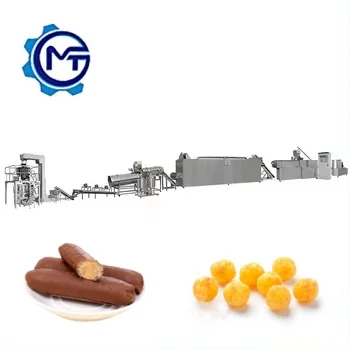
Turnkey Line Integrity — every station from batching to packing is throughput-matched and validated on your grain formulation in our testing workshop before the line leaves Jinan.
Technical Specifications
| Parameter | Value |
|---|---|
| Model | MT65 / MT70 / MT85 / MT100 |
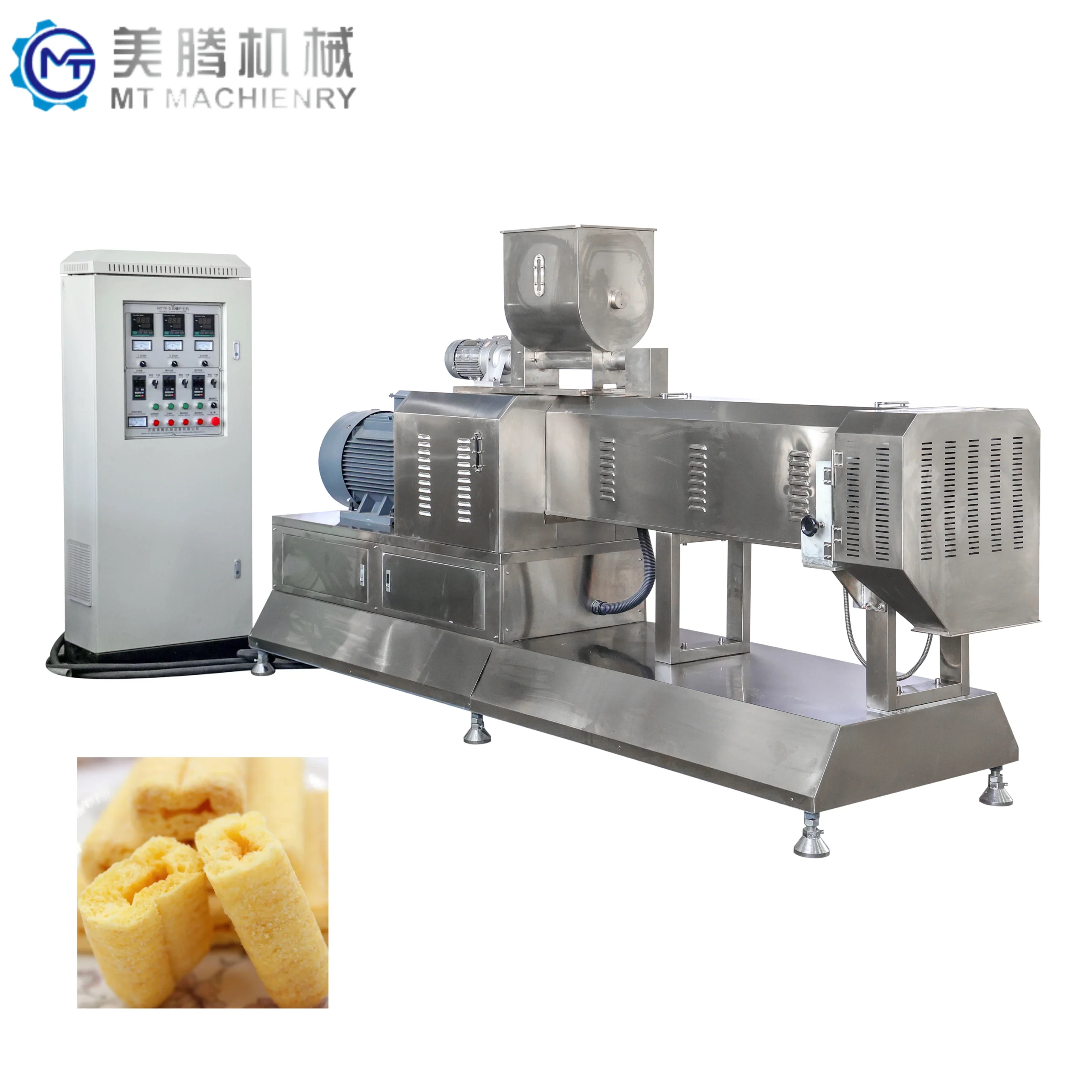
| Product Type | Twin Screw Extruder Corn Puff Snack Food Production Line |
| Screw Type | Twin screw |
| Installed Power | MT65: 130 kW / MT70: 180 kW / MT85: 220 kW / MT100: 240 kW |
| Real Consumption | MT65: 95 kW / MT70: 120 kW / MT85: 130 kW / MT100: 160 kW |
| Capacity | MT65: 120–150 kg/h / MT70: 200–300 kg/h / MT85: 300–500 kg/h / MT100: 600–800 kg/h (basis not stated in source — confirm raw material, moisture and die shape) |
| Control System | Frequency speed controlling system with automatic lubricating and cooling |
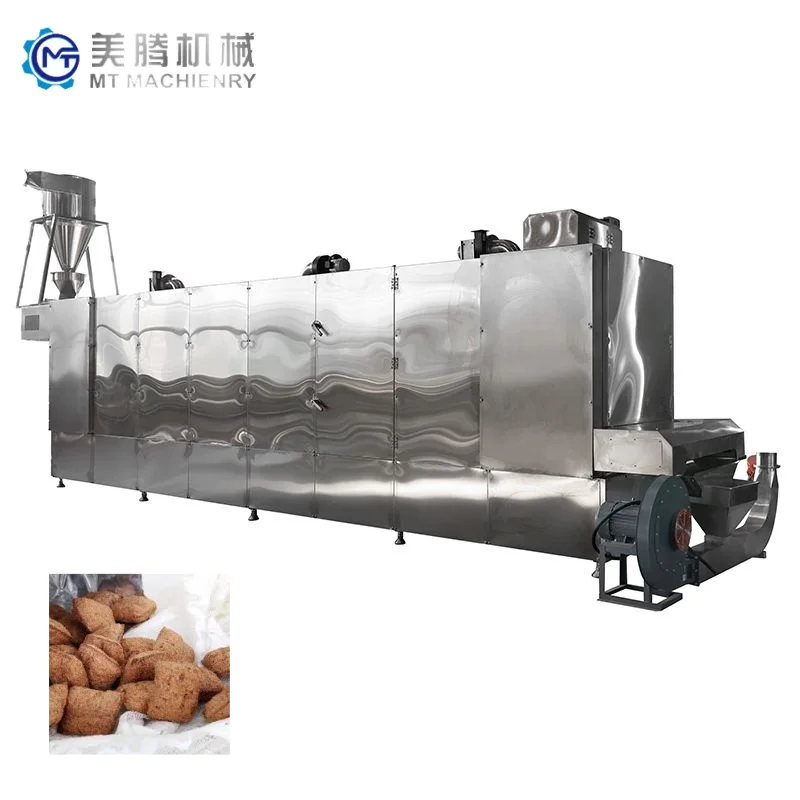
| Dryer Heating Source | Electric, steam, or gas (configurable to local utility conditions) |
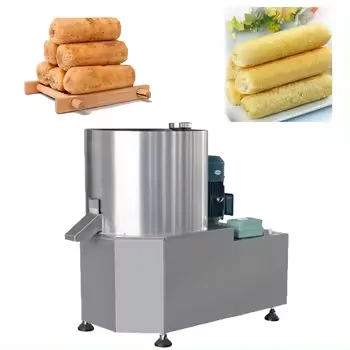
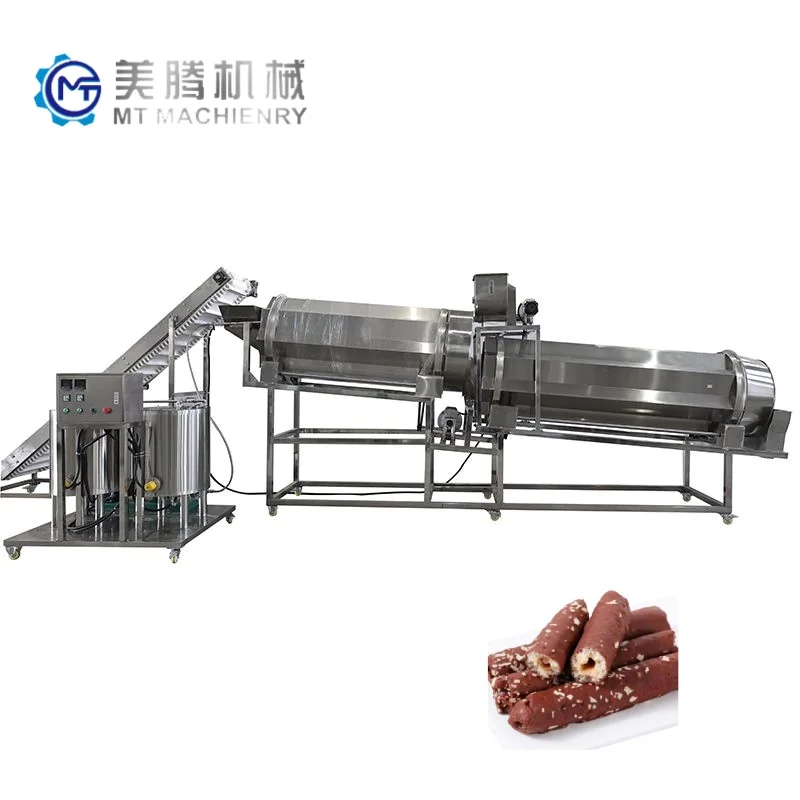
| Flavoring System | Double drum line with sugar melting and spraying nozzle for oil, liquid, and flour flavor |
| Packing Machine | Automatic weighing, sealing, marking, and coding with vibration feeding and electronic pad weighing |
| Product Shapes | Cheese ball, tube, stick, ring, fruit loop, star, wheel, flower, heart (via die change); optional core-filled format |
| Raw Materials | Corn, rice, wheat, oat, barley flour and similar grain-based materials |
| Line Stations | Mixing → Batching → Extruding → Drying → Coating / Flavoring → Cooling → Packing → Stacking |
| Delivery Time | 20 working days for production line; approx. 35 working days with packing and stacking machines (verify against current schedule) |
| Warranty | 1 year free warranty |
| Standards | CE, ISO |
Application Suitability
| Application | Material or Output |
|---|---|
| Puffed corn snacks | Corn flour and corn grits at controlled moisture for cheese balls, rings, and sticks |
| Multigrain extruded snacks | Blends of rice, wheat, oat, and barley flour for fruit loops and star shapes |
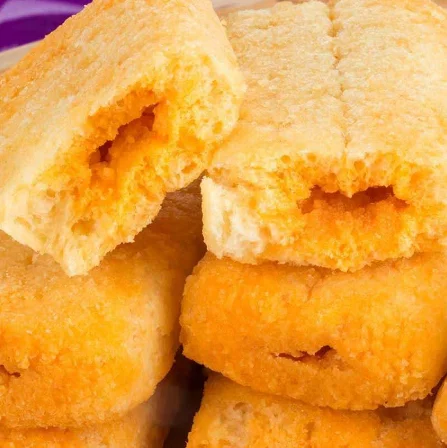
| Core-filled puffed snacks | Grain-based outer shell with cream or chocolate center using optional core filling module |
| Breakfast cereal formats | Grain flour extruded into flower, wheel, and heart shapes for retail packaging |
| Snack food line expansion | High-throughput production using MT85 or MT100 for manufacturers scaling existing output |
Why "Nominal Capacity" Fails When Your Formula Changes
A line rated on corn flour will not hold the same output on a high-fiber multigrain blend.
Last year I signed off on a corn puff snack food production line turnkey project quoted at a standard capacity figure. The buyer switched to a high-fiber杂粮 formulation after the contract was signed. The extruder could not achieve the same expansion, throughput dropped sharply, and every downstream station — dryer, flavoring drum, packing scale — ran out of sync. The bottleneck was not any single machine; it was the assumption that one capacity number covers all recipes [NEED_CITE: effect of fiber content on extrusion expansion rate]. That project reshaped how I approach every line configuration.
Matching Every Station to the Actual Recipe
A corn puff snack food production line turnkey project only performs when throughput is balanced from the batching hopper to the packing scale. If the extruder pushes more material than the dryer can handle at the target moisture, product backs up and quality degrades. If the flavoring drum runs faster than the cooler can settle the coating, you get clumping and inconsistent seasoning coverage. Each station on this line is sized relative to the extruder’s real output on your specific grain formulation — not a catalog maximum.
Die Geometry and Screw Profile Determine the Product
The shape of a puffed snack is set by the die orifice and the shear profile inside the barrel. A fruit loop requires a different die land length and screw element arrangement than a solid stick or a thin-walled tube. Changing the product format means more than swapping a die plate; the screw configuration must be adjusted to deliver the correct melt temperature and pressure at the new die geometry [NEED_CITE: twin screw die design and expansion control]. This line supports the full shape range — cheese ball, ring, stick, tube, fruit loop, star, wheel, flower, heart — plus core-filled formats with the optional filling and cutting module.
Reading the Power and Capacity Figures Correctly
The installed power and real consumption values in the table above reflect a meaningful gap. Installed power is the motor and heating capacity available at peak demand; real consumption is what the line draws during steady-state production. For the MT85, for example, 220 kW installed versus 130 kW consumed means the thermal and mechanical headroom is there for startup surges and denser formulations. Capacity figures across all four models are listed with a confirmation note because grain type, moisture content, and die shape each shift the actual output. A corn grits formula at standard moisture will behave differently from an oat-heavy blend, and the line must be configured for the material you will actually run.
The Cost of Skipping the Trial Run
When a line ships without a trial run on the buyer’s actual raw material, product development starts after installation — on the factory floor, with production deadlines already counting down. Screw elements get swapped, dryer temperatures adjusted, and flavoring spray rates recalibrated while the line is supposed to be in commercial output. Each adjustment cycle costs time and raw material waste [NEED_CITE: commissioning delays from untested raw material in extrusion lines]. The testing workshop exists to absorb that cycle before the machines are crated.
Why Procurement Lands Here
This line is configured as a single turnkey project from one supplier, so throughput calculations span every station rather than stopping at the extruder door. Screw configuration and die design are specified against the buyer’s grain formula and target shape, not copied from a generic build. The in-house testing workshop runs your raw material before shipment, producing a trial report that becomes the baseline for commissioning. Twin screw extrusion expertise covers the full grain spectrum — corn, rice, wheat, oat, barley — and the dryer heating source is configured to match your local electric, steam, or gas supply. Pre-sales engineering through on-site installation and operator training is handled by the same team that built the line.
Documentation & Verification
- Line layout and capacity calculation showing throughput balance across all stations from batching to packing
- Screw and die configuration record matched to your grain formula and target snack shape
- Trial run report on your raw material completed in the testing workshop before shipment
- Electrical schematic with voltage and frequency confirmation for your local power grid
- CE declaration of conformity and ISO certificate covering the complete line scope
- Operation and maintenance manual with wear parts list for screws, dies, and dryer belts
Installation, Commissioning & Support
- Foundation and floor space plan based on the selected model’s footprint and station count from mixing to stacking
- Dedicated power circuit sized to the model’s installed power, up to 240 kW for the MT100
- Frequency speed control system configured to your local voltage and frequency before dispatch
- First-run parameter setting on your grain formula using the trial run report as the baseline
- Operator training covering screw changes, die swaps, and flavoring drum calibration
- Wear parts inventory including screws and dies with part numbers documented at shipment
What to Include in Your Inquiry
To configure this corn puff snack food production line turnkey project accurately, share your primary grain material and any secondary flours in the blend, along with the moisture range you plan to run. Specify your target daily output and the snack shapes you need from the die set. Confirm your local voltage, frequency, and preferred dryer heating source. If you can send a sample of your raw material, we will run it in the testing workshop and include the trial report with the line proposal.
Frequently Asked Questions
Q: How is line capacity verified and what conditions is it based on?
A: Capacity figures for each model are quoted as ranges because actual output depends on grain type, moisture content, and die shape. We verify throughput by running your specific raw material in our testing workshop and recording the result in a trial report. The confirmed capacity becomes the basis for sizing every downstream station.
Q: How do you match screw configuration and die design to my product?
A: The screw element arrangement and die geometry are selected based on your grain formulation and target snack shape. A ring requires different shear and pressure profiles than a solid stick. We document the configuration in a record that travels with the line and serves as the reference for future product changes.
Q: What does the trial run before shipment cover?
A: We run your raw material through the extruder and downstream stations in our testing workshop, recording expansion rate, product density, moisture at the dryer exit, and flavoring coverage. You receive a trial run report. To arrange this, ship a representative sample of your grain blend to our facility.
Q: How is voltage and control language confirmed before production?
A: We request your local voltage, frequency, and preferred control language during the proposal stage. The electrical schematic is then drawn to match your power supply, and the frequency speed control interface is set to your language before the line enters production. This prevents delays during on-site commissioning.
Q: What does the installation and commissioning schedule look like?
A: The schedule depends on the number of stations in your line configuration. After the line arrives, installation covers station placement, utility connections, and mechanical alignment. Commissioning uses the trial run report as the starting point, with parameter adjustments made on your actual production material. Operator training runs in parallel with the first production batches.
Related products
-

New Puffed Snack Food Machine Production Line Corn Flake Puff Corn Making Machine Twin Screw Extruder 100-500kg/h Capacity Food
¥8,500.00 Select options This product has multiple variants. The options may be chosen on the product page -

Automatic Rice Crispies Extruder Machine/Chocolate Corn Flakes Extrusion Plant/wheat Flaking Snacks Production Line
¥8,500.00 Select options This product has multiple variants. The options may be chosen on the product page -

Automatic Puff Corn Snack Stick Production Line Equipment New Condition Machines
¥100.00 Select options This product has multiple variants. The options may be chosen on the product page -

Corn Puff Processing Line with Mixer Fryer Baking Oven Automatic High Productivity Grain Products Snack Making Machine
¥8,300.00 Select options This product has multiple variants. The options may be chosen on the product page


