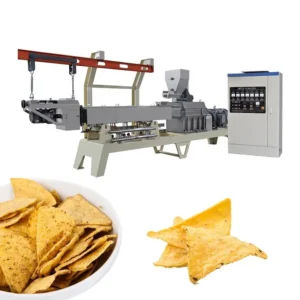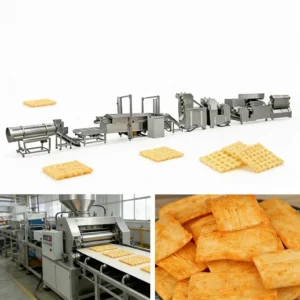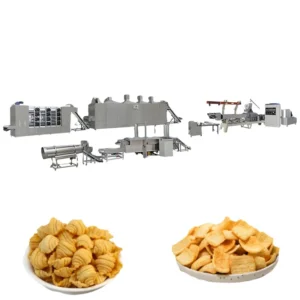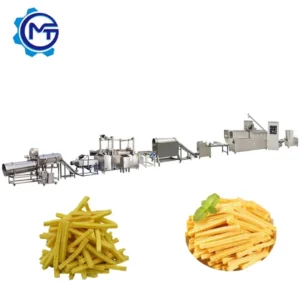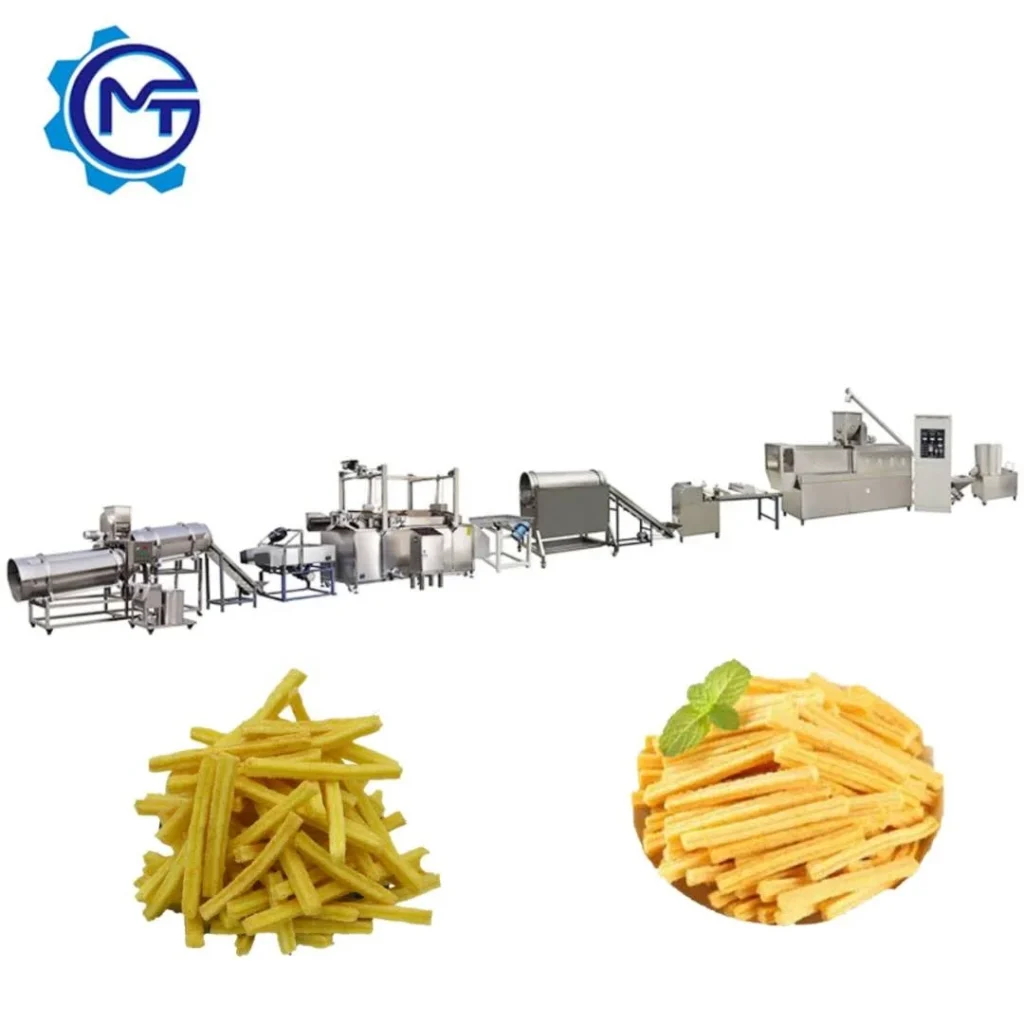
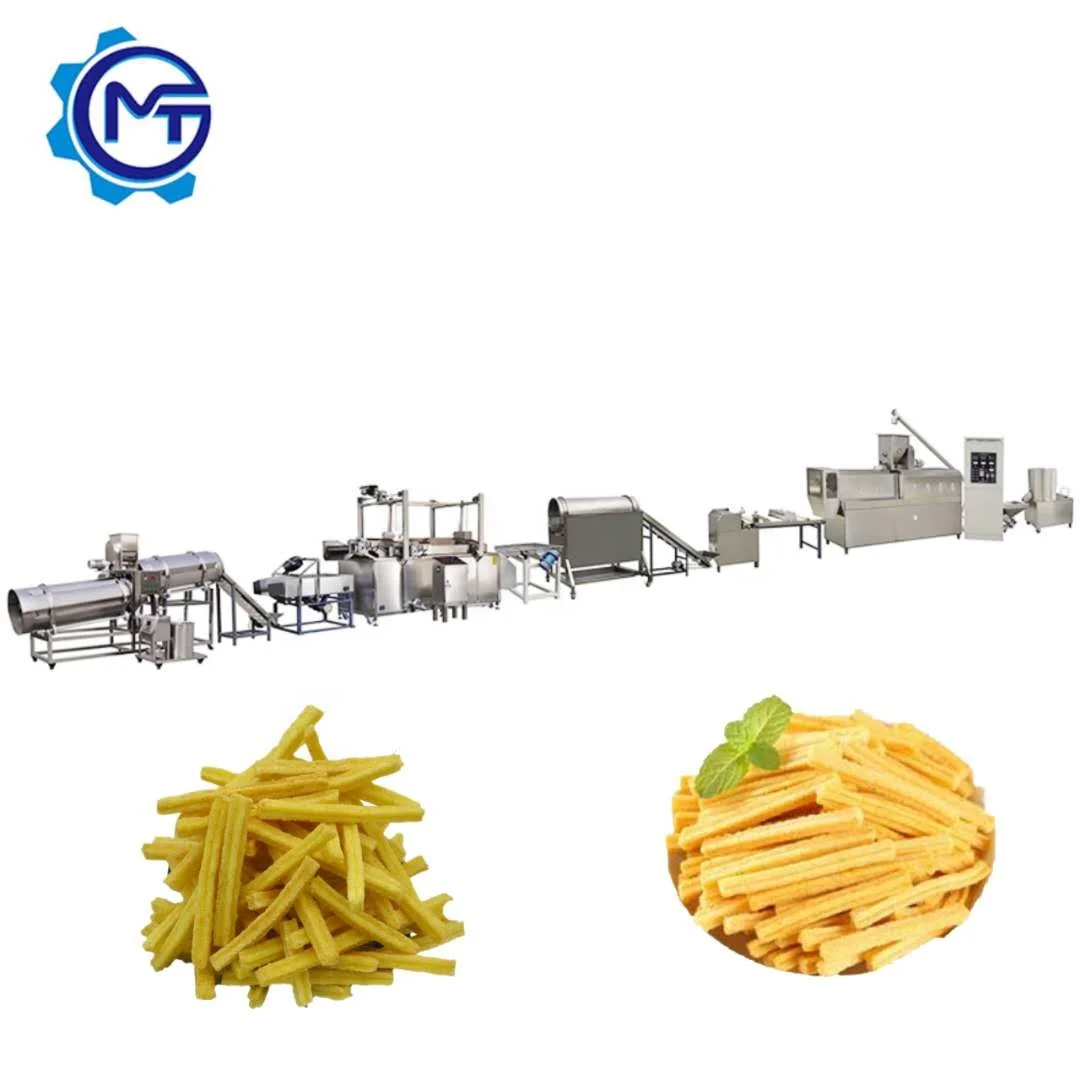
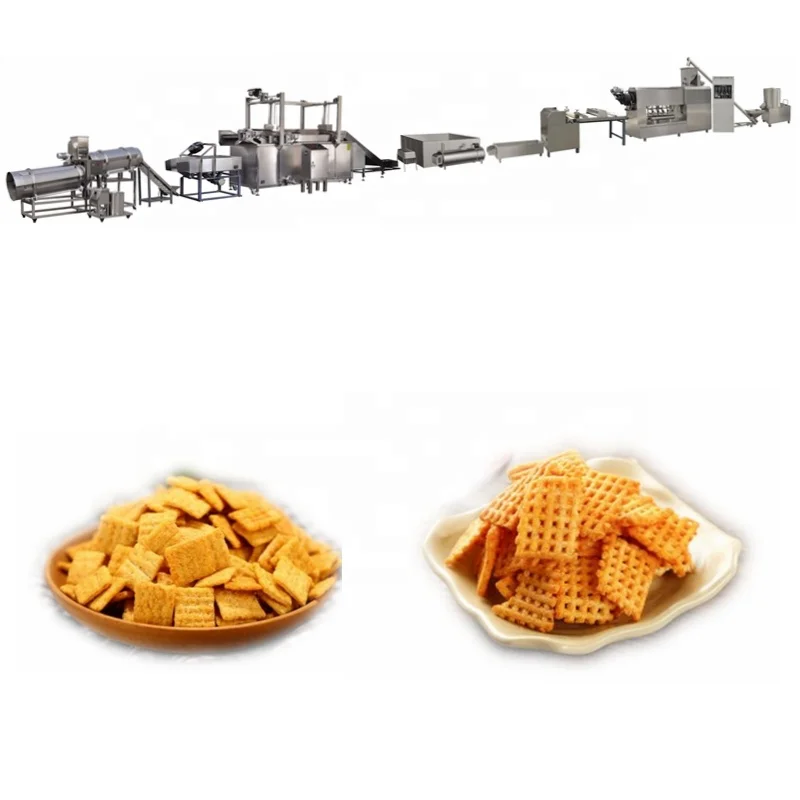
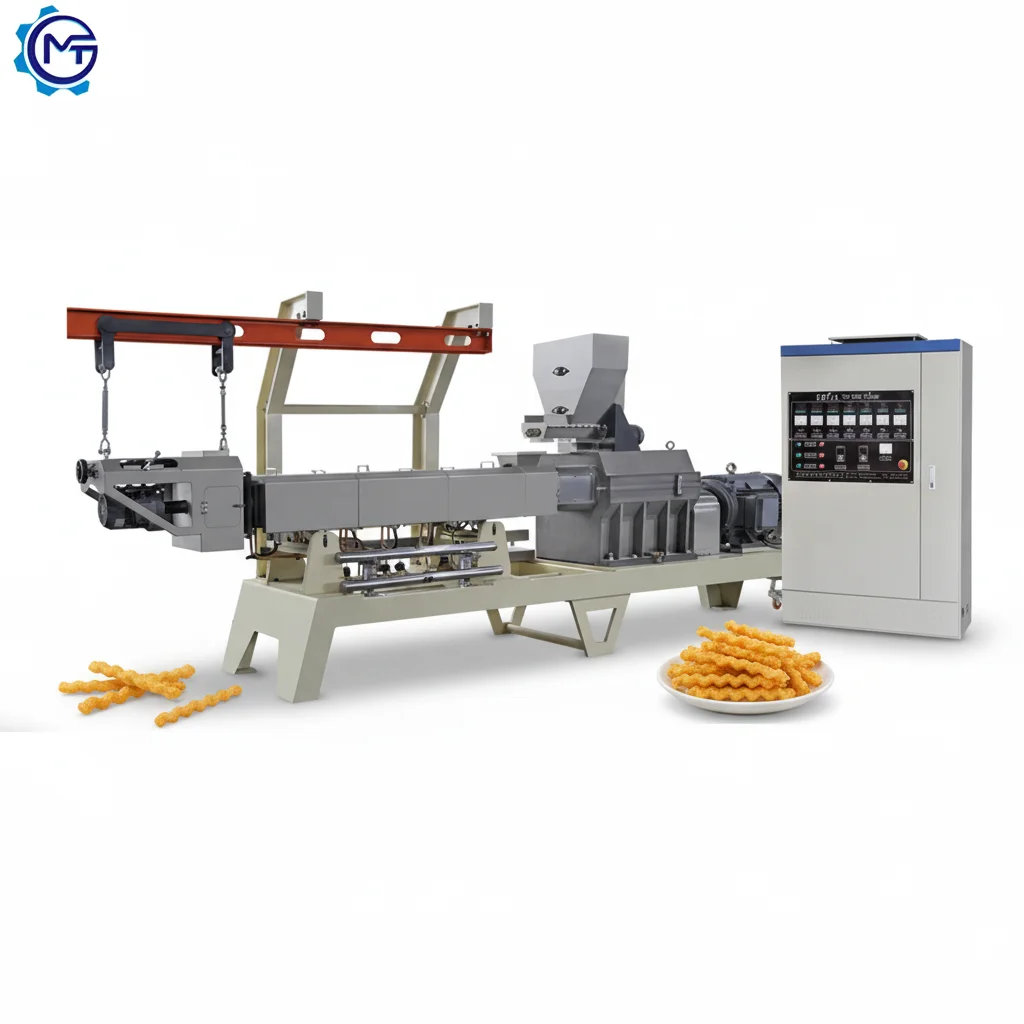


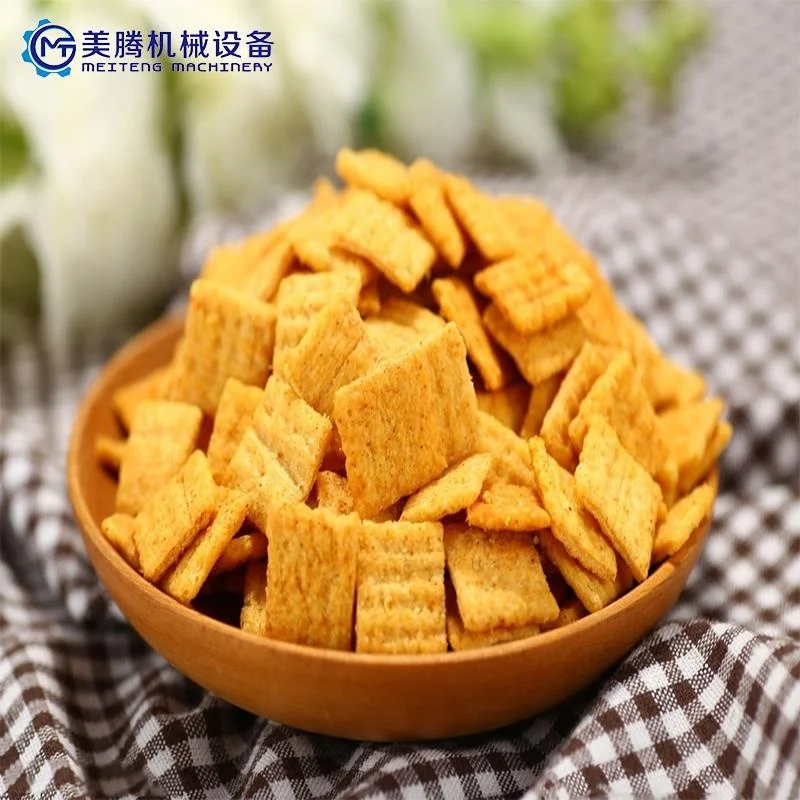
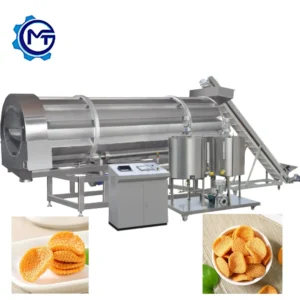
MT100/MT120 Fried Snack Extrusion Production Line, Single Screw, 50–70 kW, CE Certified — configured as a complete turnkey project for fried rice crackers and millet rice crust.
- Designed under the turnkey line projects approach, every station from mixing through extrusion, cutting, frying and flavoring is throughput-matched under one supplier to eliminate bottlenecks
- High and low pressure screw configuration with die-adjustable shapes covers screw shell, tube, ring and custom formats across wheat flour, corn starch and potato starch raw materials
- Trial runs performed on customer raw material in the in-house testing workshop before shipment, with line layout and capacity calculation documentation provided for full project verification
Description
Turnkey integration — every station from mixing to flavoring is throughput-matched under one supplier, preventing the fryer bottleneck that plagues multi-vendor fried snack lines.
Technical Specifications
| Parameter | Value |
|---|---|
| Product Type | Single Screw Extrusion Production Line for Fried Snacks & Rice Crackers |
| Model | MT100/MT120 |
| Screw Type | Single screw with high and low pressure configuration |
| Output Capacity | 120 kg/h (basis to be confirmed — raw material and moisture content not stated in source) |
| Rated Power | 50–70 kW (electricity); 50–60 kW (gas or diesel) |
| Voltage & Frequency | Three phases 380V/50Hz, Single phase 220V/50Hz (customizable to local supply) |
| Energy Options | Electricity, Gas, Diesel, Steam |
| Overall Dimensions (L×W×H) | 12,000–26,000 × 1,200 × 2,200 mm |
| Contact Material | Food grade stainless steel 201/304 |
| Control System | Standard electrical parts with Delixi or Delta inverter |
| Motor | Siemens (made in China) or equivalent China top brand |
| Line Sequence | Mixer → Screw Conveyor → Single Screw Extruder → Pulling & Cutting → Automatic Fryer → Flavoring Line → Cooling |
| Product Shapes | Screw shell, round tube, square tube, ring, cartoon shapes via die adjustment |
| Raw Materials | Wheat flour, corn starch, potato starch |
| Standards | CE, ISO 9001 |
Application Suitability
| Application | Material or Output |
|---|---|
| Fried rice cracker production | Wheat flour and starch blends, secondary-puffed through frying |
| Salad bar millet rice crust | Millet and corn starch mixes requiring controlled expansion in hot oil |
| Golgappa / pani puri shells | Thin-walled hollow rounds from wheat and semolina doughs |
| Shaped extruded snack pellets | Corn starch or potato starch for screw shell, tube, and ring formats |
What "120 kg/h" Means When Stations Are Not Matched Across the Line
A fried snack extrusion production line turnkey only holds its rated capacity when every downstream station — cutting, frying, flavoring — is sized to absorb the extruder’s actual throughput on your specific raw material.
I have watched a fried snack line in Mexico shut down every twenty minutes because the automatic fryer basket cycle was slower than the extruder discharge rate. Puffed pellets piled up on the conveyor, cooled below the threshold where frying could expand them properly, and the operator ended up feeding the fryer by hand. The extruder was rated correctly. The fryer was not. Nobody on the project had calculated the transfer rate between those two stations before the equipment left the factory [NEED_CITE: throughput matching between extrusion and frying stages]. When you source a fried snack extrusion production line turnkey from multiple vendors, each supplier quotes their own machine at its best-case output, and the gaps between them become your problem on the shop floor.
How Station Throughput Is Calculated Before the Line Ships
A fried snack extrusion production line turnkey involves more than connecting machines in sequence. Each station has its own cycle time: the extruder discharges a continuous strand, the puller-and-cutter slices it at a fixed interval, the fryer runs a basket immersion cycle measured in seconds, and the flavoring drum rotates at a speed tied to seasoning adhesion. We calculate the transfer rate between every pair of stations using the buyer’s raw material density and moisture content, then size each piece of equipment so that no station waits on the one before it.
Screw Configuration and What It Controls in Fried Snack Pellets
The single screw extruder on this line uses a high and low pressure screw arrangement. The low pressure section feeds and compresses the dough gently, while the high pressure zone generates the shear and temperature needed to gelatinize starch before the die. By adjusting which screw elements sit in each zone, we change how much expansion happens at the die versus how much is left for the fryer to finish. Wheat flour and potato starch behave differently under shear — wheat develops gluten networks that resist expansion, while potato starch gelatinizes at lower temperatures and puffs aggressively. The screw build is matched to whichever material the buyer is running, not copied from a generic template [NEED_CITE: single screw extrusion behavior on starch versus flour doughs].
Why Die Geometry Matters for Frying Performance
The die on this extruder determines wall thickness, internal void structure, and surface area — all of which govern how oil penetrates the pellet during frying. A thick-walled tube takes longer to expand fully in hot oil and absorbs more fat by weight than a thin-walled ring of the same outer diameter. Every shape available on this line — screw shell, round tube, square tube, ring, cartoon formats — is cut by a different die insert, and each insert is selected after we run a trial on the buyer’s raw material. The trial confirms whether the pellet expands to the target density in the fryer without collapsing or developing a hard center.
Reading the Spec Sheet: What the Numbers Mean for Your Floor
The overall length range of 12,000 to 26,000 mm reflects how many stations you include and whether the line runs straight or folds back. A straight layout needs a longer hall but simplifies material flow; a folded layout fits a shorter building but requires careful conveyor routing to prevent pellet bridging at the turn. The rated power split between electricity and gas or diesel tells you the fryer energy source: electric fryers hold tighter temperature bands, while gas-fired fryers recover heat faster after a basket load drops the oil temperature. The Delixi or Delta inverter on the main drives gives operators variable speed control on the extruder screw and the puller, so cutting frequency can be dialed in to match extrusion rate without stopping the line. Three-phase 380V/50Hz is standard, but the control panel is built to the buyer’s confirmed local voltage and frequency — running a 60Hz motor on a 50Hz supply reduces screw speed and shifts the entire throughput calculation downstream.
What Happens When the Fryer Is Undersized
An undersized fryer forces the operator to slow the extruder to prevent pellet buildup, and the line runs below its design capacity for the entire shift. Oil temperature drops with every overloaded basket, producing pellets that absorb excess fat and emerge soggy rather than crisp. Over time, the oil degrades faster because it spends more cycles below target temperature, increasing operating costs and shortening filter life [NEED_CITE: fry oil degradation rates under variable load conditions]. The problem is not visible in the quotation stage because each machine vendor tested their unit independently.
Why This Line Is Sourced as One Project
The extruder, fryer, and flavoring drum on this line are specified together, which means the transfer conveyor between cutting and frying is designed to hold the exact number of pellets the fryer basket accepts per cycle. The drying stage between extrusion and frying is sized so that pellet surface moisture reaches the level the fryer needs for consistent expansion. We run trial batches on the buyer’s actual raw material in our testing workshop, adjusting screw elements and die selection until the pellet fries out to the target density and texture. The line ships only after those trials confirm throughput at every station. Our engineers stay on site through installation and commissioning, verifying that the voltage and control language match the local electrical crew’s expectations. Spare screws, dies, and cutter blades ship with the line so the first replacement cycle does not halt production while waiting for parts.
Documentation & Verification
- Line layout drawing with station-by-station throughput calculation for your raw material
- Trial run report on your flour and starch blend from our in-house testing workshop
- Screw and die configuration record matched to your target pellet shape and frying density
- Electrical schematic with confirmed voltage, frequency, and panel labeling language
- Factory acceptance test record showing all stations running in sequence before packing
Installation, Commissioning & Support
- Foundation plan covering the 12,000–26,000 mm line footprint with anchor bolt positions for the extruder and fryer
- Dedicated electrical circuit sized for the 50–70 kW peak draw with the confirmed local voltage and frequency
- Extruder barrel heating zones and fryer thermostat calibrated on site during commissioning to match your product spec
- Delixi or Delta inverter parameters set and labeled in the operator’s language before training begins
- First spare screw element set, die inserts, and cutter blades included in the shipment for the initial maintenance cycle
What to Include in Your Inquiry
To size a fried snack extrusion production line turnkey for your facility, we need your raw material recipe with moisture percentages, the product shape and target fried density, and your daily output goal in kilograms of finished product. Share your building length and ceiling height so we can determine whether a straight or folded layout fits. Confirm your site voltage, frequency, and the language your operators read on a control panel.
Frequently Asked Questions
Q: How is line throughput verified across extrusion, frying, and flavoring stations as one integrated project?
A: We calculate the transfer rate between each pair of stations using your raw material density and the cycle time of the downstream machine. Trial runs in our workshop confirm that the extruder discharge rate, fryer basket cycle, and flavoring drum speed all balance without pellet accumulation or idle time at any point.
Q: What raw material trial runs are performed before shipment?
A: We run your exact flour and starch blend through the single screw extruder with the proposed screw configuration and die. The trial pellets are fried and flavoring-coated on the same line to verify expansion, texture, oil absorption, and final product density against your specification.
Q: How are voltage, frequency, and control language confirmed for the destination country?
A: Before production begins, we exchange electrical schematics with your site engineer to confirm the supply voltage, phase arrangement, and frequency. Panel labels and inverter menus are set to your preferred language so operators can read all controls on day one of commissioning.
Q: What is the phased installation and commissioning schedule for a complete fried snack line?
A: Equipment is positioned on the prepared foundation, then electrical and energy connections are made station by station starting from the mixer. Once the extruder runs, the cutting and frying stages are brought online sequentially, and final throughput tuning takes place with your raw material running continuously.
Q: How are spare wear parts such as screws and dies supplied for the first replacement cycle?
A: A wear parts list covering screw elements, die inserts, and cutter blades ships with the line. The first replacement set is included in the initial shipment so you are not waiting for international freight when routine maintenance is due.
Related products
-
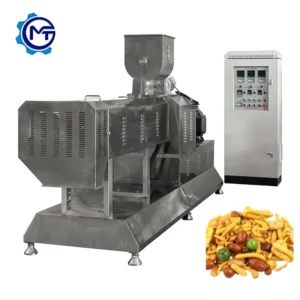
New Automatic Traditional Fried Nimko Making Machine High Productivity Large Capacity Stainless Steel Production Line
¥8,575.00 Select options This product has multiple variants. The options may be chosen on the product page -
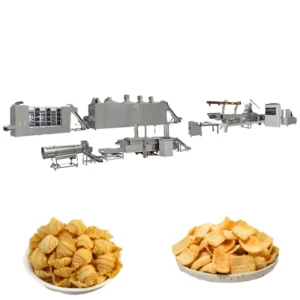
Hot Selling Puffed Ball Snacks Food Processing Line Fried Snacks Processing Line Corn Puff Snacks Machine
¥100.00 Select options This product has multiple variants. The options may be chosen on the product page -
Orion TURTLE CHIPS Snack Puffing Machinery Internet Celebrity Puffed Four-layer Crispy Production Line
¥65.00 Select options This product has multiple variants. The options may be chosen on the product page -
Automatic Rice Crust Chips Making Machine Bugles Pizza Rolls Fried Snack Food Processing Line Machine
¥8,570.00 Select options This product has multiple variants. The options may be chosen on the product page