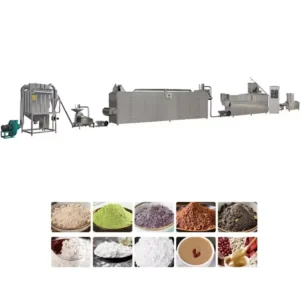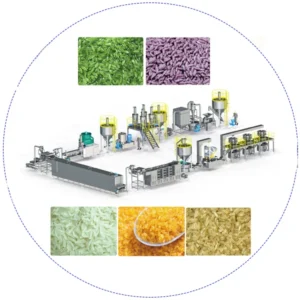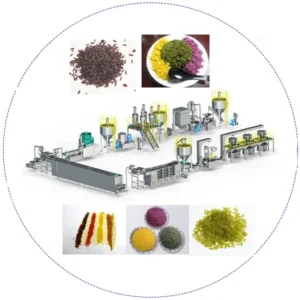


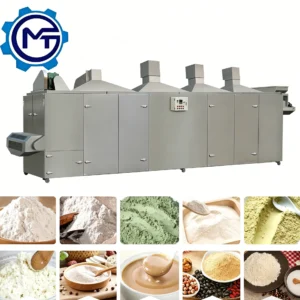
Nutrition Powder Processing Line, Food-Grade 304 SS, Touch Control Panel, Electric/Gas/Steam Heat — designed for infant food and grain-based powder production from rice, corn, and beans.
Every station from mixing through extrusion, drying, milling, and packing is throughput-matched against your specific grain formulation and moisture profile, with screw and die configuration specified to target powder density. Line layout, utility planning, and voltage confirmation are documented before production begins.
Supported by in-house trial runs on your raw material before shipment, complete electrical schematics for your market, and on-site installation with operator training.
Description
Throughput-Matched Line Design — Every station on this nutrition powder processing line is sized against the extruder’s actual output on your grain blend, so rated capacity holds beyond the factory test.
Technical Specifications
| Parameter | Value |
|---|---|
| Product Type | Nutrition Powder Processing Line |
| Output Capacity | 200–500 kg/h (basis not stated in source — confirm raw material, moisture content, and formulation) |
| Construction Material | Food-Grade 304 Stainless Steel |
| Control System | Touch Control Panel with Digital System |
| Heat Source Options | Electric / Gas / Steam |
| Automation Level | Full Automatic |
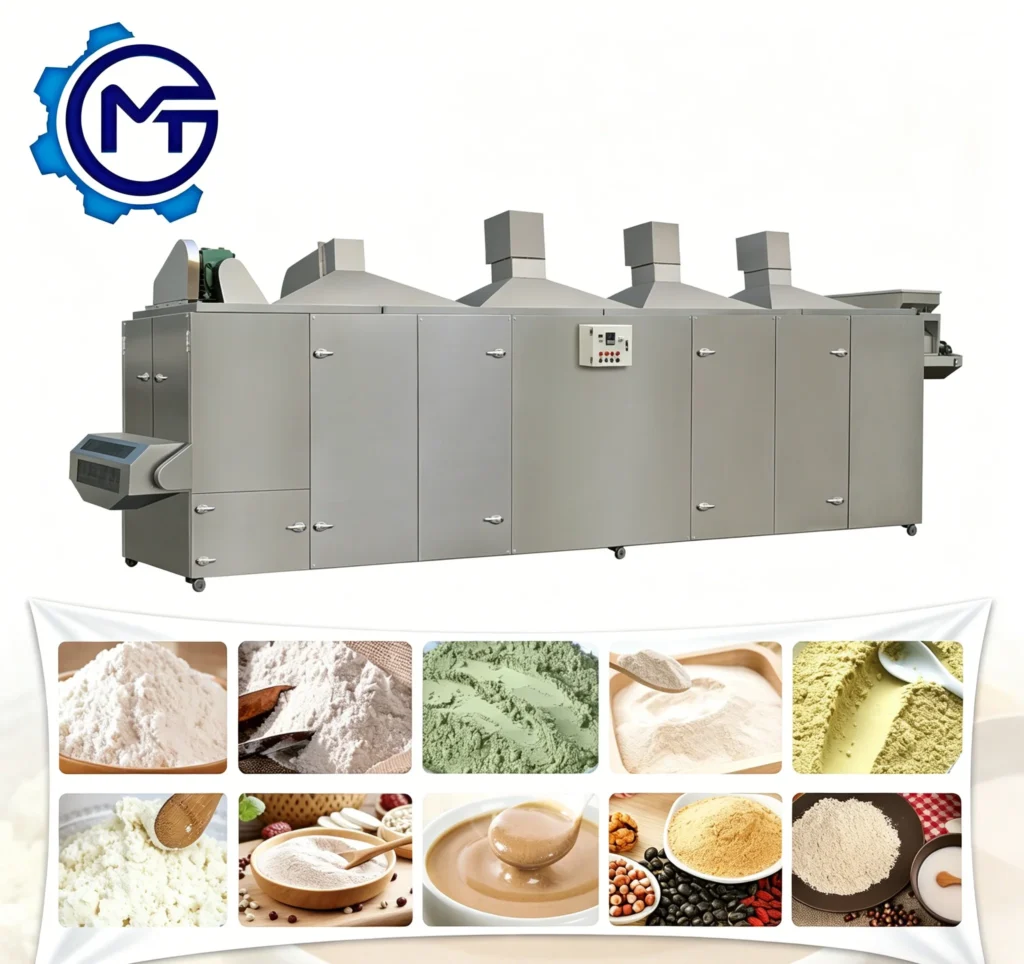
| Key Line Stations | Mixers, Extruder, Baking Ovens, Milling, Packing |
| Warranty | 1 Year |
| After-Sales Service | Overseas Engineer Service Available |
Application Suitability
| Application | Material or Output |
|---|---|
| Infant nutrition powder production | Rice, corn, and blended grain formulations with added whey protein and micronutrients |
| Fortified nutritional porridge | Milled cereal bases enriched with vitamins and mineral premixes |
| Grain-based food powder processing | Rice, corn, beans, and various food-grade grains converted into instant powder |
| Institutional nutrition programme supply | Blended cereal and protein powder for international feeding initiatives |
Why "Rated Capacity" Means Nothing Without Your Raw Material
A nutrition powder processing line turnkey is only as reliable as the trial run that proves it on your exact formulation.
Every grain blend behaves differently under heat and shear. A line that holds steady output on standard rice flour can lose expansion and density control the moment whey protein isolate or a mineral premix enters the barrel. I spent four days on-site in Saudi Arabia chasing density targets because the trial had run on clean rice flour while the customer’s production formula carried a different fat and protein profile entirely [NEED_CITE: raw material variability in extrusion processing]. That gap between quoted capacity and real output is where most line projects stall.
Matching Every Station to Your Grain Formulation
When a nutrition powder processing line turnkey is assembled from separate vendors, the extruder may outpace the dryer, or the milling station may choke at peak throughput. This line is configured as a single integrated system where mixer batch size, extruder screw speed, oven belt width, and milling capacity are calculated together. The touch control panel manages recipe parameters across the full sequence, keeping batch-to-batch density consistent whether you are running straight rice or a multi-grain blend with added protein.
Heat Source Selection and Factory Utility Planning
The choice between electric, gas, and steam heating is not just a line-item cost decision — it determines how your baking ovens respond to load changes during continuous production [NEED_CITE: industrial heat source selection for food processing]. Facilities with reliable boiler infrastructure often achieve more stable oven temperature profiles with steam, while electric heating offers finer zone control for sensitive infant formula drying. This line supports all three options so the configuration fits the utility reality of your site, not a catalogue default.
Reading the Specs That Actually Matter for Powder Quality
Food-grade 304 stainless steel across all product-contact surfaces prevents iron contamination that would compromise infant nutrition powder shelf stability. The digital touch control panel stores recipe profiles — barrel temperature zones, screw speed, and feed rate — so operators can switch between a rice-only formulation and a fortified blend without manual recalibration each shift. Output capacity spans a range that must be confirmed against your specific grain moisture and protein content, because higher protein loads typically reduce expansion ratio and require adjusted die configuration. Oven residence time and belt speed must be matched to that confirmed throughput, not to a generic line spec.
The Hidden Cost of Skipping the Trial Run
When a line ships without a trial on the buyer’s actual raw material, commissioning becomes product development. Engineers adjust screw configuration, die geometry, and moisture targets on-site while production deadlines slip. I have watched lines sit idle for days because the screw profile that worked on the supplier’s test grain produced the wrong particle density on the customer’s bean-and-cereal blend [NEED_CITE: extrusion screw configuration and material behaviour]. Spare wear parts ordered after the fact add weeks of downtime before the line reaches its intended output.
Why This Line Holds Up Beyond the Brochure
Every station from batching through packing is supplied by one source, so throughput calculations are not a negotiation between separate vendors. Screw configuration and die design are specified against the grain formulation you send us, not copied from a generic build. The in-house testing workshop runs your actual raw material before the line ships, catching density and expansion issues before they become on-site emergencies. Twin-screw expertise across infant food, cereal, and protein applications means the process parameters are drawn from production experience, not theoretical models. Pre-sales engineering covers layout, utility planning, and phased commissioning so the installation schedule matches your construction timeline.
Documentation & Verification
- Line layout and capacity calculation confirming throughput match across mixer, extruder, oven, and milling
- Trial run report on your grain formulation showing density, expansion, and moisture data
- Screw and die configuration record matched to your specific powder target
- Electrical schematic with voltage and frequency confirmation for your market
- Operation and maintenance manual with wear parts schedule
- CE declaration of conformity and ISO certificate documentation
Installation, Commissioning & Support
- Foundation plan accounts for extruder vibration isolation and oven thermal expansion clearances
- Power distribution sized for full line load with dedicated circuits for the touch control panel
- Equipment ships in modular sections for container loading and on-site reassembly
- First-run commissioning includes recipe calibration on your grain blend with density verification
- Operator training covers digital recipe management, screw changeover, and daily sanitation procedures
- Wear parts list with reorder intervals for screws, dies, and oven belt components
What We Need to Configure Your Line
To build an accurate layout and capacity proposal, share your target powder formulation including grain types, protein additions, and micronutrient premix ratios. Confirm your available heat source and local voltage and frequency standards. Provide workshop dimensions so we can plan station spacing and utility routing. If you can ship a sample of your production raw material, we will run it in the testing workshop and include the results with your quotation.
Frequently Asked Questions
Q: How is line capacity verified against my specific grain blend and moisture content?
A: We run your raw material in our in-house testing workshop before shipment. The trial records expansion ratio, powder density, and moisture at each station. Those results confirm whether the quoted 200–500 kg/h range holds on your formulation, and any screw or die adjustments are completed before the line leaves the factory.
Q: What utility planning is needed for steam, electric, and gas heat source options?
A: Each option has different infrastructure demands. Steam requires a boiler with sufficient capacity for continuous oven load. Electric heating needs a dedicated high-amperage circuit and stable supply. Gas requires compliant piping and ventilation. We provide utility requirement documents matched to your chosen heat source during the layout phase.
Q: How do you match throughput between the extruder, dryer, and milling stations?
A: Every station is sized during the line design phase using your confirmed formulation data. The extruder output sets the baseline, and oven belt speed, drying residence time, and milling capacity are calculated to that rate. The digital control panel synchronises feed rates across stations to prevent bottlenecks.
Q: What does the phased installation and commissioning schedule look like?
A: Installation follows a sequence from foundation and utility rough-in through station placement and electrical connection. Commissioning begins with individual station tests, then progresses to full-line runs with your raw material. The schedule is planned against your facility readiness to avoid idle equipment on-site.
Q: Is operator training included, and how is ongoing maintenance supported?
A: Training covers the touch control panel, recipe management, screw and die changeover, and sanitation procedures. A wear parts list with replacement intervals is included in the documentation. Overseas engineer service is available for scheduled maintenance visits and production support during your first months of operation.
Related products
-

Industrial Automatic 500kg/h Baby Cereal Nutrition Powder Extruder Manufacturing Process Line
¥8,238.27 Add to cart -
CE Approved MT Brand Organic Baby Rice Nutrition Powder Extrusion Production Line with 500kg/h Capacity and Automatic Grade
¥9,500.00 Add to cart -

High Quality Automatic PLC Controlled 500kg/h Twin Screw Extruder Machine for Baby Rice Nutrition Powder
¥8,238.27 Add to cart -

Hygienic Stainless Steel Infant Rice Powder Processing Line Automatic 500kg/h Capacity PLC Controlled
¥9,500.00 Add to cart