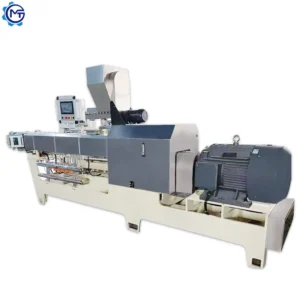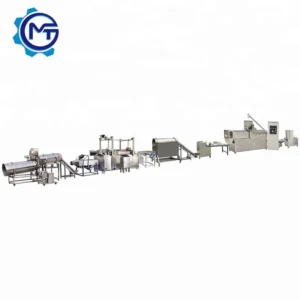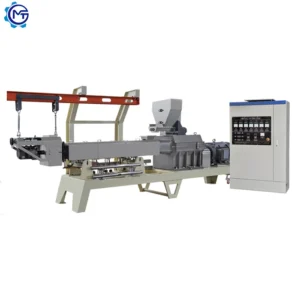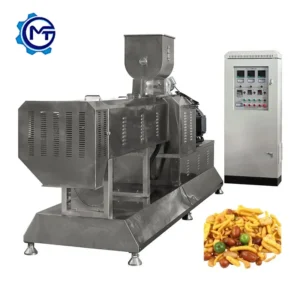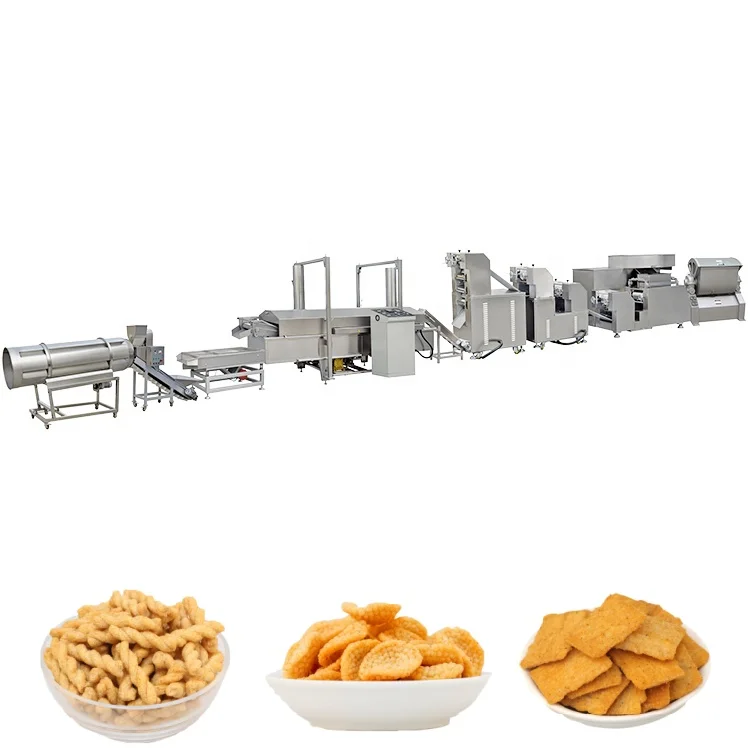
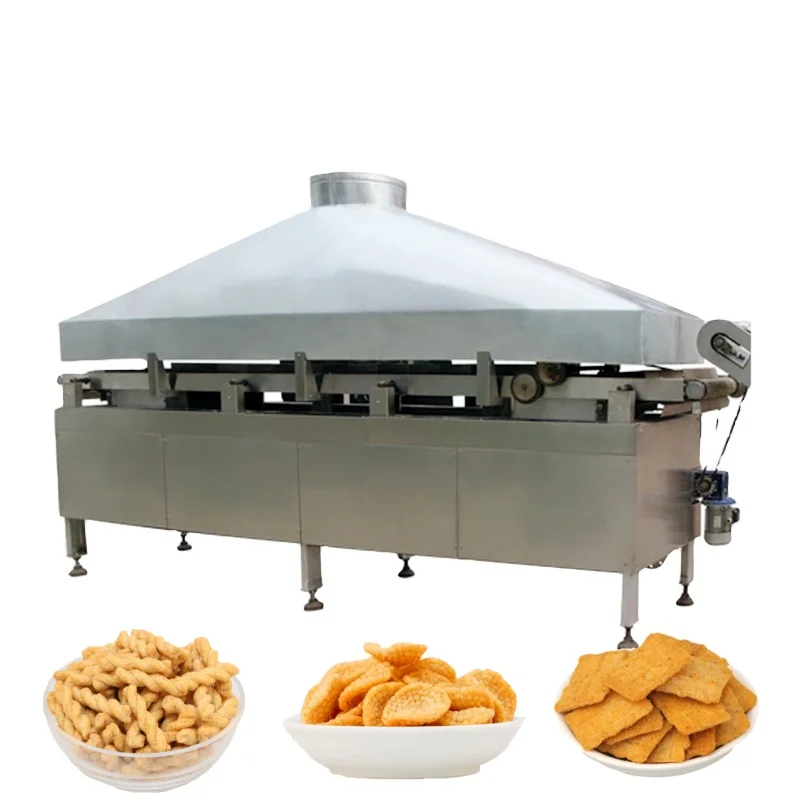
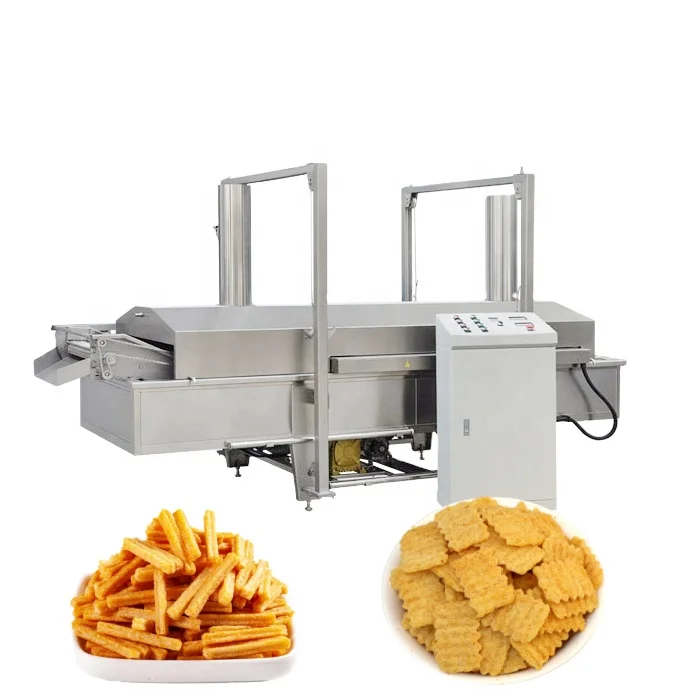
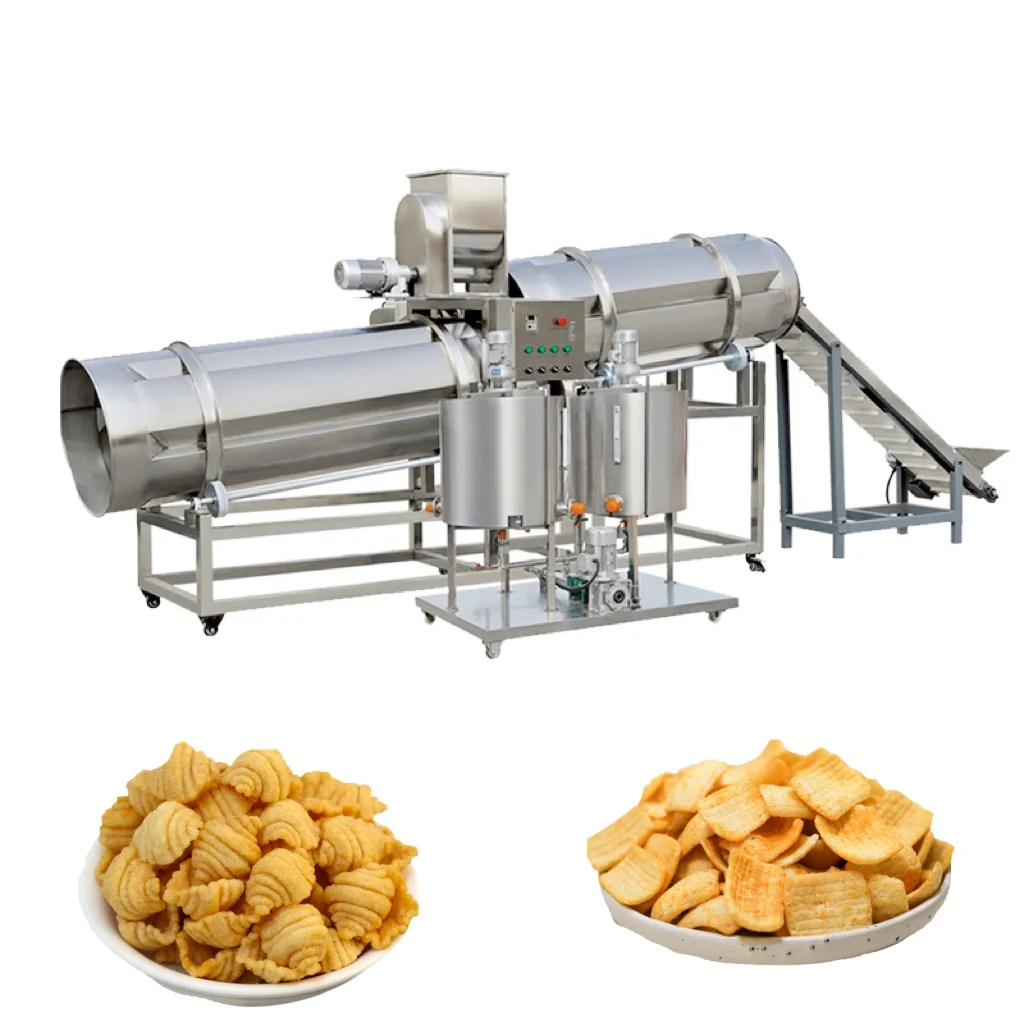
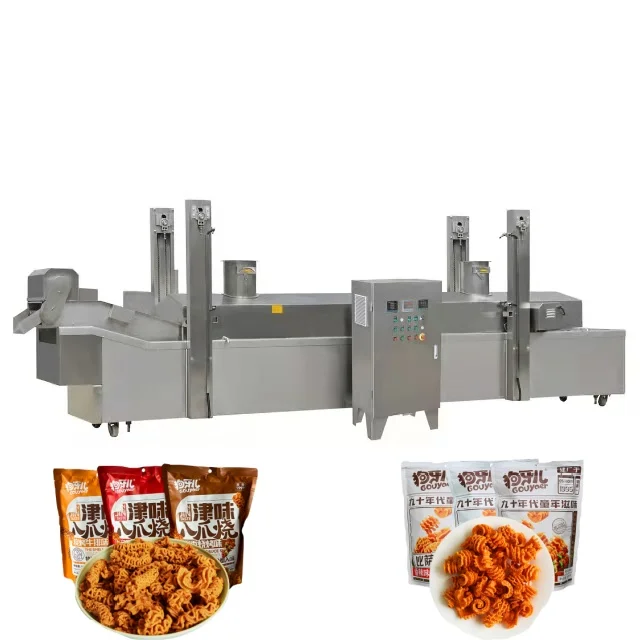
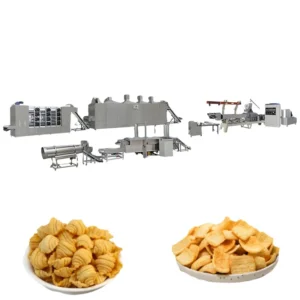
MT100/MT120 Electric Heating Fried Puffed Food Production Line, Single Screw Extruder, 50-70 kW — engineered as a complete turnkey project from batching through frying to cooling. Each station is throughput-matched under one supplier, with screw and die configuration specified to your starch formulation and target shape. Voltage and frequency confirmed before production to prevent on-site commissioning delays.
- In-house trial runs on customer raw material before shipment
- Line layout and capacity calculation matched to your product
- On-site installation, commissioning, and operator training included
Description
Complete Line Integration — Every station from mixing to cooling is throughput-matched under one supplier, preventing the bottlenecks that arise when equipment is assembled from separate vendors.
Technical Specifications
| Parameter | Value |
|---|---|
| Model | MT100/MT120 |
| Product Type | Electric Heating Fried Puffed Food Production Line |
| Extruder Type | Single screw extruder |
| Capacity | 120 kg/h (basis not stated in source — confirm raw material formulation and moisture content) |
| Installed Power | 50-70 kW (electric heating); 50-60 kW (gas or diesel heating alternative) |
| Voltage & Frequency | Three phases 380V/50Hz, Single phase 220V/50Hz (customizable to local voltage) |
| Overall Dimensions (L×W×H) | 12000-26000 × 1200 × 2200 mm |
| Contact Material | Food grade stainless steel 201/304 |
| Energy Options | Electricity / Gas / Diesel / Steam |
| Line Stations | Mixer → Screw conveyor → Single screw extruder → Pulling and cutting machine → Automatic fryer → Automatic flavoring line → Cooling |
| Product Shapes | Screw shell, round tube, square tube, ring, cartoon shapes (adjustable via die change) |
| Raw Materials | Wheat flour, corn starch, potato starch |
| Standards | CE, ISO 9001 |
Application Suitability
| Application | Material or Output |
|---|---|
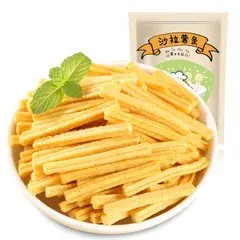
| Fried salad sticks and extruded snack sticks | Wheat flour and starch blends shaped through single screw extrusion before frying |
| Golgappa / pani puri shells | Starch-based dough formed into thin-walled hollow shapes for secondary puffing in hot oil |
| Screw shell and tube-shaped puffed snacks | Corn starch or potato starch processed through adjustable die configurations |
| Cartoon-shaped fried snacks for children’s market | Die-cut shapes from wheat flour and corn starch blends, fried for crisp texture |
Why the Extruder-to-Fryer Gap Costs You Weeks
When a fried puffed food production line turnkey is quoted as a single capacity number, what often gets left out is whether every downstream station can actually keep up with the extruder’s real output on your specific starch formulation. A line is only as fast as its slowest matched station, and the fryer is usually where the mismatch shows first.
I have watched a Middle East snack producer lose two full weeks of commissioning because their flour protein content ran lower than the lab sample they originally sent. The extruder barrel temperature profile had to be reworked on site, throughput dropped well below the nameplate figure, and the fryer sat idle for stretches because the cutting machine upstream could not feed it steadily. That is the kind of delay that does not appear in a quotation spreadsheet [NEED_CITE: common commissioning delays in starch-based snack line installations].
Single Screw Configuration and Die Flexibility
The MT100/MT120 uses a single screw extruder rather than a twin-screw setup, which makes it suited to starch-dominant formulations where high-shear mixing inside the barrel is less critical. Die changes let you move between screw shells, round and square tubes, rings, and cartoon shapes without replacing the screw itself. For a fried puffed food production line turnkey, this means one extrusion station covers multiple SKUs on the same shift.
Matching Fryer Residence Time to Extruder Output
The pulling and cutting machine between the extruder and the automatic fryer controls piece length and feed rate into the oil bath. If the cutter cycles faster than the fryer belt can carry product through at the correct residence time, you get under-fried pieces reaching the flavoring drum. This line calculates fryer belt speed and oil volume against the upstream cutting rate so that product exits the fryer at consistent moisture and color [NEED_CITE: fryer residence time and moisture reduction targets for starch-based puffed snacks].
Reading the Power and Energy Specification
The 50-70 kW electric heating rating covers the full line with electric fryer and dryer modules. Where gas, diesel, or steam is available and operating cost per therm is lower, the alternative 50-60 kW rating applies to the remaining electric loads while thermal energy shifts to the chosen fuel. Voltage confirmation — three-phase 380V/50Hz or single-phase 220/50Hz, or the specific frequency your country requires — must happen before the electrical panel is wired. Getting this wrong means rewiring on site or shipping a transformer you did not budget for [NEED_CITE: voltage and frequency standards by export market].
The 12000-26000 mm overall length reflects the number of stations and the conveyor runs between them. The lower end typically applies to lines with a compact cooling conveyor, while the upper end includes extended flavoring and cooling sections. Ceiling height of at least 2200 mm is needed at the tallest point, usually the fryer exhaust hood or the screw conveyor inlet to the extruder.
What Happens When Stations Are Sourced Separately
Buying the extruder from one vendor and the fryer from another often means nobody owns the throughput calculation between them. The extruder supplier rates their machine on a generic wheat flour formulation, the fryer supplier sizes their belt for a different product density, and the cutting machine in between runs at whatever speed its default inverter setting allows. The result is a line that technically works but never reaches the output the buyer planned a business case around.
Why Procure the Full Line Here
Every station from the mixer through the cooling conveyor is specified under one line configuration, so throughput at each transfer point is calculated before the first machine is built. The screw and die configuration is selected against the buyer’s actual raw material and target product shape, not copied from a generic build. An in-house testing workshop allows trial runs on the buyer’s flour or starch blend before shipment, so barrel temperatures and moisture targets are documented in advance. Voltage, frequency, and control language are confirmed in writing before panel wiring begins. CE and ISO 9001 documentation ships with every line.
Documentation & Verification
- Line layout and capacity calculation matched to your starch formulation and target product shape
- Screw and die configuration record documenting the exact setup for your chosen snack geometry
- Electrical schematic with voltage and frequency confirmed before panel assembly
- Trial run report on your raw material conducted in the testing workshop before dispatch
- CE declaration of conformity and ISO 9001 certificate included in shipment documentation
- Wear parts list covering screws, dies, cutter blades, and fryer mesh belt segments
Installation, Commissioning & Support
- Foundation must support the full 12000-26000 mm line length with level tolerance across all stations
- Dedicated three-phase 380V or single-phase 220V circuit sized to the confirmed 50-70 kW load
- Extruder barrel zones and fryer temperature set points calibrated on site during first production run
- Operator training covers die change procedure, fryer belt speed adjustment, and flavoring drum timing
- Spare screws, dies, and cutter blades shipped with the initial order to cover early replacement cycles
- Routine maintenance schedule provided for fryer oil filtration intervals and conveyor belt tension checks
What We Need to Configure Your Line
Send us the starch or flour blend you plan to run, including protein and moisture content if available, along with the product shapes and finished piece dimensions you are targeting. Confirm your facility voltage, frequency, and the energy source you prefer for the fryer. If you have existing upstream mixers or downstream packing equipment, share the make and throughput so we can match transfer points.
Frequently Asked Questions
Q: How is throughput verified across every station to prevent bottlenecks between the extruder, fryer, and flavoring line?
A: Each station is calculated against the extruder output on your specific raw material. Fryer belt speed, flavoring drum cycle time, and cooling conveyor length are all set so that no station starves or overflows the next. The capacity calculation document shipped with the line shows these transfer rates.
Q: Can a trial run be done on my specific starch blend before shipment?
A: Yes. Send a batch of your wheat flour, corn starch, or potato starch blend to the testing workshop. The trial run produces actual product samples using the screw and die configuration specified for your order, and the results are documented in a report that travels with the line.
Q: How is voltage, frequency, and control language confirmed to match my facility before the line is built?
A: These details are collected during the specification confirmation stage, before panel wiring begins. The electrical schematic shipped with the line reflects the agreed voltage and frequency. Control panel labels and interface language are set to your requirement so operators can read them on day one.
Q: What does the installation and commissioning schedule look like for a complete fried puffed food line?
A: After the line arrives on site, mechanical assembly and conveyor alignment typically take several days depending on line length. Commissioning includes extruder barrel heating checks, fryer temperature calibration, and first production runs with your raw material. Operator training runs in parallel during this period.
Q: How are spare wear parts specified and supplied with the initial shipment?
A: The wear parts list covers screws, dies, cutter blades, and fryer mesh belt segments. Quantities are calculated based on expected service intervals for your product type so that replacements are on hand before the first scheduled changeover.
Related products
-
Fried Flour Corn Bugles Extruded Chips Pellets Doritos Snacks Food Machine Production Line Extruder
¥100.00 Select options This product has multiple variants. The options may be chosen on the product page -
Frying Crispy 3D Corn Bugles Pellets Fried Chips Snacks Food Machine Production Line Bugles Making Extruder
¥100.00 Select options This product has multiple variants. The options may be chosen on the product page -
New Automatic Portable High Productivity Frying Salad Sticks Chips Snacks Food Production Line
¥100.00 Select options This product has multiple variants. The options may be chosen on the product page -

Electric Heating Fried Puffed Food Production Line – Salad Sticks Making Equipment
¥65.00 Select options This product has multiple variants. The options may be chosen on the product page