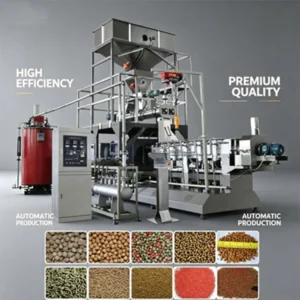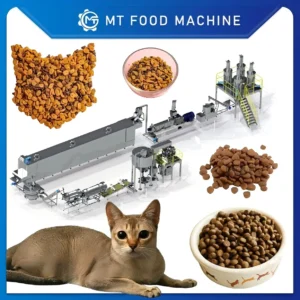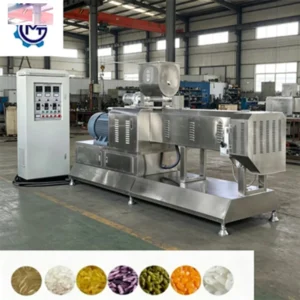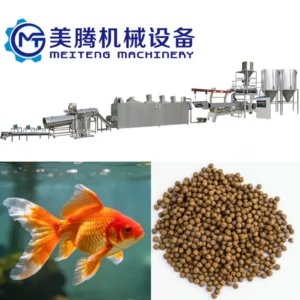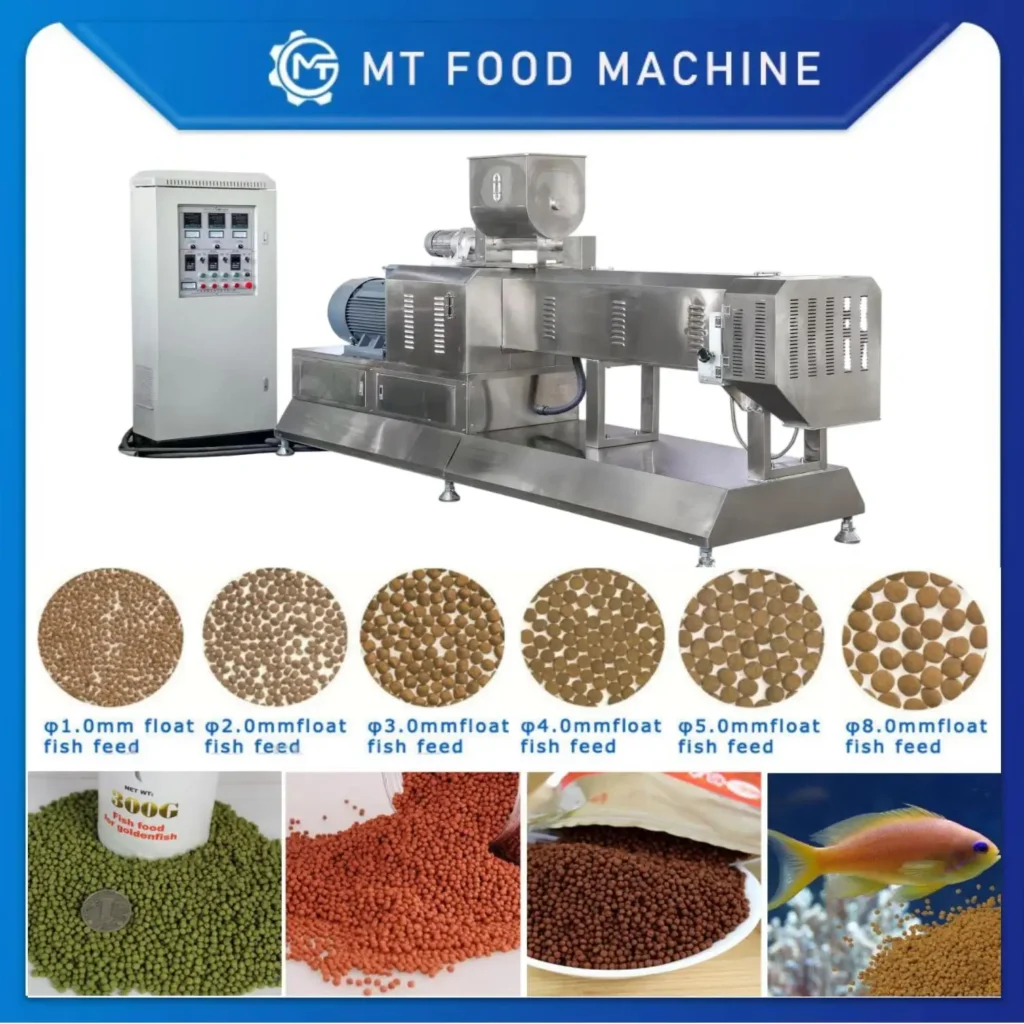
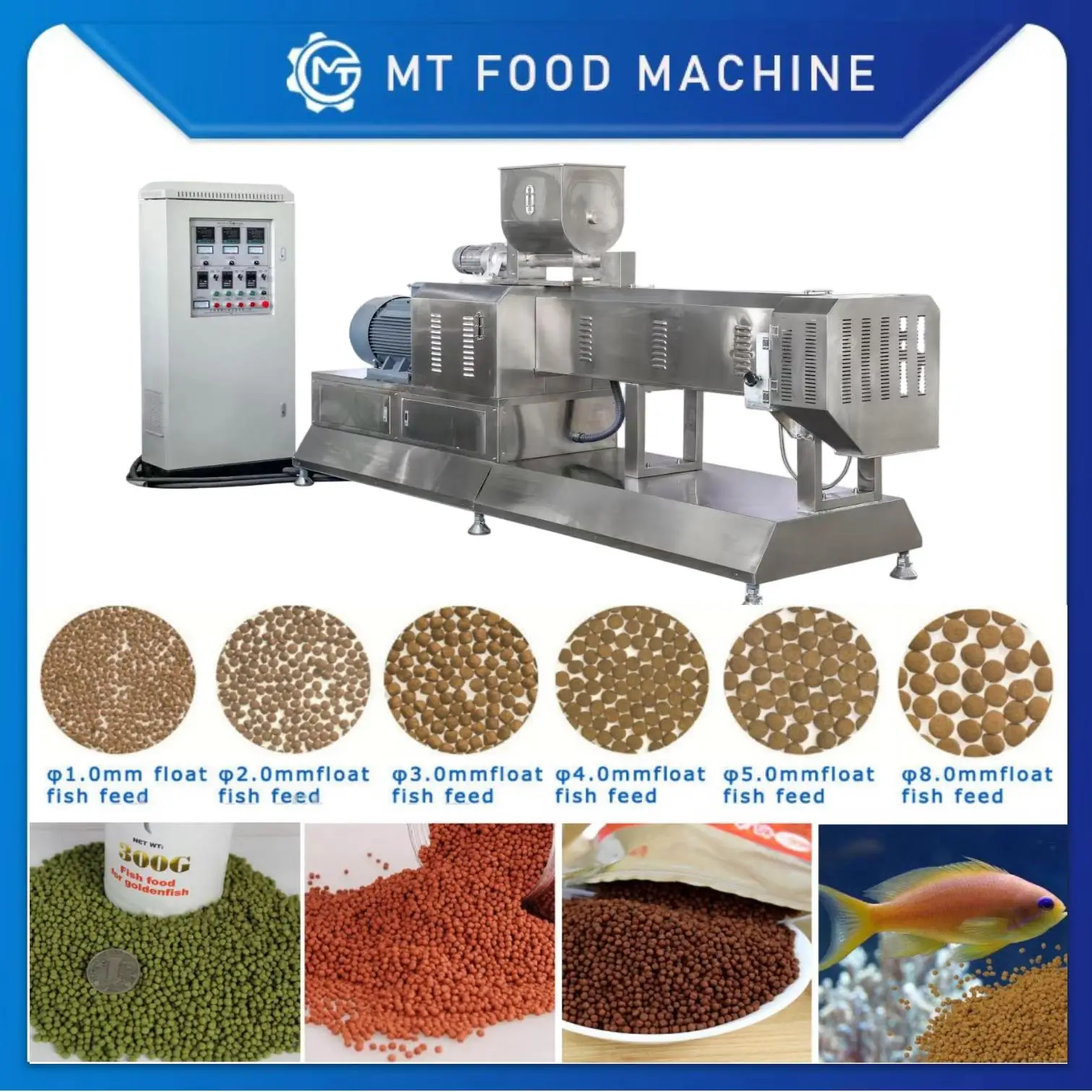

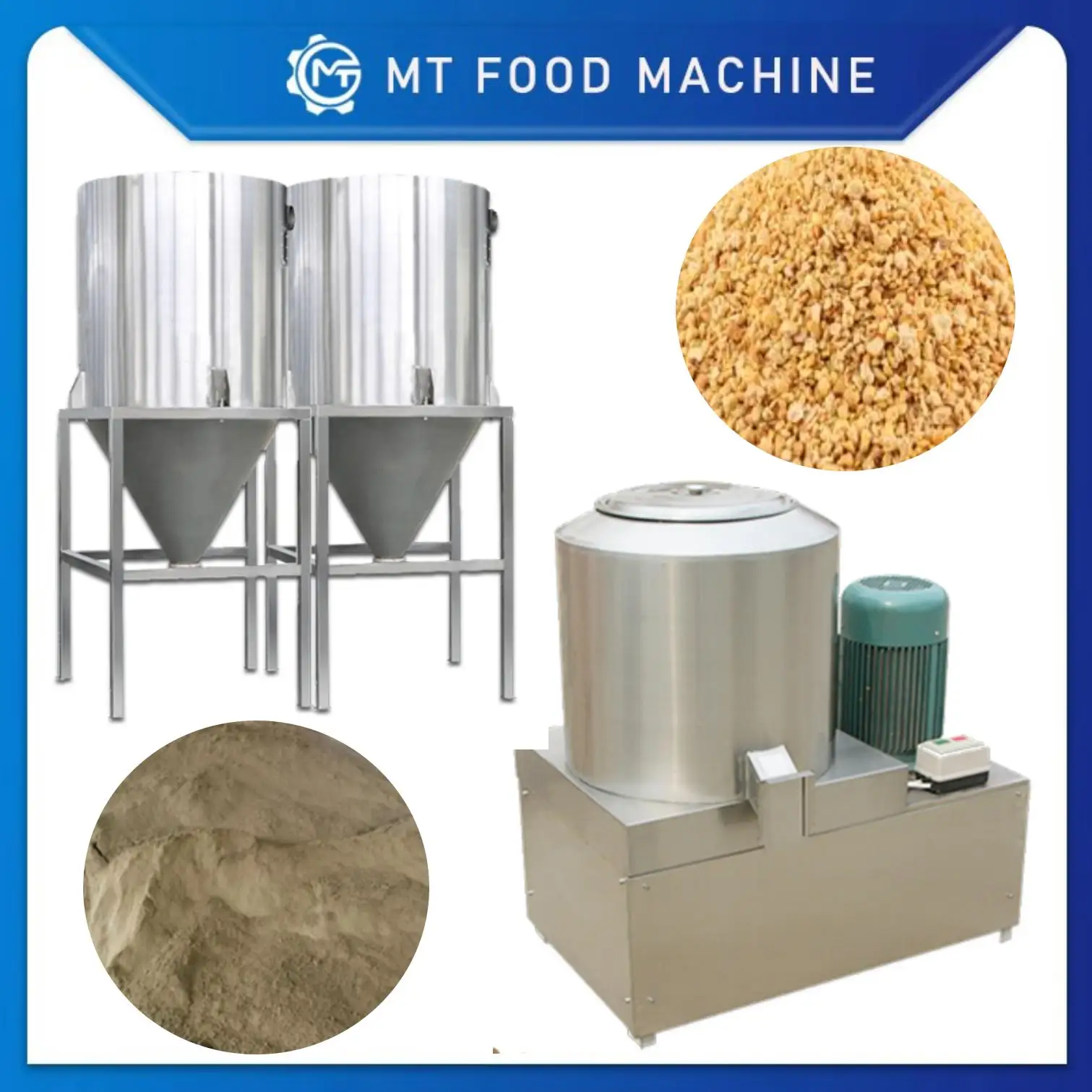


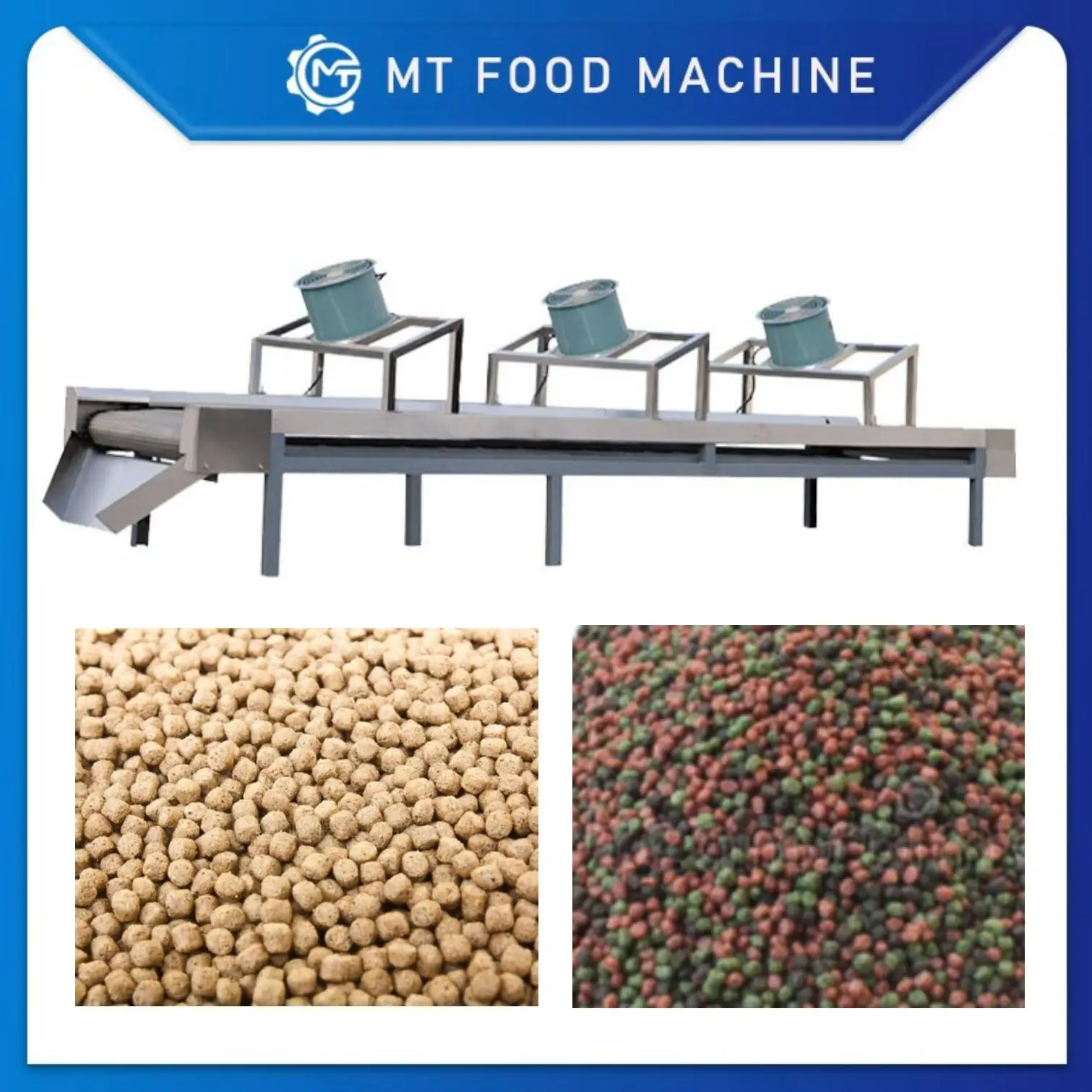
Fish Feed Processing Line, Twin-Screw Extruder, 304 Stainless Steel, up to 5t/h capacity — engineered as a turnkey project from batching through extrusion, drying, coating and packing, with every station matched for throughput to prevent bottlenecking. Screw configuration and die design are specified to raw material formulation and target pellet density for trout, salmon, catfish and other aquaculture species.
- In-house trial runs on customer raw material before shipment validate actual output and pellet specification
- Phased installation, commissioning schedule and operator training delivered as one integrated project
- Electrical schematic with voltage, frequency and control language confirmed for the target installation site
Description
Integrated Line Throughput — every station from batching to packing is calculated as one system, so the extruder output never outpaces the dryer or coater capacity on your actual formulation.
Technical Specifications
| Parameter | Value |
|---|---|
| Product Type | Fish Feed Processing Line |
| Extruder Type | Twin-screw extruder |
| Output Capacity | Up to 5 t/h (basis not stated in source — confirm raw material formulation, moisture content, pellet size) |
| Construction Material | 304 stainless steel on food-contact stations |
| Control System | PLC and MCC integration (voltage and language to be confirmed for target site) |
| Pellet Types | Floating and sinking aquaculture pellets |
| Target Species | Trout, salmon, catfish and other aquaculture species |
| Certification | CE and ISO certified (confirm specific declarations for project scope) |
Application Suitability
| Application | Material or Output |
|---|---|
| Floating feed for salmon and trout | Fish meal, starch, vitamin premix — high expansion ratio pellets |
| Sinking feed for catfish and shrimp | Dense formulation with elevated fat and protein content |
| Multi-species hatchery feed | Fine pellet diameters with controlled protein dispersal |
| Large-scale aquaculture feed mill | Continuous production across formulation changes |
Why the Nominal Capacity Figure Is Not the Whole Story
A fish feed processing line turnkey proposal that quotes only a headline tonnage without specifying the raw material formulation is not a capacity guarantee — it is a guess.
Over the years running installations across Latin America, I have watched lines stall because the quoted output was based on a test formulation the buyer never intended to use. One project in Ecuador involved a customer whose actual recipe carried a noticeably higher fat ratio than the standard trial mix. The pellets sank when they were supposed to float, and hundreds of kilograms of material went to waste before we reconfigured the screw profile and die geometry. When evaluating a fish feed processing line turnkey offer, the question to ask first is what formulation the capacity figure rests on [NEED_CITE: raw material impact on extrusion throughput and pellet density].
Matching the Screw Profile to the Target Pellet
Floating and sinking pellets demand fundamentally different shear histories inside the barrel. A twin-screw extruder configured for high-expansion floating feed runs a screw profile that builds pressure gradually and releases it at the die face to maximize puff. Sinking pellets for bottom-feeding species require a denser compression zone and a different pitch arrangement to limit expansion. Specifying the screw configuration to the buyer’s exact formulation and target species is the step that separates a working line from a costly experiment.
Station-to-Station Throughput Alignment
The extruder is only one node in the chain. If the dryer cannot remove moisture fast enough to match extruder discharge, pellets accumulate, degrade, and block downstream conveying. If the coating drum applies fat or flavour at a rate slower than the dryer output, the entire fish feed processing line turnkey system backs up. Each station must be sized so that its maximum sustainable throughput aligns with the others, accounting for the dwell time each product requires at that stage [NEED_CITE: throughput balancing in multi-station extrusion lines].
Reading the Specification Sheet Against the Formulation
The 304 stainless steel construction across food-contact stations matters for corrosion resistance when processing high-salt and high-moisture aquaculture formulations. The twin-screw design provides self-wiping action that reduces residue buildup between formulation changeovers — a practical advantage when a plant switches between floating and sinking recipes in the same shift. PLC and MCC control integration allows operators to store recipe parameters and recall them consistently, reducing batch-to-batch variation that would otherwise depend entirely on manual adjustment. The control language and voltage must be confirmed before the panels leave the factory, because rewiring or reprogramming on site adds days to commissioning.
The Cost of Skipping the Trial Run
Lines shipped without a trial run on the buyer’s actual raw material arrive on site as untested systems. The first production days become the experiment — burning through raw material, generating off-spec product, and eroding buyer confidence before the line has proven itself. Screw and die combinations that work on one starch-to-protein ratio may fail entirely on another, and discovering that during commissioning is far more expensive than discovering it in the supplier’s testing workshop [NEED_CITE: pre-shipment trial testing for extrusion equipment].
What Distinguishes This Procurement Path
- Formulation-driven configuration — screw and die design starts from the buyer’s raw material analysis, not a generic template carried over from a different species.
- Single-supplier line integration — batching, extrusion, drying, coating, and packing are sourced under one responsibility, so throughput mismatches between stations are resolved at the design stage rather than during installation.
- In-house testing workshop — trial runs on the buyer’s actual formulation produce a test report before the equipment ships, confirming pellet density, expansion ratio, and output on the real recipe.
- On-site commissioning with operator training — engineers remain through initial production runs to set process parameters and transfer knowledge to the plant team.
- Ongoing wear parts and maintenance support — screw elements, die plates, and other consumables are documented and available for planned replacement cycles.
Documentation & Verification
- Line layout drawing with capacity calculation at every station for your target formulation
- Screw and die configuration record matched to your pellet density and species spec
- Trial run report on your raw material conducted in the testing workshop before dispatch
- Electrical schematic confirming voltage, frequency, and control language for your installation site
- CE declaration of conformity and ISO certificate applicable to the project scope
- Operation and maintenance manual with wear parts list specific to your line configuration
Installation, Commissioning & Support
- Foundation and floor loading plan reflecting the full line footprint and dryer weight distribution
- Dedicated electrical circuit sizing based on the confirmed total rated power of all stations
- Modular shipment breakdown allowing staged unloading and positioning within the plant layout
- First-run parameter setting on your formulation with engineers present to tune screw speed and barrel temperatures
- Operator training covering recipe recall on the PLC, die changes, and safety interlocks
- Wear parts inventory recommendation covering screw elements, die plates, and dryer screen panels
What to Include in Your Inquiry
To build an accurate line proposal, share your target species and whether you need floating, sinking, or both pellet types. Provide your raw material formulation including fat content, protein ratio, and moisture level. Confirm the local voltage and frequency at the installation site, the preferred control language for the HMI, and any existing upstream or downstream equipment the new line must connect to.
Frequently Asked Questions
Q: How is the line capacity verified on my raw material formulation before shipment?
A: Before dispatch, the complete line configuration is tested in the in-house workshop using your actual raw material or a close equivalent. The trial run produces a report documenting pellet density, expansion ratio, and sustainable output on that formulation, so the capacity figure you receive is tied to your recipe rather than a generic benchmark.
Q: How do you match throughput between the extruder, dryer, and coating stations?
A: Each station is sized during the layout phase based on the dwell time and processing rate your formulation requires. The dryer capacity accounts for the moisture removal load at full extruder discharge, and the coater drum cycle time is aligned so that no station accumulates backlog or forces the line to run below its rated pace.
Q: What is the phased installation and commissioning schedule for a complete turnkey line?
A: Installation follows a sequence from heavy static equipment such as the dryer and silos through to the extruder and downstream conveying. Commissioning begins with single-station dry runs, progresses to wet runs with material, and concludes with continuous production trials. Operator training runs in parallel during the final production trials.
Q: How are screw and die configurations specified for floating versus sinking fish feed?
A: Floating feed requires a screw profile that generates controlled expansion at the die face, while sinking feed demands higher compression and restricted puff. The screw element arrangement, pitch, and die hole geometry are selected based on your target species and pellet specification, and validated during the pre-shipment trial run.
Related products
-
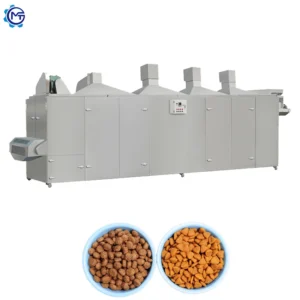
Premium Pet Food Processing Equipment Dog Cat Feed Making Machine
¥9,500.00 Select options This product has multiple variants. The options may be chosen on the product page -
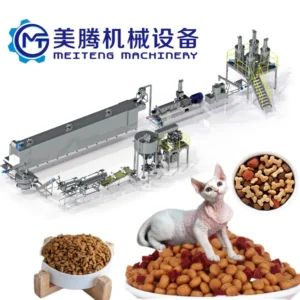
MT70 100-200kg/h Dog & Cat Pet Food Processing Line with 380V 50Hz Three Phase Power
¥35,000.00 Select options This product has multiple variants. The options may be chosen on the product page -
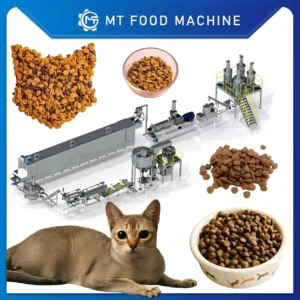
200-250kg/h Capacity PLC Controlled Multi-Species Dog Food Processing Line with MT-70 Extruder
¥35,000.00 Select options This product has multiple variants. The options may be chosen on the product page -
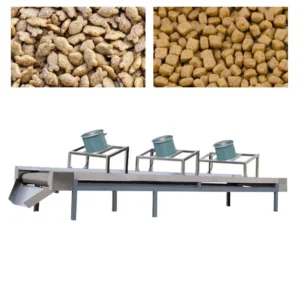
Full Automatic Pet Feed Production Line Large Twin Screw Grain Extrusion Machine
¥9,500.00 Select options This product has multiple variants. The options may be chosen on the product page