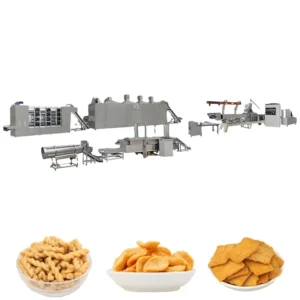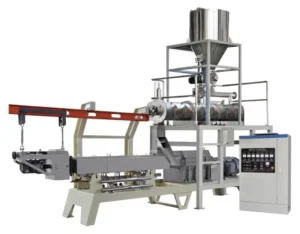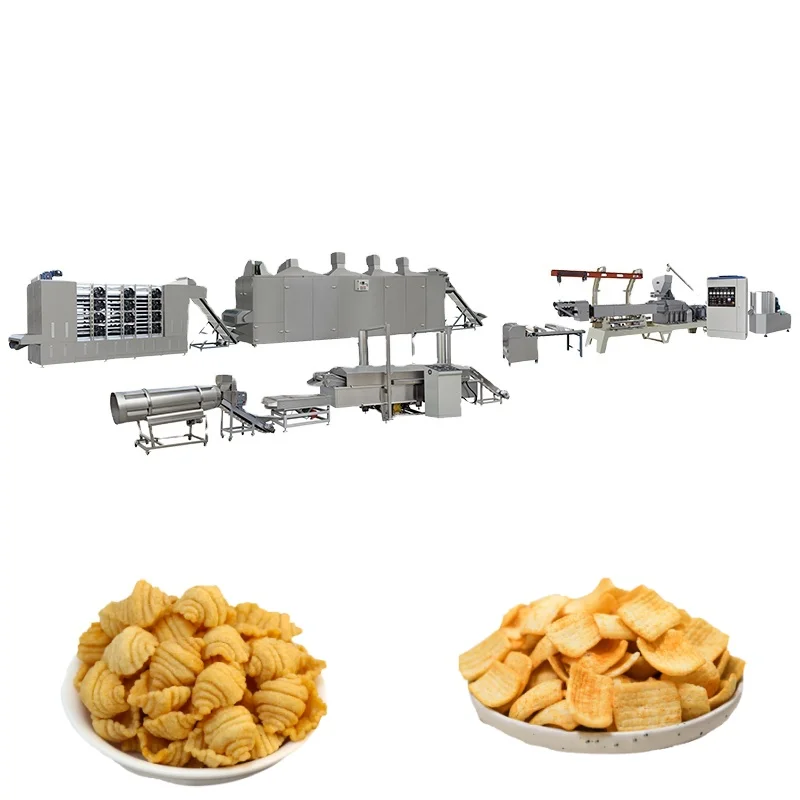


MT-65 / MT-70 / MT-85 / MT-75 / MT-95 Fried Snack Food Production Line, Twin-Screw Extruder, Gas/Electric/Diesel Heating — engineered as a complete turnkey project from layout through commissioning.
- Screw configuration and die design specified to your raw material and target product density, with sectional modules for precise shear and moisture control
- Throughput matched across mixer, extruder, cutter, fryer, and downstream stations under one supplier to eliminate bottlenecks
- Interchangeable dies and rollers enable rapid changeover between bugles, salad sticks, chips, pillows, and tube shapes
Every station is capacity-balanced and validated via in-house trial runs on your formula before shipment, ensuring the line delivers the output you specified from day one.1
Description
Turnkey Line Integration — Every station from the batching mixer through the fryer is throughput-matched under one supplier so the output you pay for is the output the line holds.
Technical Specifications
| Parameter | Value |
|---|---|
| Product Type | Fried Snack Food Production Line (Bugles / Chips / Salad Sticks) |
| Models Available | MT-65, MT-70, MT-85, MT-75, MT-95 |
| Main Motor (MT-65) | 100 kW |
| Main Motor (MT-70) | 130 kW |
| Main Motor (MT-85) | 180 kW |
| Main Motor (MT-75) | 185 kW |
| Main Motor (MT-95) | 280 kW |
| Output Capacity (MT-65) | 120–150 kg/h (basis to be confirmed) |
| Output Capacity (MT-70) | 200–250 kg/h (basis to be confirmed) |
| Output Capacity (MT-85) | 300–500 kg/h (basis to be confirmed) |
| Output Capacity (MT-75) | 400–500 kg/h (basis to be confirmed) |
| Output Capacity (MT-95) | 800–1000 kg/h (basis to be confirmed) |
| Screw Type | Twin screw, co-rotating, sectional modules |
| Drying / Heating Method | Gas, Electric, or Diesel heating options |
| Cutting Machine Power | 1.47 kW |
| Cutting Machine Shapes | Sticks, square sheet rib chips, diamond chips, wavy chips, pillow shapes, bugles, duck, Christmas tree, moon, crisp corner |
| Fryer Belt Width | 600 mm stainless steel belt |
| Mixer Power Options | 4 kW / 7.5 kW / 15 kW (matched to line model) |
| Voltage & Frequency | Customizable (e.g., 3ph 380V 50Hz, 3ph 415V 60Hz, 3ph 220V 60Hz) |
| Contact Material | Food-grade stainless steel (all parts touching raw material or product) |
| Frame Material | Painted steel |
| Line Stations | Mixer → Twin Screw Extruder → Cutting/Shaping Machine → Fryer |
| Warranty | 1 year complete, lifetime maintenance service |
Application Suitability
| Application | Material or Output |
|---|---|
| Fried pellet snack production | Corn powder, wheat flour, potato starch for bugles and corn chips |
| 2D and 3D shaped fried snacks | Potato starch and corn starch blends for pillow, diamond, wavy, and shell formats |
| Salad stick and crisp tube lines | Wheat flour and rice flour formulations for hollow sticks and round tubes |
| Turnkey snack factory projects | Small-to-large scale fried snack output for retail or food-service distribution |
What "500 kg/h" Actually Means on Your Raw Material
A nominal capacity figure is meaningless unless it was achieved on the exact flour blend, moisture content, and product shape you intend to run.
When I was doing line planning for a salad stick project not long ago, the buyer signed off on a line rated at a certain throughput based on standard corn grits. Their actual recipe used a high proportion of sweet potato starch with residual oil, which altered the gelatinisation behaviour inside the barrel. The extruder could not hold the quoted output on that formulation, and the fryer downstream was oversized for what was actually coming through. A fried snack food production line turnkey project only works when the capacity is validated against your specific material before anything is built [NEED_CITE: extrusion capacity validation on customer raw material].
Throughput Matching Across Every Station
When you source a fried snack food production line turnkey from a single supplier, the mixer output, extruder throughput, cutter speed, and fryer belt capacity are all calculated against the same target. This prevents the common situation where an extruder pushes product faster than the fryer can handle, causing oil temperature drops and inconsistent colour. Each station is specified to feed the next without surplus or starvation.
Screw Configuration to Your Formula
The twin-screw extruder uses co-rotating sectional modules that are assembled in a specific sequence based on your raw material’s starch content, protein level, and target expansion ratio. A high-potato-starch recipe requires a different screw profile than a corn-dominant blend because the gelatinisation temperature and shear sensitivity differ substantially. The die design is paired with the screw build to achieve the correct pressure and product density entering the cutter. Getting this combination wrong at the specification stage means the wrong texture reaches the fryer, and no amount of downstream adjustment can correct it [NEED_CITE: twin-screw configuration impact on snack texture].
Reading the Specifications That Matter
The main motor rating across the range — from 100 kW on the MT-65 to 280 kW on the MT-95 — determines the mechanical energy available for shear and cooking inside the barrel. A higher kilowatt rating allows the extruder to handle denser formulations with more fibre or protein that resist plasticisation. The cutter runs at 1.47 kW and uses interchangeable dies and rollers, which means shape changeover from bugles to sticks to wavy chips is a mechanical swap rather than a line rebuild. The fryer’s 600 mm stainless steel belt with automatic temperature and speed control governs oil absorption uniformity — a belt that runs too slowly through the oil bath overcooks the surface while leaving the interior underdone. Voltage customisation (380V/50Hz, 415V/60Hz, 220V/60Hz) must be locked in before production starts, because rewiring a 185 kW extruder motor on site is not a simple task [NEED_CITE: industrial voltage and frequency standards by market].
The Cost of Skipping the Trial Run
Buyers who approve a line configuration based on a brochure spec sheet and skip the material trial frequently discover problems only after the extruder is bolted to their factory floor. The product may expand too much and shatter in the fryer, or too little and emerge dense and hard. The cutter may not cleanly separate shapes if the dough viscosity is outside the expected range. Rectifying these issues post-installation means new screw segments, new dies, and production downtime that delays market launch [NEED_CITE: post-installation reconfiguration costs in extrusion lines].
Why a Single-Source Line Reduces Integration Risk
Every station on this fried snack food production line turnkey is specified under one engineering team, so the mixer batch size is timed to the extruder hopper capacity, and the fryer belt length is sized to the cutter output. The food-grade stainless steel contact surfaces across all stations mean hygiene standards are consistent from raw powder to finished snack. The in-house testing workshop runs your raw material through the configured line before shipment, producing a trial report that confirms the output, texture, and shape. Wear parts — screw segments, die plates, cutter blades — are documented and supplied as reserves so the first replacement cycle does not halt production.
Documentation & Verification
- Line layout drawing showing station dimensions and throughput at each node
- Screw and die configuration record matched to your raw material formula
- Trial run report on your raw material from the in-house testing workshop
- Electrical schematic with confirmed voltage, frequency, and control language
- Factory test record with capacity and product sample before dispatch
Installation, Commissioning & Support
- Foundation must support line weight and resist vibration from the 100–280 kW main motor
- Dedicated power circuit sized for the selected model’s full load plus fryer heating elements
- Line ships in modular sections requiring on-site assembly and belt alignment
- First-run commissioning includes barrel temperature profiling and fryer oil calibration
- Operator training covers screw segment inspection, die changeover, and fryer belt tensioning
- Spare wear parts list with recommended reorder intervals for continuous operation
What We Need to Configure Your Line
To build an accurate layout and quotation, we need your raw material formulation and moisture targets, the specific product shapes you intend to produce, and your daily output requirement in kilograms of finished product. Please also share your factory’s available voltage and frequency, the control language your operators require, and whether you have existing upstream or downstream equipment the line must integrate with. If you can send a sample of your raw material, we will run it in our testing workshop before finalising the configuration.
Frequently Asked Questions
Q: How is the output capacity verified against my specific raw material before shipment?
A: We run your actual raw material formulation through the configured extruder, cutter, and fryer in our in-house testing workshop. The trial produces a documented report covering throughput, product texture, shape consistency, and oil absorption, so you know the line’s real output before it leaves the factory.
Q: What does the installation and commissioning schedule look like?
A: The line arrives in modular sections. Our engineers handle assembly, utility connections, barrel temperature profiling, and fryer calibration on site. The schedule includes operator training on screw inspection, die changeover, and daily maintenance routines specific to your selected model.
Q: How do you prevent bottlenecks between the extruder, fryer, and packing stations?
A: Every station is specified by the same engineering team against the same target throughput. The mixer batch cycle, extruder output, cutter speed, and fryer belt capacity are calculated together so no single machine limits the line’s overall production rate.
Q: What utility planning is required before the line arrives?
A: You will need a dedicated power circuit matching your confirmed voltage and frequency, gas or electrical supply for the fryer and dryer, ventilation extraction above the fryer, and a level floor capable of supporting the line’s footprint and operating vibration.
Q: What spare parts are included and how is maintenance handled?
A: The line ships with a reserve set of wear parts including screw segments, die plates, and cutter blades. We provide a documented wear parts list with recommended reorder intervals and ongoing maintenance support after commissioning is complete.
Related products
-
New Doritos Chips Frying Equipment Machine Automatic Tortilla Corn Chips Making Line Portable High Productivity
¥100.00 Select options This product has multiple variants. The options may be chosen on the product page -
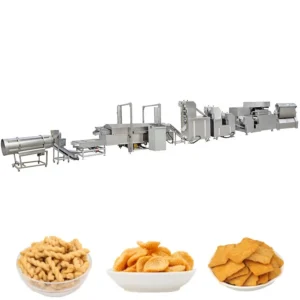
Frying Crispy 3D Corn Bugles Pellets Fried Chips Snacks Food Machine Production Line Bugles Making Extruder
¥100.00 Select options This product has multiple variants. The options may be chosen on the product page -
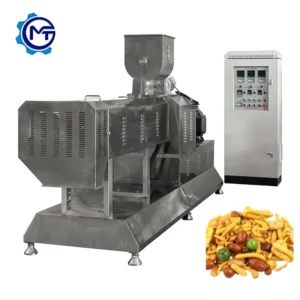
New Automatic Traditional Fried Nimko Making Machine High Productivity Large Capacity Stainless Steel Production Line
¥8,575.00 Select options This product has multiple variants. The options may be chosen on the product page -
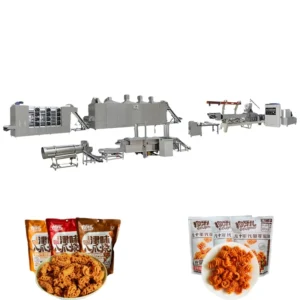
Fried Flour Corn Bugles Extruded Chips Pellets Doritos Snacks Food Machine Production Line Extruder
¥100.00 Select options This product has multiple variants. The options may be chosen on the product page