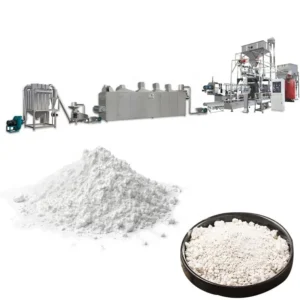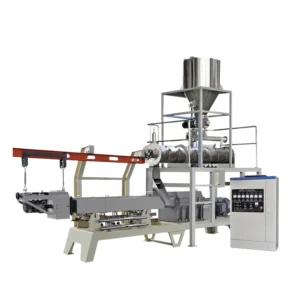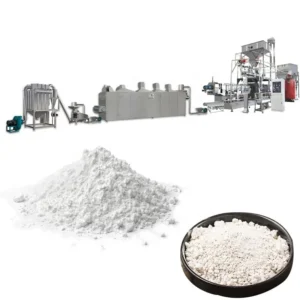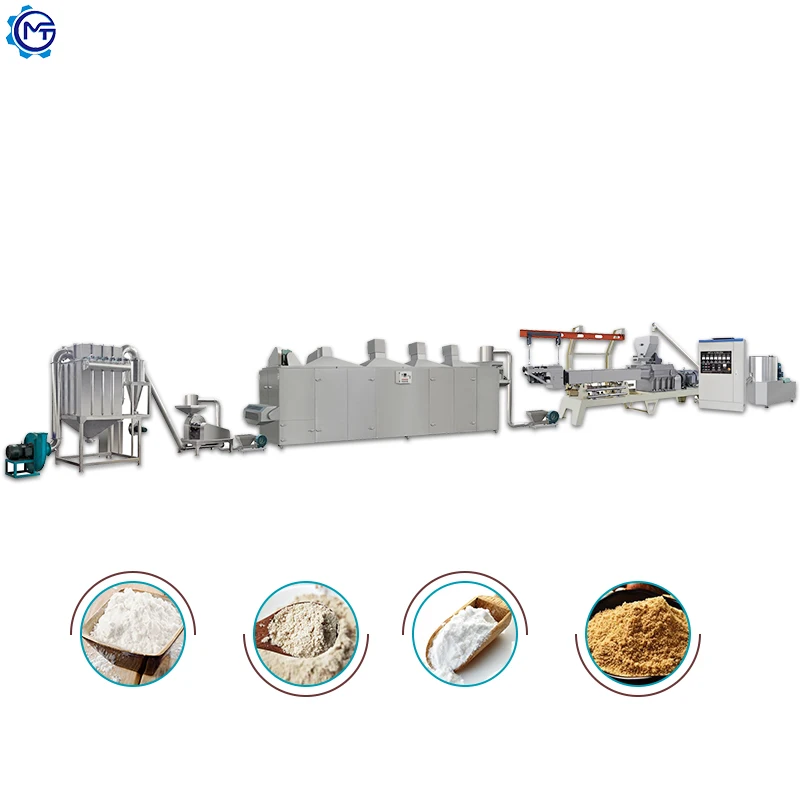


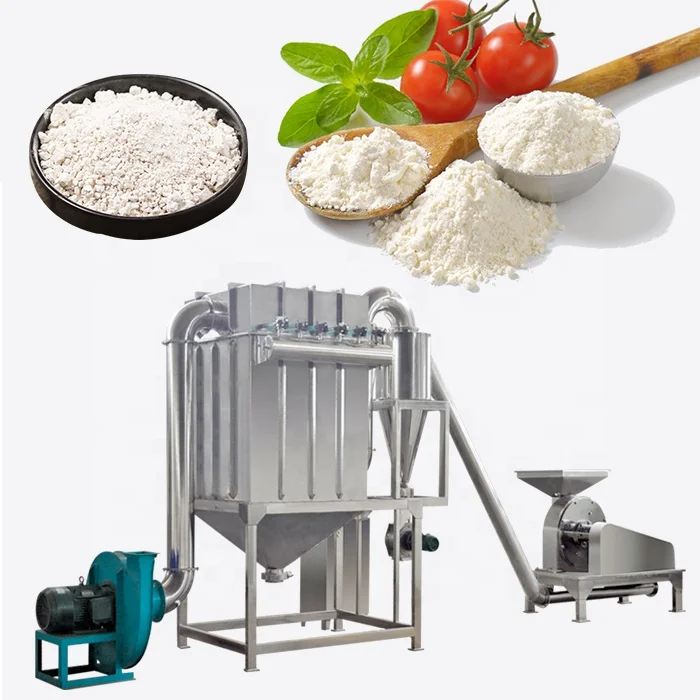
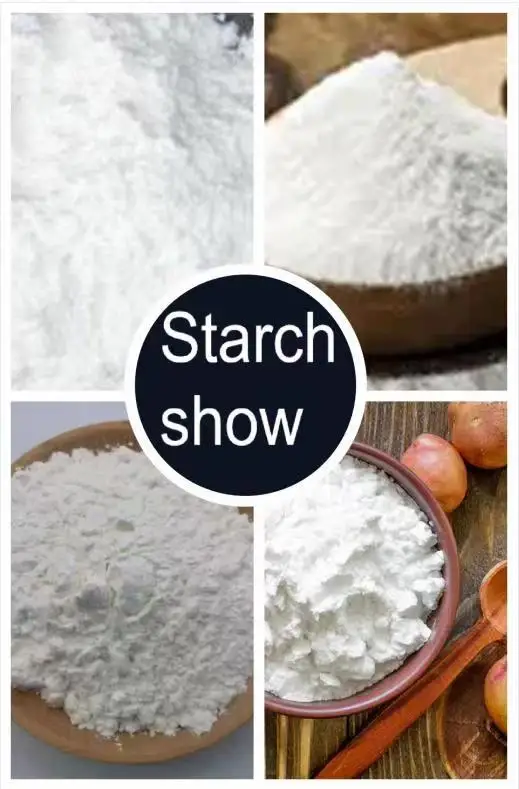

Modified Starch Processing Line, Twin-Screw Extruder, 80–500 kg/h, PLC/MCC Control — delivering complete turnkey layout from batching through extrusion, drying, conditioning, and grinding with throughput matched at every station. Screw configuration and barrel temperature profile are specified to your raw material — wheat flour, corn starch, or potato starch — ensuring target gelatinization degree, viscosity, and molecular weight are achieved consistently. Food-grade 304 stainless steel contact parts throughout, with energy options in electricity, gas, diesel, or steam. Trial runs on your actual starch formulation are conducted in our in-house testing workshop before shipment, verifying line performance against real production conditions.
Description
Throughput-Matched Line Design — Every station from batching mixer to final grinder is calculated against your actual starch formulation rather than a generic capacity chart, so output holds steady across the full modified starch processing line turnkey.
Technical Specifications
| Parameter | Value |
|---|---|
| Product Type | Modified & Pregelatinized Starch Manufacturing Line |
| Extruder Type | Twin screw |
| Capacity Range | 80–500 kg/h (basis not stated in source — confirm raw material type, moisture content, and degree of modification) |
| Raw Materials | Wheat flour, corn starch, potato starch |
| Voltage & Frequency | Three phases 380V/50Hz, Single phase 220V/50Hz (customizable to customer’s local voltage) |
| Frame Material | Stainless steel 201 |
| Contact Material | Food grade stainless steel 304 |
| Energy Options | Electricity, gas, diesel, or steam |
| Power Consumption | Approx. 100 kW (electricity heating); approx. 50–60 kW (gas or diesel heating) (rated or peak not specified in source) |
| Motor Brand | Siemens (made in China) or China top brand; Delixi or Delta inverter |
| Control System | PLC and MCC |
| Line Stations | Mixer → Screw Conveyor → Twin Screw Extruder → Shift → Air Conveyor → Dryer → Air Conveyor → Conditioning → Conveyor → Grinder |
| Mixer Motor | 4.0 kW |
| Mixer Dimensions | 1.2 × 0.9 × 1.4 m |
| Mixer Output | 3.0–4.0 kg/time (basis not stated in source — confirm batch material and moisture) |
| Screw Conveyor Motor | 1.1 kW |
| Screw Conveyor Dimensions | 2.5 × 0.6 × 2.3 m |
| Screw Conveyor Output | 0–150 kg/h (basis not stated in source — confirm material density and moisture) |
| Assembly State | Complete line with supporting equipment |
| Certification | CE |
| Warranty | One year with life-time technical guidance support |
Application Suitability
| Application | Material or Output |
|---|---|
| Food-grade modified starch production | Wheat flour, corn starch, or potato starch processed to target viscosity and gelling properties |
| Pregelatinized starch for industrial use | Corn starch or potato starch gelatinized under controlled temperature and pressure for paper and non-food sectors |
| Custom starch modification for food ingredients | Starch formulations requiring specific molecular weight, stability, and thickening behaviour in end products |
What a Nominal Capacity Figure Hides in Starch Extrusion
A line rated for one starch type will underperform or over-gelatinize on another if screw speed, barrel temperature, and moisture are not recalibrated to the buyer’s actual feed material.
When a modified starch processing line turnkey is quoted on a generic capacity number, the figure typically reflects ideal lab conditions with a single reference starch. In practice, corn starch and potato starch demand different gelatinisation temperatures, shear profiles, and residence times inside the barrel. A screw configuration set for wheat flour may leave corn starch partially raw or push potato starch into excessive degradation, producing off-spec viscosity [NEED_CITE: starch gelatinisation temperature ranges by source material]. The consequence is not a minor adjustment — it can mean weeks of on-site trials, wasted raw material, and delayed market entry while the extruder is re-tuned from scratch.
Barrel Temperature Zones and Gelatinisation Control
Starch modification inside a twin-screw extruder depends on holding the material within a narrow thermal window across multiple barrel zones. Each zone is independently heated and monitored, allowing the operator to build a temperature gradient that matches the gelatinisation onset of the specific starch in use. For corn starch, the barrel profile typically climbs more gradually than for potato starch, which gelatinises at a lower threshold and can degrade if overheated. The PLC-controlled system on this modified starch processing line turnkey manages these zone setpoints continuously, reducing batch-to-batch drift in final product viscosity.
Screw Configuration Matched to Modification Degree
The degree of starch modification — whether slight cross-linking for sauce thickeners or deep pregelatinisation for instant food applications — is controlled by screw element arrangement, flight depth, and kneading block positioning. A high-shear configuration increases mechanical energy input, breaking more molecular bonds and raising water solubility. A gentler profile preserves longer chain structures for applications requiring elastic gel behaviour [NEED_CITE: screw element arrangement effects on starch modification]. Our testing workshop runs trial production with the buyer’s actual raw material before the line ships, documenting which screw combination achieves the target modification so that commissioning starts from a known baseline rather than from guesswork.
Reading the Power and Energy Specs for Your Factory
The listed power consumption separates electricity-heated barrels from gas or diesel-heated barrels, and the gap is significant. Factories with high industrial electricity tariffs often benefit from choosing gas or steam heating, which also shifts thermal load away from the electrical panel. The motor specification — Siemens or equivalent China top brand with Delixi or Delta inverters — means drive components are serviceable through regional distributors in most markets. When specifying the modified starch processing line turnkey, confirming your site voltage and frequency early prevents transformer add-ons that consume floor space and introduce failure points.
The Hidden Cost of Skipping the Trial Run
Lines that ship without a documented trial on the buyer’s actual starch formulation arrive as mechanical assemblies that still need process development. The extruder may run, but achieving target viscosity and gelatinisation degree requires iterative screw speed, feed rate, and barrel temperature changes — each consuming raw material and operator time [NEED_CITE: commissioning duration without pre-shipment trials]. Dryer capacity may also mismatch the extruder’s actual moisture output on that specific starch, creating a bottleneck that forces the extruder to idle. These are not warranty issues; they are specification gaps that shift risk entirely onto the buyer.
Why This Line Is Structured Around Your Material
Every station is sized relative to the extruder’s verified output on your starch type, so the mixer batch cycle, screw conveyor feed rate, dryer residence time, and grinder throughput align without manual buffering. The twin-screw extruder screw and die configuration is recorded against your raw material and target modification degree before production begins. Food-grade stainless steel 304 contact surfaces meet hygiene requirements for food-ingredient starch. The in-house testing workshop produces a trial run report on your actual formulation, giving you a documented baseline before the line leaves the factory. Voltage, frequency, and PLC language are confirmed during the specification stage, not discovered during installation [NEED_CITE: electrical standard alignment for exported food processing lines].
Documentation & Verification
- Line layout and capacity calculation matching mixer, extruder, dryer, and grinder throughput
- Trial run report on your specific starch raw material and moisture content before dispatch
- Screw and die configuration record tied to your target starch modification degree
- Electrical schematic with confirmed voltage, frequency, and PLC language for your factory
- CE declaration of conformity and ISO certificate available for customs and regulatory review
Installation, Commissioning & Support
- Foundation plan accounts for extruder weight and vibration isolation at rated motor power
- Electrical hookup specifies dedicated circuit sizing for the 100 kW electric heating load
- Line arrives in modular station assemblies for staged positioning within your floor layout
- First-run parameter set from the factory trial run report shortens on-site dial-in
- Operator training covers PLC setpoint adjustment for different starch types and modification targets
- Wear parts list identifies screws, dies, and conveyor flights with reorder lead times
Before You Request a Quotation
Share the specific starch raw material you intend to process, including source crop and typical moisture content at the point of feeding. Confirm your target product application — whether food-grade thickener, pregelatinized starch for instant products, or industrial-grade modification for paper coating — along with the key property specifications your customers require. Provide your factory’s available voltage, phase configuration, and preferred heating energy source so the line can be configured before the quotation stage.
Frequently Asked Questions
Q: How is line capacity verified on my specific starch raw material before shipment?
A: Our testing workshop runs a trial production using your actual starch formulation at your specified moisture content. We document throughput, gelatinisation degree, and product properties in a trial run report that ships with the line, so capacity is verified against your real material rather than a generic reference starch.
Q: What screw configuration and barrel temperature profile is needed for my target gelatinisation degree?
A: Screw element arrangement, kneading block placement, and barrel zone temperatures are determined during the pre-shipment trial run. We test multiple configurations against your target viscosity and modification degree, then lock in the combination that meets specification and record it in your configuration document.
Q: How do you match dryer and conditioning capacity to the extruder output?
A: Each station is sized based on the extruder’s verified output on your starch type, including the moisture content leaving the die. The dryer residence time and conditioning drum volume are calculated to handle that specific throughput without creating a bottleneck or requiring the extruder to idle.
Q: Can voltage, frequency, and control language be configured to my factory’s electrical standard?
A: Yes. Voltage and frequency are confirmed during the specification stage and built into the motor, heating elements, and control panel. The PLC interface language is set to match your operator requirements, so the line is ready for commissioning without electrical adaptation or reprogramming on site.
Q: What spare wear parts are included, and what is the lead time for first replacement orders?
A: The line ships with a documented wear parts list covering screws, dies, and conveyor components subject to normal abrasion. First replacement orders can be planned using the lead times provided in that list, and we recommend ordering initial spares alongside the line to avoid downtime during early production ramp-up.
Related products
-
High-Efficiency Customizable Modified Starch Production Line – Automatic Corn Pellet Adhesive Making Equipment
¥65.00 Select options This product has multiple variants. The options may be chosen on the product page -
Automatic 304 Stainless Steel Modified Corn Starch Making Machine TWIN SCREW 500kg/h Capacity Starch Processing Production Line
¥50.00 Select options This product has multiple variants. The options may be chosen on the product page -
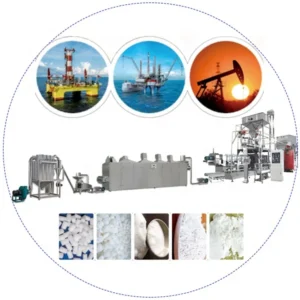
Pre-gelatinized Starch Production Line – Modified Starch Integrated Puffing Equipment
¥65.00 Select options This product has multiple variants. The options may be chosen on the product page -
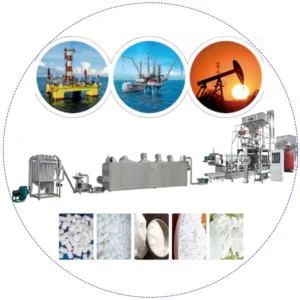
Cassava & Pregelatinized Corn Starch Extrusion Equipment – CE Certified Industrial Twin-Screw Modified Starch Line
¥65.00 Select options This product has multiple variants. The options may be chosen on the product page