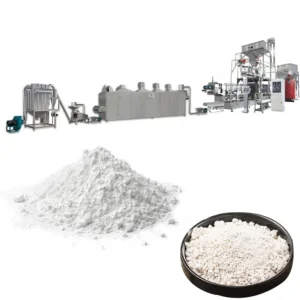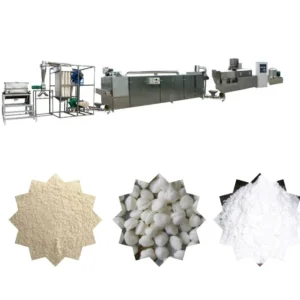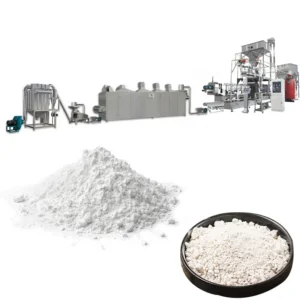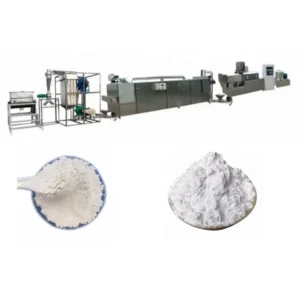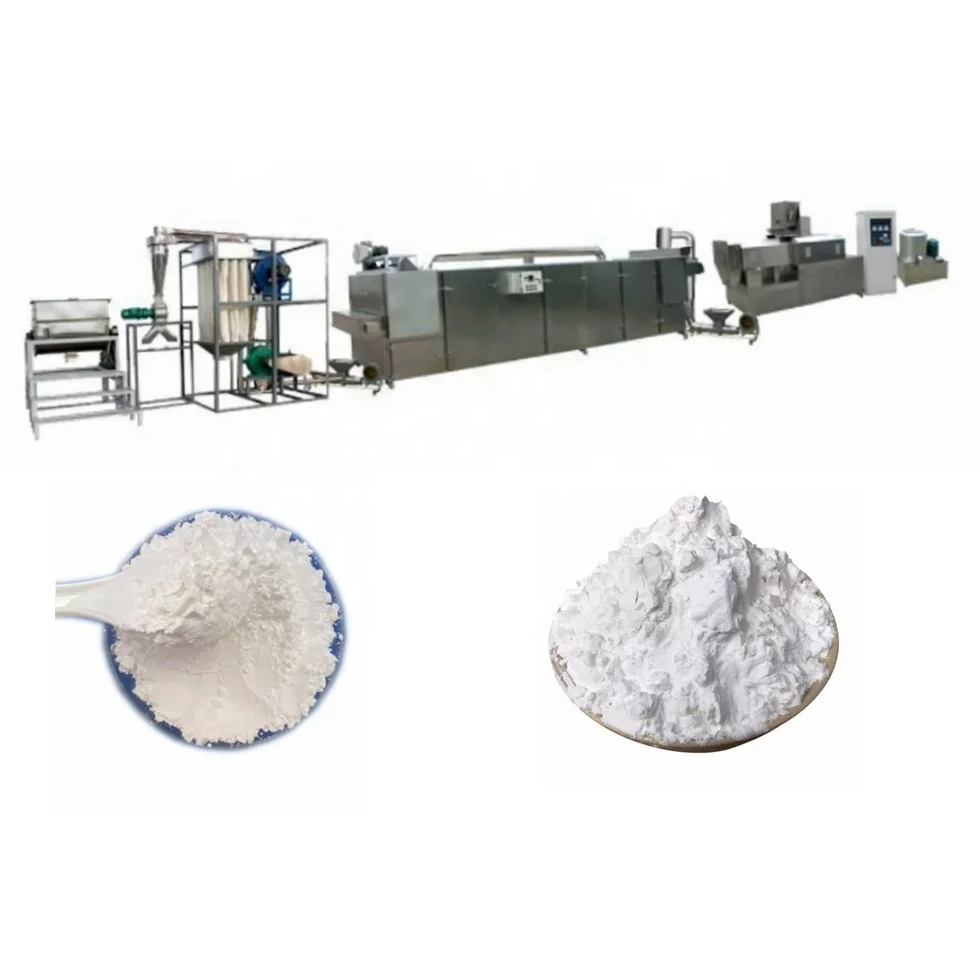


Modified Starch Processing Line, Twin-Screw, 45-200 kW, PLC & MCC Control — engineered for tapioca, corn and cassava starch modification.
- Twin-screw extrusion with screw configuration and die design matched to raw material type and target modification degree, controlling moisture, shear and gelatinisation for consistent starch properties.
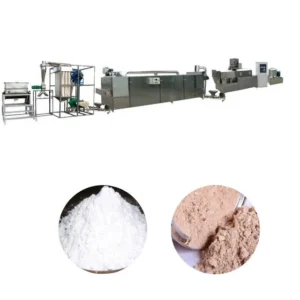
- Full line from batching through extrusion, cooling and pulse grinding with cyclone discharge and dust collector, throughput balanced at every station.
Turnkey layout with throughput calculation across all stations, in-house trial runs on your flour blend before shipment, and on-site commissioning with operator training included.
Description
Throughput-Matched Line Integration — Every station from batching through pulse grinding is balanced to your actual starch output, not assembled from mismatched standalone units.
Technical Specifications
| Parameter | Value |
|---|---|
| Product Type | Modified Starch Processing Line (Twin-Screw Extrusion) |
| Extruder Type | Twin-screw |
| Power Range | 45–200 kW |
| Capacity Range | 100–1500 kg/h (basis not stated in source — confirm raw material type, moisture content and modification degree) |
| Machine Weight | 1000–5000 kg |
| Voltage & Frequency | 220–440V, tri-phase (configurable to 380V/50Hz, 415V/60Hz, 220V/60Hz) |
| Control System | PLC and MCC automated control |
| Line Stations | Mixing/batching → Twin-screw extruder → Cooling conveyor → Pulse grinder → Packing |
| Cooling Conveyor | Low-power fan with wind-knife blowing mouth, ambient temperature drying |
| Pulse Grinder | Auger feeder, rotor with blades and disc, stator with serrated teeth, classifier, cyclone discharge with rotary valve, filter pocket dust collector |
| Contact Materials | Food-grade stainless steel (except PVC conveyors) |
| Dryer Fuel Options | Gas, diesel, electricity, steam |
| Certification | CE, ISO |
Application Suitability
| Application | Material or Output |
|---|---|
| Modified tapioca starch production | Tapioca flour with additive incorporation for food and industrial use |
| Pregelatinised corn starch | Corn flour for oil drilling fluids and paper making adhesives |
| Cassava starch modification | Cassava flour blended for specific viscosity and gelatinisation targets |
| Nutritional grain flour | Rice flour, corn flour and soybean flour blends for fortified food programmes |
| Wheat starch processing | Wheat flour modified for bakery and texturised food applications |
Why Nominal Line Capacity Rarely Survives Your Raw Material
A modified starch processing line turnkey quoted at a single number means nothing until it runs your exact flour blend.
I have stood next to starch lines in Central America where the extruder was rated for a certain hourly throughput, but the actual cassava flour from the local supplier carried more fibre and moisture than the generic test material. Output dropped, residence time shifted, and gelatinisation went incomplete. The grinder downstream was then oversized for the real output, pulling air instead of product. [NEED_CITE: starch raw material variability and extrusion throughput] That mismatch is what makes the difference between a line that holds its rate and one that constantly chases it.
Matching Station Throughput Across the Full Line
A modified starch processing line turnkey only performs when every station handles the same real-world throughput. If the extruder pushes product faster than the cooling conveyor can bring it to ambient temperature, material piles up and gelatinisation continues uncontrolled. The pulse grinder then receives feed at inconsistent moisture, producing uneven particle size. Each station on this line is specified against the same throughput target so the extruder, cooler and grinder operate in balance rather than fighting each other.
Screw Configuration Driven by Starch Source
Tapioca, corn and cassava starches behave differently under shear and heat. The twin-screw configuration is built around the gelatinisation temperature, amylose ratio and particle size of your specific raw material. Die design controls the pressure drop at exit, which determines how much mechanical energy converts into starch modification versus simple conveyance. Getting this wrong means the extruder runs, but the starch does not reach the degree of modification your market requires. [NEED_CITE: twin-screw extrusion parameters for starch gelatinisation]
What the Specs Actually Mean for Starch Output
The 45–200 kW power range reflects the difference between a line modifying a small batch of pregelatinised flour and one running continuous high-shear modification on industrial-grade corn starch. Higher kilowatt ratings sustain the barrel temperature profile needed when moisture addition is low and mechanical energy must do the gelatinisation work. The PLC and MCC control system holds barrel zone temperatures and screw speed constant across shifts, which is what keeps batch-to-batch viscosity within specification. Food-grade stainless steel contact surfaces prevent iron-catalysed discolouration in light-coloured tapioca and potato starches. The pulse grinder’s classifier speed determines final particle cut, and the cyclone discharge with integrated dust collector keeps the milling area clean without relying on external extraction.
The Cost of Skipping the Trial Run
Lines shipped without a trial run on the buyer’s own flour arrive with a screw configuration that was chosen for a different material. Commissioning then becomes product development — adjusting segment arrangement, moisture addition and barrel temperatures on a live factory floor while raw material and labour costs accumulate. In my time covering Latin American installations, the plants that skipped this step consistently took longer to reach stable output, and the first production runs often went to animal feed instead of food-grade dispatch. [NEED_CITE: extrusion line commissioning delays without pre-shipment trials]
Why Source This Line from One Supplier
Every station is configured under a single layout calculation, so the extruder output, conveyor length and grinder feed rate share one throughput basis instead of being pulled from separate catalogues. Screw segments and die plates are documented for your starch type before the machine leaves the factory. The in-house testing workshop runs your flour blend before shipment, producing a trial report you can review before the line is crated. Voltage, frequency and PLC language are confirmed against your facility specification during the engineering stage, not discovered at commissioning. Wear parts — screw segments, die plates, grinder blades — are listed and available before the first replacement cycle arrives.
Documentation & Verification
- Line layout and capacity calculation with throughput matched across batching, extrusion, cooling and grinding
- Screw and die configuration record specific to your tapioca, corn or cassava starch type
- Trial run report on your raw material conducted in the testing workshop before dispatch
- Electrical schematic with voltage, frequency and PLC language confirmed to your facility
- Factory test record documenting run conditions, output rate and product sample results
Installation, Commissioning & Support
- Foundation and floor space plan aligned to the full line footprint from mixer to packing station
- Dedicated power circuit sized to the 45–200 kW extruder drive with confirmed voltage and frequency
- Pre-assembled extruder barrel sections arrive aligned, reducing on-site mechanical assembly time
- First-run parameter setting for barrel zone temperatures, screw speed and moisture dosing on your starch
- Operator training covering PLC interface navigation, grinder classifier adjustment and daily cleaning
- Wear parts list with screw segments, die plates and grinder blades identified for first reorder
What to Include in Your Enquiry
To size a modified starch processing line turnkey correctly, share your starch source and whether it is native or already partially modified, your target degree of gelatinisation or viscosity, and the daily output you need to sustain. Include your facility voltage and frequency, preferred PLC language, and whether you can ship a sample of your flour for a pre-shipment trial run.
Frequently Asked Questions
Q: How is line capacity verified on my specific starch raw material before shipment?
A: Your flour blend runs through the twin-screw extruder in the testing workshop. The trial records actual throughput, barrel temperatures, screw speed and product properties. You receive a trial run report before the line ships, so capacity is confirmed on your material, not a generic substitute.
Q: How do you match throughput between the extruder, cooler and grinder to avoid bottlenecks?
A: The layout calculation starts with one throughput target. Cooling conveyor length and fan capacity are set to handle the extruder output at the required cooling time, and the pulse grinder auger speed is matched to receive that same feed rate without surging or starving.
Q: What voltage, frequency and control language options are confirmed before production?
A: The electrical schematic is built around your facility supply — configurations include 380V/50Hz, 415V/60Hz and 220V/60Hz among others. PLC interface language and MCC labelling are agreed during engineering so operators can read the HMI from day one.
Q: What screw and die configuration is specified for tapioca versus corn versus cassava starch?
A: Each starch source has a different gelatinisation temperature and shear sensitivity. Screw segment arrangement, compression ratio and die aperture are selected based on your material’s amylose content and target modification degree, then documented in the configuration record.
Q: What installation, commissioning and operator training is included in the turnkey scope?
A: Engineers position each station per the approved layout, connect utilities to the confirmed voltage, run the first production cycle on your starch and train operators on the PLC interface, grinder classifier settings and daily maintenance routines for the extruder and pulse grinder.
Related products
-
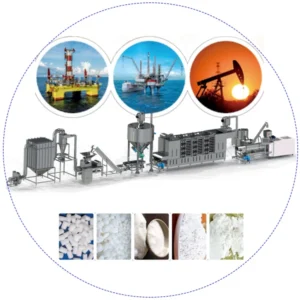
Automatic Pregelatinized Starch Processing Machine – Large-Scale New Condition Modified Starch Production Line
¥65.00 Select options This product has multiple variants. The options may be chosen on the product page -
Automatic Deep Processing Machine – Food Grade Modified & Pregelatinized Starch Manufacturing Line
¥65.00 Select options This product has multiple variants. The options may be chosen on the product page -
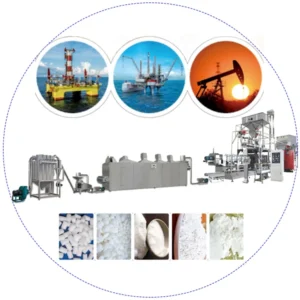
Modified and Pregelatinized Starch Processing Equipment – Pregelatinized Corn Cassava Modified Starch Puffing Machine
¥65.00 Select options This product has multiple variants. The options may be chosen on the product page -
Cassava Corn Potato Flour Starch Production Line – Industrial Pregelatinized & Modified Extrusion Machinery
¥65.00 Select options This product has multiple variants. The options may be chosen on the product page