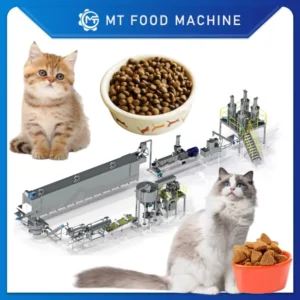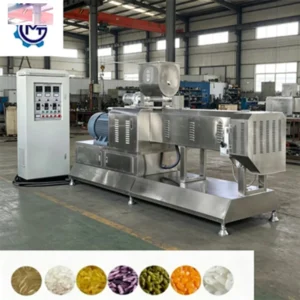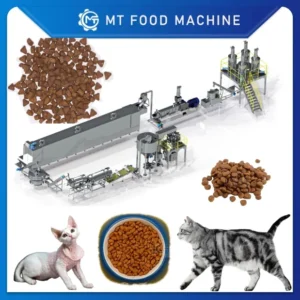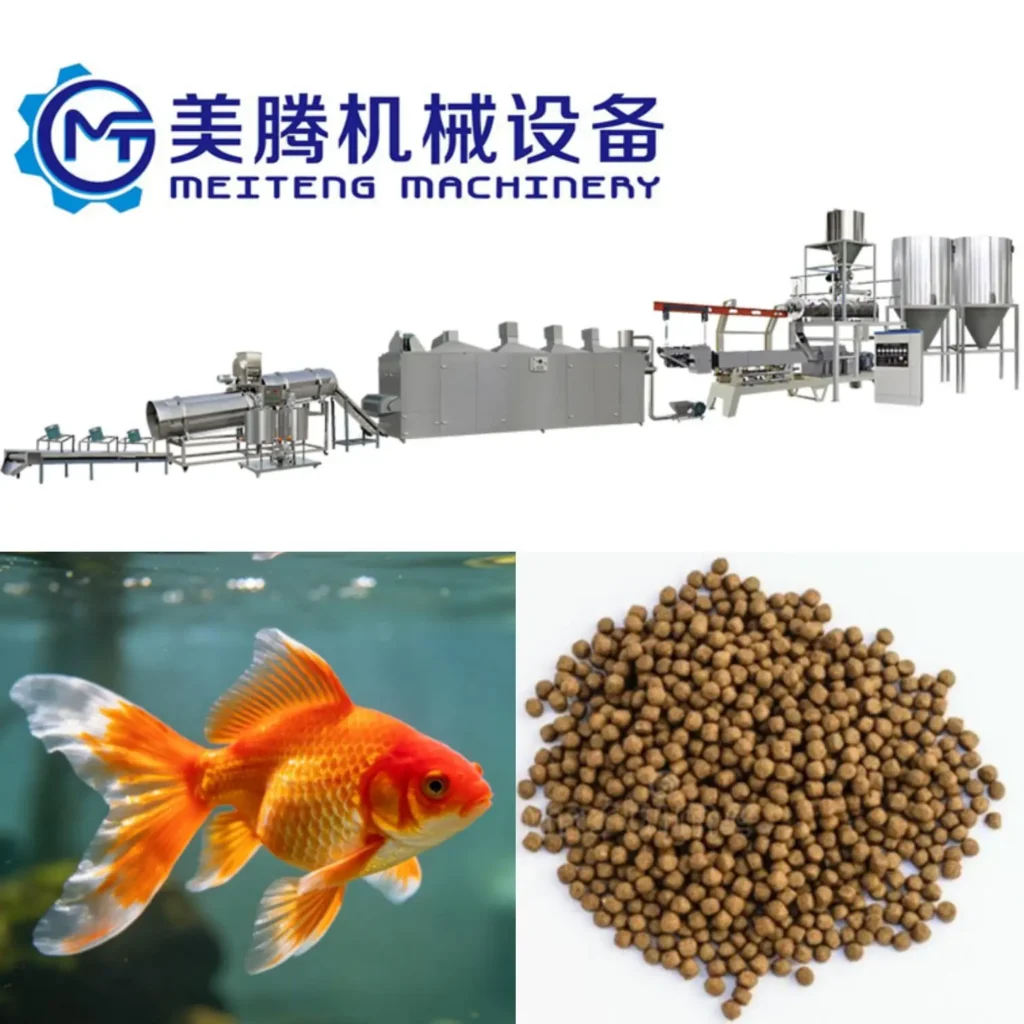
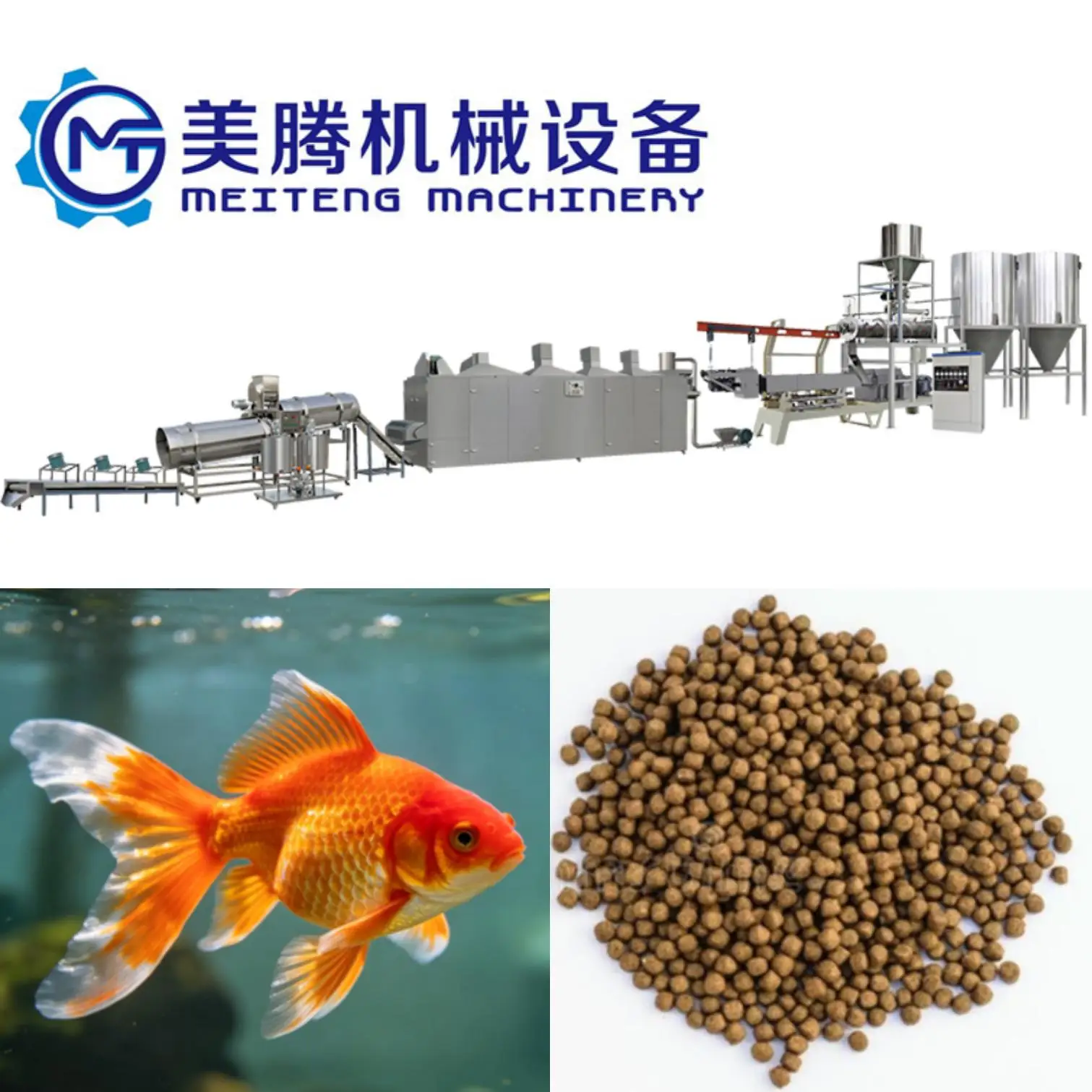


Multi-Species Fish Feed Production Line, Twin-Screw Extrusion, 304 Stainless Steel — engineered for floating and sinking pellet formats across trout, salmon, and catfish applications.
Screw configuration and die design are specified to your raw material formulation and target pellet density, with every station throughput-matched from extrusion through drying and coating. Line capacity and L:D ratio are confirmed against your actual ingredients rather than a generic benchmark.
- Trial runs on your raw material in our testing workshop validate pellet quality before shipment
- Complete layout, electrical schematic, and voltage confirmation provided prior to production
- On-site installation, commissioning, and operator training included with ongoing wear parts support
Description
Integrated Turnkey Layout — Every station on this fish feed production line is throughput-matched by a single supplier, from batching through extrusion to packing, eliminating the bottleneck gaps that form when separate vendors supply isolated machines.
Technical Specifications
| Parameter | Value |
|---|---|
| Product Type | Fish Feed Production Line |
| Output Capacity | 300-600 kg/h (basis not stated in source — confirm raw material formulation, moisture content, pellet size) |
| Screw Type | Twin-screw extruder |
| Construction Material | 304 stainless steel contact surfaces |
| Target Species | Trout, salmon, catfish (multi-species) |
| Line Stations | Twin-screw extrusion, drying, flavouring/coating |
| Control System | Configurable PLC or MCC (confirm before production) |
| Voltage & Frequency | Configurable to target market (confirm before production) |
| Pellet Format | Floating and sinking |
| Die Configuration | Matched to raw material and target density (confirm at trial) |
| L:D Ratio | Specified per formulation (confirm at trial) |
Application Suitability
| Application | Material or Output |
|---|---|
| Floating trout and salmon pellets | High-protein formulation with fish meal and oil |
| Sinking catfish feed | Plant-protein base with soy and corn derivatives |
| Multi-species aquaculture production | Variable protein-to-starch ratios across species requirements |
| Pellet density control | Expansion rate adjusted via screw configuration and die selection |
What a Nominal Capacity Rating Leaves Out About Your fish feed production line turnkey
Your formulation determines real throughput, not the nameplate.
Most buyers compare lines by a single number printed on a quote. I have watched a kibble line stall at barely half its rated output because the buyer’s recipe carried more meat meal than the generic screw profile could convey. The extruder choked, the dryer ran empty, and the whole shift bled money. A fish feed production line turnkey project carries the same risk when capacity is quoted on a reference material that does not match your actual protein-to-starch ratio or moisture window [NEED_CITE: typical variance between nominal and actual extruder throughput on high-fat formulations].
Screw Profile Dictates What Your Formula Actually Becomes
The twin-screw extruder at the heart of this line is configured with screw elements and die geometry matched to your raw material blend, not copied from a catalogue build. Protein-rich salmon formulations demand different shear and residence time profiles than starch-heavy catfish recipes. When the screw profile is wrong, pellets exit under-expanded or overworked, and density drifts outside the window your market expects.
Density Control Across Floating and Sinking Formats
Producing floating pellets for trout and sinking pellets for catfish on the same fish feed production line turnkey installation requires deliberate die changes and moisture adjustment. The extrusion section is designed so that die swaps and barrel temperature reprofiling can happen within a shift, keeping changeover practical rather than theoretical. Barrel zone heating and moisture injection points give operators the control band needed to hold target buoyancy across species [NEED_CITE: expansion index and bulk density targets for floating versus sinking aquaculture pellets].
Why L:D Ratio Matters for High-Protein Aquatic Feed
A longer barrel gives high-protein formulations the residence time needed for thorough starch gelatinisation before the die plate. When the L:D ratio is too short for a salmon recipe heavy in fish meal, the material exits undercooked and pellets crumble in water. The configuration here is specified during the trial phase so that screw length, element sequencing, and die land length are all locked to your formulation before the machine is built.
The Hidden Cost of Mismatched Station Capacity
When the extruder pushes material faster than the dryer can handle moisture removal, pellets leave the line with internal moisture pockets that trigger mould in storage. I have seen coating drums flood because the upstream extrusion rate was never reconciled against drum volume. These mismatches are invisible on a quote sheet but surface within the first week of production [NEED_CITE: consequences of throughput imbalance between extrusion and drying stations in feed processing].
Why This Line Is Procured Differently
Every station — extrusion, drying, coating, cooling — is specified under one supplier so that throughput is calculated across the full chain rather than assumed from individual machine ratings. Screw configuration and die design are recorded against your specific raw material, not borrowed from a generic template. An in-house testing workshop runs your actual ingredients before shipment, producing a trial report that confirms output rate, pellet density, and expansion behaviour. Electrical schematics and control language are confirmed before fabrication, so commissioning does not stall on a voltage mismatch or an operator interface in the wrong language.
Documentation & Verification
- Line layout with capacity calculation tied to your raw material formulation
- Trial run report on your actual ingredients before shipment
- Screw and die configuration record matched to target species and pellet density
- Electrical schematic with confirmed voltage and control language
- Operation and maintenance manual with wear parts list
Installation, Commissioning & Support
- Foundation load and footprint verified against twin-screw extruder weight and vibration profile
- Dedicated power circuit sized to confirmed rated load and voltage specification
- PLC or MCC control language set before shipment to match operator requirements
- On-site die and screw configuration fine-tuning during first production run
- Wear parts list with replacement intervals for screws, dies, and barrel liners
What to Prepare Before Requesting a Quotation
To configure a line that actually holds its output on your material, share your target species list, a representative raw material formulation with protein and moisture percentages, and the pellet diameter range you need. Confirm the voltage and frequency at your plant, the available floor space and ceiling height, and whether you need both floating and sinking capability from one extrusion station.
Frequently Asked Questions
Q: How is line capacity verified on my specific fish feed formulation rather than a nominal rating?
A: Before production, your raw material is run through the extruder in the supplier’s testing workshop. The trial report records actual output rate, pellet density, and expansion index on your formulation. That report — not a generic benchmark — becomes the basis for the capacity figure in your contract.
Q: How do you match throughput between extruder, dryer, and coating drum?
A: Each station’s capacity is calculated against the extruder’s confirmed output on your material. The dryer’s residence time and moisture removal rate, and the coating drum’s volume and cycle time, are specified so no station forces the upstream machine to slow down.
Q: Can the same line produce both floating and sinking pellets for different species?
A: Yes. Floating and sinking formats require different die configurations, barrel temperature profiles, and moisture settings. The line is designed so that die swaps and parameter adjustments happen within a normal shift, allowing multi-species production without extended downtime.
Q: What does the commissioning schedule look like at my plant?
A: Commissioning covers mechanical alignment, electrical verification, and initial production runs with your material. Operator training happens on-site during this phase, covering screw and die changes, temperature profiling, and routine maintenance tasks specific to your configuration.
Q: How are voltage, frequency, and PLC language confirmed before shipment?
A: Your plant’s electrical specification and preferred control language are documented during the layout and proposal stage. The electrical schematic is approved before fabrication so that motors, drives, and the operator interface arrive matching your local standards.
Related products
-
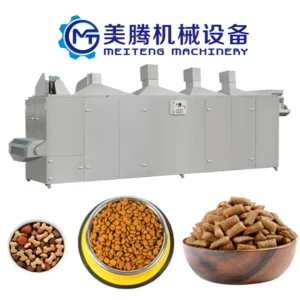
MT85 500kg/h Multi-Purpose Pet Food Processing Line for Dogs Cats Birds Fish & More-380V 50Hz Three Phase 45KW
¥65,000.00 Select options This product has multiple variants. The options may be chosen on the product page -
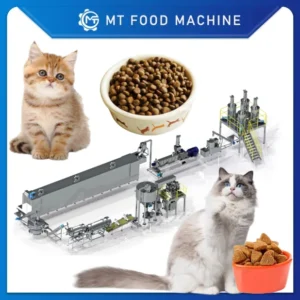
MT135 Brand 2.5-3.0t/h PLC Controlled Multi-Species Cat Food Processing Line
¥55,000.00 Select options This product has multiple variants. The options may be chosen on the product page -
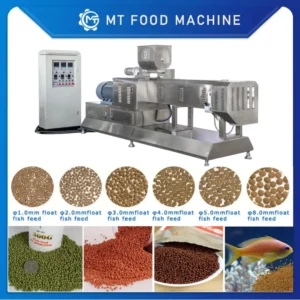
4-5t/h High Capacity Multi-Species Fish Feed Processing Line to Produce Fish Food
¥65,000.00 Select options This product has multiple variants. The options may be chosen on the product page -
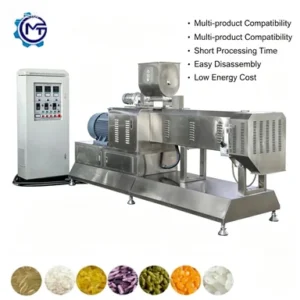
Durable Stainless Steel Twin Screw Extruder Floating Sinking Aquatic Fish Feed Processing Production Equipment
¥65.00 Select options This product has multiple variants. The options may be chosen on the product page