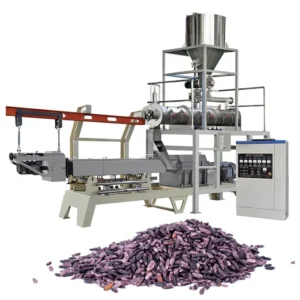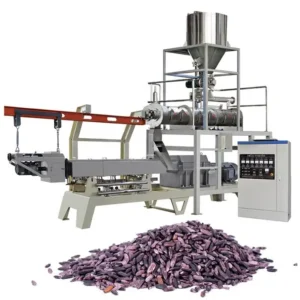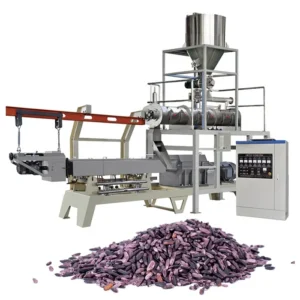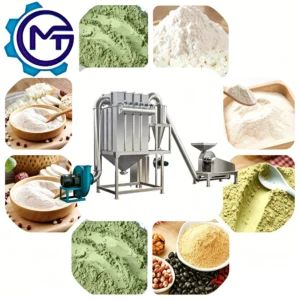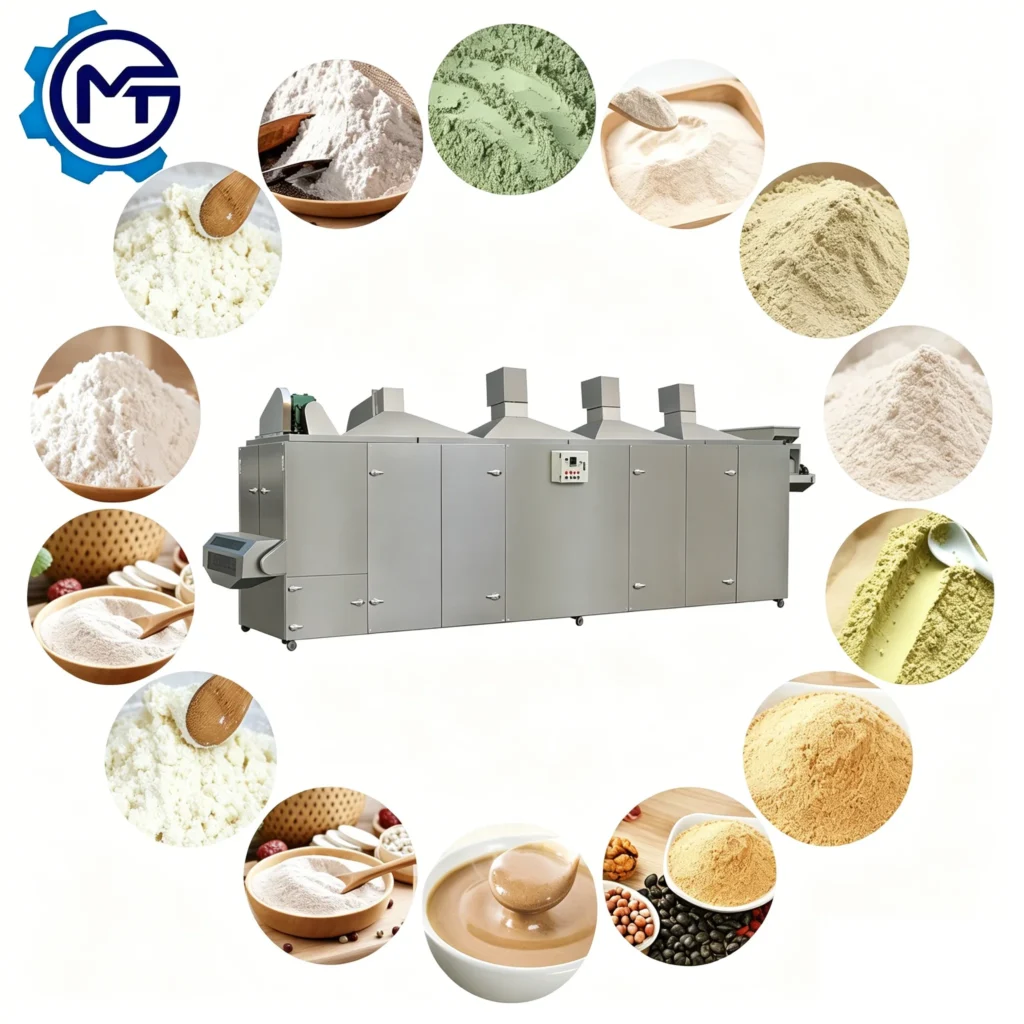


Infant Nutrition Powder Processing Line, 200-500 kg/h, Food-Grade 304 SS, Full Automatic — engineered as a turnkey project from raw material batching through extrusion, drying, milling and packing, with every station matched to prevent throughput bottlenecks. Screw configuration and die design are specified to your grain formulation and target powder density before production begins. Line layout, capacity calculation, and trial run on your actual raw material are completed in our testing workshop prior to shipment.
- Heat source options: electric / gas / steam matched to factory utility
- Touch control digital system for consistent recipe execution
- On-site installation, commissioning, and operator training included
Description
Thermally balanced extrusion and drying stages — line throughput calculated per station against your grain blend so the infant nutrition powder production line turnkey never starves the mill or floods the packing table.
Technical Specifications
| Parameter | Value |
|---|---|
| Product Type | Infant Nutrition Powder Processing Line |
| Processing Capacity | 200–500 kg/h (basis not stated in source — confirm raw material, moisture and formulation) |
| Construction Material | Food-Grade 304 Stainless Steel |
| Heat Source Options | Electric / Gas / Steam |
| Control Interface | Touch Control Panel with Digital System |
| Automation Level | Full Automatic |
| Key Line Stations | Mixers, Baking Ovens, Extrusion, Milling, Packing |
| Raw Materials | Rice, Corn, Beans, Various Grains |
| Output Formats | Nutrition Powder, Porridge, Baby Food Formulations |
| Assembly State | Complete Line (multiple stations) |
| Warranty | 1 Year |
| After-Sales | Overseas Engineer Service Available |
| Certification Status | CE and ISO certified facility; line-specific scope to be confirmed |
| Voltage & Frequency | To be confirmed against target market utility standard |
| PLC / MCC Brand & Language | To be confirmed before production |
Application Suitability
| Application | Material or Output |
|---|---|
| Infant nutrition powder manufacturing | Rice, corn, bean blends formulated for infant and toddler consumption |
| Baby food porridge production | Pre-cooked multi-grain porridge flakes or instant powder |
| Fortified cereal powder processing | Vitamin and mineral fortified grain-based nutritional powder |
| Multi-grain thermal processing | Heat-treated rice, corn and legume blends for infant feeding programmes |
| Institutional nutrition supply | Validated, food-grade processing of fortified porridge and powder for feeding programmes |
Why a Turnkey Line Quoted on Paper Capacity Fails on Real Grain
The infant nutrition powder production line turnkey must be sized to your actual grain moisture and formulation, not a catalogue number.
I have watched a porridge line sit idle for weeks because the drying tunnel was spec’d for a throughput the extruder could only reach on dry corn grits — once the buyer’s bean-and-rice blend entered the barrel at higher moisture, the dryer flooded and the mill choked. The buyer paid for a 500 kg/h line and ran at half that for the first month. [NEED_CITE: moisture content impact on extrusion throughput and drying load]
When the line is assembled from separate vendors, each station hits its own nameplate number but the overall output collapses at the weakest link.
Station Throughput Matching Across the Baby Food Line
Every station in this infant nutrition powder production line turnkey — batching, mixing, extrusion, drying, milling and packing — is calculated against the same raw material profile. The mixer batch cycle, the extruder screw speed, the dryer belt residence time and the mill feed rate are locked to a single throughput figure so material never queues or starves between stages.
Utility Planning Before the First Bolt Goes Down
Heat source selection — electric, gas or steam — is confirmed against the factory’s available utility before the dryer and baking ovens are built. Voltage and frequency are validated against the destination market standard so the control cabinet, motor starters and heating elements arrive ready to energise on day one of commissioning. [NEED_CITE: voltage and frequency standards by export market]
Reading the Specs That Actually Matter for Nutrition Powder
Raw material range — rice, corn, beans and various grains — dictates screw profile selection when an extrusion stage is part of the line. Different grains gelatinise at different barrel temperatures and moisture levels, so the screw configuration must match the buyer’s dominant formulation rather than a generic build. Food-grade 304 stainless steel contact surfaces prevent metallic contamination across every product contact point, a requirement that becomes critical when processing infant formulations subject to heavy-metal limits. The touch control digital panel stores recipe parameters so batch-to-batch consistency is maintained without relying on operator memory alone. Heat source flexibility — electric, gas or steam — lets the buyer align the dryer and baking ovens with whatever utility is most economical or available locally.
What Mis-matched Dryer Capacity Costs You
If the dryer is undersized relative to the extruder output on your specific grain blend, partially dried material reaches the mill still holding excess moisture. The mill then produces a powder that clumps during packing, fails shelf-life tests and triggers batch rejections. The line runs, but effective saleable output drops while energy consumption climbs because the dryer runs hotter and longer to compensate. [NEED_CITE: consequences of insufficient drying in food powder processing]
Why Procurement Should Happen Under One Roof
The entire infant nutrition powder production line turnkey — from batching through packing — is supplied by one engineering team, so station throughput is calculated together rather than negotiated between vendors who each guarantee only their own machine. Screw and die configurations, where extrusion applies, are specified to the buyer’s actual grain formulation and target powder density rather than copied from a generic template. An in-house testing workshop runs the buyer’s raw material before shipment, producing a trial run report that confirms capacity and product quality before the line leaves the factory. Pre-sales layout drawings include utility connection points so the buyer’s contractor can prepare water, power and drainage before the machines arrive. Post-installation support covers operator training on the digital control system and a documented wear parts schedule so replacement screws, dies and seals are ordered before they are needed.
Documentation & Verification
- Line layout and capacity calculation showing throughput matched across every station
- Trial run report on your rice, corn or bean blend from the in-house testing workshop
- Electrical schematic with voltage and frequency confirmed for your market
- Screw and die configuration record specified to your formulation and target powder density
- Factory test record documenting output and product quality before dispatch
Installation, Commissioning & Support
- Utility connection schedule covering electric, gas and steam options matched to your plant supply
- Digital touch control panel configured to operator language before the line powers on
- Drying and baking oven heat source commissioned and balanced to extruder output on your grain blend
- Operator training covering recipe storage, parameter adjustment and safety interlocks on the control panel
- Wear parts list with replacement intervals for mixing blades, extruder screws and dryer belts
What to Include in Your Inquiry
Send the grain types and ratios you intend to process, along with the moisture content of each raw material entering the mixer. Confirm the voltage, frequency and available heat source — electric, gas or steam — at the installation site. Specify the target daily output in kilograms and the available floor area with ceiling height so the line layout can be drawn to fit your building envelope. State whether you need a trial run on your raw material in the testing workshop before the line ships.
Frequently Asked Questions
Q: How is line capacity verified against my specific grain formulation and moisture content?
A: We run your actual rice, corn, bean or multi-grain blend through the extrusion and drying stages in our in-house testing workshop. The trial run report records throughput, moisture reduction and powder quality so the capacity figure you receive is tied to your material, not a generic catalogue rating.
Q: How do you match throughput between the extruder, dryer, milling and packing stations?
A: Each station is sized to the same throughput target based on your formulation data. Mixer batch cycles, extruder screw speed, dryer belt residence time, mill feed rate and packing speed are all calculated together so no single unit bottlenecks the infant nutrition powder production line turnkey.
Q: What voltage, frequency and control language options are confirmed before production?
A: We request your site utility standard and operator language before the electrical cabinet is built. The touch control digital panel, motor starters and heating elements are then configured and tested at the factory to match your local power supply and language requirement.
Q: Can I run a trial on my raw material in your testing workshop before the line ships?
A: Yes. We process your grain blend through the relevant stages and document output rate, product moisture and powder particle quality. The trial run report is shared with you before shipment so any screw, die or dryer adjustment is completed at the factory, not on your floor.
Q: What is included in on-site installation, commissioning and operator training?
A: Our engineer positions each station, connects utilities, balances throughput across the line and runs production on your raw material. Operators are trained on the digital control panel, recipe storage, safety interlocks and the documented wear parts replacement schedule before handover.
Related products
-

High Precision Automatic 500kg/h Baby Food Nutrition Powder Rice Extrusion Processing Line
¥8,238.27 Add to cart -
High Productivity New Condition Nutritious Baby Food Meal Replacement Powder Production Line
¥30.00 Select options This product has multiple variants. The options may be chosen on the product page -
Small Scale MT Brand Automatic Baby Food Nutrition Powder Rice Flour Making Machine with 500kg/h Production Capacity PLC Control
¥9,500.00 Add to cart -
150-500kg/h Twin Screw Extruder Baby Rice Flour Making Machine
¥9,500.00 Select options This product has multiple variants. The options may be chosen on the product page