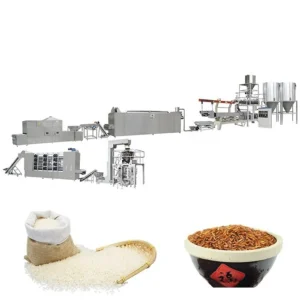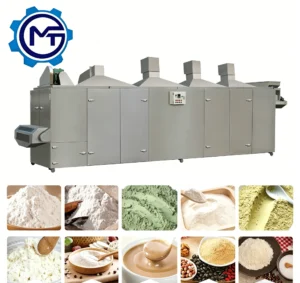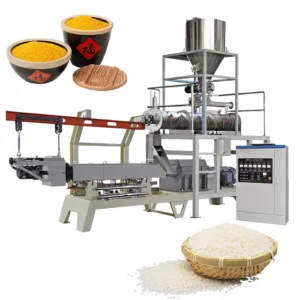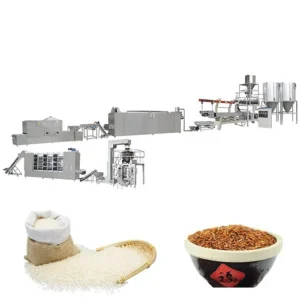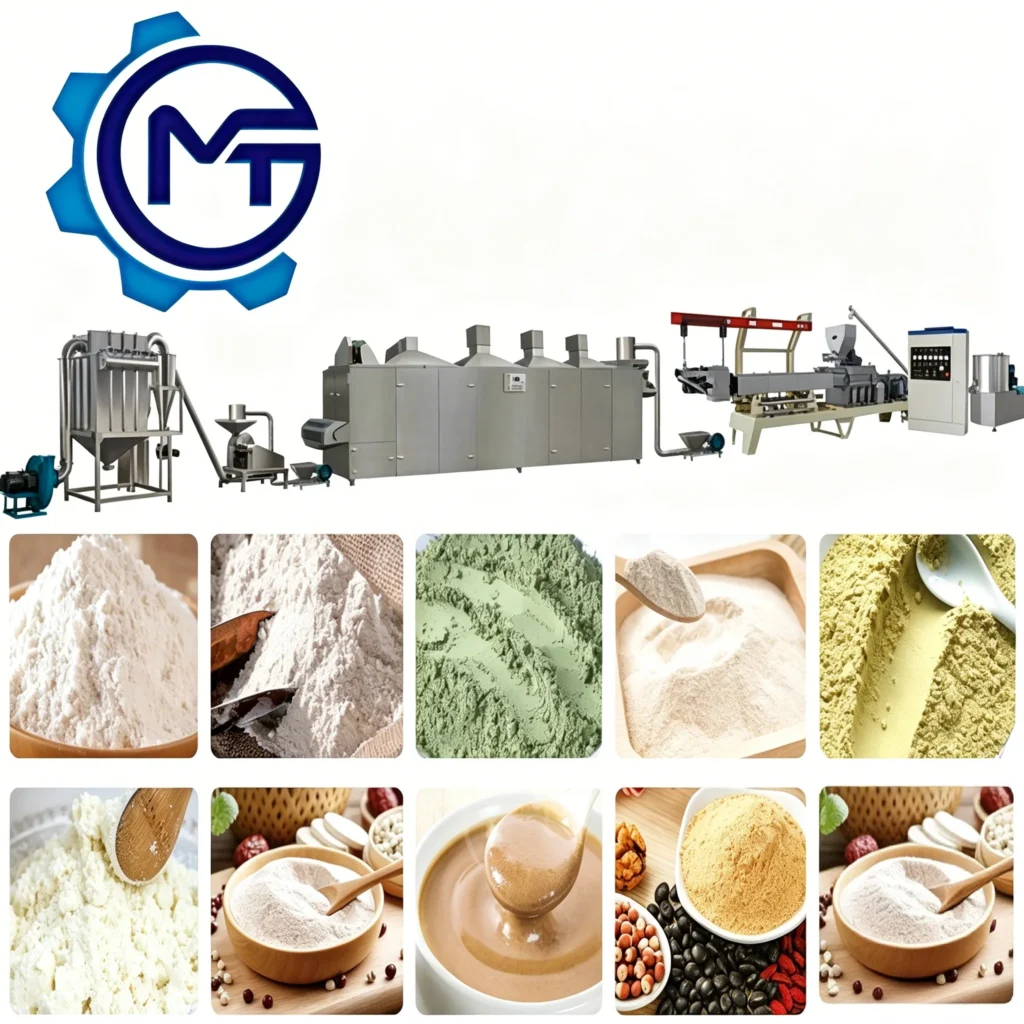
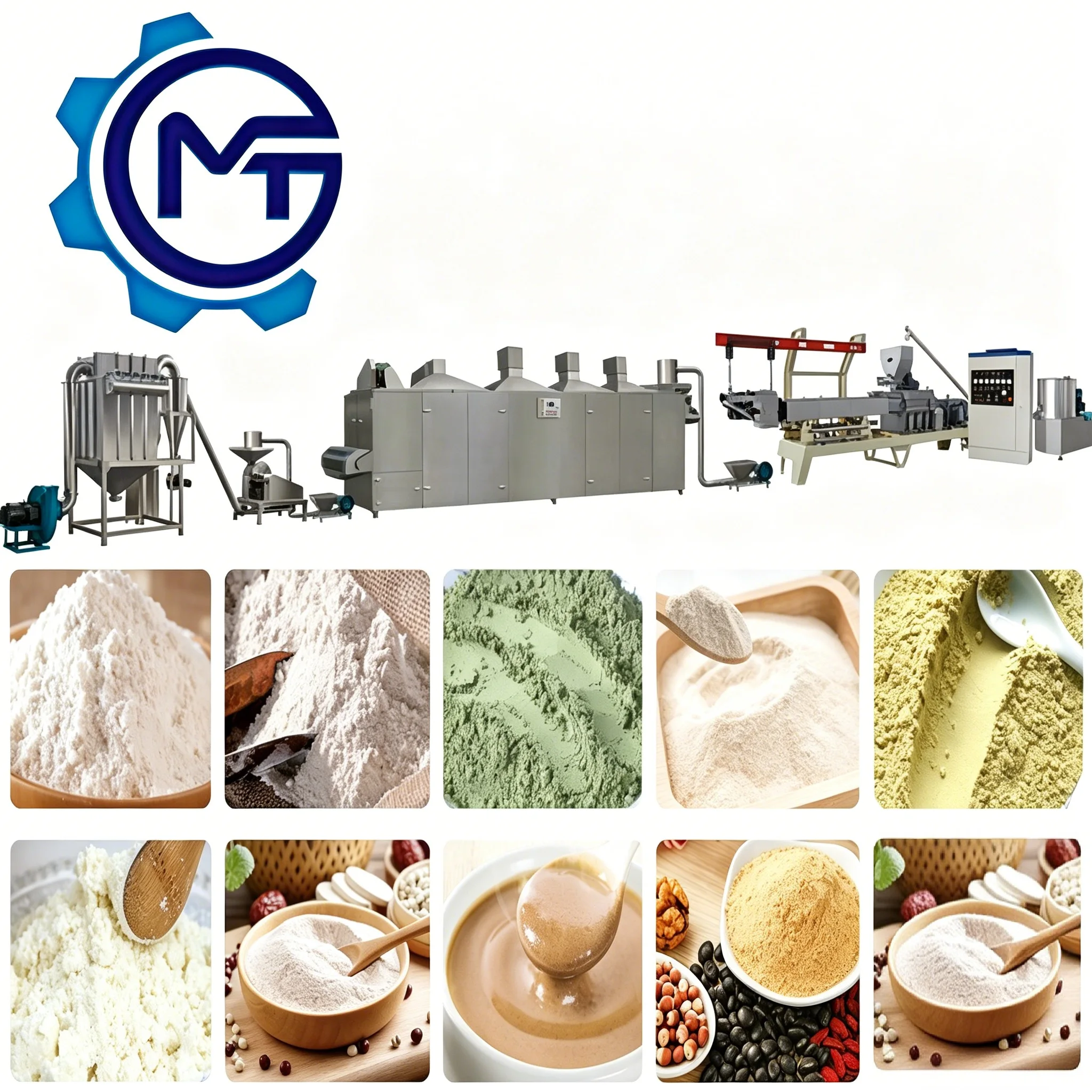
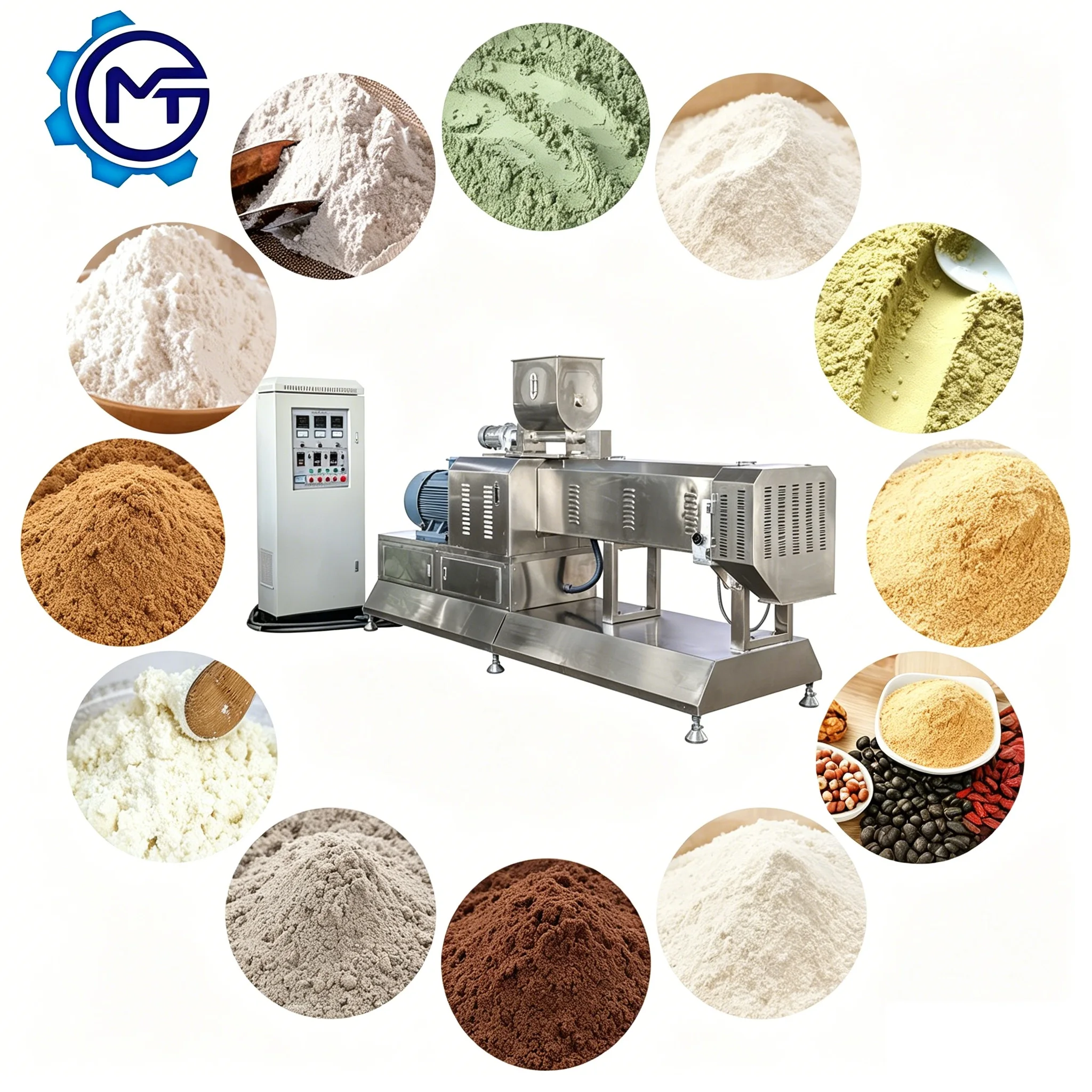
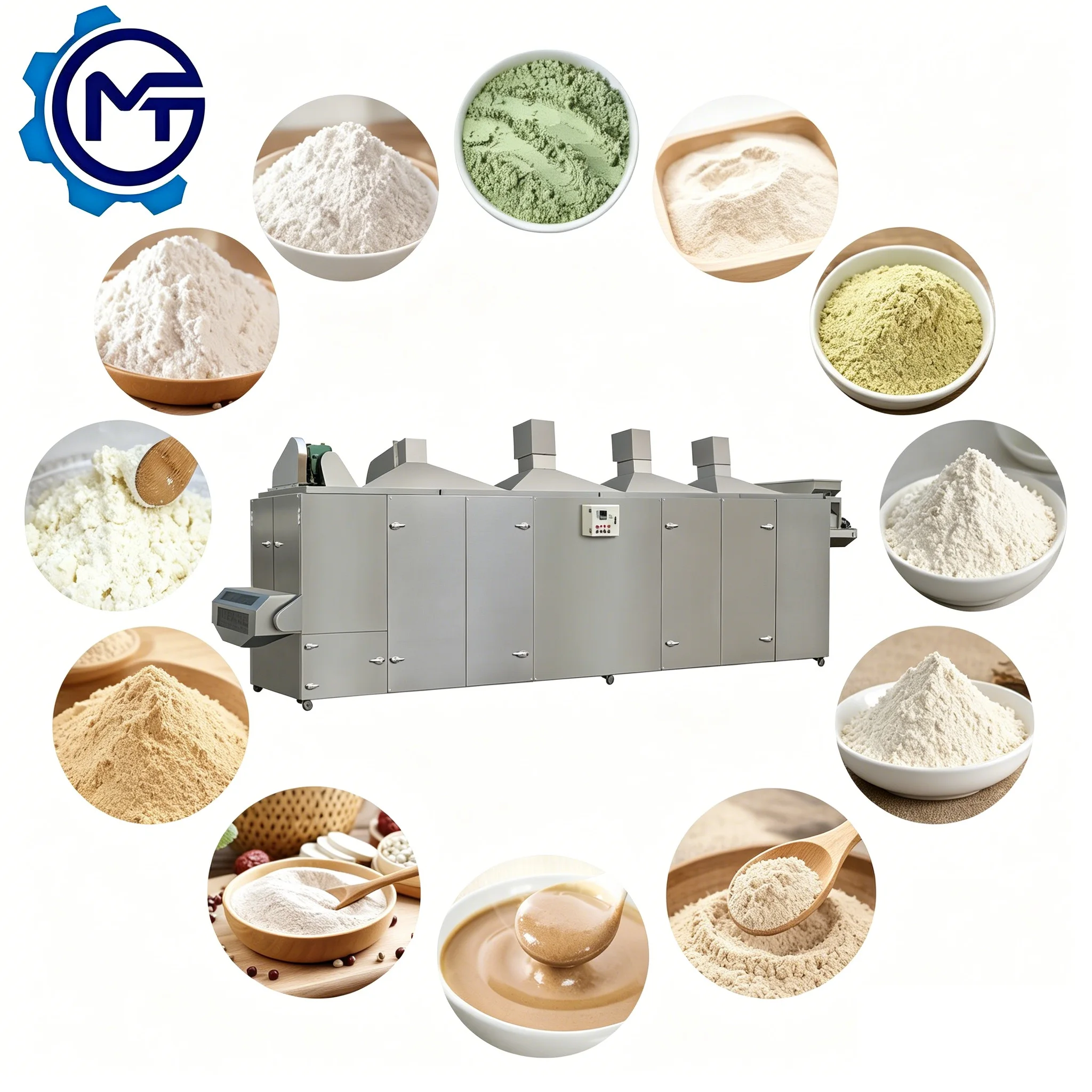

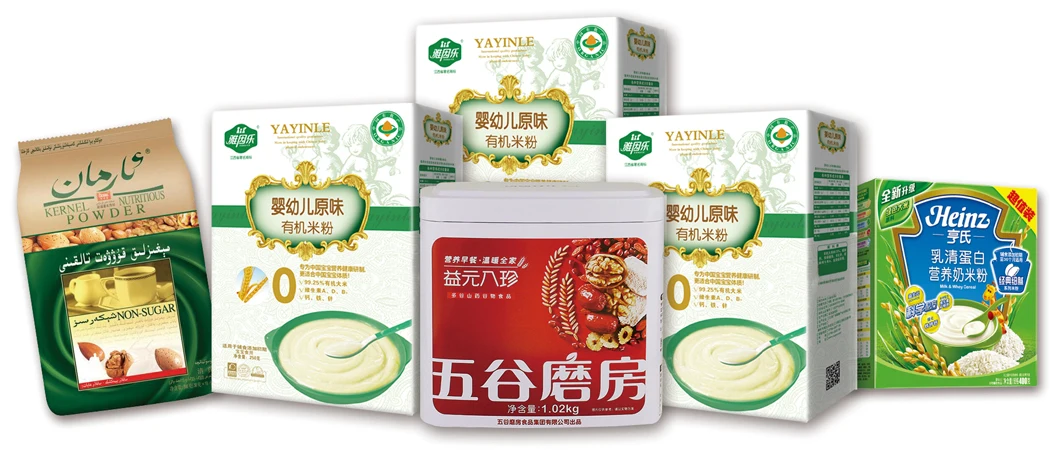
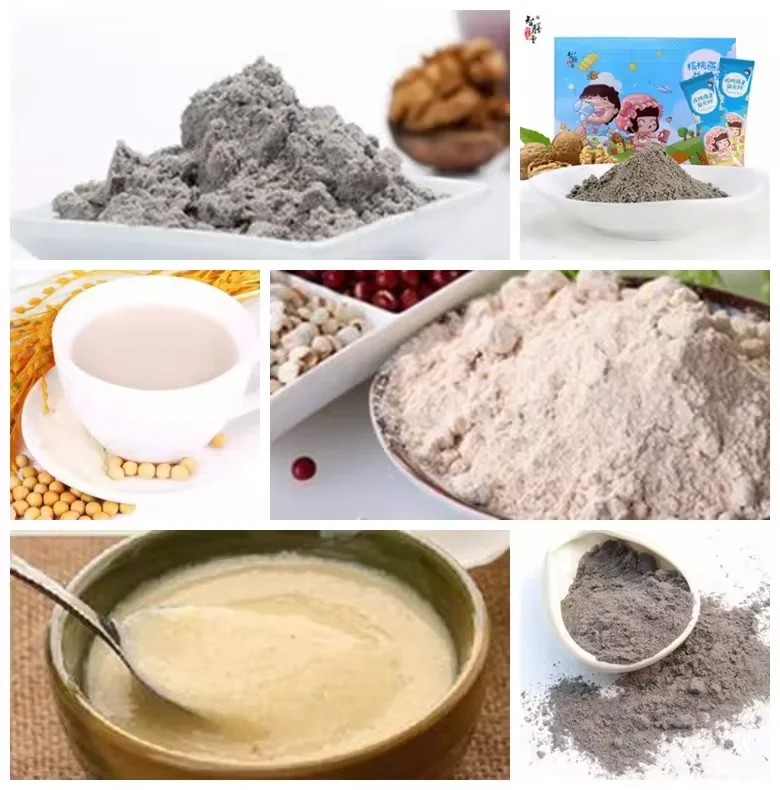
Nutrition Powder Processing Line, 200-500 kg/h, Food-Grade 304 SS, PLC Touch Control — configured as a complete turnkey project from batching through extrusion, drying, milling and packing. Each station’s throughput is calculated against your grain formulation so no dryer or cooler bottlenecks the rated output. Screw profile and die geometry are matched to rice, corn or bean blends for consistent gelatinisation and powder density. We run your actual raw material in our testing workshop and deliver the trial report before shipment.
Description
Throughput-Matched Engineering — Every station on this baby rice nutrition powder processing line is capacity-balanced from batching through packing, preventing downstream bottlenecks that typically emerge when equipment is sourced piecemeal.
Technical Specifications
| Parameter | Value |
|---|---|
| Product Type | Nutrition Powder Processing Line |
| Output Capacity | 200–500 kg/h (basis not stated in source — confirm raw material type, moisture content and formulation) |
| Construction Material | Food-grade 304 stainless steel |
| Control System | Touch control panel with digital system |
| Heat Source Options | Electric / Gas / Steam |
| Automation Level | Fully automatic |
| Line Stations | Baking oven, mixer (full line configuration to be confirmed) |
| Warranty | 1 year |
| Certification | CE, ISO |
Application Suitability
| Application | Material or Output |
|---|---|
| Baby rice cereal production | Rice flour, rice grits with vitamin and mineral premix |
| Infant formula porridge processing | Corn, rice and blended grain bases |
| Grain-based nutritional powder | Soybean, quinoa, oat and multi-grain formulations |
| Fortified food programme supply | Micronutrient-enriched cereal blends for institutional procurement |
What "Rated Capacity" Really Means on a Nutrition Powder Line
A nutrition powder processing line turnkey solution only meets its rated output when every station — mixer, extruder, dryer, cooler, packing — is balanced to that figure.
Buyers regularly encounter lines quoted at a nominal capacity that collapses once production starts. The dryer cannot keep pace with the extruder. The cooling belt becomes a parking lot. Packing stations idle while upstream catches up [NEED_CITE: throughput mismatch patterns in grain processing lines]. On this line, each station is specified against the same throughput target so the 200–500 kg/h range applies to the complete process rather than one isolated machine.
Layout Planning That Prevents Station-Level Bottlenecks
A nutrition powder processing line turnkey project starts with the floor plan. Station placement must account for material flow direction, operator walkways, and utility routing. When the baking oven sits too far from the mixer, moisture absorption during conveying shifts the feedstock specification before it even enters the extruder barrel.
Commissioning Schedules That Account for Real Variables
Installation phases are sequenced so that electrical and steam connections are verified before mechanical assembly begins [NEED_CITE: industrial line commissioning sequence standards]. For this line, the heat source option — electric, gas, or steam — determines which utility contractor mobilises first. Commissioning proceeds station by station, with the mixer and baking oven tested independently before the full line is run as one continuous system.
Reading the Specifications That Matter
The food-grade 304 stainless steel contact material is mandatory for infant food production where regulatory audits demand traceable material certificates. The touch control panel with digital system centralises setpoints for barrel temperature zones and screw speed, reducing reliance on manual adjustments that cause batch-to-batch variation. Heat source flexibility — electric, gas, or steam — allows the line to integrate with existing plant utilities rather than forcing a new boiler installation. Fully automatic operation means the PLC manages start-up and shutdown sequences, protecting the screw elements from dry-run damage when operators make errors.
The Cost of Skipping Throughput Verification
When a buyer accepts a line based on a single machine’s nameplate capacity without checking downstream balance, the consequences surface during the first production week. The dryer backs up. Uncooled product clogs the packing hopper. Operators improvise by slowing the extruder, which then changes residence time and gelatinisation behaviour in the barrel — producing powder that does not meet the nutritional specification [NEED_CITE: extrusion residence time and starch gelatinisation relationship]. Retrofitting a larger dryer or adding a second cooling belt after installation costs far more than specifying matched capacity at the quotation stage.
Why Buyers Source This Line Here
Each line ships with a layout and capacity calculation that shows how every station contributes to the overall throughput, so buyers see the engineering basis before committing. The screw configuration and die design are specified to the buyer’s actual grain formulation, not copied from a generic template. An in-house testing workshop allows trial runs on the customer’s own premix — quinoa, whey protein blends, or local grain varieties — before the equipment leaves the factory. Twin-screw expertise spans baby rice, infant formula porridge, and multi-grain nutritional powder, meaning the process parameters are drawn from real production data. Pre-sales consultation extends through on-site installation, commissioning, and operator training at the buyer’s facility.
Documentation & Verification
- Line layout drawing showing station spacing, material flow and utility connection points
- Capacity calculation sheet matching each station to the confirmed throughput target
- Screw and die configuration record matched to your grain formulation
- Electrical schematic with voltage and frequency confirmed for your facility
- Factory trial run report on your actual premix before dispatch
- Operation and maintenance manual with wear parts replacement intervals
Installation, Commissioning & Support
- Foundation requirements verified against line weight and vibration profile of the baking oven
- Dedicated electrical circuit sized to the confirmed heat source option and total connected load
- Mechanical assembly sequenced so the touch control panel is powered and tested before full line start-up
- First production run supervised on-site with parameter adjustments documented for future reference
- Operator training covers digital control interface navigation, emergency shutdown and daily cleaning procedures
- Wear parts list provided with recommended stock quantities for screws, dies and seals
- Maintenance schedule aligned to production hours with food-grade lubricant specifications
Before You Request a Quotation
Provide your target grain formulation — whether single-grain rice, multi-grain blends, or protein-fortified recipes — along with the moisture content of your incoming raw material. Confirm your facility voltage, frequency, and preferred HMI language so electrical specifications match local standards. Share your available floor area and ceiling height so the layout accounts for conveying runs and dryer exhaust routing. If you need a trial run on your specific premix before shipment, state this at the inquiry stage to allocate workshop time.
Frequently Asked Questions
Q: How is the 200–500 kg/h capacity determined for my specific formula?
A: That range depends on raw material type, moisture content, and formulation density. We calculate actual throughput after receiving your premix composition and running a trial in our testing workshop. The capacity figure in the specification then reflects your real material behaviour rather than a generic benchmark.
Q: What happens if my local voltage does not match the standard configuration?
A: We confirm your facility voltage, frequency, and phase during the quotation stage. The electrical schematic and control panel components are then specified accordingly. Confirming this early avoids commissioning delays caused by transformer mismatches or incompatible motor ratings at your site.
Q: Can the line handle quinoa or whey protein blends, not just plain rice?
A: Yes. Screw configuration, barrel temperature profile, and die design are matched to the raw material you provide. Our testing workshop runs your actual premix before shipment so gelatinisation rate and powder density are verified on your formula, not on a standard rice flour test batch.
Q: Which documents come with the shipment for regulatory compliance?
A: The package includes a CE declaration of conformity, ISO certificate, factory test record, trial run report, electrical schematic, screw and die configuration record, and operation manual. These documents support food safety audits and import customs clearance in your destination market.
Q: How long does on-site installation and commissioning typically take?
A: Duration depends on facility readiness — whether utilities, foundations, and exhaust systems are prepared before our team arrives. A prepared site allows mechanical assembly, electrical connection, parameter tuning, and operator training to proceed on a typical multi-week schedule.
Related products
-
Industrial Instant Corn Paste Production Line Nutritional Powder Processing Equipment Meal Replacement Nutrition Powder Machine
¥65.00 Select options This product has multiple variants. The options may be chosen on the product page -
Small Scale MT Brand Automatic Baby Food Nutrition Powder Rice Flour Making Machine with 500kg/h Production Capacity PLC Control
¥9,500.00 Add to cart -
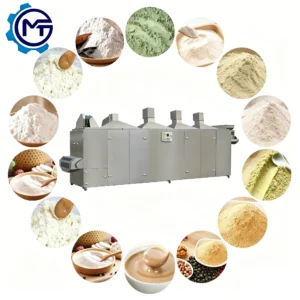
Full Automatic Complete Baby Food Nutrition Powder Porridge Processing Production Line for Infant Nutrition Factory
¥9,500.00 Add to cart -
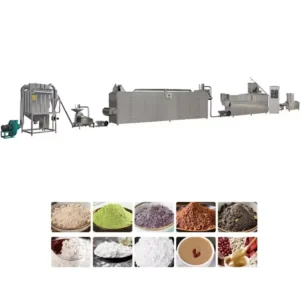
Healthy Baby Food Production Line Nutritional Powder Equipment for Baby Food Supplements for Flour Processing Machinery
¥8,500.00 Select options This product has multiple variants. The options may be chosen on the product page