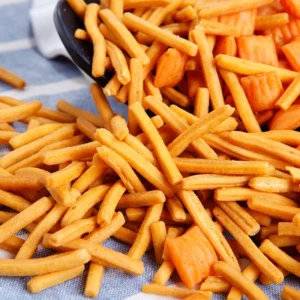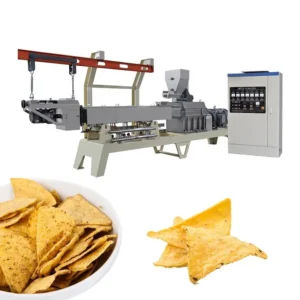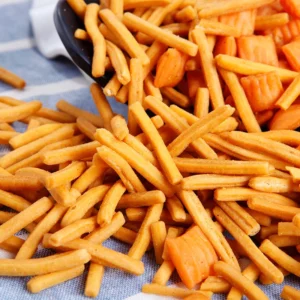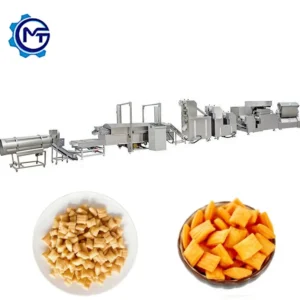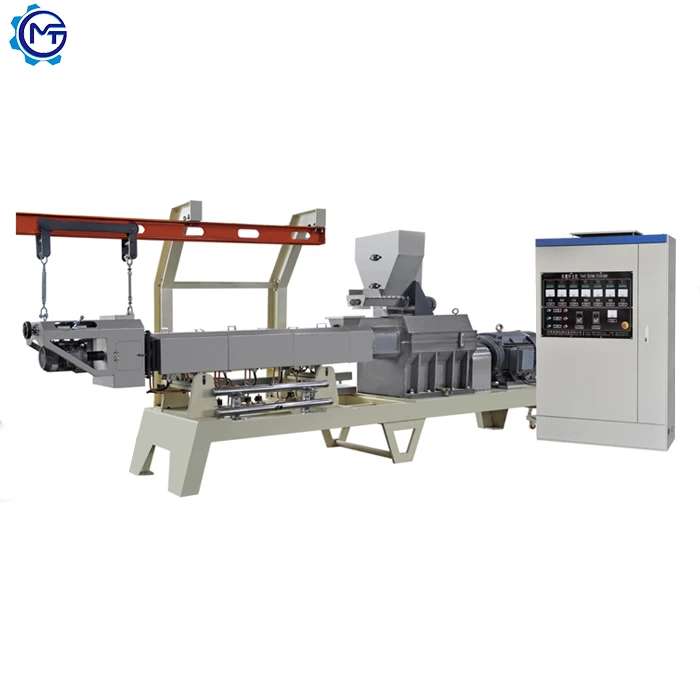
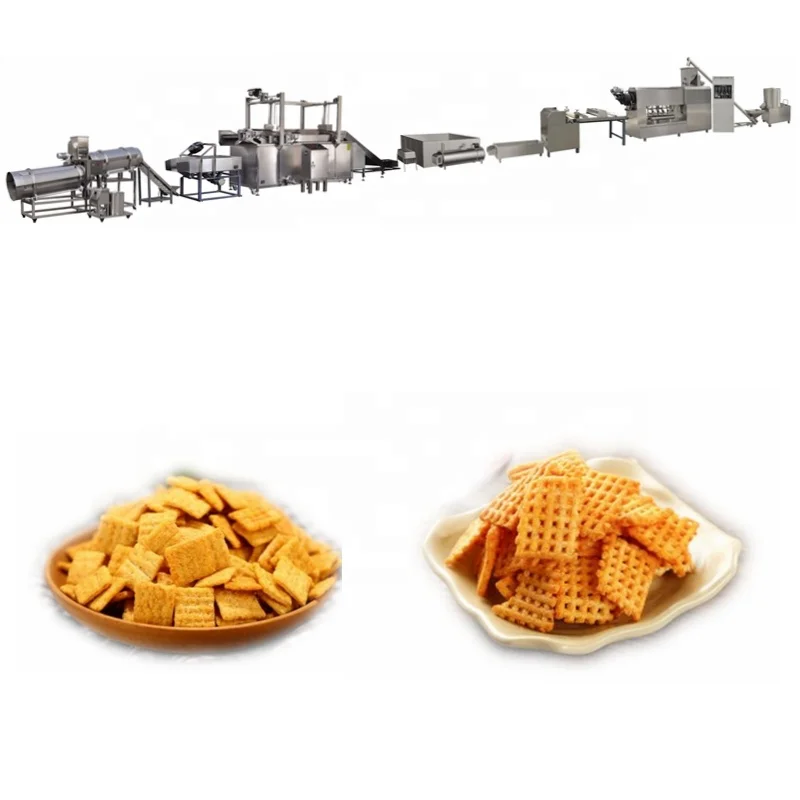
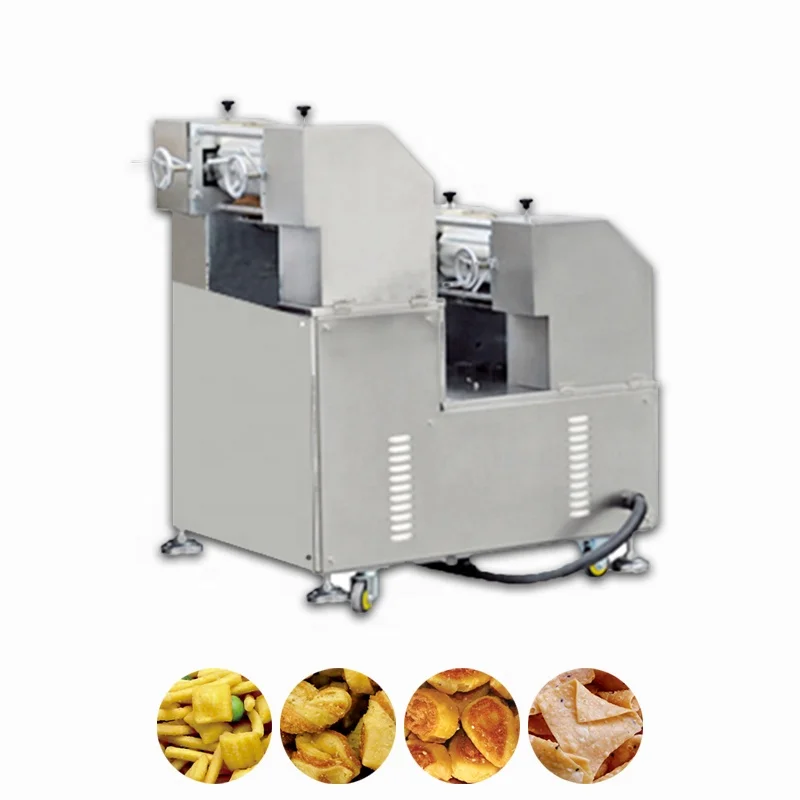
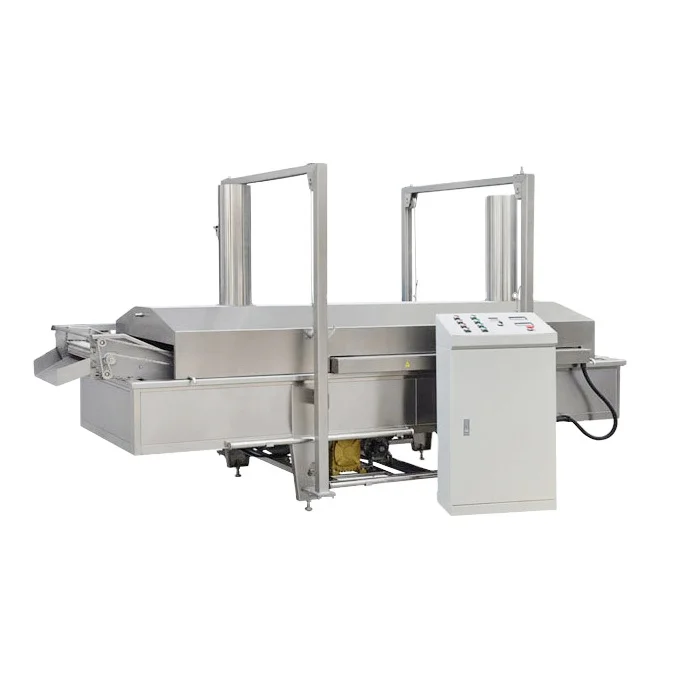


MT100/MT120 Single Screw Extruder Puffed Snack Production Line, 120 kg/h Output, 50–70 kW — complete turnkey project from batching through extrusion, frying, flavoring and cooling with throughput matched at every station.
- High and low pressure screw configuration adapts to wheat flour, corn starch and potato starch
- Die design adjustable for grid crusts, strips, tubes, rings and custom shapes
- Energy options across electricity, gas, diesel or steam to fit facility utilities
- CE and ISO certified with food-grade stainless steel 201/304 construction
Line layout, capacity calculation and screw configuration specified to your raw material, with in-house trial run before shipment.
Description
Integrated Line Engineering — Every station from mixing to cooling is throughput-matched and documented before the extruder is built, eliminating mid-line bottlenecks that cap real output below nominal capacity.
Technical Specifications
| Parameter | Value |
|---|---|
| Model | MT100/MT120 |
| Product Type | Single Screw Extruder Puffed Snack Production Line |
| Extruder Type | Single screw extruder |
| Screw Configuration | High and low pressure screw |
| Rated Power | 50–70 kW (electricity); 50–60 kW (gas/diesel) |
| Voltage & Frequency | Three phases 380V/50Hz, Single phase 220V/50Hz (customizable to local voltage) |
| Overall Dimensions (L×W×H) | 12000–26000 × 1200 × 2200 mm |
| Output Capacity | 120 kg/h (basis not stated in source — confirm raw material / moisture / product format) |
| Construction Material | Food grade stainless steel 201/304 |
| Energy Options | Electricity / Gas / Diesel / Steam |
| Electrical Components | Siemens (China) or China top brand motors; Delixi or Delta inverters |
| Die Configuration | Adjustable dies for grid crust, strips, round tube, square tube, ring, cartoon shapes |
| Raw Materials | Wheat flour, corn starch, potato starch |
| Line Stations | Mixer → Screw conveyor → Single screw extruder → Pulling and cutting machine → Automatic fryer → Automatic flavoring line → Cooling |
| Standards | CE, ISO 9001 |
Application Suitability
| Application | Material or Output |
|---|---|
| Grid-pattern rice cakes and secondary puffed snacks | Wheat flour, corn starch, potato starch blends |
| Strip-shaped vegan salad snacks and golgappa / pani puri | Starch-based raw materials |
| Screw shells, round tubes, square tubes, rings | Corn starch and potato starch with die changeover |
| Cartoon-shaped puffed snacks for children’s market | Starch formulations with custom die inserts |
What the Capacity Number on Your Quote Actually Means
Real throughput is set by the slowest matched station, not the extruder nameplate.
When a puffed snack production line turnkey is quoted at a nominal output, buyers often discover after commissioning that the fryer or flavoring drum cannot absorb the extruder’s actual discharge rate. I spent two days on-site in West Africa watching half-fried rice cakes pile up because the fryer basket cycle was slower than the cutting machine feed — a mismatch that should have been caught at the layout stage [NEED_CITE: industrial equipment throughput matching practices]. The MT100/MT120 puffed snack production line turnkey addresses this by documenting the calculated throughput of every station before production begins.
Station Sequence and Throughput Matching
A complete puffed snack production line turnkey requires every station to pass product at the same rate. The sequence here — mixer, screw conveyor, single screw extruder, pulling and cutting machine, automatic fryer, automatic flavoring line, and cooling conveyor — is specified so that no station accumulates backlog or starves the next. Each conveyor speed and batch cycle is set against the extruder’s discharge rate during line layout design.
Die Changeover and Product Format Flexibility
The adjustable die plate on the MT100/MT120 allows operators to switch between grid crust, strip, tube, ring, and custom cartoon shapes without replacing the entire screw assembly. This matters for producers running multiple SKUs on one extruder — changeover time is measured in minutes rather than hours, and the high-and-low-pressure screw configuration handles the varying back-pressures that different die geometries demand [NEED_CITE: single screw extruder die pressure and product expansion].
Reading the Specs That Matter for Starch Extrusion
The high-and-low-pressure screw configuration directly affects how starch gelatinises inside the barrel. A single screw running wheat flour needs different compression zones than one running pure potato starch, and this configuration gives operators a wider processing window without swapping screws. The 50–70 kW rated power range reflects the motor load across electricity-heated and fuel-heated barrel variants — gas or diesel heating shifts energy cost off the electrical supply, which is a practical choice in regions where three-phase power is metered at peak tariff rates. Stainless steel 201/304 contact surfaces meet food-grade requirements, and the selectable energy sources — electricity, gas, diesel, steam — let the line fit existing utility infrastructure rather than forcing a workshop upgrade.
The Hidden Cost of an Undersized Fryer
When the automatic fryer is spec’d by basket volume alone without calculating cycle time against the extruder’s continuous output, partially fried product backs up on the cutting table. Oil temperature drops as overloaded baskets are submerged, producing uneven color and texture that fails quality checks. Producers then slow the extruder to match the fryer, running the entire puffed snack production line turnkey below the capacity they paid for [NEED_CITE: continuous frying capacity calculation for extruded snacks].
Why Sourcing the Full Line from One Supplier Changes the Commissioning Week
The MT100/MT120 is engineered as one project rather than assembled from separate vendors. The line layout and capacity calculation document confirms that mixer batch size, conveyor transfer rate, fryer cycle, and flavoring drum residence time are all balanced to the extruder output. Screw and die configuration is recorded against the buyer’s specific raw material, not copied from a generic build. Voltage and frequency are confirmed to the destination country’s standard before the electrical panel is wired. A trial run on the buyer’s actual flour or starch blend is conducted in the in-house testing workshop, so product density and texture are validated before the line ships.
Documentation & Verification
- Line layout and capacity calculation showing throughput at each station from mixer to cooling
- Screw and die configuration record matched to buyer’s raw material and target product shape
- Electrical schematic with voltage and frequency confirmed for destination country grid standard
- Trial run report on customer raw material conducted in testing workshop before shipment
- CE declaration of conformity and ISO 9001 certificate included with shipping documents
Installation, Commissioning & Support
- Foundation and floor space planned to the 12000–26000 mm line length with utility connection points marked
- Dedicated circuit sized to the 50–70 kW rated power draw with breaker and cable schedule provided
- Line arrives in station modules; assembly sequence documented so mechanical and electrical teams can work in parallel
- First-run parameter setting covers barrel temperature profile, screw speed, and fryer cycle matched to product spec
- Operator training covers die changeover, fryer oil management, and flavoring drum timing for each product format
- Wear parts list with reorder codes for screws, dies, and cutting blades included in the operation manual
What to Share When Requesting a Line Proposal
To size the MT100/MT120 line accurately, share your raw material formulation and moisture content, the target product shapes and daily output, your workshop length and ceiling height, and the local voltage and frequency standard. If you are running existing upstream mixing or downstream packing equipment, provide their throughput so the new line stations can be matched to them.
Frequently Asked Questions
Q: How is line throughput verified against my raw material and target product density?
A: A trial run is conducted in the in-house testing workshop using your actual flour or starch blend. The extruder output is measured over a timed run, and the result is used to confirm fryer cycle time, flavoring drum speed, and cooling conveyor length so every station matches real discharge rate rather than a generic nominal figure.
Q: What voltage, frequency, and control language are confirmed before shipment?
A: The electrical schematic is reviewed with the buyer before the panel is wired. The standard options cover three-phase 380V/50Hz and single-phase 220V/50Hz, and both are customizable to local grid requirements. Control language and labeling are set to match the operator team’s working language.
Q: How are frying and flavoring station capacities matched to extruder output?
A: The fryer basket cycle time and oil recovery rate are calculated against the extruder’s continuous discharge. The flavoring drum rotation speed and seasoning feed rate are then set so that no product waits between stations, preventing moisture loss or texture degradation on the transfer conveyors.
Q: Can a trial run be conducted on my raw material before delivery?
A: Yes. The testing workshop runs your specific wheat flour, corn starch, or potato starch formulation through the extruder with the selected die. The trial run report documents product density, expansion ratio, and texture, and any screw or barrel temperature adjustments are recorded before the line is shipped.
Q: What is the phased installation and commissioning schedule for a complete turnkey line?
A: Installation follows a documented sequence: mechanical station placement, utility connections, electrical panel termination, then individual station testing before the full line is linked. Commissioning covers parameter setting, operator training on die changeover and fryer management, and a production run to confirm throughput matches the layout calculation.
Related products
-
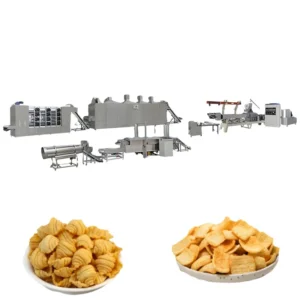
Automatic Fried Crispy Bugles Snacks Food Making Machines Wheat Flour Sala Food Extruder
¥100.00 Select options This product has multiple variants. The options may be chosen on the product page -
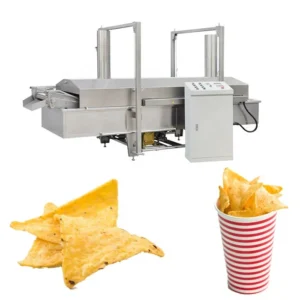
New Fully Automatic Large Capacity 304 Stainless Steel Savory Frying Snack Production Line Crisp Bugles Chips Processing Machine
¥30.00 Select options This product has multiple variants. The options may be chosen on the product page -
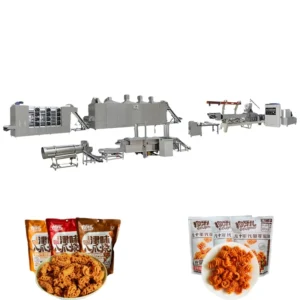
Fried Flour Corn Bugles Extruded Chips Pellets Doritos Snacks Food Machine Production Line Extruder
¥100.00 Select options This product has multiple variants. The options may be chosen on the product page -
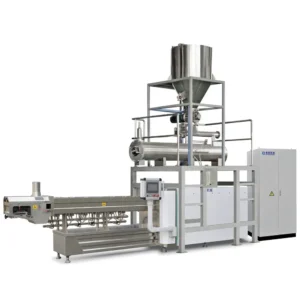
New Automatic 150-200kg/h Nimko Fried Pasta Snacks & Kurkure Making Machine Food Grade Stainless Steel High Productivity
¥8,585.00 Select options This product has multiple variants. The options may be chosen on the product page