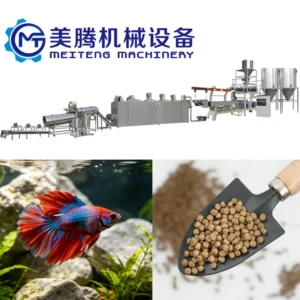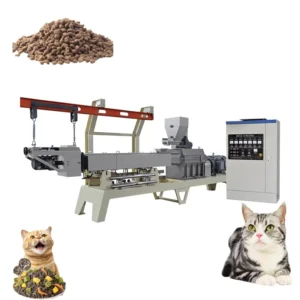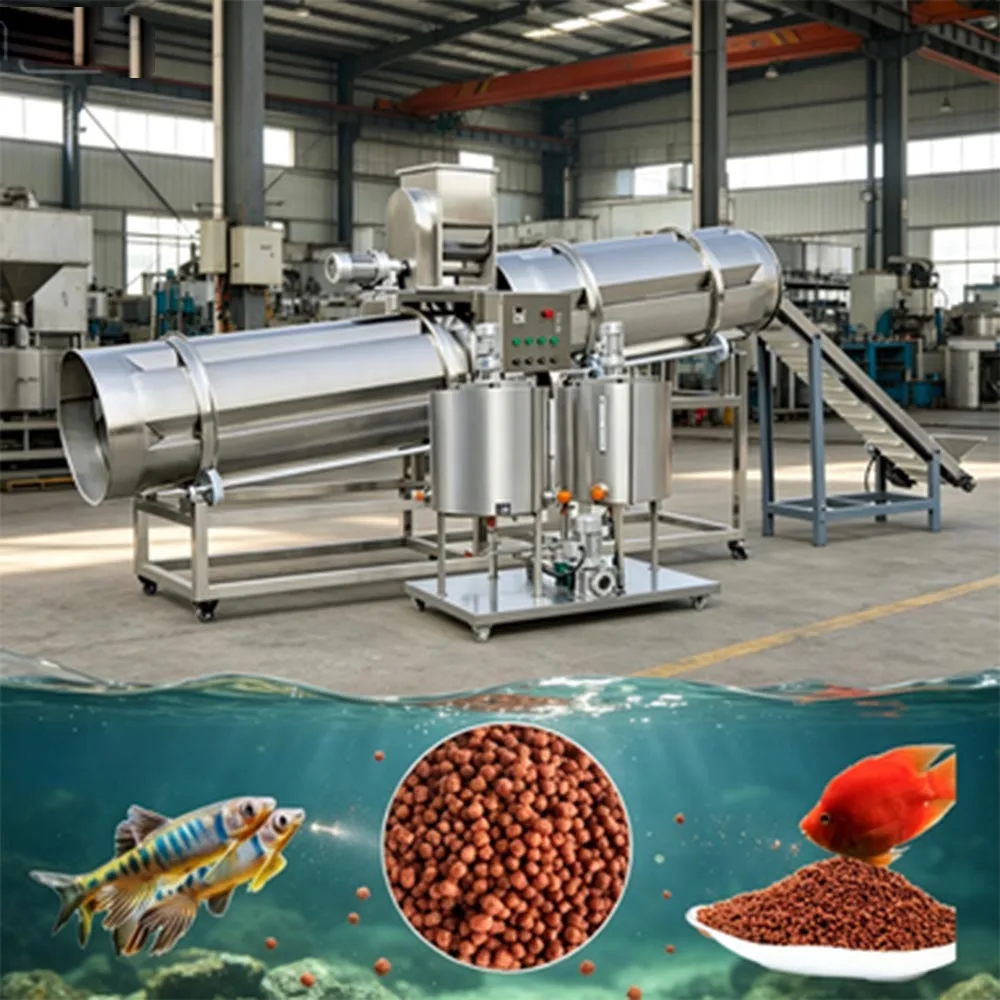
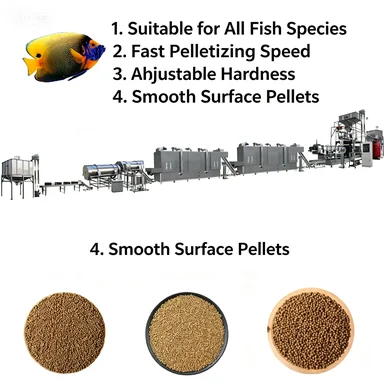
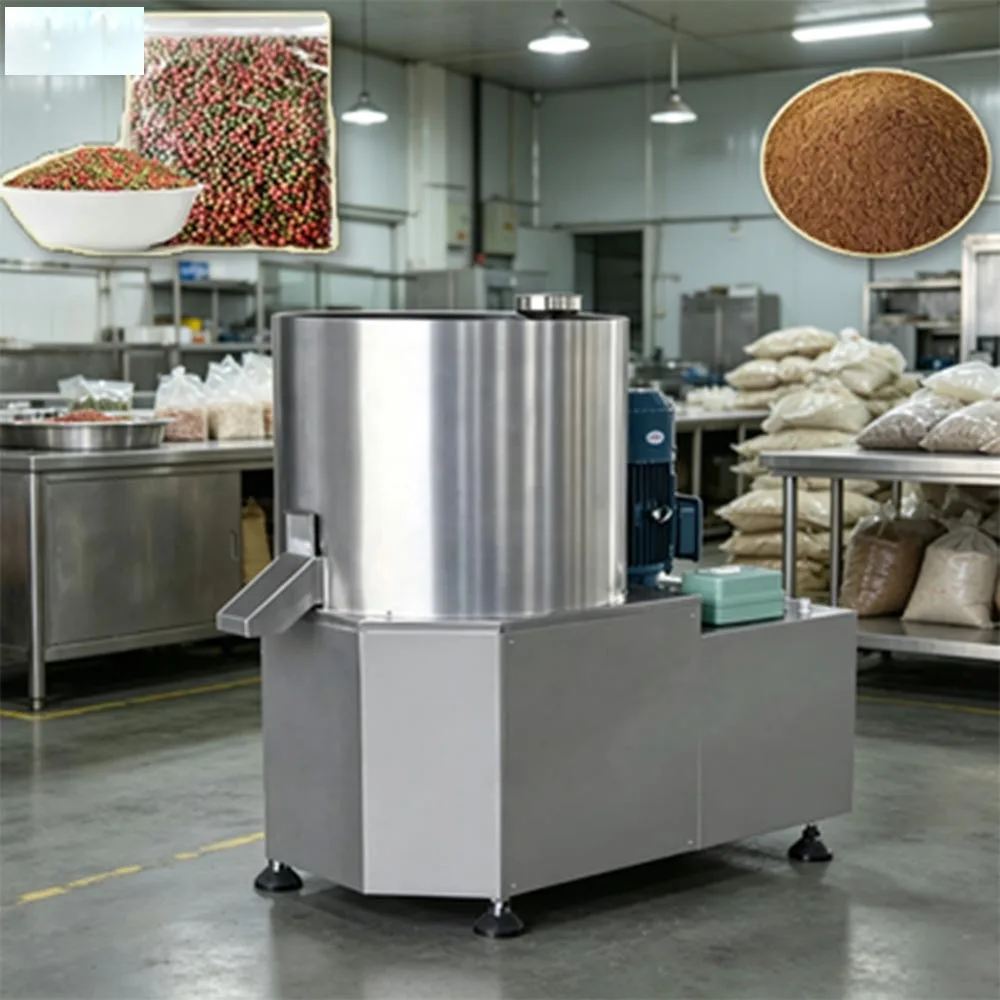
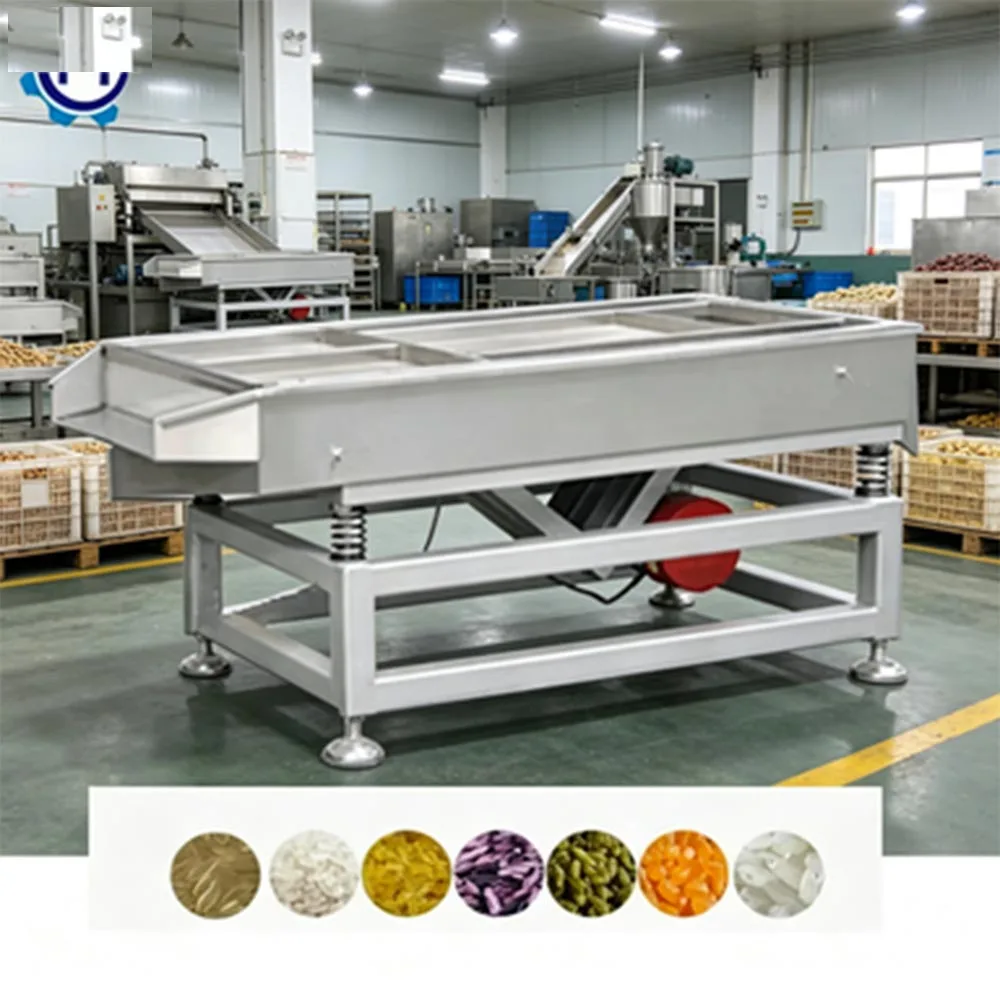
Wet Twin Screw Aquatic Fish Feed Extrusion Line, PLC Control, Food-Grade 304 SS — configured for floating and sinking pellet production from batching through drying and coating.
- Screw configuration and die design specified to your raw material formulation and target buoyancy
- Throughput-matched stations — mixer, extruder, dryer, seasoning drum, vibrating sieve, conveyors — sized as one integrated system
Line layout, capacity calculation, and in-house trial run on your raw material before shipment ensure the line performs to specification on arrival.
Description
Integrated throughput matching — every station from batching to packing is sized as one system, eliminating the bottlenecks that arise when an aquatic feed line is assembled from separate vendors.
Technical Specifications
| Parameter | Value |
|---|---|
| Product Type | Twin Screw Aquatic Fish Feed Extrusion Production Line |
| Extruder Type | Twin screw (wet extrusion) |
| Screw Configuration | Twin screw, matched to raw material formulation and target pellet buoyancy |
| Control System | PLC automatic control with MCC integration |
| Material Contact Parts | Food-grade 304 stainless steel |
| Line Stations | Raw material mixer, extruder, dryer, seasoning/coating machine, vibrating sieve, conveyor equipment |
| Output Products | Floating and sinking fish feed pellets |
| Pellet Adjustability | Size, hardness, and buoyancy adjustable per breeding requirements |
| Production Mode | Full continuous automatic production |
| Processing Capacity | Large stable processing capacity for medium-to-large scale production (basis to be confirmed — dependent on raw material formulation, pellet size, and moisture content) |
| Energy Design | Optimized energy-saving transmission structure and heating system |
| Assembly State | Complete matched production configuration |
| Certification | CE, ISO |
Application Suitability
| Application | Material or Output |
|---|---|
| Floating pellet production for koi, goldfish, and tropical fish | Fish meal, soybean meal, corn powder, compound additives |
| Sinking pellet production for catfish and tilapia | Fish meal, soybean meal, corn powder, compound additives |
| Shrimp feed pellet extrusion | Soybean meal, corn powder, compound additives formulated for crustacean nutrition |
| Medium-to-large scale industrial aquatic feed mass production | Continuous long-time uninterrupted operation across freshwater and ornamental species markets |
What "Rated Capacity" Leaves Out About Aquatic Feed Extrusion
A capacity figure means nothing unless it is tied to your actual raw material formulation and target pellet buoyancy.
I have seen lines quoted at a nominal throughput that dropped to barely half output once the customer switched from a standard fishmeal recipe to a high-fat shrimp formula. The twin-screw was configured for one material profile, and nobody asked about the real recipe before the machine left the factory. When the material behaves differently under heat and shear, the entire line — extruder, dryer, coating drum — falls out of balance [NEED_CITE: raw material formulation impact on twin-screw extrusion throughput]. This is why we trial-run on the buyer’s actual material before any aquatic fish feed extrusion production line turnkey project ships.
Screw and Die Configuration for Target Buoyancy
Floating and sinking pellets demand fundamentally different screw profiles and die geometries. The degree of starch gelatinisation, the shear energy applied inside the barrel, and the pressure drop at the die face all determine whether a pellet traps enough gas to float or compresses into a dense sinking form. On this aquatic fish feed extrusion production line turnkey system, the screw configuration and die design are specified to the buyer’s raw material and target buoyancy before production begins.
How Moisture and Shear Define Pellet Integrity
Wet extrusion introduces steam and water into the barrel, altering how proteins denature and starches gelatinise. The moisture level, combined with the screw speed and barrel temperature profile, controls expansion ratio and final pellet density. If these parameters are set generically rather than matched to the specific formulation, pellets may crack during drying or disintegrate in water before the fish can consume them. The PLC control system on this line maintains consistent barrel temperature and feed rate across long production runs [NEED_CITE: wet extrusion moisture and shear parameters for aquatic feed].
Reading the Specs That Actually Matter
The twin-screw wet extrusion design provides longer material residence time compared to single-screw alternatives, which is essential when working with high-protein aquatic feed formulations that require thorough gelatinisation. Food-grade 304 stainless steel on all material contact parts resists the corrosive effects of fish meal and compound additives over years of continuous operation. The PLC with MCC integration allows operators to monitor barrel temperature zones, screw speed, and feeder rate from a single interface, reducing batch-to-batch variation across shifts.
The Hidden Cost of Mismatched Line Stations
When an extruder is supplied without a dryer or coating drum sized to its actual output, the bottleneck moves downstream. Pellets pile up waiting for drying capacity, moisture remains too high for packing, and coating application becomes uneven. On a floating feed line, insufficient drying can cause pellets that initially float to absorb residual moisture and sink within hours. These failures rarely show up in a factory acceptance test running for only thirty minutes — they emerge during the first full production shift [NEED_CITE: throughput mismatch between extruder and dryer in feed processing lines].
Why Procurement Here Reduces Integration Risk
Every station on this line — mixer, extruder, dryer, seasoning machine, vibrating sieve, conveyors — is throughput-matched under one supplier, so no single unit constrains the others. The screw and die configuration is specified to the buyer’s raw material rather than copied from a generic build. An in-house testing workshop allows trial runs on the customer’s actual formulation before shipment, catching buoyancy and density issues early. Electrical schematics are confirmed against the target market’s voltage and frequency standards. Pre-sales consultation extends through on-site installation, commissioning, and operator training.
Documentation & Verification
- Line layout and capacity calculation confirming throughput matching across mixer, extruder, dryer, and coating stations
- Screw and die configuration record specified to buyer’s raw material formulation and target pellet buoyancy
- Trial run report on customer’s actual aquatic feed raw material conducted before dispatch
- Electrical schematic with voltage, frequency, and PLC control language confirmation for target market
- CE declaration of conformity and ISO certificate for the complete production line
- Operation and maintenance manual covering twin-screw extruder, dryer, and all downstream stations
Installation, Commissioning & Support
- Foundation and floor space planning based on the full line footprint from mixer through packing conveyor
- Dedicated power circuit sized to the PLC-controlled extruder motor and dryer heating system requirements
- Modular station delivery allowing phased installation of mixer, extruder, dryer, and coating equipment
- First-run parameter setting for barrel temperature zones, screw speed, and moisture injection calibrated to buyer’s formulation
- Operator training on PLC interface, die changes, and screw replacement procedures
- Wear parts list for screws, dies, and dryer components with recommended replacement intervals
Before You Request a Quote
To configure an aquatic feed line that matches your actual production conditions, we need your target species and pellet buoyancy requirement (floating, sinking, or both), the raw material formulation you plan to run, and your local voltage and frequency standards. If you have existing upstream batching or downstream packing equipment, share the specifications so we can size the interface conveyors accordingly. Specifying whether you need a trial run on your own raw material before shipment helps us schedule the testing workshop early in the project timeline.
Frequently Asked Questions
Q: How is output capacity verified and what raw material formulation is it based on?
A: Capacity is confirmed through a trial run on the buyer’s actual raw material in our in-house testing workshop. The trial report documents throughput, pellet density, buoyancy, and moisture content under the specific formulation. We do not quote a capacity figure without tying it to a defined recipe, pellet size, and target buoyancy — because the same extruder produces different outputs on different materials.
Q: How are screw configuration and die design selected to achieve target pellet buoyancy?
A: Floating pellets require higher starch gelatinisation and controlled expansion at the die face, while sinking pellets need denser compression with lower gas retention. We select screw element arrangement, barrel temperature profile, and die geometry based on the buyer’s raw material formulation and target species. The configuration record is documented and provided before shipment.
Q: What voltage, frequency, and PLC control language options are confirmed before shipment?
A: Electrical schematics are prepared after confirming the buyer’s local voltage and frequency standards. The PLC control language is set to the operator’s preference. This confirmation happens during the specification stage, well before production begins, to avoid commissioning delays on site.
Q: Is a trial run on the buyer’s raw material conducted before shipment?
A: Yes. Every line undergoes a trial run using the customer’s actual raw material in our testing workshop. The resulting report covers pellet size, buoyancy, density, moisture level, and observed throughput. This allows us to adjust screw configuration and process parameters before the equipment leaves the factory.
Related products
-
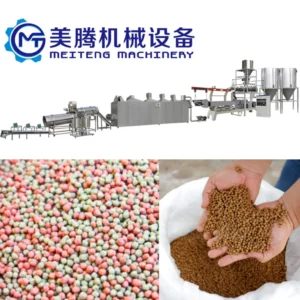
2-3t/h High Capacity Multi-Species Fish Feed Processing Line to Produce Fish Food
¥55,000.00 Select options This product has multiple variants. The options may be chosen on the product page -
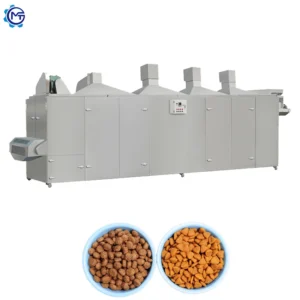
Premium Pet Food Processing Equipment Dog Cat Feed Making Machine
¥9,500.00 Select options This product has multiple variants. The options may be chosen on the product page -
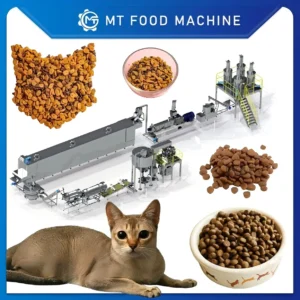
100-200kg/h Capacity PLC Controlled Multi-Species Cat Food Processing Line
¥34,000.00 Select options This product has multiple variants. The options may be chosen on the product page -
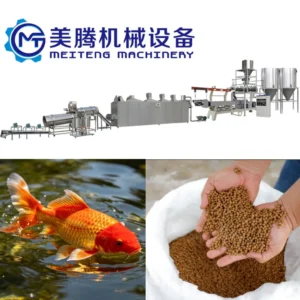
1.0-1.5t/h High Capacity Multi-Species Fish Feed Processing Line to Produce Fish Food
¥45,000.00 Select options This product has multiple variants. The options may be chosen on the product page