

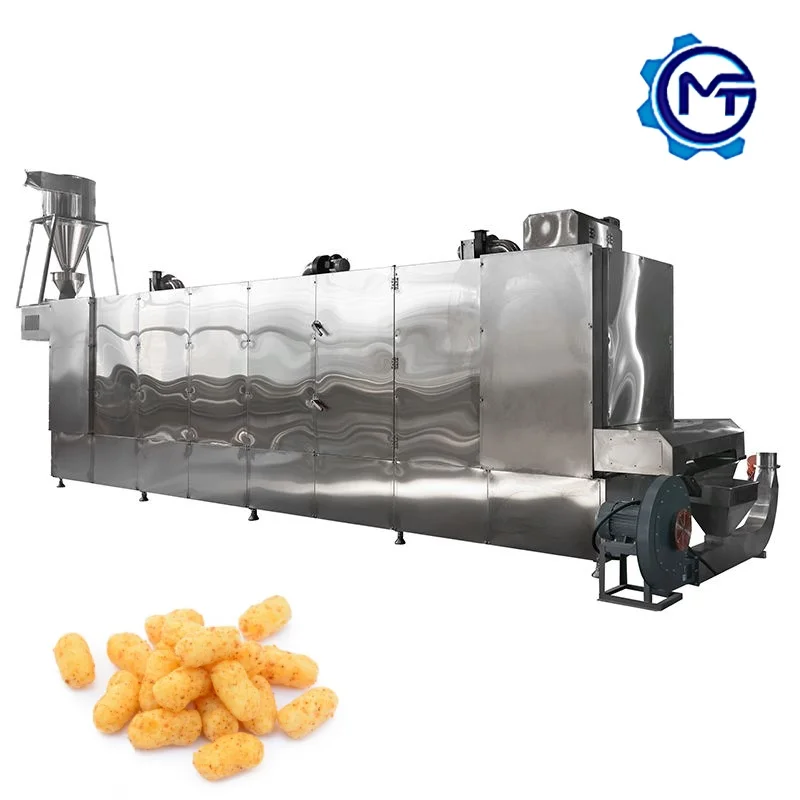
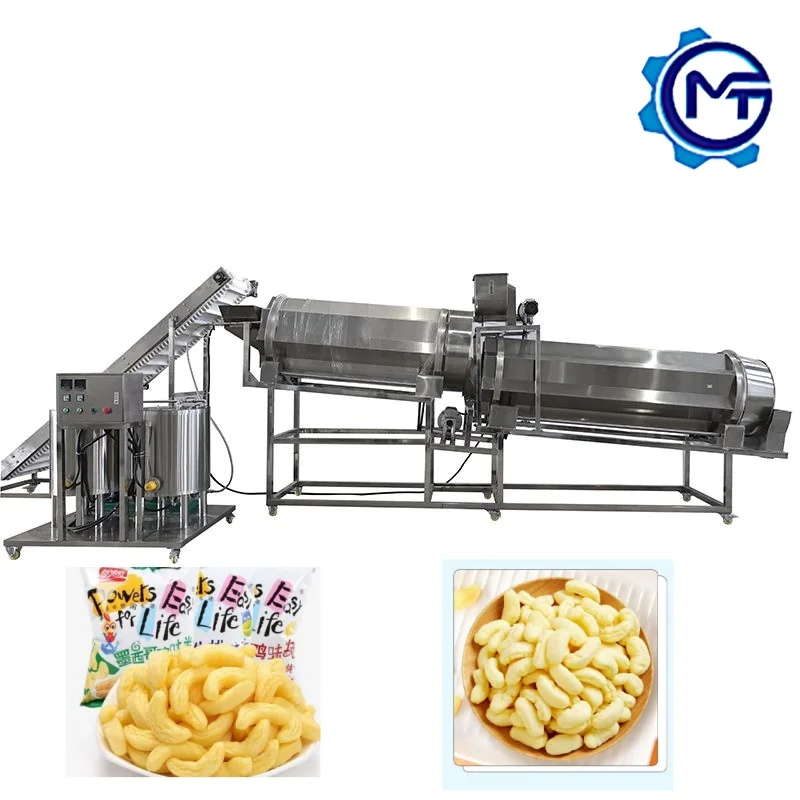
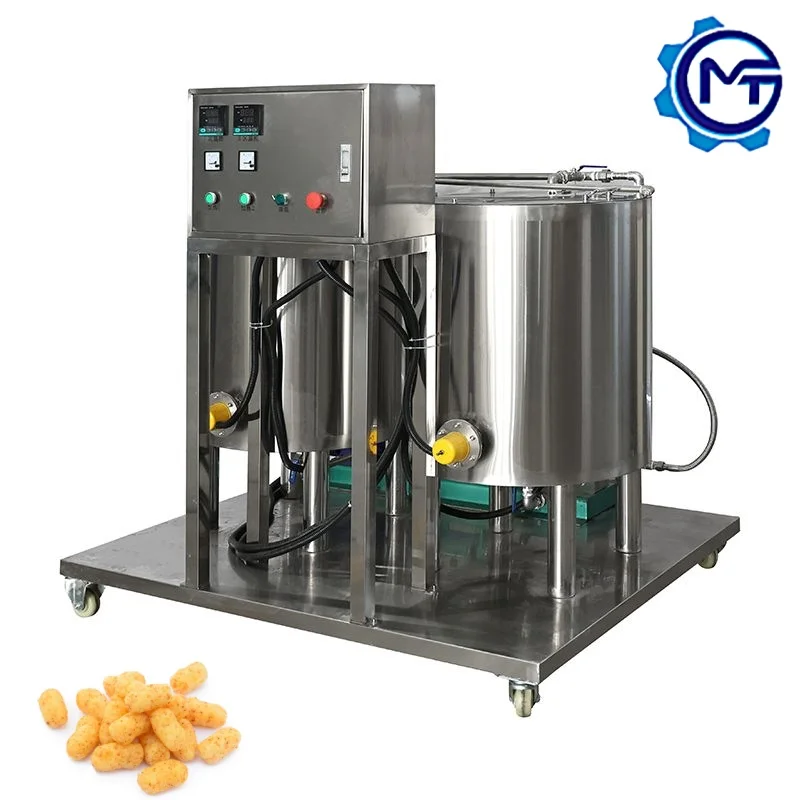
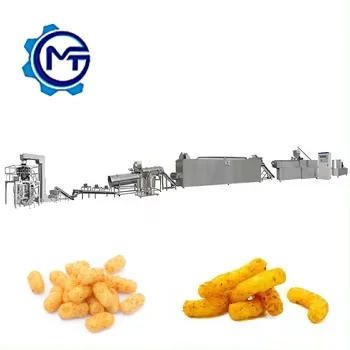
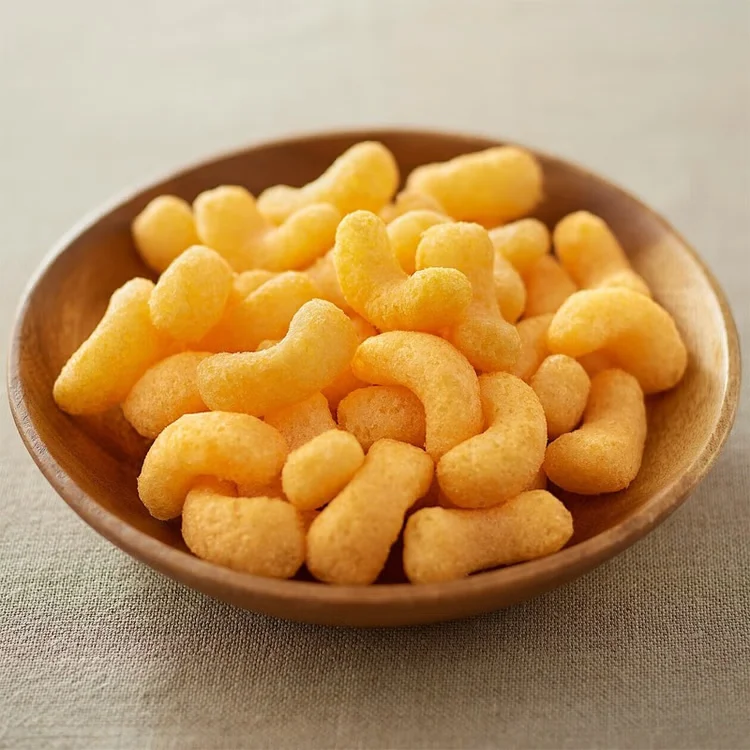
MT65 / MT70 / MT85 / MT100 Twin Screw Extruder Puffed Snack Production Line, 130–240 kW installed power, interchangeable die system — engineered as one integrated turnkey project where every station from batching through extrusion, drying, double-drum flavoring, cooling to packing is throughput-matched under a single supplier. Screw configuration and die design are specified to your flour blend and target shape, with drying heat source configurable to electric, steam, or gas based on local utility conditions.
- In-house testing workshop trial runs on your actual raw material before shipment, with documented reports confirming product density, expansion, and texture against your market specification.
Description
Throughput-Matched Integration — Every station from batching to packing is engineered as one project under a single supplier, eliminating the bottleneck risk of assembling a puffed snack line from separate vendors.
Technical Specifications
| Parameter | Value |
|---|---|
| Product Type | Twin Screw Extruder Puffed Snack Production Line |
| Model | MT65 / MT70 / MT85 / MT100 |
| Screw Type | Twin Screw |
| Installed Power | MT65 — 130 kW / MT70 — 180 kW / MT85 — 220 kW / MT100 — 240 kW |
| Real Consumption | MT65 — 95 kW / MT70 — 120 kW / MT85 — 130 kW / MT100 — 160 kW |
| Output Capacity | MT65: 120–150 kg/h (basis not stated in source); MT70: 200–300 kg/h (basis not stated in source); MT85: 300–500 kg/h (basis not stated in source); MT100: 600–800 kg/h (basis not stated in source) |
| Control System | Frequency speed controlling system |
| Raw Materials | Corn, rice, wheat, oat, barley flour |
| Die Configuration | Interchangeable dies for cheese ball, tube, stick, ring, fruit loop, star, wheel, flower, heart shapes |
| Core Filling Option | Available with added core filling machine and cutting machine |
| Drying Heat Source | Electric, steam, or gas (configurable) |
| Lubrication | Automatic lubricating and cooling system |
| Assembly State | Turnkey complete line |
| Warranty | 1 year |
Application Suitability
| Application | Material or Output |
|---|---|
| Extruded ring and ball snacks | Corn flour, rice flour, wheat flour blends |
| Core-filled snack production | Cereal-based shell with cream or chocolate center (requires core filling module) |
| Stick and tube format puffed snacks | Oat, barley, and multi-grain flour mixes |
| Breakfast cereal and fruit loop formats | Fortified grain blends requiring controlled expansion and density |
| Star, wheel, flower, and heart novelty shapes | Corn and rice flour with specific moisture conditioning for die definition |
What the Extruder Capacity Number Leaves Out
A 500 kg/h extruder paired with a 300 kg/h dryer means your real output is 300 kg/h.
The puffed snack production line turnkey concept only delivers when every station is sized against the same throughput target. I have seen snack manufacturers commit capital based on the extruder’s rated number, then discover the dryer cannot keep pace or the flavoring drum creates a backlog. When you source stations from separate vendors, each one quotes their own nominal figure, and the mismatch only appears on the first production day. Sizing the dryer, coating system, and cooler to the actual extruder output on your specific flour blend is where the real engineering work happens. [NEED_CITE: throughput balancing principles in continuous food processing lines]
Station Sizing Across the Full Extrusion Chain
The MT65 through MT100 range covers capacity tiers from small-batch trial production to high-volume output. Selecting the correct model depends on your target product density, the moisture content of your flour blend, and the die shape you intend to run. A cheese ball and a thin-wall tube place different demands on the screw configuration and barrel temperature profile, which in turn affect the throughput the dryer and flavoring system must handle downstream.
Matching Drying and Coating to Your Actual Product
The drying station offers electric, steam, or gas heat sources, and the choice affects both your utility costs and the residence time required for your product’s moisture reduction target. The double drum flavoring line handles sugar melting, oil spraying, and liquid or flour-based seasoning. If your recipe requires a heavy sugar glaze followed by a dry powder coat, the drum speed and spray nozzle arrangement must be configured to prevent clumping at your line speed. [NEED_CITE: drying and coating synchronization in snack food manufacturing]
Understanding Screw and Die Configuration for Snack Formats
The twin-screw design allows the screw elements to be rearranged for different shear and residence time profiles. A high-moisture oat blend needs a different compression ratio and kneading block arrangement than a dry corn flour recipe. The interchangeable die system covers shapes from simple sticks to complex flower and heart profiles, but each shape requires a specific die geometry and cutting frequency. Getting the die and screw combination right before the machine leaves the factory avoids days of parameter adjustment on your floor.
The Cost of Skipping Raw Material Validation
When the screw configuration is set for standard corn flour but your actual recipe uses a mixed grain blend with different starch ratios, the extruder will not produce the expansion and density your market expects. I once configured a line for puffed corn curls using a standard test flour, and when the customer ran their own blended material on site, the product came out too dense. We spent three days adjusting barrel temperatures and screw spacing before it stabilized. That is why running your actual raw material in the testing workshop before shipment is not optional — it locks in the screw and die record so the first day of production matches the trial. [NEED_CITE: impact of raw material variability on extrusion consistency]
Why Project-Level Engineering Matters Here
The line layout and capacity calculation document specifies throughput at every station, confirming the extruder, dryer, and flavoring drum are balanced to your target output rather than to nominal catalog figures. Screw and die configurations are recorded against your specific flour blend and target shape before production begins. An in-house testing workshop runs your raw material through the actual machine configuration, producing a documented trial report you receive before shipment. Voltage, frequency, and control language are confirmed with your local electrical standards before the electrical schematic is finalized, preventing commissioning delays. The MT65 through MT100 models all follow this same validation sequence, regardless of which capacity tier you select.
Documentation & Verification
- Line layout and capacity calculation matching extruder output to dryer and flavoring throughput
- Screw and die configuration record for your flour blend and target snack shape
- Trial run report on your raw material from the in-house testing workshop
- Electrical schematic with voltage, frequency, and control language confirmed pre-production
- CE declaration of conformity and factory test record before dispatch
- Wear parts list specifying screws, dies, and cutting blades with replacement intervals
Installation, Commissioning & Support
- Utility planning covering the MT85’s 220 kW installed power requirement and dedicated circuit sizing
- Drying station configured to your local heat source availability — electric, steam, or gas
- Frequency speed controlling system calibrated to your operator language before commissioning
- Die changeover procedure training for switching between ring, stick, ball, and novelty shapes
- Automatic lubricating system inspection schedule aligned with your production shift pattern
- Spare screw elements and die plates stocked based on your initial wear parts list
What We Need to Start Your Line Configuration
To scope a puffed snack production line turnkey project accurately, provide your primary flour blend composition, target moisture content at the extruder inlet, and the product shapes you plan to run. We also need your local voltage and frequency specification, preferred control system language, and available floor space with ceiling height for the dryer exhaust routing. If you have existing upstream batching or downstream packing equipment, share the model and throughput so we can confirm integration points.
Frequently Asked Questions
Q: How is line throughput verified across all stations to prevent bottlenecks?
A: Each station — extruder, dryer, flavoring drum, cooler — is sized against your target output on your specific raw material. The line layout document shows the calculated throughput at every point, so you can see the balance before committing to production.
Q: What does the in-house trial run cover, and what documentation do we receive?
A: Your raw material is run through the exact screw and die configuration specified for your product. You receive a trial run report documenting expansion ratio, product density, moisture levels, and the confirmed screw arrangement before the machine ships.
Q: How are screw and die configurations matched to our flour blend?
A: The screw element sequence and die geometry are selected based on your flour’s starch content, moisture level, and target shape. This configuration is recorded and locked in during the workshop trial, not guessed from a generic setup.
Q: What is the phased installation schedule for a complete turnkey line?
A: Installation follows a sequenced plan: extruder and dryer first, then flavoring and cooling stations, with electrical and control integration last. Commissioning runs through each station individually before full-line continuous production begins.
Q: How are voltage, frequency, and control language confirmed before production?
A: Your local electrical standards and operator language requirements are confirmed during the specification stage. The electrical schematic reflects these choices and is approved before manufacturing starts, avoiding rewiring or reprogramming at your site.
Related products
-

Corn Puff Processing Line with Mixer Fryer Baking Oven Automatic High Productivity Grain Products Snack Making Machine
¥8,300.00 Select options This product has multiple variants. The options may be chosen on the product page -

Fully automatic puff snack processing line
¥8,500.00 Select options This product has multiple variants. The options may be chosen on the product page -

Automatic Rice Crispies Extruder Machine/Chocolate Corn Flakes Extrusion Plant/wheat Flaking Snacks Production Line
¥8,500.00 Select options This product has multiple variants. The options may be chosen on the product page -

Full Automatic Puffed Corn Snack Food Extruder Puffed Snack Corn bar Making Machine
¥8,500.00 Select options This product has multiple variants. The options may be chosen on the product page


