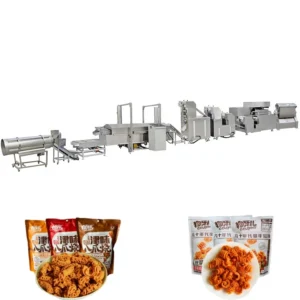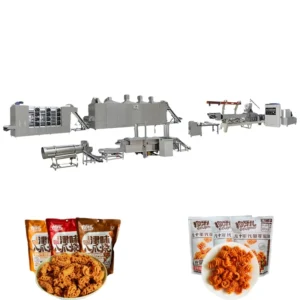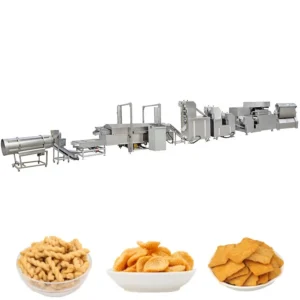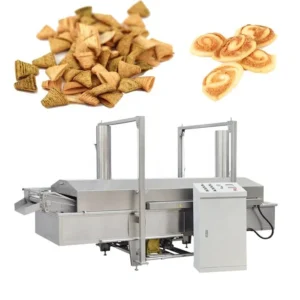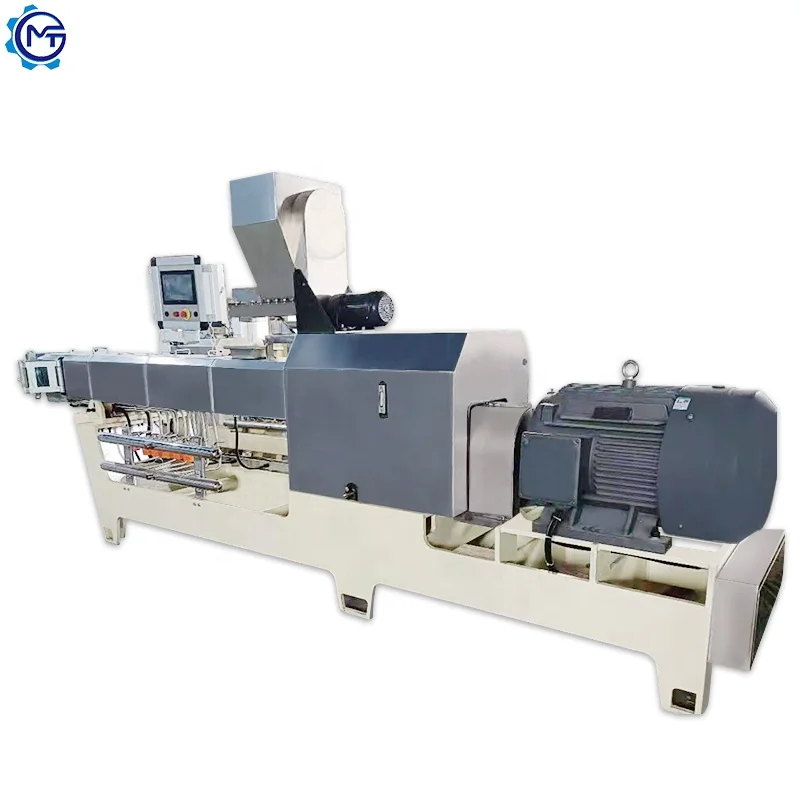


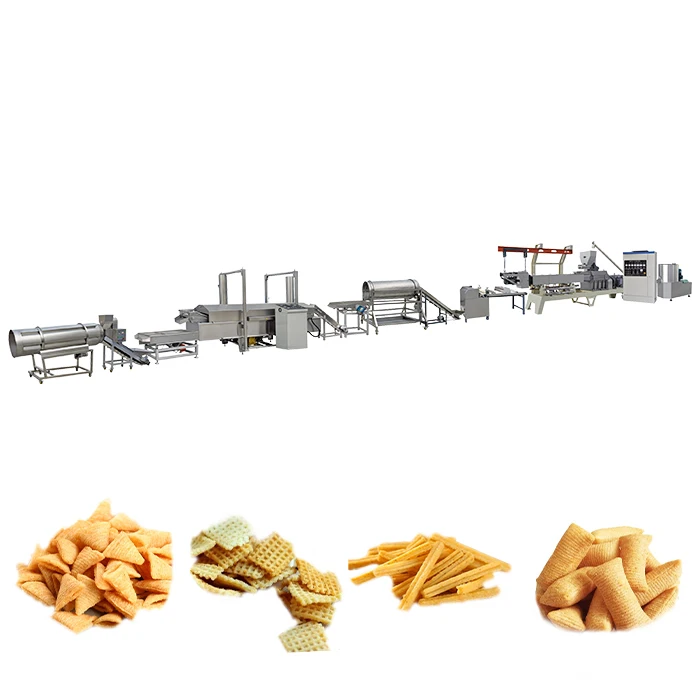

MT65 / MT70 / MT70c / MT75 Twin Screw Extruder Snack Production Line, 22-55 kW, Alloy 38CrMoAl Screws — turnkey configuration covering extrusion, frying, and double-drum flavoring with every station throughput-matched to avoid bottlenecking.
- Screw and die geometry specified to your corn flour blend and target chip density, controlling expansion and texture from Nacho to Doritos formats.
- Self-cleaning screw design enables fast changeover between recipes, while the gearbox features automatic lubrication for sustained run time.
Layout, capacity calculation, and trial run report on your actual raw material are delivered before shipment, with on-site commissioning and operator training included.
Description
Throughput-Matched Turnkey Layout — Every station from batching to flavoring is sized against the buyer’s actual corn flour blend, not a generic nameplate figure, preventing the bottlenecks that stall snack line commissioning.
Technical Specifications
| Parameter | Value |
|---|---|
| Product Type | Twin Screw Extruder Corn Flour Puff Snack Making Machine |
| Models Available | MT65 / MT70 / MT70c / MT75 |
| Screw Type | Twin screw |
| Screw Material | Alloy 38CrMoAl, nitriding process |
| Main Motor | Siemens brand |
| MT65 Rated Power | 22 kW |
| MT65 Output Capacity | 100–150 kg/h (basis not stated in source — confirm raw material, moisture, product format) |
| MT65 Overall Dimensions | 22000 × 1200 × 2200 mm |
| MT70 Rated Power | 30 kW |
| MT70 Output Capacity | 150–200 kg/h (basis not stated in source — confirm raw material, moisture, product format) |
| MT70 Overall Dimensions | 25000 × 1500 × 2200 mm |
| MT70c Rated Power | 45 kW |
| MT70c Output Capacity | 200–250 kg/h (basis not stated in source — confirm raw material, moisture, product format) |
| MT70c Overall Dimensions | 30000 × 3500 × 4300 mm |
| MT75 Rated Power | 55 kW |
| MT75 Output Capacity | 200–300 kg/h (basis not stated in source — confirm raw material, moisture, product format) |
| MT75 Overall Dimensions | 33000 × 3500 × 4300 mm |
| Feeding System | Food grade stainless steel twin screw feeding machine |
| Control System | Speed adjusted converter on feeding, extrusion, and cutting; gearbox with automatic lubrication |
| Cutting Mechanism | Knife fixed in die head seat, rotary cutting by V-belt drive |
| Line Stations | Extruder → fryer (electric / diesel / gas heated) → double drums flavoring system |
| Cooling | Increased radiator on driving part for forced cooling |
| Certification | CE |
| Warranty | One year from equipment arrival at customer site |
Application Suitability
| Application | Material or Output |
|---|---|
| Nacho chips production | Corn flour blend extruded, fried, and seasoned |
| Tortilla chip manufacturing | Corn powder processed through twin screw extrusion and frying |
| Doritos-style triangular snacks | Corn flour shaped at die, expanded, fried, flavor coated |
| Bugles cone-shaped snacks | Corn-based dough extruded through specialized die, fried to target density |
| Fried corn puff snacks | Corn grits or flour at varying moisture levels through hot-air expansion and frying |
Why "Nominal Capacity" Should Never Be the First Number You Check
A twin screw extruder snack production line turnkey quoted at a round number means nothing until it is proven on your specific corn flour formulation and moisture content.
I have watched commissioning weeks turn into months because the extruder was sized for a standard corn meal spec, but the buyer’s local supplier delivered a flour with different particle size and starch composition. The screw configuration that worked in the factory trial could not achieve proper gelatinisation on the actual raw material. Output dropped noticeably, product density drifted outside what the market expected, and the fryer downstream sat half-empty because the extruder could not feed it. [NEED_CITE: starch gelatinisation behaviour across corn flour particle sizes] That is why a Twin Screw Extruder Snack Production Line turnkey project must begin with a documented line layout and capacity calculation tied to the buyer’s real material — not a catalogue figure.
Screw and Die Configuration Matched to Your Corn Flour
The texture and density of a fried corn chip depend on how thoroughly the starch gelatinises inside the barrel. A twin screw extruder snack production line turnkey setup requires screw elements arranged to deliver the correct shear and residence time for the buyer’s specific corn flour moisture and particle size. Die geometry then controls the shape and expansion ratio of the extrudate before it enters the fryer. When these parameters are set from a generic template rather than a material-specific calculation, the chip either puffs too much and breaks during frying or stays dense and oily.
Station-by-Station Throughput Matching Across the Line
An extruder that delivers beyond the fryer’s capacity creates a backlog of extrudate cooling on conveyors, losing the moisture profile needed for consistent frying. A fryer that outruns the double-drum flavoring system leaves chips tumbling too briefly for even seasoning coverage. In a properly engineered Twin Screw Extruder Snack Production Line turnkey layout, the extruder output, fryer dwell time, and flavoring drum residence are calculated together so each station handles what the previous one delivers. [NEED_CITE: throughput balancing principles in continuous snack processing lines] This prevents the situation where one bottleneck station forces the entire line to run below its design capacity.
Reading the Specification Sheet Beyond the Headline Numbers
The screw material — alloy 38CrMoAl with nitriding — resists abrasion from corn flour, which carries mineral grit that wears untreated steel quickly. The Siemens main motor provides stable torque across the speed-adjusted converter range, keeping screw RPM constant even as barrel back-pressure changes during start-up or material changeover. The food-grade stainless steel twin screw feeder prevents bridging in the hopper, a common problem with fine corn flour that tends to compact under its own weight. Forced cooling on the driving part keeps gearbox oil temperature within limits during extended runs, which matters in tropical workshops where ambient heat already stresses thermal margins.
The Cost of Skipping Material-Specific Configuration
When a snack line ships with a screw profile copied from a previous project, the first production run often reveals problems that no amount of on-site adjustment can fix. Chips may emerge from the fryer with uneven color because the extrudate density varies across the die face. Seasoning adhesion fails because the surface porosity is wrong. In the worst cases, the buyer has to order an entirely new screw set and wait weeks for delivery while the line sits idle. [NEED_CITE: extruder screw redesign lead times and production downtime costs] These consequences are avoidable when the configuration is specified against the buyer’s raw material before the machine is built.
Why Buyers Source This Line Through Our Turnkey Project Channel
The line layout and capacity calculation document covers every station from raw material batching through packing, so throughput is matched rather than assembled from mismatched vendors. Screw configuration and die design are recorded against the buyer’s specific corn flour blend and target chip density, not borrowed from a standard build. An in-house testing workshop runs trial production on the buyer’s actual raw material before any crate is shipped, catching gelatinisation or expansion issues early. Pre-sales engineering consultation continues through on-site installation, commissioning, and operator training, so the team running the line daily understands parameter adjustments. CE certification supports import clearance across regulated markets, and full electrical schematics with voltage confirmation prevent commissioning delays.
Documentation & Verification
- Line layout drawing showing throughput matching across extruder, fryer, and flavoring stations
- Screw and die configuration record tied to your corn flour blend and target chip shape
- Trial run report produced on your actual raw material before shipment
- Electrical schematic with voltage and frequency confirmed for your facility
- CE declaration of conformity for import clearance documentation
- Operation and maintenance manual covering daily checks and screw changeover procedure
Installation, Commissioning & Support
- Foundation plan accounting for the 22 to 33 meter line length and fryer utility connections
- Dedicated power circuit sized to the model’s rated power from 22 kW to 55 kW
- Phased assembly sequence with extruder alignment before fryer and flavoring station hookup
- First-run parameter setting on your corn flour including barrel temperature and screw speed
- Operator training covering die changeover, cutting knife adjustment, and flavoring drum loading
- Wear parts list with alloy 38CrMoAl screw elements and die plates for first replacement cycle
What We Need to Scope Your Line Correctly
To configure a twin screw extruder snack production line turnkey project that actually performs at commissioning, share your corn flour supplier’s specification sheet including particle size distribution and typical moisture range. Provide your target chip format — Nacho, Tortilla, Bugles, or a custom shape — along with the daily output volume your market requires. Confirm the voltage and frequency at your facility, the control language your operators need, and the heating source available for the fryer. If you have existing upstream or downstream equipment that must integrate, include those details so the layout accounts for connection points.
Frequently Asked Questions
Q: How is the line throughput verified on my specific corn flour formulation and moisture level?
A: We run a trial in our testing workshop using your actual raw material before shipment. The extruder screw configuration, barrel temperature profile, and die design are set to your flour specification. A trial run report documents output rate, product density, and expansion ratio so you see verified performance data, not catalogue estimates.
Q: What screw configuration and die design will be used for my target chip shape and density?
A: Screw element arrangement and die geometry are specified to your corn flour characteristics and target chip format. The configuration record documents element sequence, compression ratio, and die opening dimensions. This ensures the extrudate enters the fryer at the correct density and shape for your Nacho, Tortilla, or Bugles product.
Q: How are extruder, fryer, and flavoring stations sized to avoid line bottlenecks?
A: Each station is calculated against the others during layout design. Extruder output is matched to fryer dwell capacity, and fryer discharge rate is matched to the double-drum flavoring system residence time. The line layout document shows these throughput calculations so no single station limits overall production.
Q: What is the installation timeline and commissioning schedule for a complete turnkey project?
A: Installation proceeds in phases, starting with extruder positioning and alignment, followed by fryer utility connections, then flavoring system integration. Commissioning includes dry runs, material trials on your corn flour, and parameter optimization. Operator training covers daily operation, screw changeover, and routine maintenance before the engineering team departs.
Q: Can a trial run be done on my raw material before shipment?
A: Yes. Send a representative sample of your corn flour to our testing workshop. We configure the extruder with the screw and die set planned for your line, run production, and document results including chip shape, density, and frying behaviour. You review the trial run report and approve before the equipment ships.
Related products
-
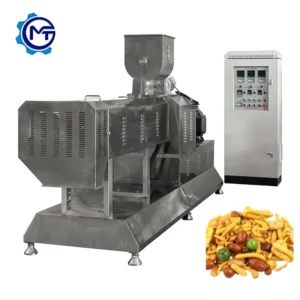
New Automatic Traditional Fried Nimko Making Machine High Productivity Large Capacity Stainless Steel Production Line
¥8,575.00 Select options This product has multiple variants. The options may be chosen on the product page -
Orion TURTLE CHIPS Snack Puffing Machinery Internet Celebrity Puffed Four-layer Crispy Production Line
¥65.00 Select options This product has multiple variants. The options may be chosen on the product page -
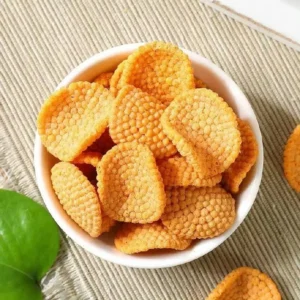
New Automatic Bugles Puff Snack Production Line Price Corn Chips Making Machine Fried Maize Machine High Productivity Large
¥8,570.00 Select options This product has multiple variants. The options may be chosen on the product page -
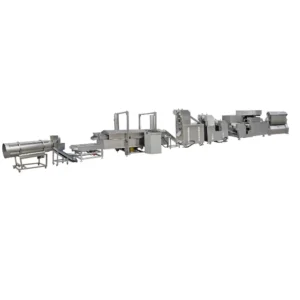
Frying Crispy 3D Corn Bugles Pellets Fried Chips Snacks Food Machine Production Line Bugles Making Extruder
¥100.00 Select options This product has multiple variants. The options may be chosen on the product page