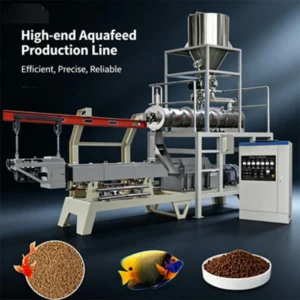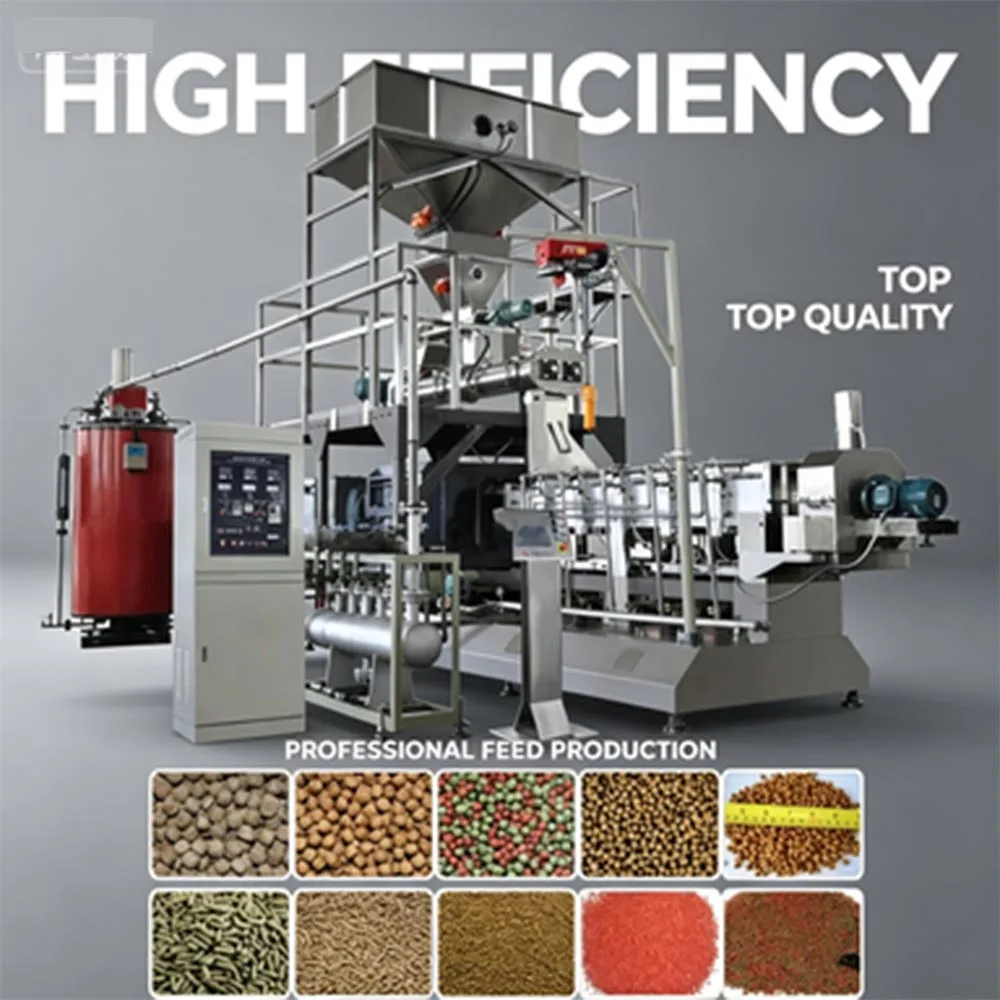

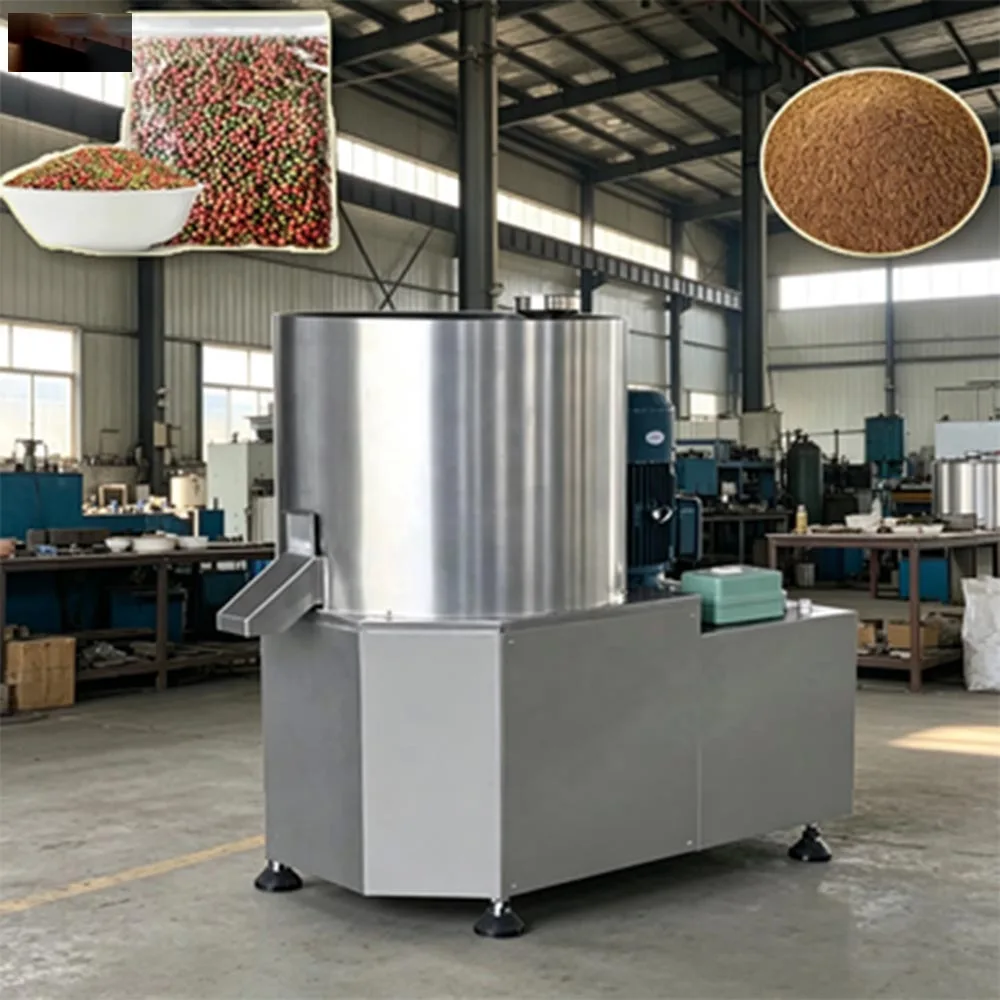


Twin Screw Aquatic Feed Extrusion Line, PLC Control, Floating & Sinking Pellets — engineered as a complete turnkey project with throughput matched across every station from raw material mixing through extrusion, drying, seasoning, and packing. Screw configuration and die design are specified to your formulation and target pellet density, ensuring buoyancy and texture meet market expectations. Backed by in-house trial runs on your raw material before shipment, with full documentation and single-supplier accountability for installation and commissioning.
- Food-grade 304 stainless steel contact parts
- Adjustable pellet size, hardness, and buoyancy
- Optimized energy-saving transmission and heating system
- CE and ISO certified production standards
Description
Throughput-Matched Line Engineering — Every station from batching to packing is specified to your exact aquatic feed formulation, preventing the extruder-dryer bottlenecks that plague multi-vendor assemblies.
Technical Specifications
| Parameter | Value |
|---|---|
| Product Type | Twin Screw Aquatic Feed Extrusion Line |
| Extruder Configuration | Twin-screw, configuration matched to raw material |
| Control System | PLC automatic control with intelligent interface |
| Contact Material | Food-grade 304 stainless steel |
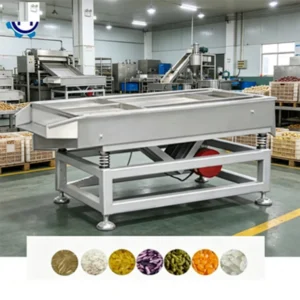
| Line Sequence | Mixer → Extruder → Dryer → Seasoning Coater → Vibrating Sieve → Conveyor → Discharge |
| Pellet Buoyancy | Adjustable for floating and sinking formats |
| Pellet Dimensions | Size and hardness adjustable per breeding requirements |
| Heating System | Optimized for reduced heat loss |
| Transmission | Energy-saving design |
| Operation Mode | Full continuous automatic production |
| Maintenance Access | Quick replacement of vulnerable parts |
| Output Capacity | Medium to large scale industrial production (basis to be confirmed with raw material formulation, moisture content, pellet size and density target) |
| Certification | CE, ISO |
Application Suitability
| Application | Material or Output |
|---|---|
| Koi and ornamental fish feed production | Fish meal, soybean meal, corn powder, compound additives |
| Tropical fish pellet processing | Protein-rich blends with vitamin and mineral premixes |
| Freshwater aquaculture feed manufacturing | Soybean meal and grain-based formulations with aquatic attractants |
| Goldfish floating and sinking pellet lines | Starch-bound formulations requiring controlled expansion |
What "Nominal Line Capacity" Leaves Out on a Fish Feed Production Line Turnkey
A quoted throughput figure means nothing until it is validated against your specific raw material formulation and target pellet density.
I have watched aquaculture feed producers sign off on a line based on a brochure number, only to find the extruder cannot hold that rate when they switch from a standard corn-soy blend to a high fish-meal recipe. The screw shear profile that works on starch-heavy formulations behaves entirely differently on protein-dense mixes. The die expansion ratio shifts, pellet density drifts, and the downstream dryer suddenly receives product outside its moisture removal window. The whole fish feed production line turnkey stalls at a fraction of the promised rate, and the buyer spends weeks reconfiguring screws and dies that should have been specified correctly before the machines left the factory [NEED_CITE: twin-screw extrusion behavior across varying protein-to-starch ratios].
How Screw Configuration Dictates Pellet Buoyancy and Density
Floating and sinking fish feed pellets demand fundamentally different shear and pressure profiles inside the barrel. The twin-screw configuration, barrel temperature zoning, and die geometry must all be coordinated to achieve the correct expansion ratio. On a fish feed production line turnkey project, the screw element arrangement — conveying sections, kneading blocks, and reverse elements — is selected based on the buyer’s raw material composition and the target buoyancy. This is not a set-and-forget parameter; it changes when the formulation changes.
Matching Dryer and Coater Throughput to Extruder Output
An extruder running at its rated output is only useful if the dryer can remove moisture at the same rate and the coating drum can apply fats and palatants without creating a backlog. When stations are sourced from separate vendors, throughput mismatches are almost guaranteed because each supplier optimizes for their own machine in isolation. On this line, capacity calculations span every station so that the dryer residence time, the coating drum volume, and the vibrating sieve throughput all align with the extruder discharge rate [NEED_CITE: throughput balancing in continuous food processing lines].
Reading the Spec Sheet Beyond the Headline Numbers
The PLC intelligent interface governs barrel temperature zones, screw speed, and feed rate in real time, which is essential for batch-to-batch consistency in aquatic feed. Food-grade 304 stainless steel contact parts meet hygiene requirements and resist corrosion from the saline and acidic components common in fish meal formulations. The adjustable pellet sizing means a single line can produce multiple diameter ranges — critical for producers supplying different aquaculture species that require distinct pellet dimensions. The energy-saving transmission and reduced heat-loss heating system lower per-unit operating costs over long continuous production runs, though actual savings depend on local utility rates and production scheduling.
The Hidden Cost of Skipping a Pre-Shipment Trial Run
Lines shipped without a trial run on the buyer’s actual raw material arrive as untested assemblies. I have seen producers spend two weeks on-site adjusting screw configurations and die clearances that should have been resolved in the factory testing workshop. Floating feed ends up sinking, pellet hardness falls outside the breeding specification, and the commissioning schedule stretches well past the planned window. Every day of delayed production is revenue lost on a capital investment that should have been generating output from day one [NEED_CITE: commissioning delays in extrusion-based feed processing installations].
Why This Sourcing Approach Reduces Project Risk
Throughput matching across all stations under one supplier eliminates the finger-pointing that occurs when an extruder vendor blames the dryer vendor for a bottleneck. Screw and die configuration is specified to your raw material, not copied from a generic build intended for a different product category. The in-house testing workshop runs your formulation before shipment, producing a documented trial run report that confirms pellet buoyancy, size, and density targets. Pre-sales engineering covers the full line layout, utility planning, and phased installation schedule rather than just the extruder footprint. Ongoing support includes operator training, wear parts supply, and maintenance guidance specific to the twin-screw components in your configuration.
Documentation & Verification
- Line layout and capacity calculation showing throughput at every station
- Screw and die configuration record matched to your raw material formulation
- Electrical schematic with voltage and frequency confirmed to site conditions
- Trial run report on customer raw material documenting pellet density and buoyancy
- CE declaration of conformity and ISO certificate for export compliance
- Operation and maintenance manual with wear parts replacement schedule
Installation, Commissioning & Support
- Foundation and floor space planning based on the full line footprint from mixer to discharge conveyor
- Dedicated power circuit sizing confirmed for PLC-controlled extruder motor and dryer heating loads
- Modular station delivery with assembly sequence mapped to minimize installation downtime
- First-run parameter setting for barrel temperature zones, screw speed, and die pressure
- Operator training on PLC intelligent interface, daily cleaning, and quick-change vulnerable part replacement
- Wear parts inventory list covering screws, dies, and seals with recommended reorder intervals
Before You Send the Inquiry
To size a fish feed production line turnkey accurately, we need your target species and the pellet buoyancy, diameter, and hardness each one requires. Share your raw material formulation — including fish meal percentage, starch source, and any compound additives — along with your planned daily output in metric tons. Confirm your site voltage, frequency, and preferred control language so the electrical design matches local conditions before production begins.
Frequently Asked Questions
Q: How is the line’s output capacity verified against my specific raw material formulation?
A: Capacity is not quoted from a generic table. We run your actual raw material blend through the twin-screw extruder in our testing workshop, measuring discharge rate, pellet density, and moisture content at the die. The resulting trial run report documents the achievable throughput for your formulation, and every downstream station is sized to match that verified rate.
Q: How do you prevent bottlenecks between the extruder, dryer, and coating stations?
A: Each station’s throughput is calculated from the extruder’s verified discharge rate on your formulation. The dryer residence time is matched to the moisture removal requirement, and the coating drum volume is sized so that seasoning application does not create a backlog. The complete capacity calculation is shared with the buyer before the order is confirmed.
Q: What does the installation and commissioning schedule look like for a full line?
A: A phased plan covers foundation preparation, station-by-station assembly, utility connections, and sequential startup from mixer through discharge. The PLC control system is configured and tested before the line runs continuously. Operator training runs alongside commissioning so your team understands parameter adjustments for different pellet formats before our engineers depart.
Q: Do you test my raw material before the line ships?
A: Yes. The in-house testing workshop runs a production trial on your raw material, producing pellets in both floating and sinking formats if required. The trial run report records screw configuration, die selection, barrel temperature profile, pellet dimensions, buoyancy, and moisture levels. This report ships with the line and serves as the baseline for on-site commissioning.
Q: How are screw and die configurations chosen for floating versus sinking pellets?
A: Floating pellets require higher expansion at the die, achieved through specific kneading block placement and barrel temperature zoning that maximizes starch gelatinization. Sinking pellets need denser compression with reduced expansion, requiring a different screw element sequence and die geometry. Both configurations are documented in the screw and die record provided with your line.
Related products
-
Premium Pet Food Processing Equipment Dog Cat Feed Making Machine
¥9,500.00 Select options This product has multiple variants. The options may be chosen on the product page -
2-3t/h High Capacity Multi-Species Fish Feed Processing Line to Produce Fish Food
¥55,000.00 Select options This product has multiple variants. The options may be chosen on the product page -
300-600kg/h Capacity Multi-Species Fish Feed Processing Line to Produce Fish Food
¥45,000.00 Select options This product has multiple variants. The options may be chosen on the product page -
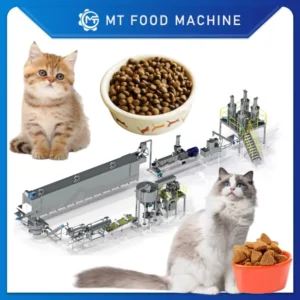
MT Brand 450-550kg/h PLC Controlled Multi-Species Pet Food Processing Line
¥40,000.00 Select options This product has multiple variants. The options may be chosen on the product page