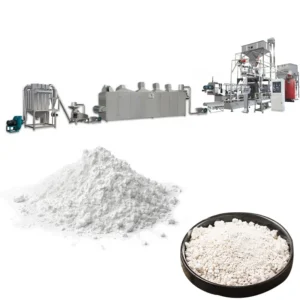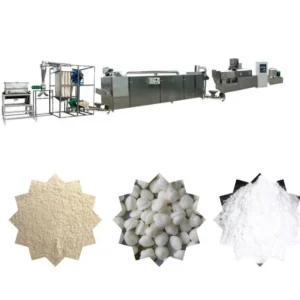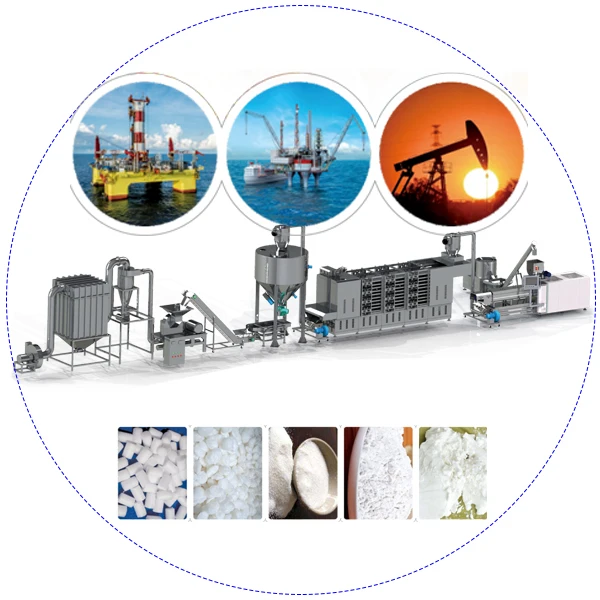


Twin Screw Modified Starch Processing Line, 100-1500 kg/h Output, Food-Grade 304 Stainless Steel — engineered for corn, wheat, rice and potato starch modification with screw configuration and die design matched to your raw material formulation.
- Complete turnkey layout from batching through extrusion, cooling and pulse grinding with throughput balanced across every station
- Voltage, frequency and control language confirmed to your factory standard before production begins
- Trial runs on customer-supplied raw material in our testing workshop verify capacity and product specification before shipment
Description
Throughput-Matched Starch Lines — Every station from extrusion through cooling to pulse grinding is calculated against your specific raw material profile before the line is built, not assembled from catalog defaults.
Technical Specifications
| Parameter | Value |
|---|---|
| Product Type | Twin Screw Modified Starch Processing Line |
| Screw Type | Twin screw |
| Output Capacity | 100–1500 kg/h (basis to be confirmed — depends on raw material, moisture content, and target modified starch type) |
| Power | 45–200 kW |
| Voltage | 220–440V, tri-phase (frequency to be confirmed) |
| Line Stations | Twin screw extruder, cooling conveyor, pulse grinder |
| Contact Material | Food-grade stainless steel (304) |
| Automation Level | Automatic (PLC / MCC to be confirmed) |
| Assembly State | Complete production line |
| Dryer Fuel Options | Gas, diesel, electricity, steam |
| Standards | CE, ISO |
Application Suitability
| Application | Material or Output |
|---|---|
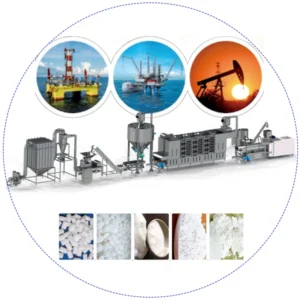
| Food-grade modified starch for thickeners and stabilisers | Corn starch, wheat flour, potato starch with additive materials |
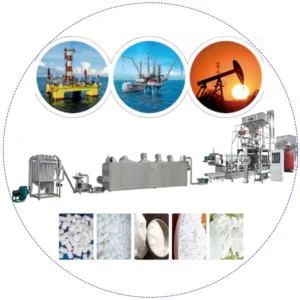
| Modified starch for oil drilling fluid additives | Corn starch and rice flour blends formulated for viscosity control |
| Modified starch for paper-making coating and sizing | Wheat flour and potato starch processed for adhesion and film-forming properties |
| Pre-gelatinised starch for instant food ingredients | Corn starch and rice flour at controlled moisture and barrel temperature profiles |
What "500 kg/h" Actually Means on Your Starch Feedstock
Capacity holds only when screw configuration, barrel temperature, and moisture input match the exact amylose-amylopectin ratio of your raw material.
I spent two extra weeks in a Riyadh workshop because the buyer’s corn starch carried a higher amylose fraction than the standard trial material we used in Jinan. The gelatinisation window shifted, the expansion curve collapsed, and we had to tear down the screw combination and rebuild it from scratch on-site. That is the gap between a nameplate number and a working modified starch processing line turnkey project. A line quoted on nominal output that cannot hold that throughput on the buyer’s actual formulation is the single most common failure in starch modification installations [NEED_CITE: common causes of capacity shortfall in starch extrusion projects].
Why Raw Material Data Must Come Before the Line Layout
Every modified starch processing line turnkey project we deliver starts with a raw material analysis report — amylose content, protein residue, moisture baseline, and particle size distribution. These four values determine the screw element sequence, the barrel zone temperature profile, and the die aperture geometry. Skipping this step means building a line on assumptions, and assumptions in starch extrusion show up as inconsistent gelatinisation degrees, off-spec viscosity readings, and product batches that fail the buyer’s own QC protocol.
How Station-to-Station Matching Prevents Downstream Chokepoints
A twin screw extruder that pushes material faster than the cooling conveyor can handle creates a pile-up that forces the operator to throttle the extruder back, negating the quoted capacity entirely. The same logic applies to the pulse grinder: if its throughput ceiling sits below the cooled output rate, the entire line waits on one station. In a properly engineered modified starch processing line turnkey layout, every station is calculated against the same mass flow rate, so no single machine dictates the ceiling.
Reading the Specs That Matter for Starch Modification
The twin screw configuration allows continuous adjustment of shear intensity along the barrel length, which is critical when gelatinisation must occur within a narrow temperature band. Food-grade 304 stainless steel contact surfaces prevent iron contamination that would discolour white starch products and compromise food-safety audits. The power envelope of 45–200 kW reflects the range from pilot-scale runs to continuous production volumes, and the correct selection depends on the specific starch type and target modification degree. Voltage and frequency confirmation before production avoids the situation where a motor rated for 380V/50Hz is shipped to a 440V/60Hz market, requiring rewinding or replacement before commissioning can even begin [NEED_CITE: voltage and frequency standards by export market].
What Happens When Screw and Die Configuration Is Copied, Not Calculated
A generic screw build designed for one starch source will produce the wrong degree of modification when the raw material changes. Higher amylose starches need longer residence times and different shear profiles; lower protein content shifts the moisture absorption window. The result is modified starch that does not meet the buyer’s viscosity specification, forcing reprocessing or outright rejection of entire production batches. Die design errors compound the problem — incorrect aperture geometry produces uneven expansion that the pulse grinder cannot correct downstream [NEED_CITE: effect of screw configuration on starch gelatinisation uniformity].
Why Sourcing the Complete Line Under One Supplier Matters
When extruder, cooling conveyor, and pulse grinder come from separate vendors, no single party owns the throughput calculation, and finger-pointing replaces problem-solving during commissioning. Our approach delivers every station with matched mass flow, so the line runs as one system rather than a collection of independent machines. The in-house testing workshop allows us to run your actual raw material before shipment, catching formulation mismatches in Jinan rather than on your factory floor. Electrical schematics with confirmed voltage, frequency, and control language ship with the line, so your electricians connect power on day one rather than waiting for clarification across time zones. Screw and die configuration records travel with the machine, giving your maintenance team the baseline they need when wear parts come due.
Documentation & Verification
- Line layout drawing with throughput calculation at each station for your starch formulation
- Screw element sequence and die aperture record matched to your raw material report
- Electrical schematic confirming voltage, frequency, and PLC language before production
- Trial run report on your own starch feedstock conducted in the testing workshop
- CE declaration of conformity and ISO certificate included in shipping documentation
- Operation and maintenance manual with wear parts list and replacement intervals
Installation, Commissioning & Support
- Foundation plan scaled to the 45–200 kW motor load and line footprint of your configuration
- Dedicated power circuit sized to confirmed voltage and tri-phase frequency at your site
- Complete line shipped in station modules for phased installation on a pre-agreed schedule
- First-run parameter setting on your raw material with barrel zone temperatures logged
- Operator training covering screw changeover, die cleaning, and pulse grinder adjustment
- Wear parts list covering screws, dies, and barrel liners with recommended stock quantities
What We Need to Quote Your Line Accurately
Send the raw material specification sheet — starch source, amylose content, protein percentage, and baseline moisture. Tell us the target modified starch type and the viscosity or functional property your end customer requires. Confirm your factory’s voltage, frequency, and the control language your operators will work in. If you have existing upstream batching or downstream packing equipment, share the model and throughput so we can match the line to your current infrastructure.
Frequently Asked Questions
Q: How is line capacity verified against my specific raw material and modified starch formulation?
A: We request your raw material analysis report and run a trial on your actual starch in our testing workshop before shipment. Screw configuration, barrel temperature profile, and die geometry are adjusted until the output meets your target viscosity and gelatinisation degree, and the results are documented in a trial run report you receive before the line ships.
Q: How do you match throughput between extruder, cooler, grinder and packing to avoid bottlenecks?
A: Every station is specified against the same mass flow calculation based on your target output and raw material characteristics. The cooling conveyor length, pulse grinder capacity, and any intermediate conveying are all sized so that no single station forces the extruder to throttle back below its rated throughput.
Q: What is the phased installation and commissioning schedule for a complete starch processing line?
A: The line arrives in station modules with a pre-agreed installation sequence. Foundation and utility work is completed first, followed by mechanical assembly, electrical connection using the confirmed schematic, and then dry-run testing before raw material introduction. Commissioning with your starch feedstock follows, with parameter logging at every stage.
Q: Can voltage, frequency and PLC control language be confirmed before shipment?
A: Yes — these are locked in writing before production begins. The electrical schematic is prepared to your factory’s supply standard, and the control interface language is set to match your operators. This prevents delays during commissioning caused by mismatched electrical supply or unreadable HMI screens.
Q: Do you provide operator training and ongoing maintenance support after commissioning?
A: On-site training covers daily operation, screw and die changeover procedures, pulse grinder calibration, and routine maintenance intervals. A wear parts list with recommended spare quantities ships with the line, and ongoing technical support is available for process questions as your operators gain experience with the equipment.
Related products
-
Modified and Pregelatinized Starch Processing Equipment – Pregelatinized Corn Cassava Modified Starch Puffing Machine
¥65.00 Select options This product has multiple variants. The options may be chosen on the product page -
Automatic 304 Stainless Steel Modified Corn Starch Making Machine TWIN SCREW 500kg/h Capacity Starch Processing Production Line
¥50.00 Select options This product has multiple variants. The options may be chosen on the product page -
Modified Starch for Construction Adhesives Production – Custom Built Double Screw Extruder Line
¥65.00 Select options This product has multiple variants. The options may be chosen on the product page -
Cassava & Pregelatinized Corn Starch Extrusion Equipment – CE Certified Industrial Twin-Screw Modified Starch Line
¥65.00 Select options This product has multiple variants. The options may be chosen on the product page