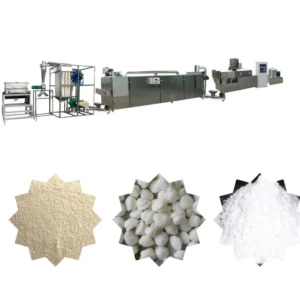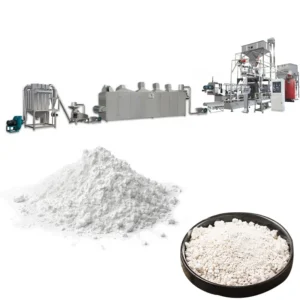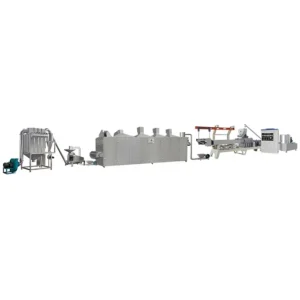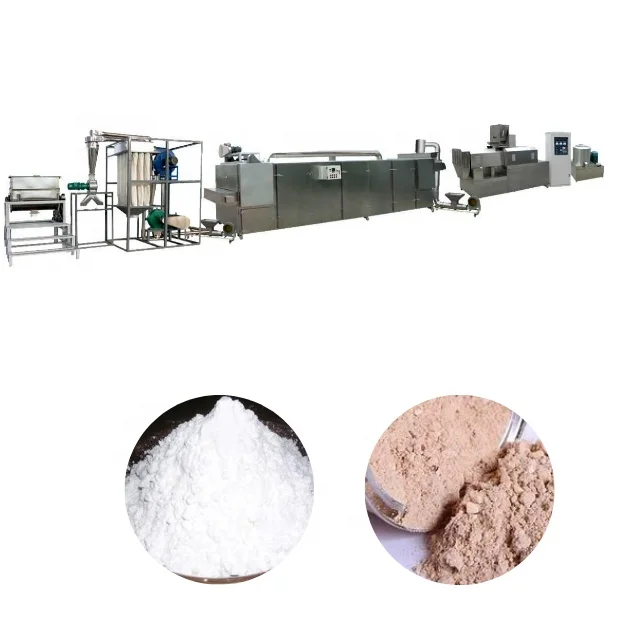
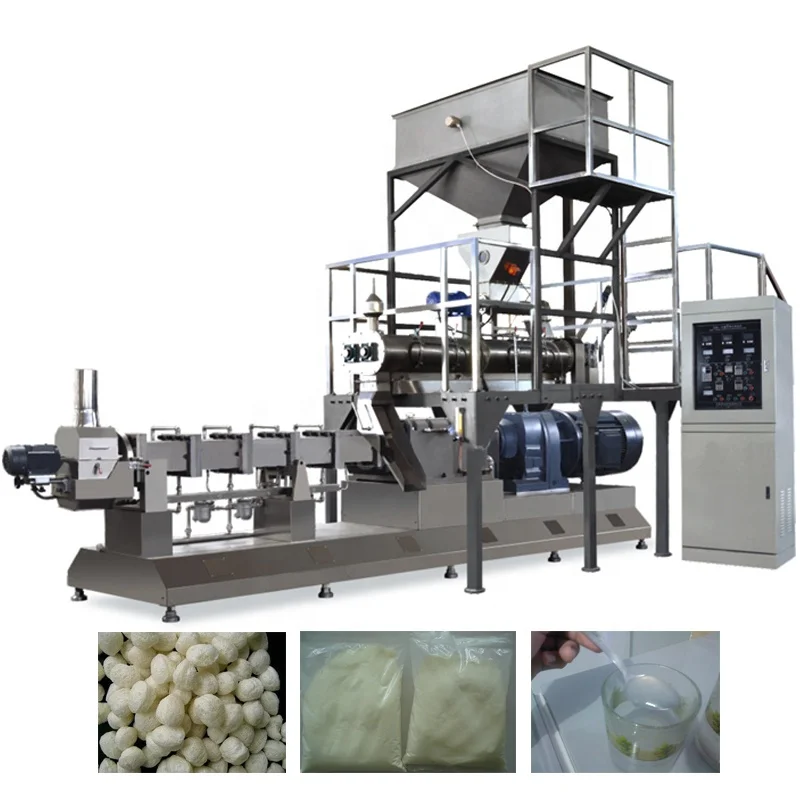


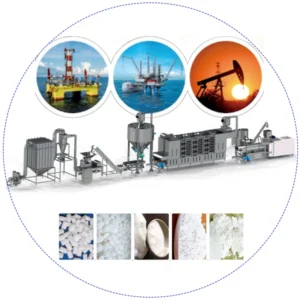
Modified Starch Processing Line, Twin-Screw Extruder, 45-200kW, 220-440V Tri-Phase — engineered as a complete turnkey project from batching through extrusion, cooling and pulse grinding.
- Line layout and throughput matched across every station to your raw material and target modification degree
- Screw configuration and barrel temperature profile specified for corn, wheat, rice or soybean starch bases
- Fuel flexibility across gas, diesel, electricity and steam for heating stations
Trial runs on your actual raw material are completed in our testing workshop before shipment, with full line documentation and on-site commissioning included.
Description
Turnkey Integration Under One Roof — extrusion, cooling, grinding and conveying engineered as a single matched system rather than assembled from disconnected vendors, eliminating the throughput gaps that stall starch lines at commissioning.
Technical Specifications
| Parameter | Value |
|---|---|
| Product Type | Modified Starch Processing Line |
| Extruder Type | Twin-screw |
| Total Installed Power | 45–200 kW |
| Capacity Range | 100–1500 kg/h (basis not stated in source — confirm raw material type, moisture content and modification degree) |
| Line Weight | 1000–5000 kg (varies by configuration) |
| Voltage | 220–440 V, tri-phase (frequency to be confirmed pre-production) |
| Control System | Temperature controlled (PLC / MCC available on request) |
| Core Line Stations | Twin-screw extruder, cooling conveyor, pulse grinder |
| Contact Material | Food-grade stainless steel (PVC on select conveyor sections) |
| Fuel Options | Gas / diesel / electricity / steam |
| Certifications | CE, ISO |
Application Suitability
| Application | Material or Output |
|---|---|
| Food-grade modified starch | Corn starch, wheat flour, rice flour with food-safe additive blends |
| Oil-drilling fluid starch | Corn or wheat starch modified for thermal stability and viscosity control |
| Paper-making sizing starch | Corn, wheat or soybean flour processed for surface sizing and coating grades |
| Industrial adhesive starch | Grain flours with cross-linking agents for corrugated and packaging adhesives |
Why Nominal Capacity Figures Mislead Starch Buyers
A modified starch processing line turnkey solution is only as reliable as the throughput verified on your actual raw material.
Starch modification is not a single recipe. A line rated for a headline output on standard corn starch may behave differently when your raw material has a higher gelatinisation temperature, a different amylose ratio, or a target modification degree that demands longer residence time inside the barrel. I once watched a starch processor lose two weeks of production because the drying section was spec’d for a standard moisture curve while the actual extrudate left the die several points wetter than anticipated. The bottleneck was not the extruder — it was every station downstream [NEED_CITE: starch gelatinisation temperature variation across grain sources].
Layout Planning That Starts from Your Material, Not a Template
Every modified starch processing line turnkey project we configure begins with a raw material sample and a target product specification. The twin-screw extruder is the heart of the system, but throughput is meaningless if the cooling conveyor cannot shed heat fast enough or the pulse grinder cannot keep pace with the extrudate volume. We map each station’s capacity against your specific starch base — corn, wheat, rice or soybean — and the modification chemistry you intend to run, so that the line layout reflects real operating conditions rather than catalogue numbers.
Throughput Matching Across Every Station
A turnkey line lives or dies at the hand-off points. Extruder output must align with cooling conveyor dwell time, which in turn must match the pulse grinder’s feed rate. When one station runs faster than the next, material accumulates, moisture migrates, and product quality drifts. We size each station so the modified starch processing line turnkey system runs as a continuous flow, not a series of buffers waiting to overflow. Utility routing — steam, gas, electricity, compressed air — is planned alongside the mechanical layout so that installation follows a logical sequence rather than requiring rework after the machines are bolted down [NEED_CITE: industrial line utility planning standards].
Reading the Spec Sheet Against Your Actual Process
The 45–200 kW power envelope reflects the range of configurations available across different capacity targets and starch chemistries. A line producing lightly modified food-grade starch at the lower end of the capacity range may require a smaller motor and a shorter barrel, while heavily cross-linked starch for oil-drilling applications demands higher torque and longer residence time, pushing power toward the upper envelope. The tri-phase voltage range of 220–440 V covers most export markets, but frequency must be confirmed before production begins — a 50 Hz motor rewound for 60 Hz after delivery is a delay no project schedule can absorb. Fuel flexibility across gas, diesel, electricity and steam allows the heating sections to match whatever utility infrastructure is available at the installation site, which matters in regions where natural gas supply is intermittent or steam boiler permitting is lengthy.
The Hidden Cost of Mismatched Configuration
When an extruder’s screw profile is copied from a generic build rather than matched to the buyer’s starch type and modification target, the immediate symptom is inconsistent expansion or incomplete gelatinisation. The downstream consequence is worse: the cooling conveyor receives material outside its design moisture range, the grinder produces particles that fail the buyer’s mesh specification, and the packing station sees a product that does not meet the certificate of analysis. I have seen processors spend months adjusting parameters on a line that was never configured for their material in the first place — a problem that a pre-shipment trial run would have surfaced in days [NEED_CITE: twin-screw extrusion screw configuration impact on starch modification].
Why Procurement Consolidation Matters on Starch Lines
Sourcing the extruder from one vendor, the cooling conveyor from another, and the grinder from a third creates finger-pointing when throughput falls short. Our modified starch processing line turnkey projects place responsibility for end-to-end performance under one supplier. Screw configuration and die design are specified to your raw material and target product, not borrowed from a catalogue default. The in-house testing workshop runs your actual starch formulation before the line ships, producing a trial run report that documents achievable throughput, moisture profile, and particle characteristics. Pre-sales consultation covers line layout, utility planning and phased installation scheduling, so the project moves from delivery to commissioning without surprises.
Documentation & Verification
- Line layout drawing with capacity calculation for each station based on your starch formulation
- Screw and die configuration record specific to your modification target, not a generic template
- Electrical schematic and voltage/frequency confirmation signed off before production begins
- Trial run report on your raw material from the in-house testing workshop before shipment
- CE declaration of conformity and ISO certificate for export documentation
Installation, Commissioning & Support
- Workshop floor assessment for line footprint, utility routing and phased installation sequencing
- Tri-phase power supply verification at 220–440 V with dedicated circuit planning for the 45–200 kW load
- Twin-screw extruder barrel alignment and screw assembly checked on-site after transit
- Temperature profile calibration across all heating zones during first production run
- Operator training covering screw wear indicators, die changeover and pulse grinder screen replacement
- Wear parts list with recommended spare screws, dies and grinder screens for first-year operation
What We Need to Configure Your Line
To move from inquiry to line configuration, we need your raw material type and source, target modification degree, intended application (food, oil drilling, paper making or other), daily output target, available workshop dimensions, and local voltage and frequency. If you have existing upstream batching or downstream packing equipment, share the interface specifications so we can match throughput at the boundaries.
Frequently Asked Questions
Q: How is line capacity verified before shipment?
A: We run your actual starch raw material in our in-house testing workshop, documenting throughput, moisture content and particle characteristics in a trial run report. Capacity figures quoted for the modified starch processing line turnkey project are based on these verified results, not generic catalogue ratings.
Q: How are screw and die configurations chosen for different starch applications?
A: Screw profile, barrel temperature zones and die geometry are specified to your raw material’s gelatinisation behaviour and target modification degree. Food-grade starch, oil-drilling starch and paper-making starch each demand different shear and residence time settings, which we validate during the pre-shipment trial.
Q: What installation conditions should we prepare before the line arrives?
A: We provide a workshop layout drawing covering floor space, utility connection points and phased installation sequence. Power supply at the confirmed voltage and frequency, steam or gas lines for heating stations, and adequate ventilation around the cooling conveyor are the primary prerequisites.
Q: How do you prevent bottlenecks between the extruder and downstream stations?
A: Each station — extruder, cooling conveyor and pulse grinder — is sized against the verified extrudate flow rate and moisture profile from your trial run. This ensures continuous material flow without accumulation or starvation at any hand-off point along the line.
Q: What is included in on-site commissioning and training?
A: Our engineers oversee mechanical assembly, electrical connection verification, temperature profile calibration and first production runs. Operators receive hands-on training covering daily start-up, screw and die inspection, grinder screen changes and routine maintenance schedules.
Related products
-
Cassava Corn Potato Flour Starch Production Line – Industrial Pregelatinized & Modified Extrusion Machinery
¥65.00 Select options This product has multiple variants. The options may be chosen on the product page -
Pre-gelatinized Starch Production Line – Modified Starch Integrated Puffing Equipment
¥65.00 Select options This product has multiple variants. The options may be chosen on the product page -
Modified and Pregelatinized Starch Processing Equipment – Pregelatinized Corn Cassava Modified Starch Puffing Machine
¥65.00 Select options This product has multiple variants. The options may be chosen on the product page -
Máquina de producción de almidón modificado de gran capacidad
¥30.00 Select options This product has multiple variants. The options may be chosen on the product page