

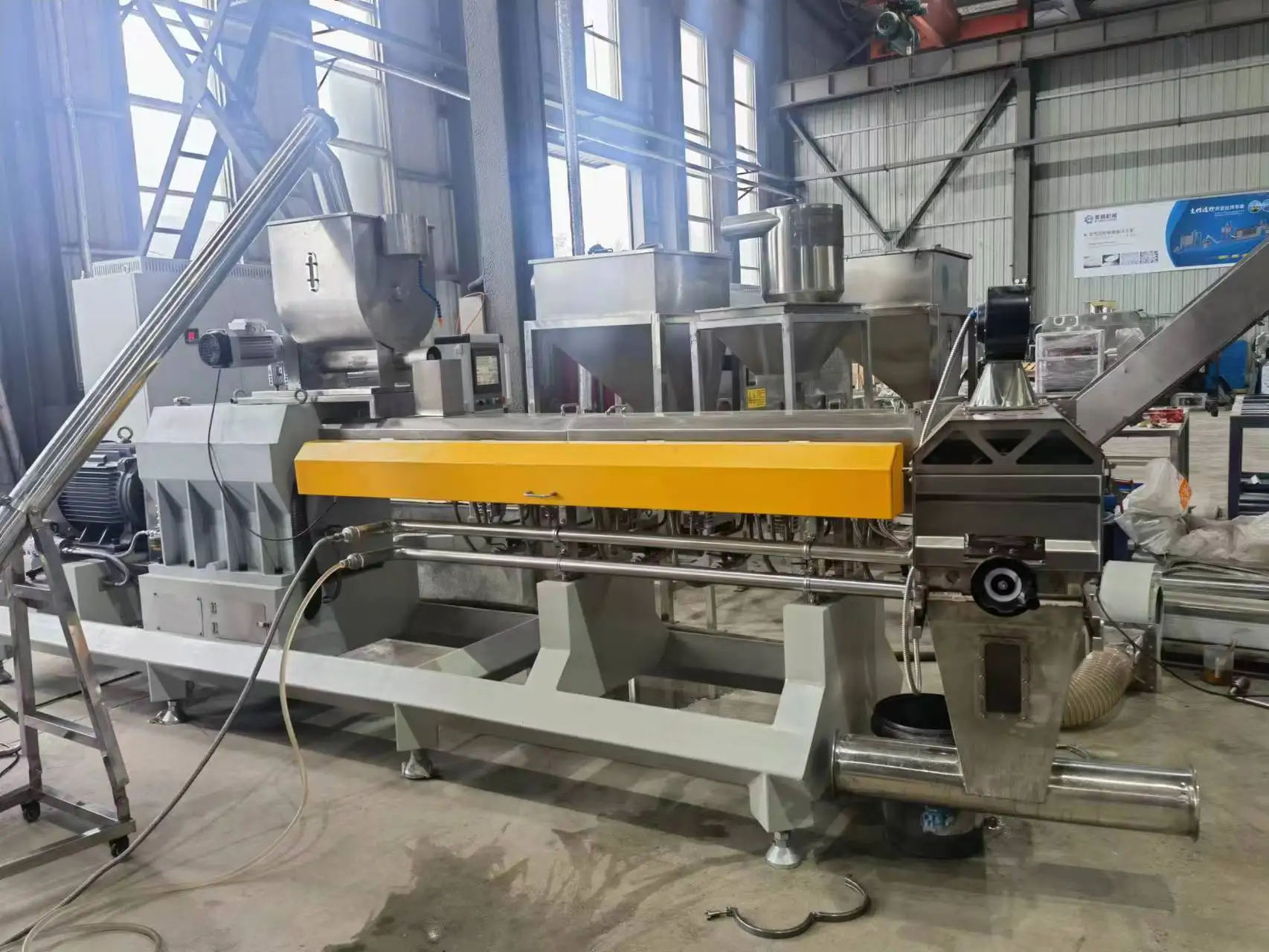
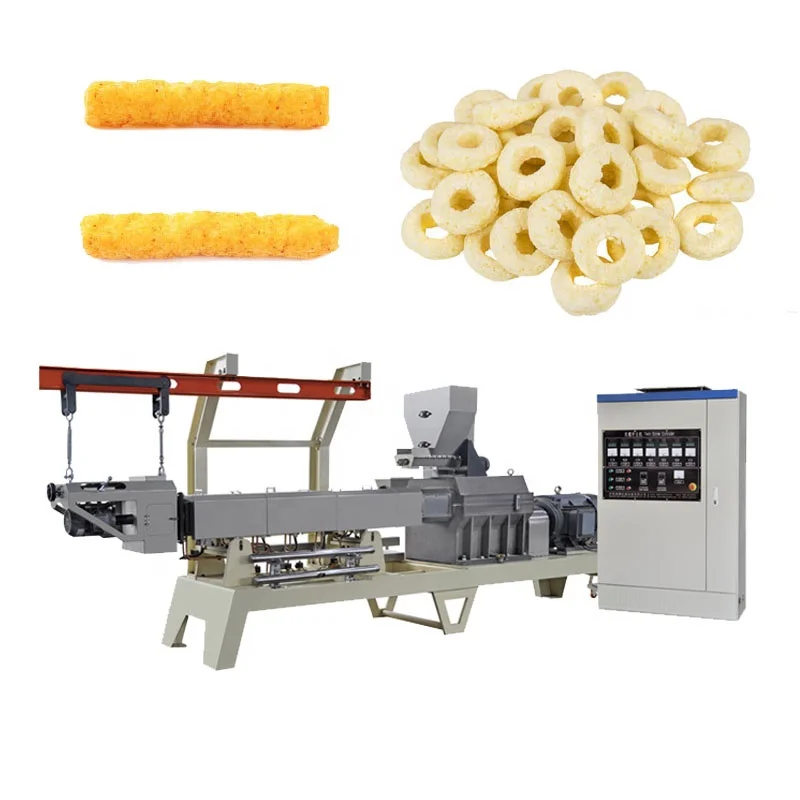
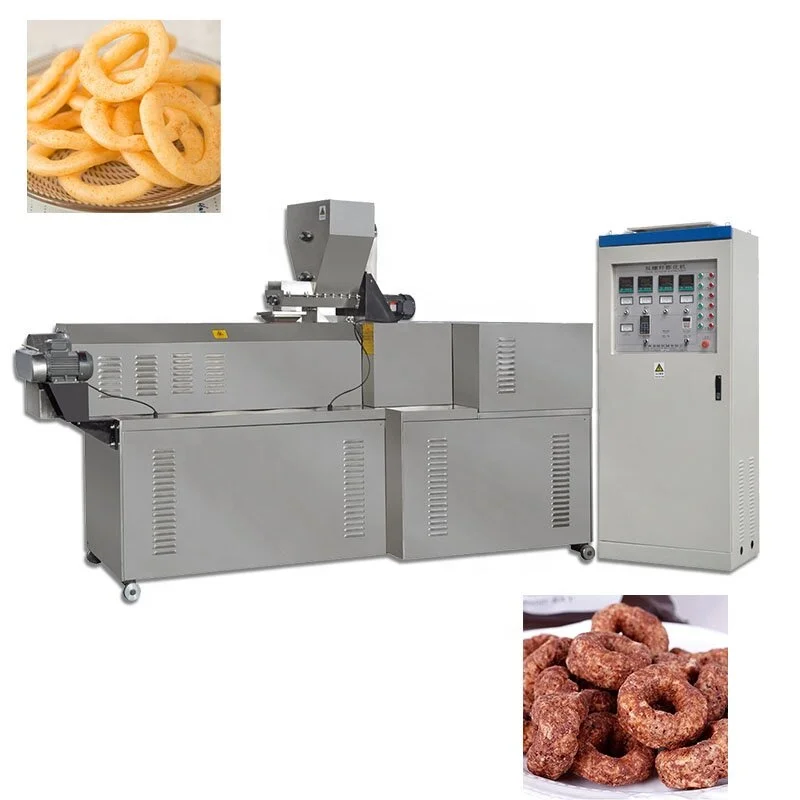
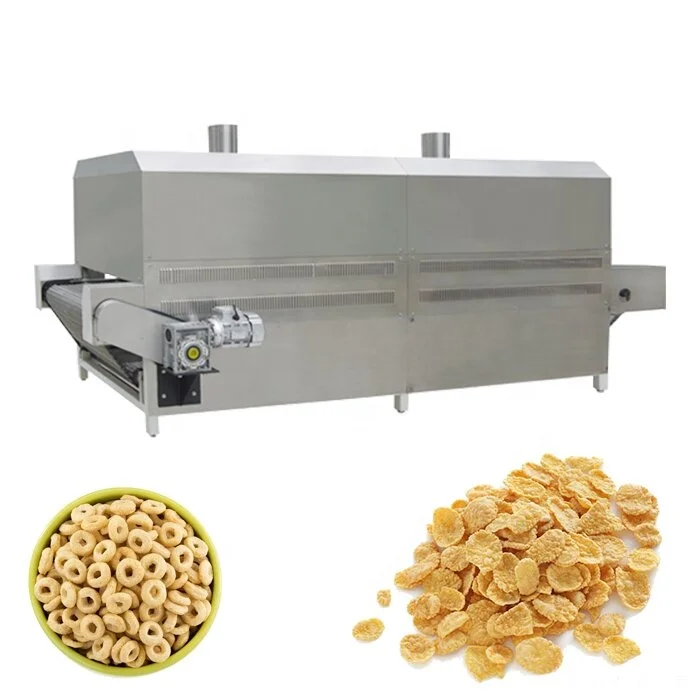
Twin Screw Puffed Snack Extrusion Line, PLC Control, CE Certified — engineered as a complete turnkey system from batching through extruding, drying, flavoring, and packing, with every station throughput-matched to eliminate bottlenecks that arise when equipment is sourced from separate vendors. Screw configuration and die design are specified to your raw material and target product texture, with in-house trial runs verifying output before shipment.
- Line scope: mixing → extruding → shaping → cutting → drying → flavoring in one-pass operation
- Multi-layer dryer with configurable length and layer count based on product type
- Semi-automatic or automatic flavoring system handles sugar, oil, and powder seasoning
- Layout design, utility planning, and phased commissioning support included for turnkey projects
Trial runs on your actual raw material in our testing workshop ensure capacity and product specification are verified before the line leaves the factory.
Description
Matched-Throughput Engineering — Every station from batching to packing is sized as one system, eliminating the dryer or flavoring bottlenecks that appear when line components are sourced separately.
Technical Specifications
| Parameter | Value |
|---|---|
| Product Type | Twin Screw Puffed Snack Extrusion Line |
| Screw Type | Twin-screw (double screw) |
| Extruder Configuration | Configurable screw and die setup based on raw material and target product |
| Control System | Available with PLC or MCC automation |
| Line Stations | Mixing → extruding → shaping → cutting → drying → flavoring |
| Dryer Type | Multi-layer, configurable length and layer count based on product type |
| Flavoring System | Semi-automatic or automatic; handles sugar, oil, and powder seasoning |
| Assembly State | Complete turnkey line from batching to packing |
| Output Capacity | Rated capacity depends on raw material and product format (basis to be confirmed) |
| Certification | CE, ISO |
| Warranty | 24 months with lifetime service support |
| Voltage & Frequency | Configurable to target market requirements (basis to be confirmed) |
Application Suitability
| Application | Material or Output |
|---|---|
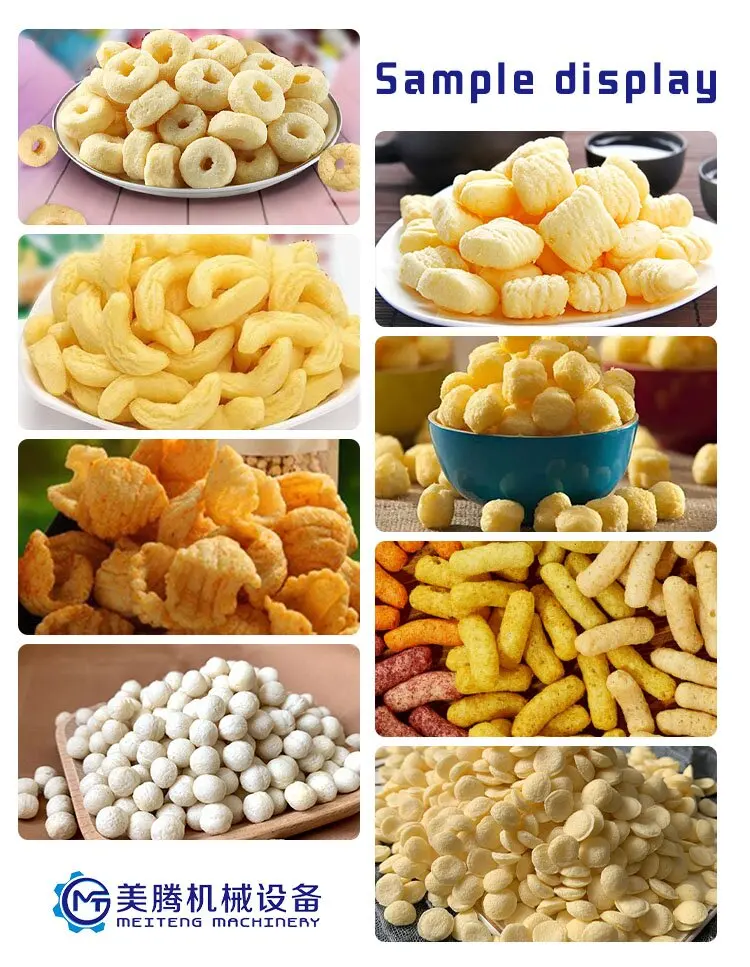
| Puffed corn snacks | Corn grits, corn flour, maize meal |
| Puffed rice snacks | Rice flour, broken rice, rice grits |
| Core-filled snacks | Starch-based shell with cream or chocolate filling |
| 2D and 3D pellet snacks | Corn starch, potato starch, wheat flour blends |
| Extruded snack foods | Blends of corn, rice, oat, and similar starch-based raw materials |
Why "Nominal Capacity" Means Nothing Without Your Raw Material
A line rated at a given output on one formula can underperform on yours — verified capacity comes only from a trial run on your actual material.
Buyers often receive quotations stating a throughput figure based on a standard recipe or ideal conditions. When the line arrives and production begins with the buyer’s own corn or rice blend, the extruder may not hold that output, the product density drifts outside specification, or the dryer cannot keep pace. The twin screw puffed snack extrusion production line turnkey approach addresses this by running your formula through the testing workshop before the equipment leaves the factory [NEED_CITE: extrusion throughput variability across raw material grades]. Capacity is confirmed against your specific particle size, moisture content, and starch composition rather than assumed from a catalog figure.
Screw Configuration Dictates Product Texture
The twin-screw design allows the screw profile, pitch, and kneading block arrangement to be matched to your raw material’s gelatinisation behaviour. Corn grits with a coarser grind require a different shear profile than fine rice flour to achieve consistent expansion. Die geometry further controls the shape, wall thickness, and cell structure of the finished snack. Getting this combination wrong means the puffed product either collapses after extrusion or emerges too dense for the target market. Each screw and die set is therefore specified after reviewing your material sample and desired product format, not pulled from a generic build sheet.
Throughput Matching Across the Full Line
A common failure in assembled lines is the bottleneck that appears between stations — an extruder running at full output while the downstream dryer falls behind, or a flavoring drum that cannot cycle fast enough. This twin screw puffed snack extrusion production line turnkey system sizes every station as part of one engineered sequence. The multi-layer dryer length and layer count are calculated from the extruder’s verified output and the moisture reduction required for your product. The flavoring system — whether semi-automatic or fully automatic — is matched to the same throughput, handling sugar coating, oil spraying, or powder seasoning at the line rate without accumulation or starvation [NEED_CITE: line balance principles in continuous food extrusion].
Reading the Specs That Actually Matter
The twin-screw configuration provides greater flexibility in raw material handling compared to single-screw extruders, which are more sensitive to feed consistency and moisture variation. Barrel zone heating — configurable across multiple independent zones — controls the temperature gradient from feed to die, directly influencing starch gelatinisation and expansion ratio at the die face. The PLC or MCC control system maintains these temperature and screw speed parameters within set tolerances throughout production, which is what delivers batch-to-batch consistency. For facilities running multiple snack formats on one line, the ability to reconfigure screw elements and swap dies means changeover between puffed corn, rice snacks, or core-filled products can be accomplished without replacing the extruder itself.
The Cost of Skipping the Trial Run
When a line ships without a factory trial on the buyer’s material, product development begins only after installation. That means weeks of on-site adjustment — tweaking screw speed, barrel temperature, and die openings — while raw material is consumed and production time is lost. Density may land outside the specification the market expects, forcing reformulation or packaging changes. In some cases, the dryer or flavoring station turns out to be undersized for the actual extruder output, creating a permanent bottleneck that requires capital expenditure to correct [NEED_CITE: commissioning delays from untested extrusion lines].
What Distinguishes This Procurement Path
Every station — mixing, extruding, drying, flavoring, cooling, and packing — comes from one supplier, so throughput calculations are performed on the full sequence rather than per individual machine. Screw configuration and die design are documented against your raw material sample and target product specification, not copied from a default library. The in-house testing workshop runs your formula before shipment, generating a trial report that confirms output, texture, and density. Pre-sales engineering covers line layout, utility planning, and phased installation scheduling. Post-commissioning support includes operator training, a documented wear parts list, and ongoing maintenance guidance.
Documentation & Verification
- Line layout and capacity calculation confirming throughput match across all stations
- Screw and die configuration record specific to your raw material and product format
- Trial run report on your raw material verifying output, texture, and density before shipment
- Electrical schematic with voltage and frequency matched to your facility
- CE declaration of conformity and ISO certificate for customs and regulatory compliance
- Operation and maintenance manual with wear parts list and packing photographs
Installation, Commissioning & Support
- Foundation and floor space plan based on your confirmed line layout and dryer length
- Power supply specifications covering extruder motor, dryer heating zones, and control cabinet circuits
- Assembly and alignment of extruder, dryer, and flavoring stations by on-site engineers
- First-run parameter setting for screw speed, barrel temperatures, and die clearance on your material
- Operator training covering PLC interface navigation, screw and die changeover, and daily inspection routines
- Wear parts supply including screws, dies, and dryer belt segments with recommended replacement intervals
What We Need to Build Your Line Accurately
To configure a twin screw puffed snack extrusion production line turnkey system that matches your facility, share your raw material type and particle size specification, the snack formats you intend to produce, and your target daily output. Your local voltage and frequency, along with the preferred control language for the PLC interface, should be confirmed before production begins. If you have existing upstream or downstream equipment that the new line must integrate with, provide those specifications as well. A raw material sample sufficient for a workshop trial run will allow us to verify capacity and product quality before the line ships.
Frequently Asked Questions
Q: How is line capacity verified before the equipment is shipped?
A: Your raw material is run through the extruder in the in-house testing workshop before dispatch. The trial produces actual product samples, and the output rate, texture, and density are recorded in a trial run report. This confirms the line holds its rated capacity on your specific formula rather than on a generic recipe.
Q: How is the screw and die configuration chosen for my product?
A: The screw profile, kneading block arrangement, and die geometry are specified based on your raw material’s starch content, particle size, and moisture level, as well as the target product shape and density. This configuration is documented and can be adjusted if you later introduce new snack formats.
Q: How do you ensure throughput is matched between stations?
A: The dryer length, layer count, and flavoring drum cycle rate are all calculated from the extruder’s verified output on your material. This prevents situations where one station accumulates product while another starves, which is a common problem when line components are sourced from separate vendors.
Q: What installation and utility planning support is included?
A: The turnkey project scope covers line layout design, utility connection planning for power, water, and compressed air, and a phased commissioning schedule. On-site engineers handle assembly, first-run parameter setting, and operator training before handover.
Q: How are voltage and control language confirmed before production?
A: Your facility’s voltage, frequency, and preferred PLC interface language are confirmed during the specification stage, before manufacturing begins. The electrical schematic is reviewed and approved, preventing commissioning delays that occur when control systems arrive mismatched to local power standards [NEED_CITE: electrical compatibility requirements for imported food processing equipment].
Related products
-

Nueva máquina automática para hacer snacks de harina de arroz inflado de acero inoxidable, alta productividad y multifuncional.
¥11,050.00 Select options This product has multiple variants. The options may be chosen on the product page -

Máquina de producción de snacks de maíz extruidos de venta caliente, máquina para hacer puffs de maíz.
¥20,000.00 Select options This product has multiple variants. The options may be chosen on the product page -

Máquina de Extrusión Automática de Crujientes de Maíz para Chips de Maíz y Palitos de Maíz en Nueva Condición
¥8,000.00 Select options This product has multiple variants. The options may be chosen on the product page -

Máquina Extrusora Automática de Rice Crispies / Planta de Extrusión de Copos de Maíz con Chocolate / Línea de Producción de Snacks de Trigo Flake
¥8,500.00 Select options This product has multiple variants. The options may be chosen on the product page


