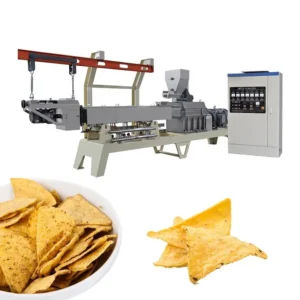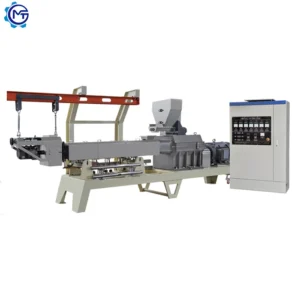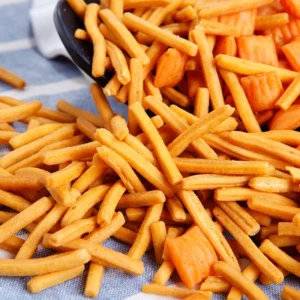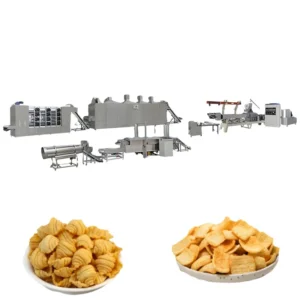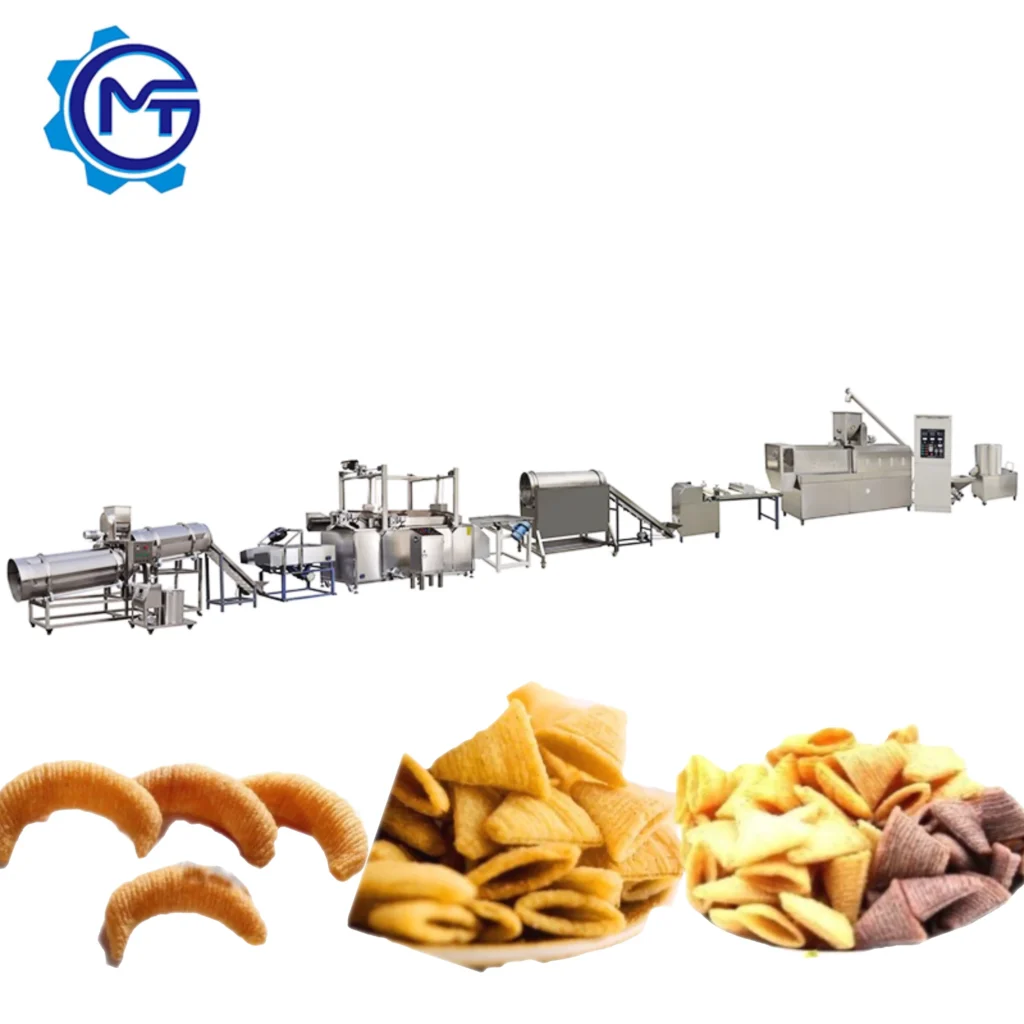

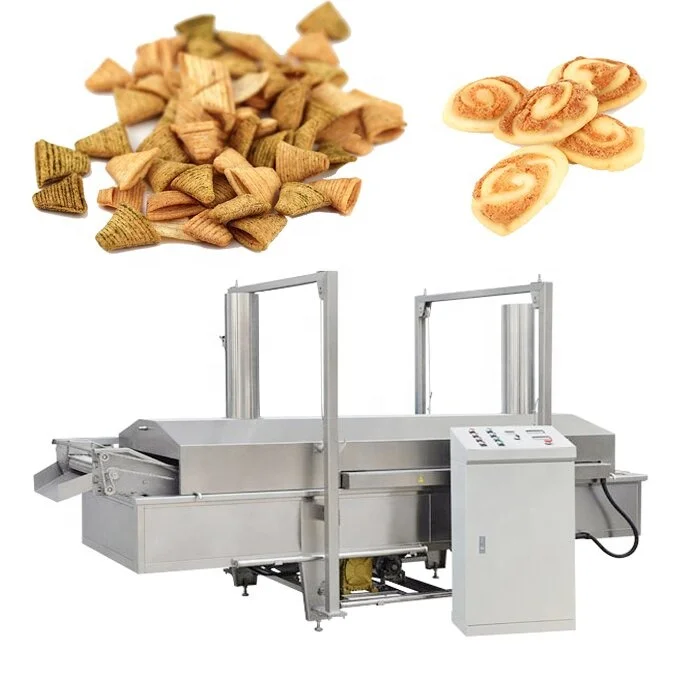
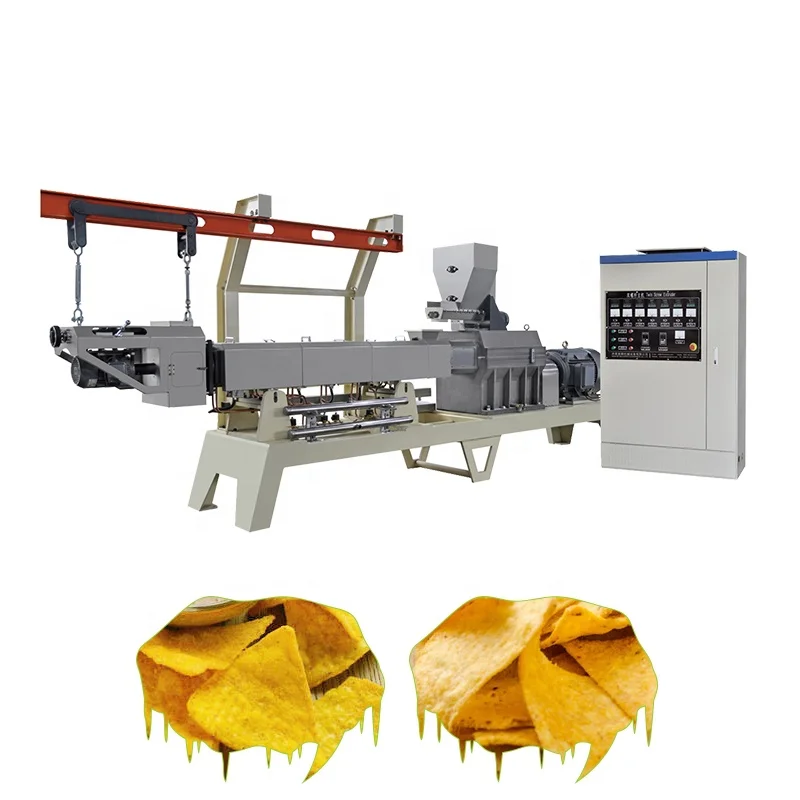
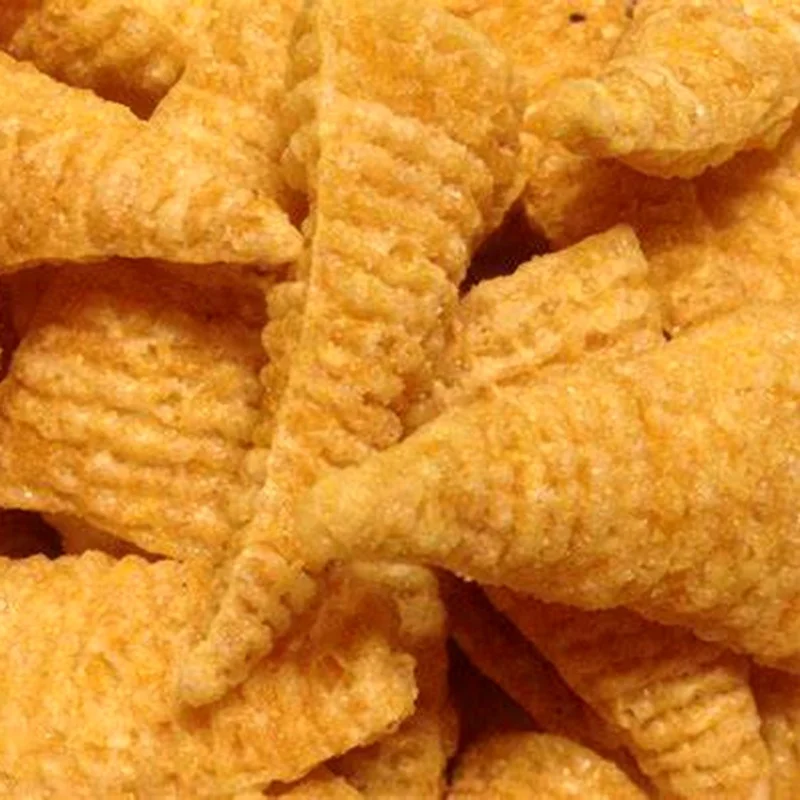
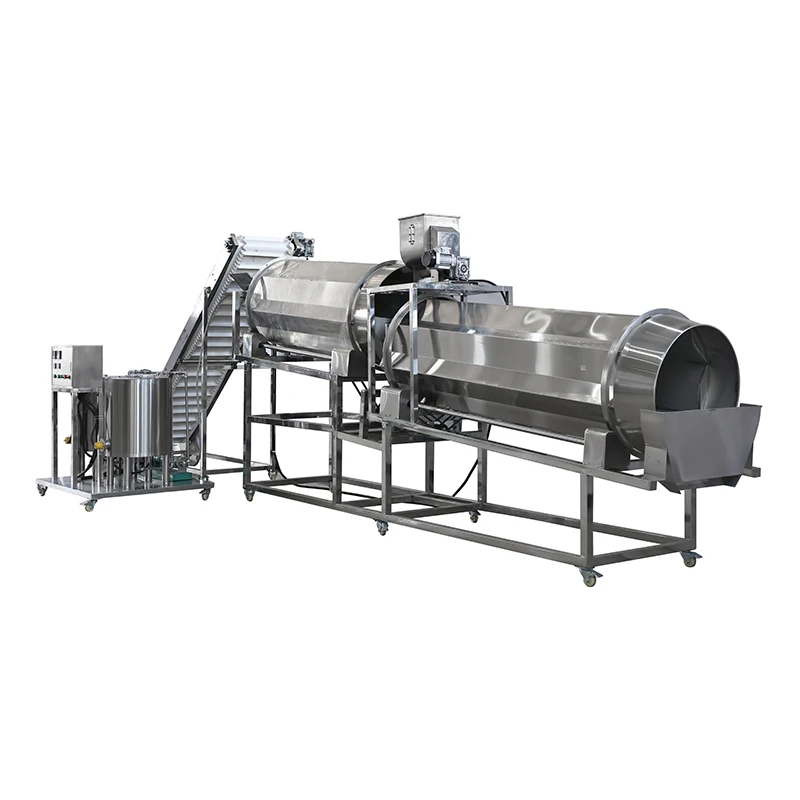
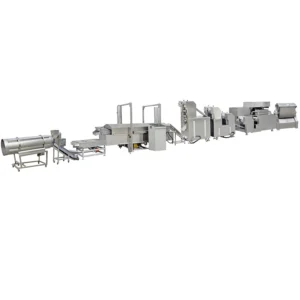
MT65 / MT70 / MT85 / MT75 / MT95 Fried Snack Production Line, Twin-Screw Extruder, Stainless Steel Construction — integrated from powder mixer through extrusion, frying, and flavoring as a single turnkey project. Every station is throughput-matched to your raw material and target shape — pizza rolls, crispy corners, rice crusts — preventing fryer or coating bottlenecks that hold output below nominal capacity. CE certified, with in-house trial runs on your actual formulation before shipment, plus full line layout and commissioning documentation for contractor handover.
- Five capacity tiers from start-up to high-volume production
- Screw and die configured to product density and expansion target
- Line layout, electrical schematic, and wear parts list included
Description
Throughput-Matched Station Design — every mixer, extruder, fryer, and flavoring drum is sized against your actual raw material and target snack geometry so no single station throttles the rest of the line.
Technical Specifications
| Parameter | Value |
|---|---|
| Product Type | Fried Snack Production Line (Extrusion & Frying) |
| Models Available | MT65, MT70, MT85, MT75, MT95 |
| Extruder Type | Double Screw (Twin-Screw) |
| MT65 Installed Power | 142 kW |
| MT65 Real Power Consumption | 100 kW |
| MT65 Output | 120–150 kg/h (basis not stated in source — confirm raw material, moisture, and product shape) |
| MT65 Footprint | 22000 × 1200 × 2200 mm |
| MT70 Installed Power | 185 kW |
| MT70 Real Power Consumption | 130 kW |
| MT70 Output | 200–250 kg/h (basis to be confirmed) |
| MT70 Footprint | 24000 × 1500 × 2400 mm |
| MT85 Installed Power | 240 kW |
| MT85 Real Power Consumption | 180 kW |
| MT85 Output | 300–500 kg/h (basis to be confirmed) |
| MT85 Footprint | 26000 × 1500 × 2300 mm |
| MT75 Installed Power | 245 kW |
| MT75 Real Power Consumption | 185 kW |
| MT75 Output | 400–500 kg/h (basis to be confirmed) |
| MT75 Footprint | 26000 × 1500 × 2800 mm |
| MT95 Installed Power | 370 kW |
| MT95 Real Power Consumption | 280 kW |
| MT95 Output | 800–1000 kg/h (basis to be confirmed) |
| MT95 Footprint | 30000 × 1500 × 2800 mm |
| Powder Mixer Tank Volume | 150 kg per batch |
| Powder Mixer Rotary Speed | 385 rpm |
| Powder Mixer Mixing Time | 10 min per batch |
| Powder Mixer Power | 4 kW |
| Fryer Temperature Range | 0–260 °C |
| Fryer Dimension | 4500 × 1350 × 2350 mm |
| Flavor Line Power | 1.5 kW |
| Flavor Line Dimension | 3000 × 1650 × 1800 mm |
| Contact Material | Food-Grade Stainless Steel |
| Warranty | 1 Year Complete Warranty |
Application Suitability
| Application Scenario | Raw Material or Output |
|---|---|
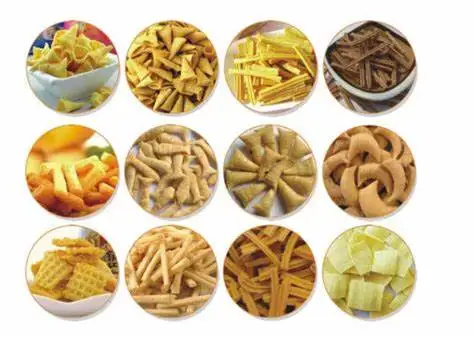
| Pizza rolls and crispy corner snacks for retail snack packs | Flour-based and starch-based dough formulations |
| Rice crusts and golden corner chips for savory snack markets | Rice flour blends with seasoning additives |
| 3D shaped puffed snacks — duck, Christmas tree, small fish shapes | Corn grits, wheat flour, and modified starch mixes |
| Small gourd and triangle chip formats for bulk food service | Composite grain and tuber starch raw materials |
| Phased capacity scaling from start-up to high-volume production | Same product geometry across MT65 through MT95 models |
Why "Nominal Capacity" on a Fried Snack Production Line Turnkey Misses the Real Picture
A line rated at 300 kg/h on paper can stall at half that once your specific flour blend and moisture content hit the barrel.
When I dispatch a fried snack production line turnkey, I have seen buyers compare two quotes on the output number alone and pick the higher one. What that number leaves out is the raw material it was measured against. Corn grits at a certain moisture level behave very differently from a high-starch rice flour blend in the barrel, and the fryer needs to keep up with whatever the extruder actually produces — not what a brochure claims. Without that matching, the fryer oil temperature drops every time a cold batch enters, and the snack surface blisters unevenly [NEED_CITE: thermal equilibrium requirements in continuous industrial fryers].
Layout Engineering That Accounts for Your Workshop
A fried snack production line turnkey is not just a row of machines plugged together. The mixer feeds the extruder at a rate that must match the batch cycle, and the extruder output must land within the fryer belt capacity. If the ceiling height in your facility is limited, the cooling conveyor may need a horizontal layout rather than a vertical cascade. I check door widths and floor load ratings before we crate anything, because a 30-meter line does not fit into a workshop designed around a single stand-alone machine.
Station Sizing Against Your Actual Dough Behavior
Each station on the line is sized after we understand what your raw material does under heat and shear. A high-protein flour blend generates more friction in the barrel, which shifts the actual throughput away from generic test figures. The fryer must then hold temperature across a wider oil volume, and the flavoring drum needs enough dwell time to coat a denser product evenly. This is where a fried snack production line turnkey earns its name — every transition point is calculated before steel is cut [NEED_CITE: starch gelatinisation behaviour under twin-screw extrusion conditions].
What the Power Draw Tells You About Running Costs
The difference between installed power and real power consumption across the model range is significant. The MT65 draws 142 kW on paper but runs closer to 100 kW in practice, while the MT95 peaks at 370 kW installed yet pulls around 280 kW under load. This gap reflects motor start-up surges and heater ramp-up phases that settle once the line reaches thermal equilibrium. For workshop electrical planning, the real power figure determines your transformer sizing and cable gauge, not the installed total. The twin-screw extruder itself, with its independently developed cutting and shaping mechanism, runs on a dedicated motor whose load varies with dough viscosity — stiffer blends pull more current, which is why the MCC panel needs properly rated contactors for each zone. The fryer operates across a 0–260 °C range, and the heating element duty cycle depends on product load and oil replenishment rate. Understanding these parameters prevents nuisance trips during the first production week.
The Hidden Cost of Mismatched Stations Downstream
I remember a job where the buyer sourced their own fryer from a local fabricator to save on the line total. The extruder pushed product faster than the fryer belt could carry it, so the snack pieces piled up at the fryer infeed, cooled down, and stuck together in clumps. By the time they reached the flavoring drum, the seasoning clung to the clumps instead of individual pieces, and the rejection rate was unacceptable [NEED_CITE: impact of throughput mismatch on product quality in snack processing]. That kind of bottleneck never shows up in a single-machine quotation, but it costs far more to fix on-site than to engineer out before shipment.
Why Sourcing This Line as One Project Changes the Outcome
We configure the screw profile and die geometry to your raw material, not a generic template, so the snack shape and expansion match your market sample from the first hour. The in-house testing workshop runs your actual flour or starch blend before the line ships, which means the trial run report documents real behavior — not assumptions. All stations from the powder mixer through the flavoring drum come under one supplier, so throughput is matched by design rather than by luck after installation. Electrical schematics confirm your voltage, frequency, and control language before production begins, preventing commissioning delays. Stainless steel food-contact surfaces throughout the line support washdown protocols and food safety audits at your facility.
Documentation & Verification
- Line layout and capacity calculation confirming throughput across mixer, extruder, fryer, and flavoring drum for your raw material
- Screw and die configuration record documenting the exact build geometry for your target snack shape
- In-house trial run report on your flour or starch blend covering expansion, texture, and frying behavior
- Electrical schematic with confirmed voltage, frequency, and MCC panel labeling for your factory infrastructure
- Factory test record photographing each station under load before crating
- Wear parts list identifying screws, dies, and fryer belt sections for first-cycle replacement planning
Installation, Commissioning & Support
- Floor space up to 30 meters for the MT95 configuration requires level concrete with anchor provisions at each station base
- Dedicated electrical circuit sized to the real power draw of your selected model, confirmed against local voltage and frequency
- Arrives as matched station modules for phased installation in the sequence of mixing, extrusion, frying, and flavoring
- First production run supervised on-site with screw speed, barrel temperature, and fryer dwell time set to your raw material
- Operator training covering die changes for shape switching and fryer oil filtration intervals
- Spare screws, dies, and fryer belt sections shipped with the line to cover initial replacement needs
What We Need to Move From Inquiry to Line Proposal
Send us your target snack format — whether that is pizza rolls, crispy corners, or a custom 3D shape — along with the raw material composition you plan to run. Include your daily production target, available workshop dimensions including ceiling height, and the local voltage and frequency standard so the MCC and heating elements are built correctly from the start. If you have existing upstream or downstream equipment you want to integrate, share those specifications so we can match the infeed and discharge heights.
Frequently Asked Questions
Q: How is the output capacity of each model verified against my raw material?
A: We run your actual flour or starch blend in our in-house testing workshop before shipment. The trial run report documents the real throughput, product shape, expansion ratio, and frying behavior observed, so you receive verified numbers tied to your specific formulation rather than generic catalogue figures.
Q: What does the installation and commissioning schedule look like for a complete line?
A: The schedule depends on your selected model and workshop readiness. Utility connections for power and ventilation must be completed before our technicians arrive. Station modules are installed in sequence from mixer to flavoring drum, followed by wet testing, parameter tuning on your raw material, and operator training before the first full production run.
Q: How is throughput matched between the extruder, fryer, and flavoring stations?
A: Each station is sized during the line configuration phase based on your target product density and frying time. The extruder screw speed sets the feed rate, the fryer belt speed and oil volume absorb that rate, and the flavoring drum rotation provides sufficient dwell time — all calculated before manufacturing begins.
Q: What documentation accompanies the line at shipment?
A: You receive a line layout, capacity calculation sheet, screw and die configuration record, electrical schematic with confirmed voltage, trial run report on your raw material, CE declaration of conformity, operation manual, and a wear parts list. Customs documentation support is included for export clearance.
Related products
-
Máquina automática para la fabricación de chips de costra de arroz Bugles, línea de procesamiento de alimentos fritos de rollos de pizza.
¥8,570.00 Select options This product has multiple variants. The options may be chosen on the product page -
Máquina de fabricación de snacks de maíz en polvo con extrusora de doble tornillo, producción de nachos, chips de tortilla y Doritos. Línea de producción de snacks salados.
¥50.00 Select options This product has multiple variants. The options may be chosen on the product page -

Electric Heating Fried Puffed Food Production Line – Salad Sticks Making Equipment
¥65.00 Select options This product has multiple variants. The options may be chosen on the product page -
Orion TURTLE CHIPS Maquinaria de Snack Puffing Línea de Producción Crujiente de Cuatro Capas de Celebridad de Internet
¥65.00 Select options This product has multiple variants. The options may be chosen on the product page