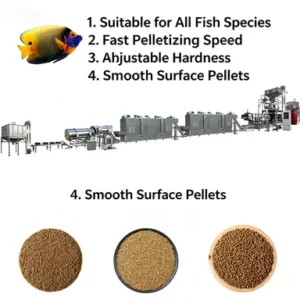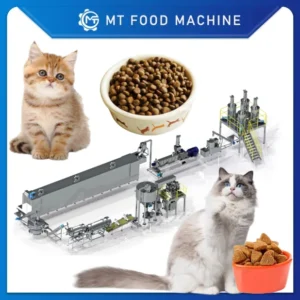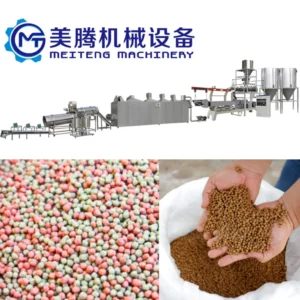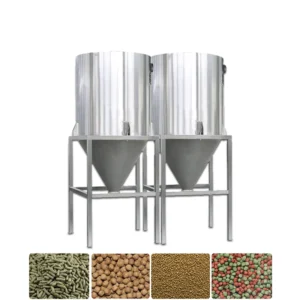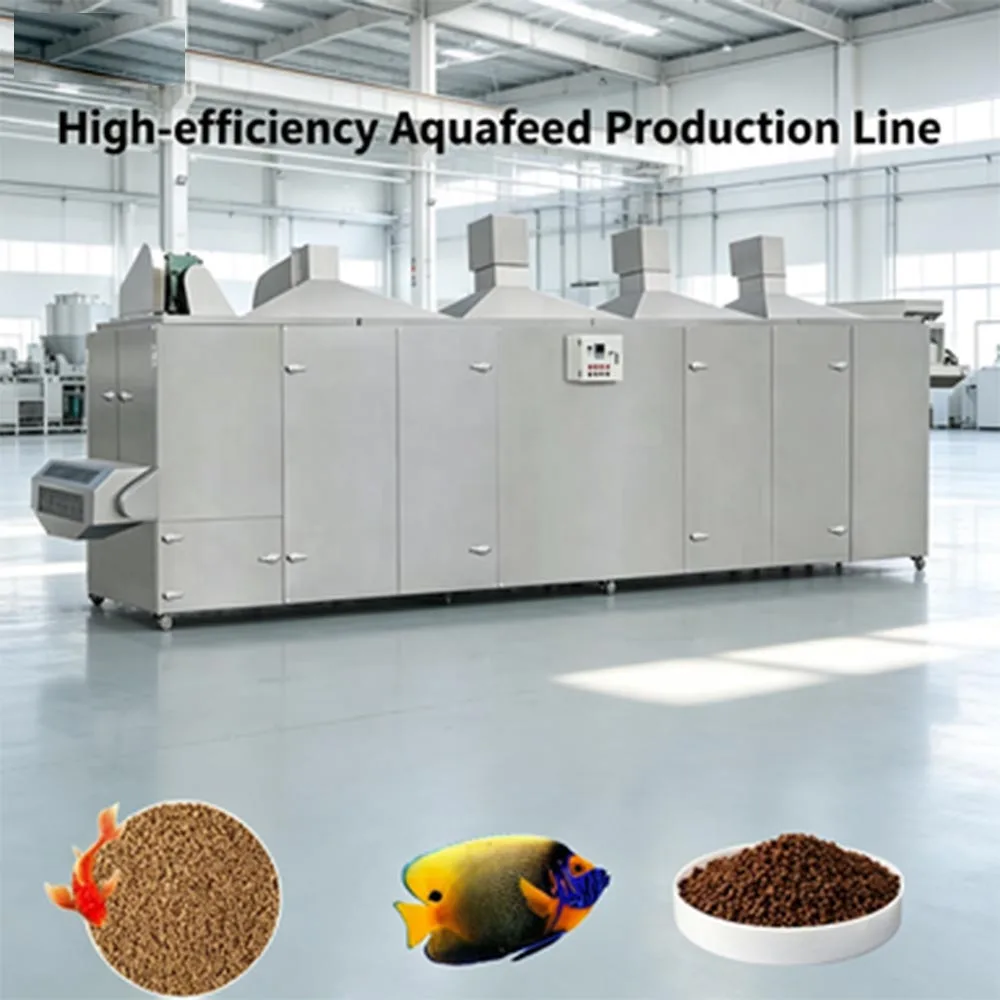


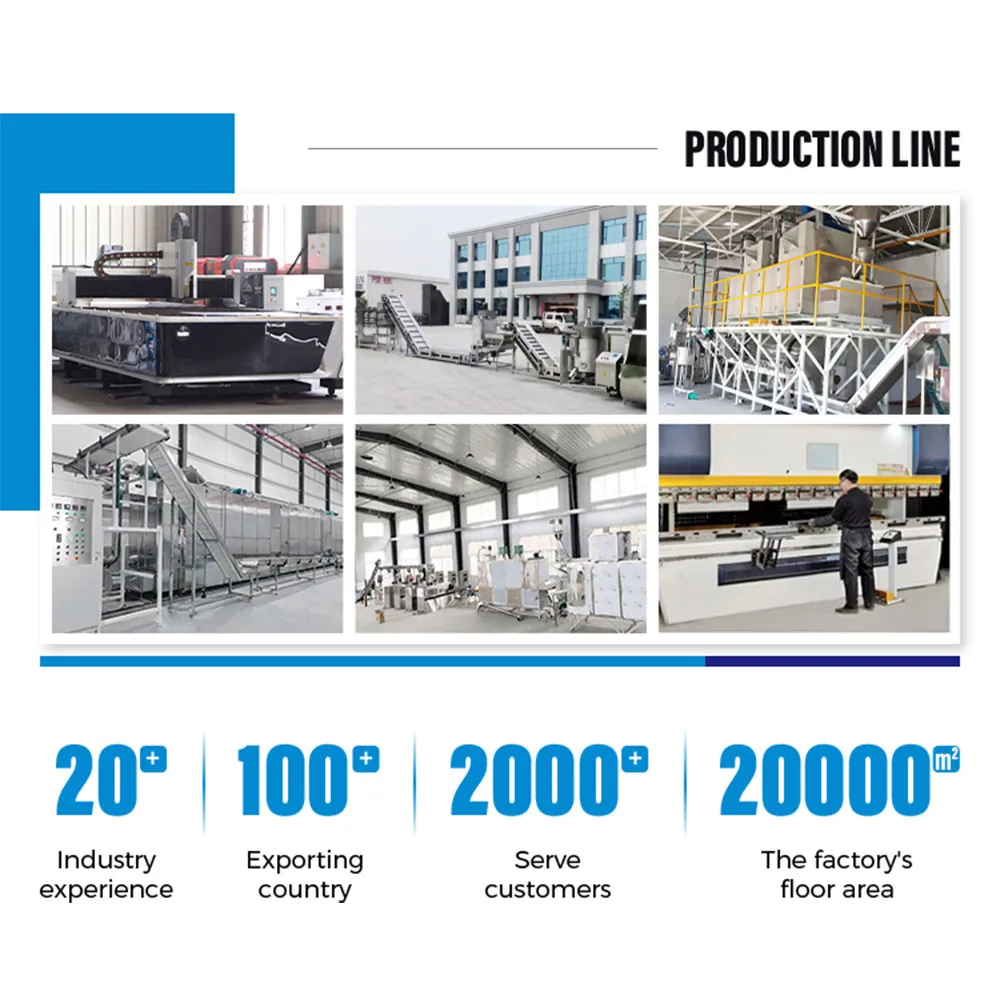
Turnkey Fish Feed Pellet Production Line with Tunnel Dryer, food-grade 304 stainless steel construction, intelligent PLC automatic control, continuous tunnel drying — engineered as a complete throughput-matched aquatic feed system from batching through extrusion, drying, seasoning, and packing. Every station is capacity-aligned so dryer residence time never constrains extruder output, with temperature and airflow profiles set for both floating and sinking pellet formats.
- Full continuous production mode with minimal manual intervention
- Pellet size, hardness, and buoyancy adjustable per breeding requirements
- Corrosion-resistant stainless steel across all material contact parts
Delivered with a trial run report on your actual raw material from our in-house testing workshop, so process parameters are validated before shipment.
Description
Matched Throughput Engineering — Every station from mixing to packing is capacity-balanced against the tunnel dryer’s residence time, preventing the extruder from outpacing downstream drying in your aquatic feed line.
Technical Specifications
| Parameter | Value |
|---|---|
| Product Type | Continuous Tunnel Dryer for Aquatic Feed Pellets |
| Dryer Configuration | Continuous Tunnel Type with multi-pass belt conveying |
| Contact Material | Food Grade 304 Stainless Steel (machine body and all material contact parts) |
| Control System | Intelligent PLC Automatic Control System |
| Line Integration | Raw material mixer, extruder, dryer, seasoning coating machine, vibrating sieve, conveyor equipment |
| Production Mode | Full continuous automatic production (mixing → extrusion → drying → seasoning → screening → discharging) |
| Corrosion Resistance | Anti-corrosion and anti-rust construction for wet feed environments |
| Heating System | Optimized transmission structure and heating system for reduced power consumption and heat loss |
| Pellet Adjustability | Size, hardness, buoyancy adjustable per breeding requirements |
| Processing Capacity | Large stable processing capacity for medium-large scale industrial production (basis to be confirmed by feed type, moisture content, and pellet diameter) |
| Certification | CE, ISO |
Application Suitability
| Application | Material or Output |
|---|---|
| Floating fish feed for koi, goldfish, and tropical species | Fish meal, soybean meal, corn powder, compound additives formulated for low-density extrusion |
| Sinking feed for catfish and bottom-feeding freshwater species | High-protein ingredient blends requiring extended drying residence time to reach target moisture |
| Shrimp and aquatic crustacean feed pellets | Compound formulations with heat-sensitive nutritional additives requiring controlled temperature profiles |
| Medium-to-large scale aquaculture feed plants | Continuous throughput matching extruder output with tunnel dryer capacity across full shifts |
Why Extruder Capacity Means Nothing Without a Matched Dryer
A tunnel dryer that cannot absorb your extruder’s output turns a high-capacity line into a batch operation.
I have watched production floors where an extruder pushes out pellet after pellet while the downstream dryer chokes, forcing operators to shut down the front end and let the belt clear. The rated capacity on the extruder nameplate becomes irrelevant when the drying station cannot keep up. This bottleneck pattern repeats constantly in aquatic feed installations where stations are sourced from different vendors without throughput reconciliation [NEED_CITE: throughput mismatch consequences in multi-vendor feed lines]. When planning a Turnkey Fish Feed Pellet Production Line with Tunnel Dryer, the drying residence time and belt speed must be calculated against the extruder’s actual output on your specific raw material formulation — not a generic reference capacity.
Thermal Profile Control Across Floating and Sinking Formats
Floating pellets and sinking pellets demand fundamentally different drying strategies. Floating feed requires rapid surface moisture removal to lock in the expanded cellular structure, while sinking pellets need gentler, longer heat exposure to drive internal moisture out without cracking the denser matrix. The PLC-controlled tunnel dryer allows operators to store and recall distinct temperature and belt-speed profiles for each pellet format, switching between floating and sinking runs without manual recalibration guesswork. This flexibility matters when a single Turnkey Fish Feed Pellet Production Line with Tunnel Dryer serves multiple aquaculture species across different breeding cycles.
Stainless Steel Construction Where It Actually Counts
Aquatic feed environments are corrosive by nature — fish meal dust, high ambient humidity from the drying process, and frequent wash-downs degrade carbon steel quickly. Every material contact surface on this dryer is built from Food Grade 304 Stainless Steel, including the belt, internal baffles, and discharge chutes. The anti-corrosion specification is not cosmetic; it prevents rust particulate from contaminating feed batches and extends the service interval between belt replacements. In coastal or tropical installation sites where humidity compounds corrosion risk, this material choice directly affects equipment longevity [NEED_CITE: stainless steel performance in high-humidity food processing environments].
How PLC Integration Stabilizes Moisture Targets
The intelligent PLC automatic control system coordinates dryer zone temperatures, belt speed, and airflow volume as a single variable set rather than isolated adjustments. When the extruder upstream shifts output due to raw material moisture variation, the PLC can respond by modulating dryer residence time to maintain consistent final pellet moisture. This closed-loop logic reduces the off-spec batches that plague manually adjusted dryers, where operators react to moisture readings after the deviation has already occurred. Consistent pellet moisture directly affects shelf life and nutritional stability in stored aquatic feed inventories.
When the Dryer Arrives Before the Floor Plan
I spent years on assembly floors in Shandong, and one memory sticks: we shipped a continuous tunnel dryer to a Southeast Asian pet food facility last year. The client never mentioned their workshop ceiling height during the planning phase. The dryer arrived, the top clearance was too tight for the door frame, and we ended up removing the upper housing panels to push it inside — a full week of delay before the line could even be assembled. Now, for every Turnkey Fish Feed Pellet Production Line with Tunnel Dryer project, I request the factory floor drawing before finalizing the layout. Dryer dimensions, inlet and outlet elevations, and overhead clearance are all mapped against the actual building, not an assumption [NEED_CITE: industrial equipment installation clearance standards].
The hidden cost is never the machine itself. It is the crane rental for a second lift, the electrician idle for three days, and the production target pushed into the next quarter because one station did not fit through the door.
Engineering the Whole Line Under One Responsibility
Throughput reconciliation across every station — The mixer, extruder, dryer, seasoning drum, and vibrating sieve are specified as a single system where each station’s capacity is calculated against the others, eliminating the bottleneck pattern that plagues multi-vendor assemblies.
In-house testing workshop trial runs — Your raw material formulation is processed through the complete line configuration before shipment, generating a trial run report that confirms pellet buoyancy, moisture content, and drying profile match your market specification.
Screw and die configuration matched to your pellet target — The extruder upstream of the dryer is configured with screw elements and die geometry specified for your exact ingredient blend, so the dryer receives pellets with predictable density and moisture profiles rather than generic output.
Voltage and control language confirmed pre-production — Electrical schematics are validated against your facility’s power supply and your operators’ language requirements before the control panels are wired, preventing commissioning delays on site.
Pre-shipment documentation package — Line layout drawings, capacity calculations, and factory test records are delivered before the crate is sealed, so your installation contractor can prepare foundations and utility connections while the equipment is in transit.
Documentation & Verification
- Line layout and capacity calculation showing throughput balance between extruder output and tunnel dryer residence time for your pellet format
- Trial run report on your actual fish meal and soybean formulation conducted in the testing workshop before dispatch
- Electrical schematic with voltage, frequency, and PLC interface language confirmed against your facility specifications
- Screw and die configuration record paired with dryer temperature profile documentation for your specific floating or sinking pellet target
- Factory test record documenting continuous run stability and material contact surface inspection
- CE declaration of conformity and ISO certificate for customs clearance and local regulatory compliance
Installation, Commissioning & Support
- Foundation requirements calculated from the full tunnel dryer footprint and loaded belt weight for your floor slab specification
- Dedicated electrical circuit sizing based on the dryer’s heating system power draw and PLC control panel requirements
- Modular shipping configuration with reassembly sequence documented to match your workshop door and ceiling clearances
- First-run commissioning covering PLC parameter setup for your specific floating and sinking pellet moisture targets
- Operator training on dryer belt speed, zone temperature adjustment, and daily stainless steel surface cleaning protocols
- Wear parts list covering dryer belt sections, heating elements, and drive components with recommended replacement intervals
What We Need to Configure Your Drying Station
Send your target pellet specification — floating or sinking, diameter range, and final moisture content — along with your primary ingredient formulation. Include your workshop floor drawing with ceiling height and door dimensions so the tunnel dryer layout fits your building before fabrication begins. Confirm your facility voltage, phase, and frequency so the heating system and PLC panel are wired correctly for your local grid. If you have an existing extruder upstream, share its actual output data on your formulation so we can calculate the required dryer residence time and belt width.
Frequently Asked Questions
Q: How is dryer capacity matched to extruder output to prevent line bottlenecks?
A: We calculate the required tunnel dryer belt speed and residence time against the extruder’s actual output on your specific raw material, not a generic nameplate figure. The line layout document shows throughput at every station so drying capacity is verified before production begins.
Q: Can the dryer handle both floating and sinking pellet formats?
A: Yes. The PLC stores separate temperature profiles and belt speed settings for each pellet density target. Floating pellets receive rapid surface drying to preserve expansion, while sinking pellets follow a longer, gentler profile to reach lower moisture without surface cracking.
Q: What electrical and control confirmations happen before shipment?
A: Voltage, frequency, and phase are confirmed against your facility supply. The PLC interface language is set to your operators’ preference. Electrical schematics are delivered for your approval before the control panels are wired.
Q: Is a trial run performed on our raw material before the line ships?
A: Yes. Your actual ingredient formulation is processed through the matched extruder and tunnel dryer configuration in our testing workshop. The trial run report documents pellet buoyancy, moisture content, and drying parameters for your review before dispatch.
Q: What spare parts and maintenance support come with the dryer?
A: A wear parts list covers dryer belt sections, heating elements, and drive components specific to your configuration. Recommended replacement intervals are documented, and ongoing parts supply is maintained after installation and commissioning are complete.
Related products
-
Línea de procesamiento de alimentos para gatos de múltiples especies controlada por PLC con capacidad de 100-200 kg/h
¥34,000.00 Select options This product has multiple variants. The options may be chosen on the product page -
Máquina de Línea de Producción de Alimento para Peces Automática Fabricación de Pellets Flotantes y Hundidos Diseño de Alta Capacidad y Ahorro de Energía
¥9,500.00 Select options This product has multiple variants. The options may be chosen on the product page -
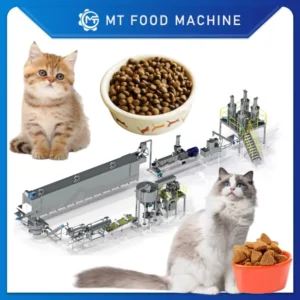
Línea de procesamiento de alimentos para mascotas de múltiples especies controlada por PLC MT Brand 450-550kg/h
¥40,000.00 Select options This product has multiple variants. The options may be chosen on the product page -
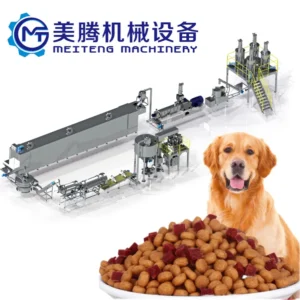
Línea de producción de extrusión de alimentos para mascotas de alta capacidad adecuada para perros, gatos, aves, peces y alimento para ganado.
¥9,500.00 Select options This product has multiple variants. The options may be chosen on the product page