

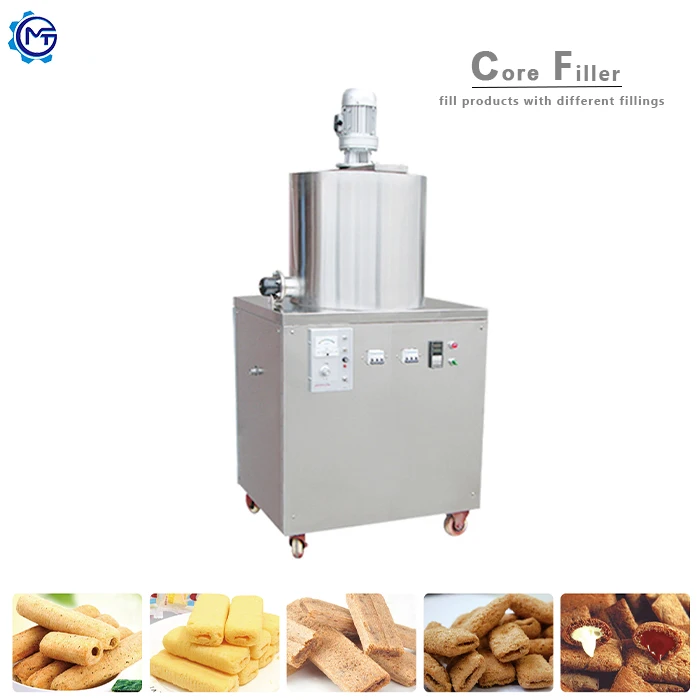
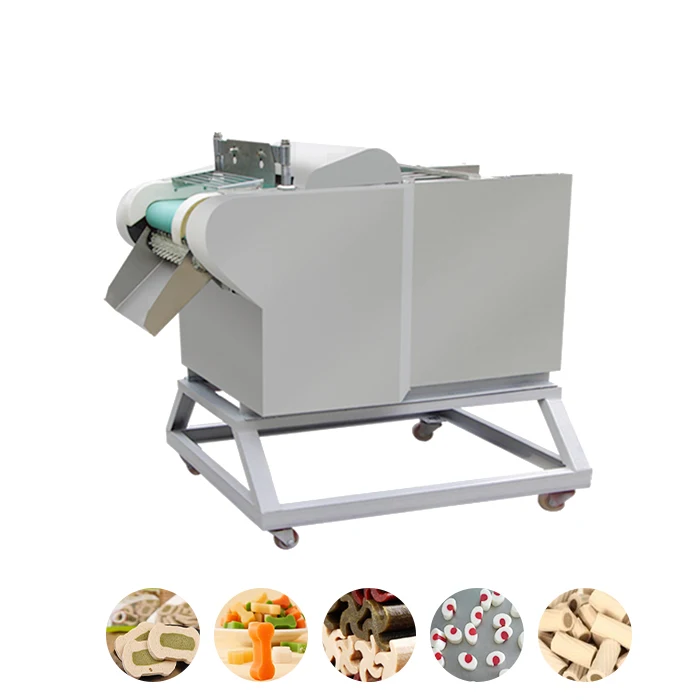
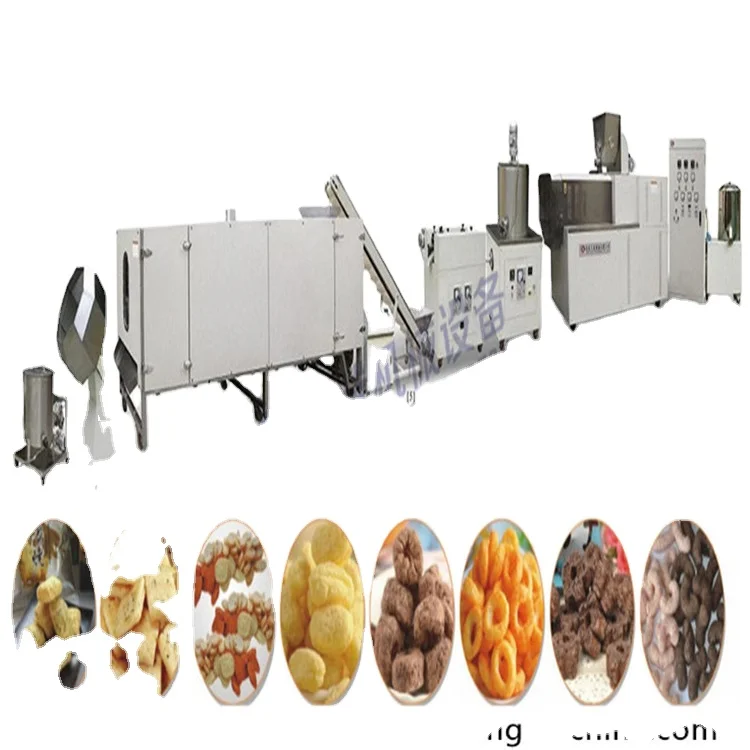
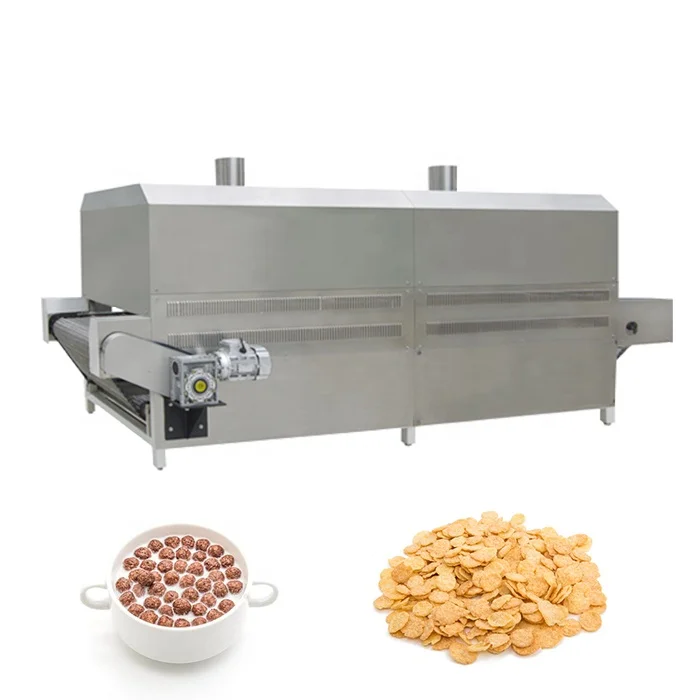
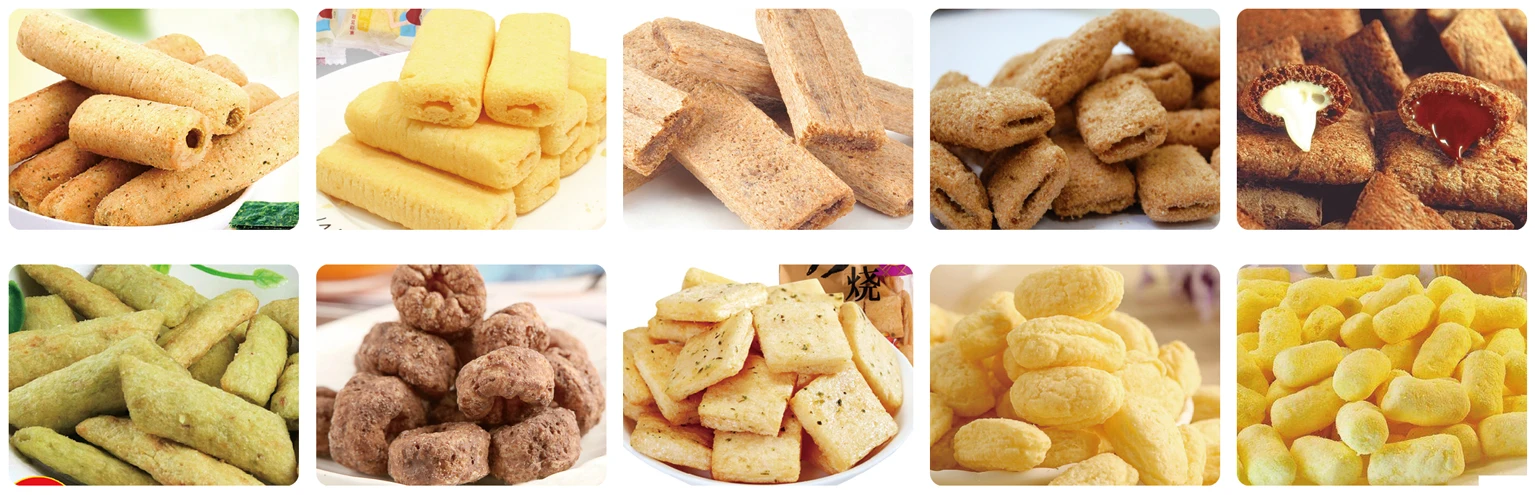
MT65 / MT70 / MT85 Core Filling Puff Snack Extrusion Line, Twin-Screw, PLC Control — engineered as one integrated turnkey project from mixing through extrusion, shaping, drying, and flavoring. Screw configuration and die design are matched to your raw material and target snack format, with barrel temperature and moisture profiles set for consistent expansion and core-filled density. Throughput is balanced across every station to prevent bottlenecks common in multi-vendor lines.
- Line layout and capacity calculation provided with matched station throughput
- Trial run on your raw material in our testing workshop before shipment
- On-site installation, commissioning, and operator training included
- 24-month warranty with lifetime technical support
1
Description
Screw and die configuration specified to your raw material — Every core filling puff snack extrusion line we ship is trialed on the buyer’s actual flour blend in our testing workshop before the crates close.
Technical Specifications
| Parameter | Value |
|---|---|
| Model | MT65 / MT70 / MT85 |
| Product Type | Core Filling Puff Snack Food Extrusion Line |
| Screw Type | Twin-screw |
| MT65 Installed Power | 70 kW |
| MT65 Real Power | 40 kW |
| MT65 Output | 100–150 kg/h (basis not stated in source — confirm raw material / moisture / product format) |
| MT65 Overall Dimensions | 20000 × 1200 × 2200 mm |
| MT70 Installed Power | 100 kW |
| MT70 Real Power | 70 kW |
| MT70 Output | 200–240 kg/h (basis not stated in source — confirm raw material / moisture / product format) |
| MT70 Overall Dimensions | 25000 × 1500 × 2200 mm |
| MT85 Installed Power | 200 kW |
| MT85 Real Power | 150 kW |
| MT85 Output | 300–400 kg/h (basis not stated in source — confirm raw material / moisture / product format) |
| MT85 Overall Dimensions | 30000 × 3500 × 4300 mm |
| Control System | PLC / MCC |
| Line Stations | Mixing → Extruding → Shaping → Cutting → Drying → Flavoring |
| Dryer Type | Multi-layer mesh belt (length and layer configurable) |
| Flavoring System | Semi-automatic or automatic; oil, sugar, powder seasoning |
| Assembly State | Complete line, fully automatic |
| Warranty | 24 months, lifetime service |
Application Suitability
| Application | Material or Output |
|---|---|
| Core-filled puff snacks | Corn, rice, wheat, oat flour with chocolate, cream, or fruit paste filling |
| Puffed extruded snacks | Composite grain flours in varied die-cut shapes |
| Fried snack formats | Grain-based dough with die and process adjustment |
| Artificial rice | Rice flour and starch blends through shaping die |
Why Nominal Output Quotations Derail Snack Line Startups
A line rated at 400 kg/h on the extruder means little when the downstream dryer can only handle 250 kg/h.
When sourcing a core filling puff snack extrusion line turnkey, buyers often receive quotations anchored to a single extruder’s peak number. The dryer, flavoring drum, and cooling conveyor may carry different throughput ceilings, and that mismatch surfaces only after installation — usually as half-coated product backing up on the belt or moisture levels drifting out of spec. [NEED_CITE: common causes of throughput mismatch in multi-station food processing lines] I once saw a snack line where the extruder ran fine at its rated output, but the multi-layer dryer needed twice the residence time the layout allowed, forcing the entire line to idle at a fraction of its quoted speed.
Matching Throughput Across Every Station in a Core Filling Line
A core filling puff snack extrusion line turnkey operates as a continuous chain: mixing feeds the twin-screw extruder, the extruder pushes shaped product through the cutting station, cut pieces enter the dryer, and dried product rolls into the flavoring drum. Each station must move the same mass per hour or the weakest link dictates real output. On the MT65 through MT85 range, line configuration pairs the extruder capacity with a dryer whose belt length and layer count are calculated from the target moisture removal profile, not pulled from a standard catalogue.
How Layout Design Prevents the Bottleneck You Cannot See Until Startup
Floor space is finite, and the physical arrangement of stations determines how product transfers between them. A poorly routed core filling puff snack extrusion line turnkey forces operators to hand-carry trays between the cutter and dryer, introducing delays and contamination risk. In our layout proposals, the distance between the extruder die face and the dryer infeed is minimized, and transfer chutes are specified to match the cut-piece geometry so that fragile filled shells do not fracture before entering the drying zone. [NEED_CITE: food extrusion line layout best practices for continuous operation]
Screw Geometry, Die Design, and What They Mean for Filled Snack Shells
The twin-screw configuration on the MT65, MT70, and MT85 handles a broader range of grain flours than a single-screw equivalent because the intermeshing screw flights provide positive conveying and self-wiping action. For a core-filled product, the shell must be thin enough to yield a satisfying crunch yet strong enough to contain the filling without rupturing at the injection point. Screw pitch, compression ratio, and die land length together govern the dough’s gelatinisation degree and expansion ratio at the die exit. The PLC and MCC control system holds barrel temperature zones within tight bands, which keeps shell wall thickness consistent across long production runs — a factor that directly affects whether the filling stays inside or bleeds out during cooling.
The Hidden Cost of Skipping the Trial Run Before Shipment
Buyers who accept shipment without a factory trial on their own raw material are effectively paying for product development in their own facility, on their own time. I once worked with a buyer whose local corn flour had a higher fat content than the standard test blend, causing the extrudate to collapse after cutting. The shells could not hold filling, and the flavoring oil pooled on flat surfaces instead of coating evenly. A pre-shipment trial run in the supplier’s testing workshop catches this kind of incompatibility while there is still time to adjust screw configuration or recommend a flour blend correction. [NEED_CITE: importance of raw material trial runs in food extrusion equipment procurement]
Why Sourcing the Full Line from One Supplier Matters Here
When the extruder, dryer, flavoring drum, and packing station come from separate vendors, nobody owns the throughput gap between them. Our core strength on the core filling puff snack extrusion line turnkey is that every station is specified under one project scope, so the MT85’s 300–400 kg/h range (basis to be confirmed) is supported by a dryer and flavoring system sized to the same output ceiling. Screw and die configurations are recorded against your raw material formulation, not copied from a generic template. Voltage and frequency are confirmed against your facility’s utility supply before the electrical panel is wired, avoiding commissioning delays. The in-house testing workshop runs your flour blend before crating, and our engineers stay on-site through operator training so the line does not hand over as a collection of unfamiliar machines.
Documentation & Verification
- Line layout drawing with throughput matched across every station
- Screw and die configuration record matched to your flour formulation
- Trial run report on your raw material before shipment
- Electrical schematic with voltage and frequency confirmed for your market
- Operation and maintenance manual with wear parts list
- CE declaration of conformity and ISO certificate in electronic edition
Installation, Commissioning & Support
- MT85 footprint of 30000 × 3500 × 4300 mm requires level concrete floor with drainage near dryer zone
- MT85 installed power of 200 kW needs dedicated three-phase circuit with isolated breaker panel
- Extruder, dryer, and flavoring drum ship in sections; our engineers reassemble and align on your floor
- PLC and MCC control system parameters set during commissioning to match your product specification
- Operator training covers screw changeover, die cleaning, and filling injection timing
- Wear parts list with screw elements, dies, and mesh belt sections provided at handover
- 24-month warranty with lifetime service and overseas technician dispatch available
What We Need to Build Your Line Proposal
Share your target product format — shell shape, filling type, and finished piece weight — along with the grain flour blend you plan to run. Tell us your facility’s available voltage and frequency, the floor area and ceiling height you have allocated, and your target daily output so we can select between the MT65, MT70, or MT85 and size every downstream station accordingly.
Frequently Asked Questions
Q: How is total line throughput verified across all stations rather than quoted on the extruder alone?
A: We calculate throughput for the mixing, extruding, cutting, drying, and flavoring stations individually during layout design, then balance them so no single station constrains the others. The capacity calculation document shows matched output at each point, not just the extruder’s peak rating.
Q: What does the phased installation and commissioning schedule look like?
A: The larger MT85 line requires foundation prep, station-by-station assembly, utility hook-up, and dry runs before product trials begin. Our engineers remain on-site through each phase, including operator training, to ensure the line reaches stable production before handover.
Q: How are utility requirements planned and documented for the full line layout?
A: The electrical schematic lists total connected load, per-station circuit requirements, and confirmed voltage and frequency. Compressed air and steam demands for the dryer and flavoring system are calculated during layout design and shown on the utility plan.
Q: What raw material trial runs are performed before shipment?
A: We run your actual flour blend through the configured extruder and cutting station in our testing workshop. The trial run report documents expansion ratio, shell wall thickness, and filling compatibility, and any screw or die adjustments are made before the machine ships.
Q: How is operator training structured during commissioning?
A: Training covers daily startup and shutdown procedures, screw and die changeover, PLC and MCC parameter adjustment, and routine maintenance intervals. We provide a wear parts list and recommend stocking critical spares like screw elements and die plates for the first production cycle.
Related products
-

Nueva máquina automática para hacer snacks de harina de arroz inflado de acero inoxidable, alta productividad y multifuncional.
¥11,050.00 Select options This product has multiple variants. The options may be chosen on the product page -

Extrusora de Doble Tornillo para Snacks de Queso Puff Máquina Simple de Arroz Inflado de Acero Inoxidable
¥8,500.00 Select options This product has multiple variants. The options may be chosen on the product page -

Máquina Extrusora de Maíz Inflado Línea de Producción de Snacks Rellenos de Núcleo Inflado
¥8,500.00 Select options This product has multiple variants. The options may be chosen on the product page -

Máquina Automática de Snacks de Comida Inflada Máquina Eléctrica para Hacer Snacks de Maíz Puff Nueva Condición Producción de Snacks Puff Sabrosos
¥7,550.00 Select options This product has multiple variants. The options may be chosen on the product page


