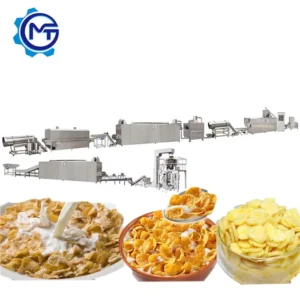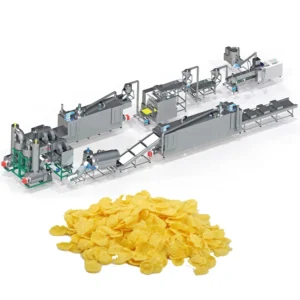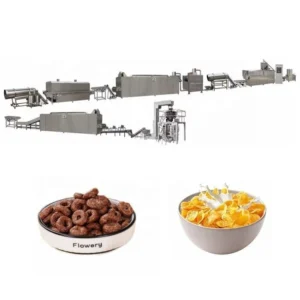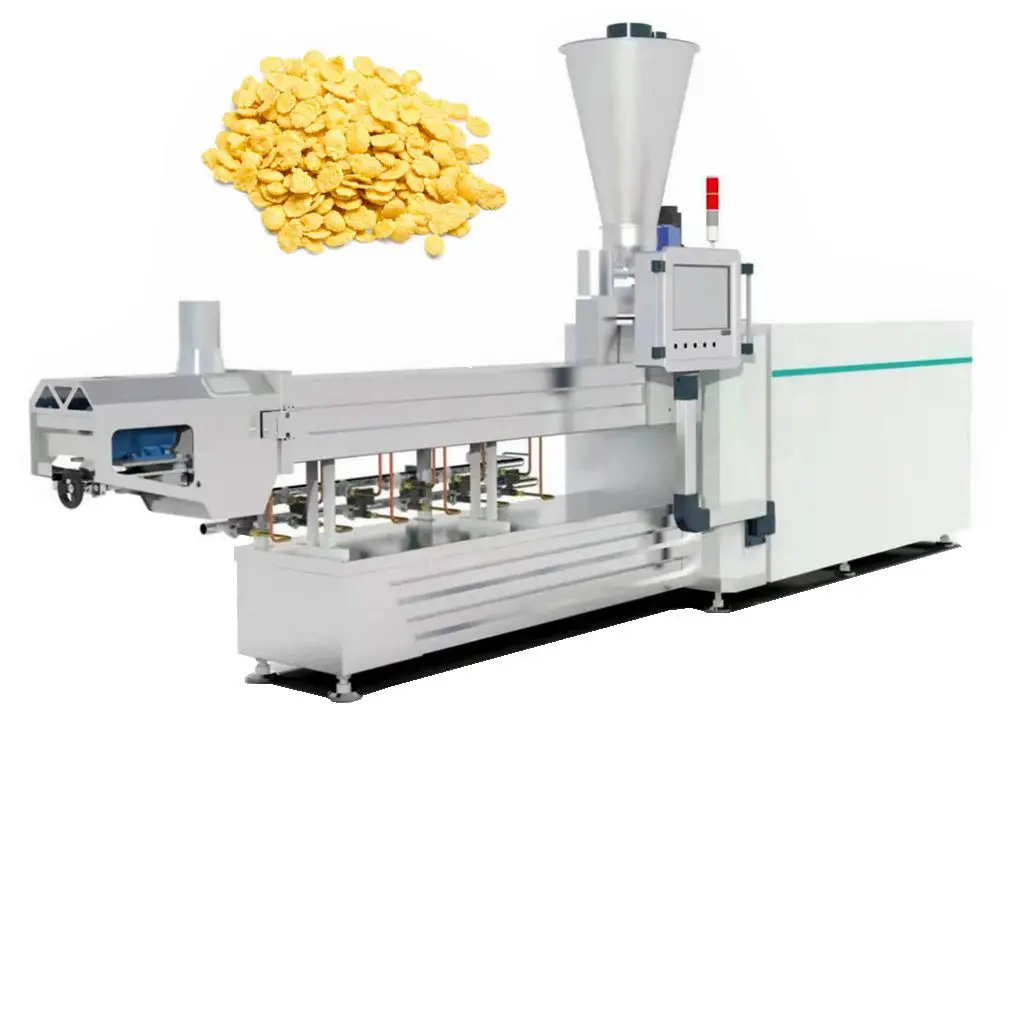
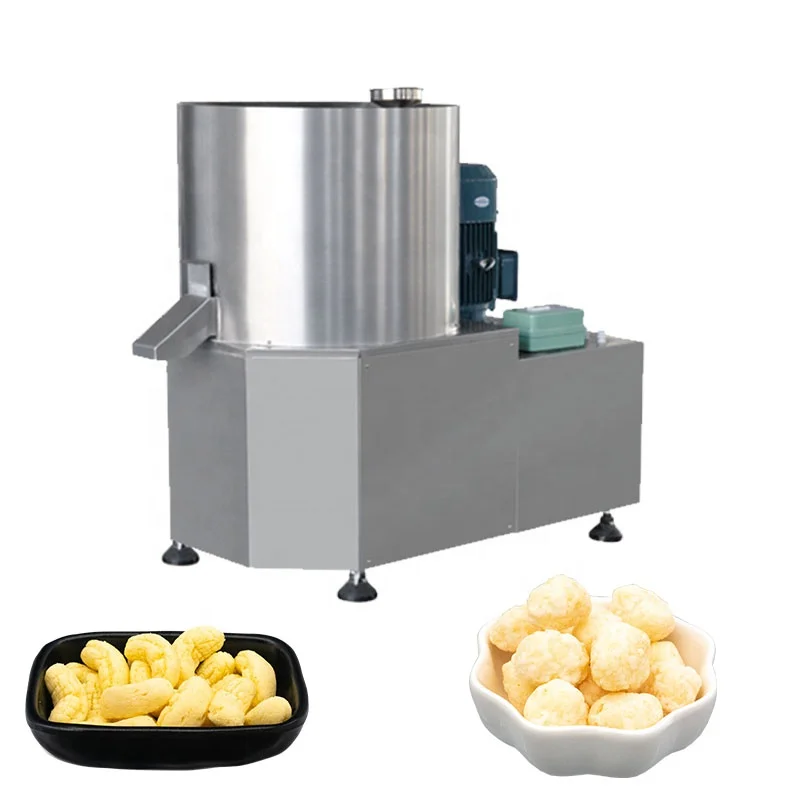
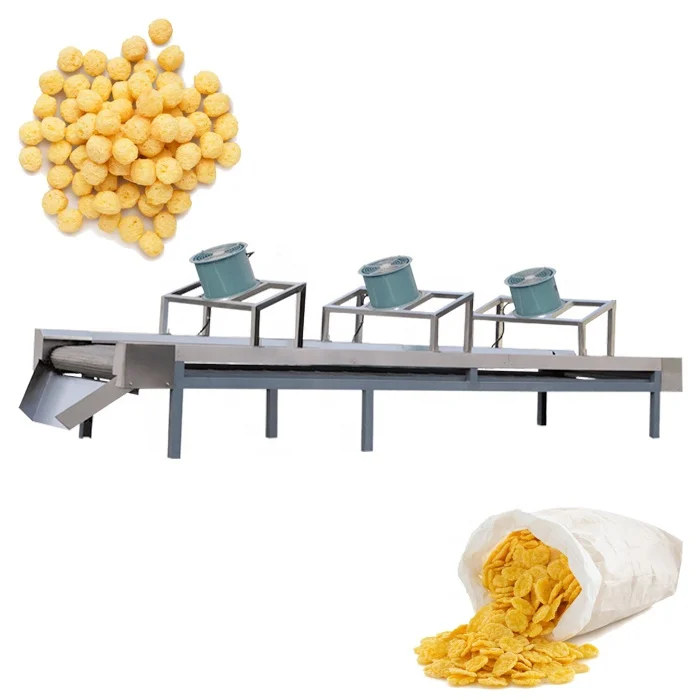
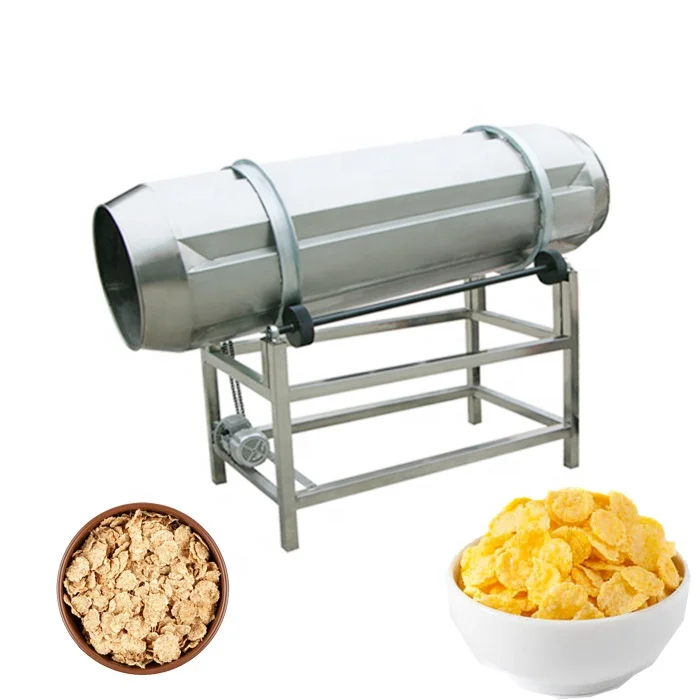

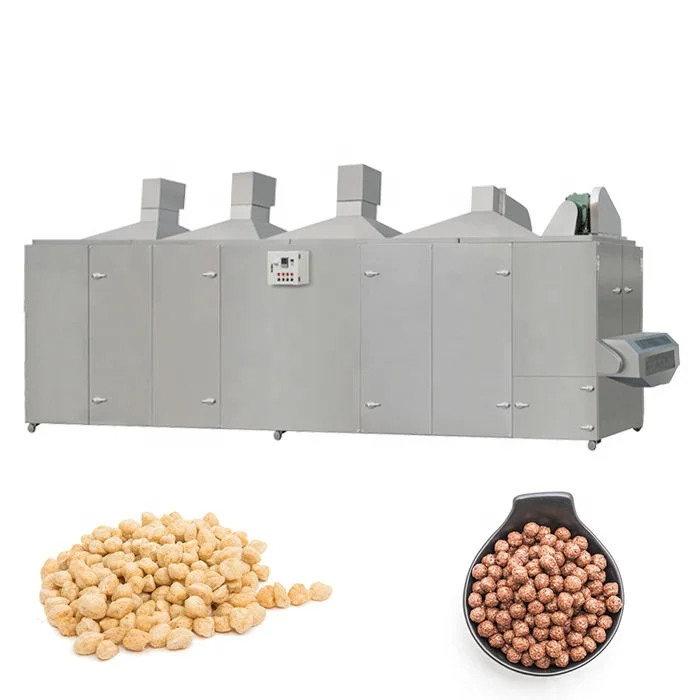
MT70 / MT85 / MT75 Corn Flakes Breakfast Cereal Production Line, Twin-Screw Extruder, PLC Flaking Control — designed as a turnkey project with matched throughput from batching through packing.
- Screw configuration and die design specified to your raw material formulation and target flake density
- Hydraulic double-roller flaking station with infrared temperature regulation for consistent sheet thickness
- Hot air roasting oven with dual circulating fans and cyclone dust removal for uniform blistering
- Natural or sugar-coated corn flakes, plus shaped cereals (rings, stars, loops) on the same extrusion platform
Full line layout and capacity calculation provided, with in-house trial runs on your raw material before shipment and on-site commissioning included.
Description
Turnkey Line Integrity — Every station from mixing through packing is throughput-matched and factory-verified before dispatch, preventing the bottleneck failures that plague multi-vendor cereal line assemblies.
Technical Specifications
| Parameter | Value |
|---|---|
| Model | MT70 / MT85 / MT75 |
| Product Type | Corn Flakes Breakfast Cereal Production Line |
| Installed Power | MT70: 160 kW; MT85: 190 kW; MT75: 210 kW |
| Power Consumption | MT70: 120 kW; MT85: 140 kW; MT75: 150 kW |
| Output Capacity | MT70: 150–200 kg/h (basis to be confirmed); MT85: 300–400 kg/h (basis to be confirmed); MT75: 300–500 kg/h (basis to be confirmed) |
| Overall Dimensions (L×W×H) | MT70: 41 × 1.5 × 2.2 m; MT85: 43 × 1.5 × 3.2 m; MT75: 45 × 1.5 × 3.5 m |
| Extruder Screw Type | Twin screw |
| Flaking Machine | PLC-controlled hydraulic double-roller system, dual motors, infrared sensor temperature control |
| Dryer Heating Source | Gas or Electric |
| Roasting Oven | Hot air circulation, dual circulating fans, cyclone dust removal, vibrating pan with high-temperature spraying tubes |
| Coating System | Double tumble sugar-melting unit, elevator, coating drum, precision spraying nozzle |
| Raw Materials | Corn, rice, wheat, oat, barley powder |
| Final Product Shapes | Ball, tube, stick, ring, fruit loop, star, wheel, flower, heart (by adjusting extruder die) |
| Assembly State | Complete turnkey production line |
| Certification | CE, ISO |
Application Suitability
| Application | Material or Output |
|---|---|
| Natural corn flakes for breakfast cereal packaging | Corn and barley-based formulations, roasted to crisp density |
| Sugar-coated or frosted corn flakes | Corn grits with sugar-spray coating, dried to low-moisture shelf-stable state |
| Shaped breakfast cereal snacks | Rice, wheat, and oat blends formed into fruit loops, rings, stars, and wheels |
| Fortified cereal lines for nutrition programs | Grain-based blends with added micronutrient premix compatibility |
Why a "Corn Flakes Production Line Turnkey" Quote Often Fails at Startup
A line rated at a nominal output rarely holds that figure on the buyer’s actual grain formulation and moisture profile.
I have watched factory managers stare at a conveyor backed up with damp flakes while the dryer runs at full capacity but cannot catch up. The extruder pushes through, the flaker presses on schedule, and then the roasting oven becomes the choke point — because each machine was sourced separately and never tested as a single corn flakes production line turnkey system. The downtime and wasted raw material during commissioning add up fast, and no single vendor takes responsibility for the gap [NEED_CITE: throughput mismatch causes in multi-vendor food processing lines].
Matching Station Throughput Across the Full Cereal Line
A corn flakes production line turnkey project only works when the mixer batch size, extruder output, flaking roll speed, dryer belt length, and roasting oven residence time are all calculated against the same target throughput. If the flaker presses 400 kg/h but the dryer only handles 250 kg/h, wet flakes pile up, absorb moisture from the air, and stick together before they reach the oven. Every station on this line is configured as a matched set so the bottleneck never shifts downstream during production ramp-up.
The Screw and Die Configuration That Defines Flake Density
Twin-screw extrusion gives operators control over shear, residence time, and moisture injection at multiple barrel zones. For corn flakes specifically, the screw profile and die opening determine whether the cooked dough exits at the right viscosity for flaking — too stiff and the rolls crack the sheet, too soft and the flakes tear under their own weight. The die design is specified against your raw material formulation and target product shape, whether that is a flat flake, a fruit loop, or a star-shaped cereal piece. Getting this configuration right in the testing workshop before shipment eliminates weeks of trial-and-error on your factory floor [NEED_CITE: twin-screw extrusion parameter effects on cereal dough rheology].
Reading the Power and Footprint Data Against Your Factory Reality
The MT85 draws 140 kW under load across the full line, which means your electrical panel needs a dedicated circuit sized for continuous duty plus startup surge — not just the nameplate figure. At 43 meters long, the line requires a clear floor span with adequate ceiling height for the roasting oven’s exhaust ducting and the dryer’s thermal insulation clearance. The PLC-controlled flaking station uses hydraulic pressure on both rollers, so your compressed air and hydraulic fluid supply must be confirmed before installation day. These utility and spatial requirements are documented in the line layout drawing, but they need to be cross-checked against your building’s actual infrastructure early in the project.
The Hidden Cost of Skipping the Pre-Shipment Trial Run
When a cereal line ships without a documented trial run on the buyer’s own corn or wheat formulation, the first production batch becomes the real test — and the stakes are far higher. I have seen operators spend an entire shift adjusting barrel temperatures and roll gap pressures because the screw configuration was set for a generic maize blend rather than the specific grit size and moisture content the buyer actually sources locally. The wasted grain, the lost production day, and the frustration of a commissioning engineer flying in to re-do what should have been done in the factory workshop — these costs never show up in the initial quote [NEED_CITE: pre-shipment trial run impact on food extrusion commissioning time].
Why This Line Comes from One Supplier
Every station from the batching mixer through the final packing conveyor is specified and built under a single supply contract, so throughput matching is engineered rather than negotiated between separate vendors. The screw configuration and die design are set to your raw material and target flake density before the extruder leaves the workshop. An in-house testing workshop runs your actual grain formulation through the complete line before crating. The hot air roasting oven arrives with its dual circulating fans and cyclone dust removal system already balanced for the airflow rates your product requires. Electrical schematics, voltage, and PLC language are confirmed against your plant standard before the control cabinets are wired. CE and ISO documentation ships with the line, not as an afterthought requested months later.
Documentation & Verification
- Line layout and capacity calculation showing station-by-station throughput match for your target output
- Screw and die configuration record specific to your grain formulation and flake density target
- Trial run report generated on your raw material in the in-house testing workshop before dispatch
- Electrical schematic with confirmed voltage, frequency, and PLC language for your plant
- CE declaration of conformity and ISO certificate included in the shipping documentation set
- Wear parts list covering screws, dies, and flaking roll surfaces with recommended replacement intervals
Installation, Commissioning & Support
- Floor plan with utility drop points for the 160–210 kW power range depending on selected model
- Dedicated circuit sizing guidance accounting for extruder motor startup surge and roasting oven heating elements
- Phased assembly sequence from dryer and roasting oven anchoring through flaker and coating drum alignment
- First-run parameter setting on your raw material with extruder barrel temperature and roll gap calibration
- Operator training covering PLC interface navigation, hydraulic flaker pressure adjustment, and safety lockout procedures
- Spare screw elements, die plates, and flaking roll segments supplied with the initial shipment for first replacement cycle
Preparing Your Project Inquiry
To move from a general corn flakes production line turnkey inquiry to a firm layout proposal, the useful starting information includes your primary grain type and any secondary blends, your target daily output in finished product weight, and your available floor length and ceiling height. Voltage and frequency at your facility determine the motor and heater specifications, and your preferred PLC language affects the control panel build. If you have existing upstream silos or downstream packing equipment, noting their connection points allows the line layout to integrate rather than duplicate.
Frequently Asked Questions
Q: How is line capacity verified on my specific raw material formulation?
A: The testing workshop runs your actual corn, wheat, or oat blend through the extruder and flaking station before shipment. Moisture content, grit size, and starch composition all affect throughput, so the trial run report documents the achieved output under conditions that mirror your factory environment rather than relying on generic benchmark figures.
Q: How is throughput matched between the extruder, flaker, dryer, and roasting oven?
A: Each station is sized during the layout phase so that the extruder output rate equals the flaker acceptance rate, which in turn feeds the dryer belt at a speed the roasting oven can sustain. The line layout document shows this calculation station by station, and any mismatch is corrected before manufacturing begins.
Q: What voltage, frequency, and control language options are confirmed before shipment?
A: The electrical schematic is reviewed with the buyer during the specification confirmation stage. Motor winding, heater element rating, and PLC interface language are all set to match the destination plant’s supply standard, preventing the commissioning delays that occur when control panels arrive wired for the wrong grid [NEED_CITE: voltage and frequency standards by export market].
Q: Can the extruder produce multiple cereal shapes beyond standard corn flakes on the same line?
A: Yes. The twin-screw extruder accepts interchangeable die plates, allowing production of balls, tubes, rings, fruit loops, stars, wheels, and other shapes from the same platform. The downstream flaking station is bypassed for shaped products, with the dryer and roasting oven handling the formed pieces directly.
Q: What does the phased installation and commissioning schedule look like for a complete turnkey project?
A: Heavy equipment such as the dryer and roasting oven is positioned and anchored first, followed by the extruder and flaker alignment, then the coating and packing stations. Commissioning proceeds station by station with parameter logging at each stage, and operator training runs parallel to the first production batches so your team gains hands-on experience under supervision.
Related products
-
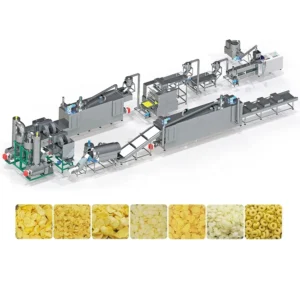
Línea de producción de cereales de desayuno de copos de maíz automática de venta caliente
¥20,000.00 Select options This product has multiple variants. The options may be chosen on the product page -
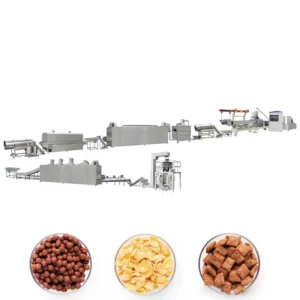
Línea de producción de copos de maíz automática de 1000 lbs Mezclador de cereales para el desayuno Línea de producción de copos de maíz
¥45,000.00 Select options This product has multiple variants. The options may be chosen on the product page -
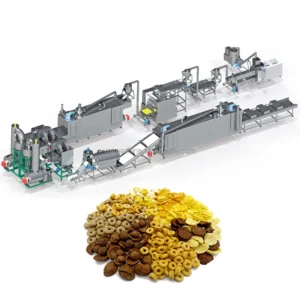
Máquina de producción de copos de cereal de desayuno de maíz en copos pequeños de acero inoxidable
¥30,000.00 Add to cart -
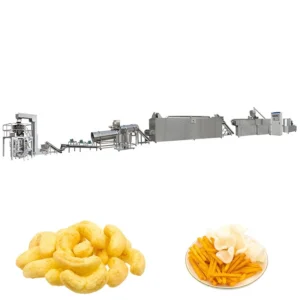
Máquina para hacer copos de maíz Máquina para hacer puffs de maíz Línea de producción de alimentos para bocadillos
Price range: ¥500.00 through ¥1,200.00 Select options This product has multiple variants. The options may be chosen on the product page