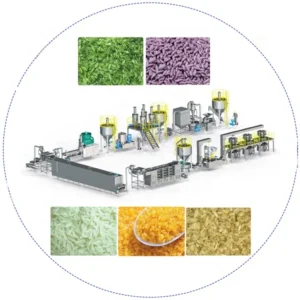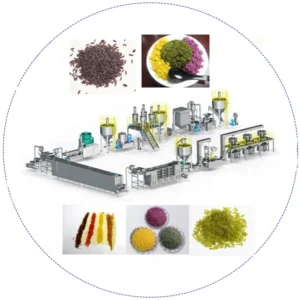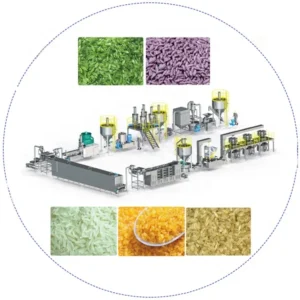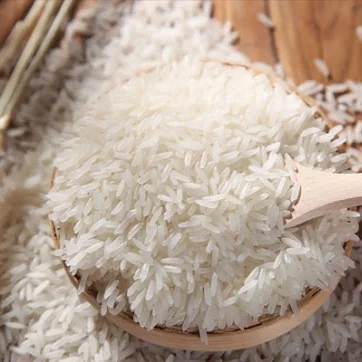
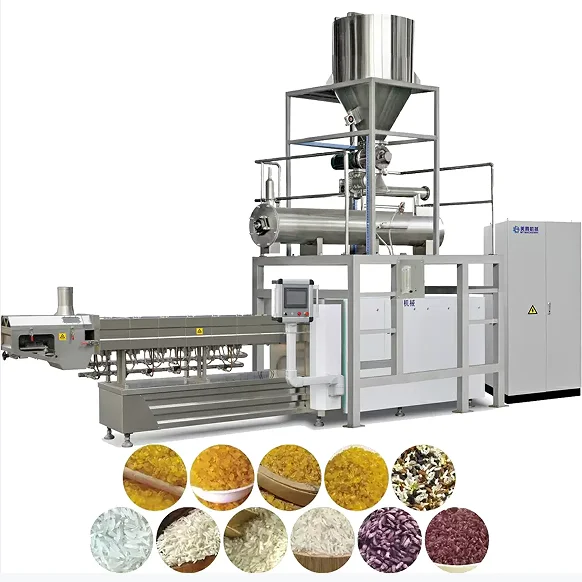
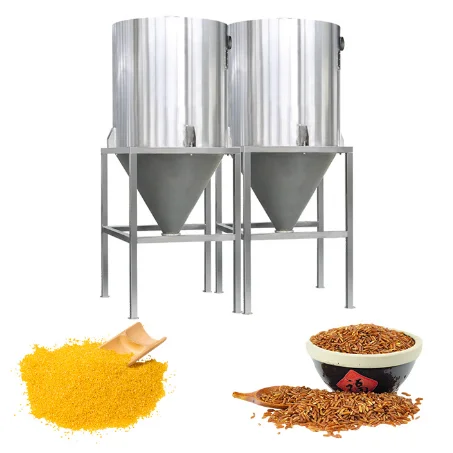
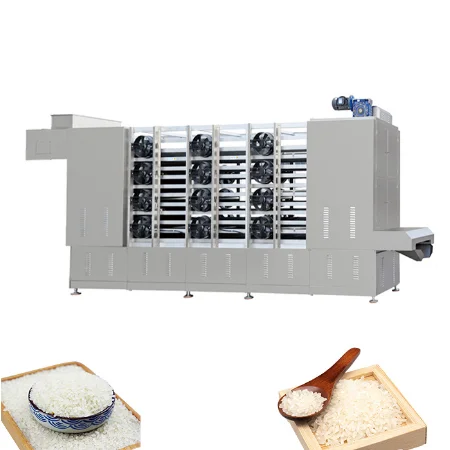
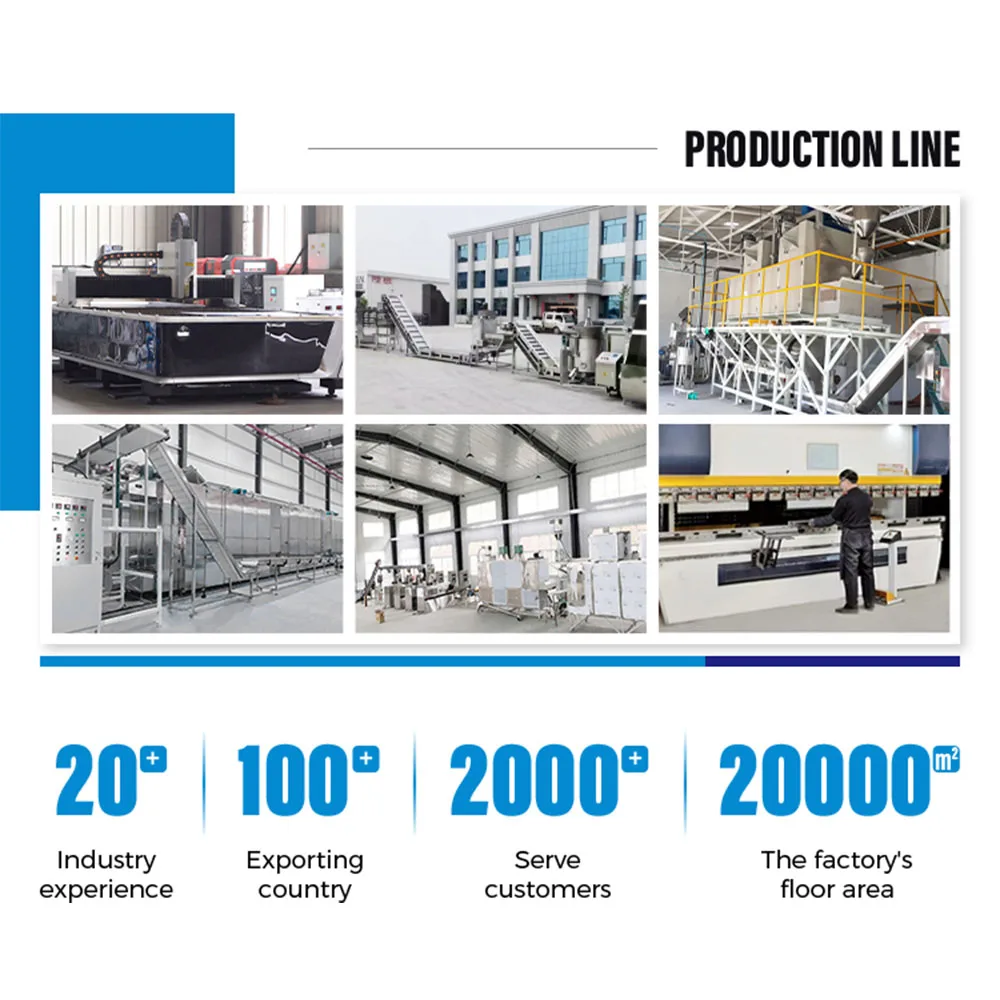
Fortified Nutritional Rice Production Line, 70-300 kg/h Capacity, 380V/50Hz, Food-Grade Stainless Steel — complete turnkey solution from batching through extrusion to final packing. Designed as an integrated project with throughput-matched stations, utility planning, and layout customization to fit your factory footprint. Screw configuration and die design are specified to your grain-based raw material for consistent density and shape. Backed by in-house trial runs on your actual rice flour formulation before shipment, ensuring verified output from day one.
- Output Capacity: 70-300 kg/h (confirm raw material type, moisture content, and product format)
- Voltage & Frequency: 380V / 50Hz
- Control System: Automatic control
- Construction: Food-grade stainless steel
- Line Stations: Mixer, extrusion system, fryer
- Raw Materials: Rice flour and grain-based materials
- Customization: Minor, drawing-based, and full customization supported
Description
Integrated Line Engineering — Every station from batching to packing is throughput-matched under one supplier, eliminating the bottleneck gaps that emerge when separate vendors assemble a Fortified Nutritional Rice Production Line turnkey project.
Technical Specifications
| Parameter | Value |
|---|---|
| Product Type | Fortified Nutritional Rice Production Line |
| Output Capacity | 70–300 kg/h (basis not stated in source — confirm raw material type, moisture content, and product format) |
| Voltage & Frequency | 380V / 50Hz (configurable for target market grid) |
| Control System | Automatic control (PLC / MCC options available) |
| Construction Material | Food-grade stainless steel |
| Line Stations | Mixer, extrusion system, fryer (dryer / cooler / packer configuration to be confirmed) |
| Screw Type | Single or twin screw options (to be specified per application) |
| Raw Material Compatibility | Rice flour and other grain-based materials |
| Customization Level | Minor, drawing-based, and full customization supported |
| Assembly State | Complete integrated line |
| Finish | Silver (stainless steel) |
Application Suitability
| Application | Material or Output |
|---|---|
| Fortified rice for nutrition programmes | Rice flour blended with vitamin and mineral premix |
| Artificial rice from broken rice fractions | Milled rice flour with starch binders |
| Multi-grain nutritional rice | Brown rice, quinoa, and millet blends |
| Instant cooking rice products | Pre-gelatinised rice flour formulations |
| Infant and weaning rice cereal base | Fine rice flour with nutritional fortificants |
What "70–300 kg/h" Actually Means on Your Raw Material
A capacity figure without a raw material premise is a guess, not a guarantee.
I spent years on assembly floors before moving into line planning, and the pattern repeats: a line is quoted at a nominal throughput, arrives on site, and the first trial run on the buyer’s actual grain blend falls short. The extruder might handle standard white rice flour at the upper end of that range, but switch to a brown rice and quinoa mix with higher fibre and lipid content, and gelatinisation behaviour shifts. Throughput drops. Moisture windows narrow. We saw this firsthand when a Southeast Asian buyer sent us their proprietary blend after we had already tested with standard rice flour — the gelatinisation temperature was completely different, and commissioning took an extra two weeks of parameter rework. Since then, every Fortified Nutritional Rice Production Line turnkey project we ship goes through a trial run on the customer’s own material before crating [NEED_CITE: raw material variability in grain extrusion processes].
Throughput Matching Across Every Station
A complete line is only as fast as its slowest station. When the extruder runs at one rate but the dryer cannot keep pace, product backs up, moisture migration becomes uneven, and surface cracking appears on the rice grains. Our layout planning starts with the target output on your specific formulation, then sizes the mixer batch cycle, extruder screw speed, dryer belt length, and cooling conveyor to the same cadence. No station is oversized to inflate the quotation, and none is undersized to cut cost.
Layout Planning Against Real Factory Constraints
Every factory floor has columns, doorways, and utility drop points that a catalogue drawing ignores. We work from your building plan to route the line so that material flow moves in one direction, maintenance access is preserved around the extruder barrel and die assembly, and the packing end aligns with your warehouse or dispatch area. For multi-storey facilities, vertical product transfer between drying and cooling levels is engineered into the structural layout rather than added as an afterthought.
Reading the Specification Sheet Correctly
The voltage and frequency specification matters before the machine leaves the factory. A 380V / 50Hz motor wired for the wrong grid will overheat within hours or fail to reach the torque required for dense grain dough extrusion [NEED_CITE: voltage and frequency standards by export market]. The control system choice — PLC for recipe-driven automation or MCC for simpler relay-based operation — determines how your operators interact with barrel temperature zones, screw speed, and feeder rates. Food-grade stainless steel contact surfaces are standard, but the specific alloy grade and surface finish should match your local food safety audit requirements. Screw type selection — single or twin — directly influences how well the system handles high-fibre or high-fat grain blends versus pure starch formulations.
The Cost of Skipping Material Trials
When a line ships without a trial run on the buyer’s actual formulation, commissioning becomes product development. Screw configuration gets changed on site, die geometry is re-cut, and barrel temperature profiles are mapped from scratch — all while the installation clock runs. In our experience, on-site rework extends commissioning timelines considerably and delays the first saleable production run [NEED_CITE: commissioning delays in food extrusion installations].
Why Source This Line From One Supplier
Complete lines from batching to packing under one supplier means throughput is matched across every station rather than assembled from separate vendors who each optimise for their own machine. Screw configuration and die design are specified to your raw material and target rice grain shape, not copied from a generic build. Our in-house testing workshop runs your actual grain blend before shipment, so the line arrives with validated parameters. Twin-screw and single-screw expertise spans grain, starch, and protein applications, meaning the extrusion platform is chosen for your formulation, not for what is in stock. Pre-sales consultation through on-site installation, commissioning, and ongoing maintenance keeps one engineering team accountable from first drawing to steady-state production.
Documentation & Verification
- Line layout and capacity calculation matched to your grain blend and target output
- Trial run report on your actual raw material conducted before shipment
- Electrical schematic and voltage confirmation for your facility grid
- Screw and die configuration record tied to your rice grain specification
- Operation and maintenance manual with wear parts list for your line configuration
- Factory test record documenting steady-state run parameters
Installation, Commissioning & Support
- Foundation requirements based on total line weight and extruder vibration profile
- Dedicated electrical circuit sized to the line’s aggregate power draw at your confirmed voltage
- Modular station delivery with sequenced uncrating to match installation order
- First-run parameter validation on your grain formulation with our process engineer on site
- Operator training covering barrel temperature zones, screw speed, and die changeover procedures
- Wear parts list covering screws, dies, and seals with recommended replacement intervals
Preparing Your Inquiry
To move from general interest to a workable line proposal, we need your raw material specification including grain types and any fortificant premix ratios, your target daily output and shift pattern, and your facility floor plan with ceiling height and utility drop locations. If your local grid runs on a voltage or frequency different from 380V / 50Hz, flag that early so motor and transformer specifications are adjusted before production begins.
Frequently Asked Questions
Q: How is the 70–300 kg/h capacity range validated for my specific formulation?
A: That range is a reference envelope, not a fixed promise. We conduct a trial run in our testing workshop using your actual grain blend and fortificant premix. The resulting output rate, moisture window, and grain integrity data form the basis of the final line configuration and the capacity figure written into your quotation.
Q: How do you match extrusion output with drying and cooling capacity?
A: Each downstream station is sized to the validated extrusion rate on your material. Dryer belt length, airflow volume, and cooling conveyor speed are calculated so that product residence time matches the moisture removal curve of your specific rice formulation without bottlenecks.
Q: What happens if my facility voltage differs from 380V / 50Hz?
A: Motors, heaters, and control panels are specified to your confirmed grid supply before production starts. We request a voltage and frequency declaration during the proposal stage so that transformer ratios and motor winding configurations are built correctly from the outset [NEED_CITE: electrical standards for industrial food machinery exports].
Q: How long does on-site installation and commissioning typically take?
A: Timelines depend on line scope, facility readiness, and how well the trial run matched your production material. When utility connections and foundations are prepared before our team arrives, a complete line can progress from uncrating to first saleable output within a typical multi-week window.
Q: How do different grain blends affect screw and die selection?
A: High-fibre grains like brown rice and quinoa require different compression ratios and shear profiles compared to pure white rice flour. Screw element sequencing and die orifice geometry are selected based on your blend’s gelatinisation behaviour, target grain density, and the surface finish your market expects.
Related products
-
Máquina extrusora automática de alimentos para bebés controlada por PLC de 500 kg/h para el procesamiento de cereales de arroz
¥9,500.00 Add to cart -

Máquina Extrusora de Doble Tornillo Automática Controlada por PLC de Alta Calidad de 500kg/h para Polvo de Nutrición de Arroz para Bebés
¥8,238.27 Add to cart -

Máquina de hacer polvo de nutrición de cereal de arroz para bebés fortificado con hierro automático 500kg/h controlada por PLC
¥8,238.27 Add to cart -

Línea de Producción Automática Instantánea de Polvo Máquina Extrusora de Polvo Nutricional
¥10,000.00 Select options This product has multiple variants. The options may be chosen on the product page