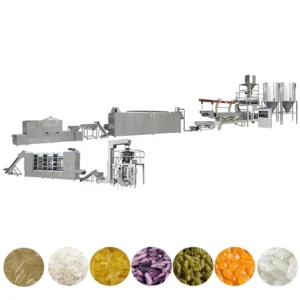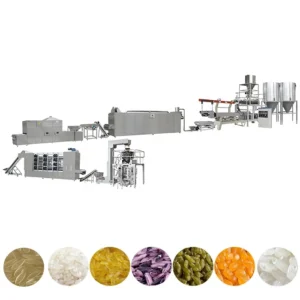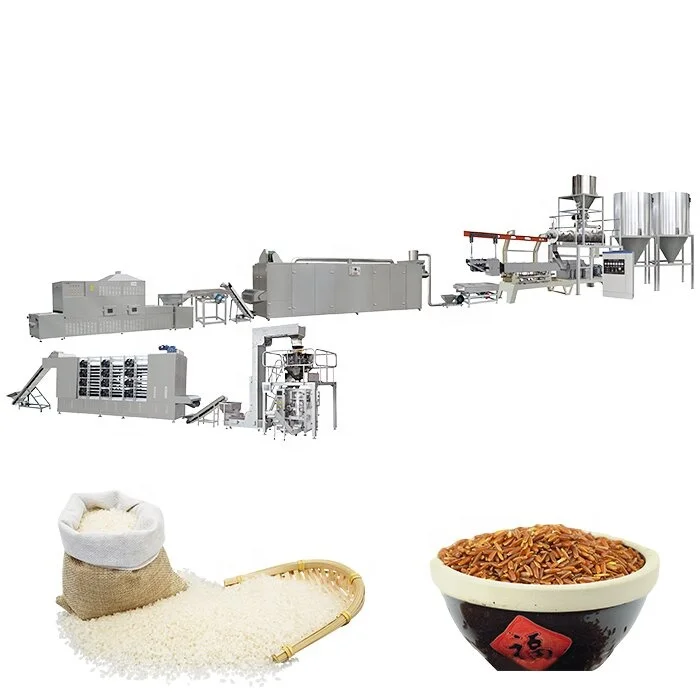


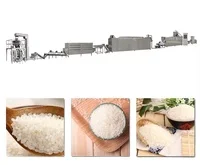
Fortified Artificial Rice Processing Line, Twin Screw Extruder, 100-1000 kg/h Capacity Range — configured for complete nutritional rice kernel production from batching through packing, with throughput matched across every station. Screw configuration and die design are specified to your raw material formulation, moisture content, and target kernel dimensions to ensure consistent density and shape. Full turnkey project support including line layout, on-site commissioning, operator training, and ongoing maintenance.
- CE and ISO certified manufacturing
- In-house testing workshop with trial runs on customer raw material before shipment
- Automated PLC and MCC control with voltage confirmation for your facility
- Complete documentation package including electrical schematics and wear parts list
Description
Integrated Line Throughput Matching — every station from batching to packing is calculated against the actual raw material formulation, preventing the bottleneck effect that occurs when machines are sourced separately.
Technical Specifications
| Parameter | Value |
|---|---|
| Product Type | Fortified Artificial Rice Processing Line |
| Extruder Type | Twin Screw |
| Feeding System | Single or double screw feeding (selected by material) |
| Extruder Control | Frequency speed controlling |
| Extruder Lubrication & Cooling | Automatic lubricating, cooling |
| Line Stations | Mixing, Extruding, Vibrating, Low Temperature Drying, Cooling, High Temperature Roasting, Cooling, Packing |
| Drying Oven Heating Source | Electric or gas |
| Drying Oven Control | Frequency motor controls mesh belt speed |
| Basic Material Compatibility | Broken rice, rice, corn, millet, wheat, oats, buckwheat, bean, starch; vitamin and mineral additives |
| Final Products | Artificial rice, fortified rice kernels |
| Assembly State | Complete processing line (batching through packing) |
| Certification | CE, ISO |
Application Suitability
| Application | Material or Output |
|---|---|
| Nutritional Staple Fortification | Broken rice and rice bran blended with vitamins and minerals to produce fortified rice kernels |
| Multigrain Reconstituted Rice | Corn, millet, oats, buckwheat, and bean blends shaped into uniform rice kernels |
| Legume Shaping | Soya dal and lentils processed into consistent, easy-to-cook formats |
| Institutional Nutrition Projects | Fortified rice targeting malnutrition programmes and government staple-fortification initiatives |
What "Nominal Capacity" Leaves Out on a Fortified Rice Line
A capacity figure without raw material context is a guess, not a guarantee.
I have seen buyers compare quotes based on the headline kg/h number alone, only to discover during commissioning that their specific rice flour formulation — perhaps higher in protein or fiber than the supplier assumed — pushes the extruder torque beyond its working range. The line then runs at a fraction of the quoted output, and every downstream station (dryer, cooler, packing) is oversized relative to actual throughput [NEED_CITE: twin-screw extrusion torque and material rheology]. This is why a fortified artificial rice production line turnkey proposal must state the exact flour blend, moisture percentage, and die format behind every capacity claim.
How Screw Configuration Determines Kernel Density
The twin-screw extruder sits at the center of any fortified artificial rice production line turnkey system. Screw element arrangement — conveying, kneading, and reverse-flight sections — controls shear intensity and residence time inside the barrel. For a high-starch broken rice formulation, a gentler kneading profile prevents over-gelatinisation that would make the kernels too sticky to separate on the vibrating screen. For a legume-heavy blend with more protein, a higher-shear configuration ensures complete starch cook-out and a firm, non-crumbly kernel. Die aperture and land length then define the final kernel dimensions and surface finish.
Why Dryer and Extruder Capacity Must Be Reconciled Early
A frequent mismatch occurs when the extruder is sized correctly but the drying oven cannot handle the moisture load coming off the forming stage. Low-temperature drying is used first to set the kernel structure without cracking the surface, followed by cooling and then high-temperature roasting to achieve shelf-stable moisture levels. If the mesh belt speed or oven length is undersized, kernels exit the dryer above target moisture and spoil during storage [NEED_CITE: moisture migration and shelf stability in extruded rice kernels]. Frequency-controlled belt motors allow fine adjustment, but only when the oven’s thermal capacity was calculated against the actual throughput and incoming moisture from the extruder.
Reading the Power and Footprint Figures
Installed power across the model range varies considerably — from 85 kW to 260 kW — reflecting different extruder sizes and supporting equipment counts. Power consumption figures are lower than installed totals because not every motor runs at full load simultaneously. Overall line length spans 28 m to 36 m depending on configuration, which directly affects workshop layout planning. The twin-screw extruder’s automatic lubrication and cooling circuits reduce manual maintenance during continuous shifts, while frequency speed control on both the extruder and dryer belt lets operators dial in throughput without stopping the line to change pulleys or sprockets.
The Cost of Skipping a Pre-Shipment Trial Run
When an extruder ships without being tested on the buyer’s actual broken rice or multigrain blend, the first production run becomes an expensive experiment. Screw configuration may need adjustment, die land length may prove wrong for the target kernel size, and the drying curve may require recalculation. On-site troubleshooting then delays commercial production and strains the relationship between buyer and supplier [NEED_CITE: commissioning delays from untested extrusion parameters]. A trial run in the supplier’s testing workshop, documented with moisture readings, torque logs, and kernel density samples, shifts this risk to the pre-shipment phase where adjustments cost hours rather than days.
Why Buyers Choose This Supplier for Rice Extrusion Projects
Every station on the line — batching, extruding, vibrating, low-temperature drying, cooling, roasting, final cooling, and packing — is sourced from one supplier, so throughput is reconciled across the entire sequence rather than left to the buyer to balance. Screw and die configurations are specified to the buyer’s raw material formulation and target kernel dimensions, not copied from a generic template. An in-house testing workshop allows trial runs on customer-provided flour blends before the line ships. Pre-sales engineering covers line layout, utility planning, and capacity calculation, extending through on-site installation, commissioning, operator training, and ongoing wear-parts supply.
Documentation & Verification
- Line layout and capacity calculation based on your rice flour formulation and target kernel size
- Screw and die configuration record matched to your specific raw material blend
- Trial run report on your raw material with moisture, torque, and density data
- Electrical schematic with voltage and frequency confirmed for your facility
- CE declaration of conformity and ISO certificate for customs and regulatory clearance
- Operation and maintenance manual with wear parts list and replacement intervals
Installation, Commissioning & Support
- Foundation and floor space planning matched to line length of 28–36 m depending on model
- Dedicated electrical circuits sized to installed power ranging from 85 kW to 260 kW
- Twin-screw extruder barrel alignment and screw element sequencing verified on site
- Frequency drive calibration for extruder screw speed and dryer mesh belt speed during commissioning
- Operator training covering die changes, automatic lubrication checks, and drying temperature profiles
- Wear parts inventory including spare screw elements and die plates supplied with initial shipment
What We Need to Build Your Line Proposal
To configure a fortified artificial rice production line turnkey system that actually delivers on its quoted throughput, share your raw material formulation (broken rice percentage, starch source, vitamin-mineral premix ratio), target kernel dimensions, and desired hourly output. Confirm your workshop’s available length, ceiling height, and local voltage and frequency standards. Let us know your preferred drying energy source — electric or gas — and whether you need control panel labels and HMI text in a specific language.
Frequently Asked Questions
Q: How is the actual line capacity verified before shipment?
A: The supplier runs your specific raw material blend through the extruder and dryer in an in-house testing workshop. The trial run report records torque, moisture content at each stage, and kernel density. Capacity is then confirmed against your formulation rather than a generic benchmark, and any screw or die adjustments are made before the line is packed for shipping.
Q: What happens if the extruder and dryer are mismatched?
A: An undersized dryer leaves kernels above safe moisture levels, risking spoilage in storage. An oversized dryer wastes energy and floor space. Throughput matching across every station — extruder output versus dryer belt length and thermal capacity — is calculated during the layout phase to prevent either scenario.
Q: How are voltage and control language confirmed before production?
A: The electrical schematic and voltage confirmation document is reviewed and signed off during the quotation stage. This covers supply voltage, frequency, plug type, and HMI language. Confirming these details before the control panel is wired avoids commissioning delays once the line arrives at your facility.
Q: Which spare wear parts should I order with the initial shipment?
A: Screw elements, die plates, and feeding augers are the primary wear items. A recommended spare parts list with quantities and expected replacement intervals is included in the documentation package, allowing you to plan inventory without waiting for international shipping when the first replacement is due.
Related products
-
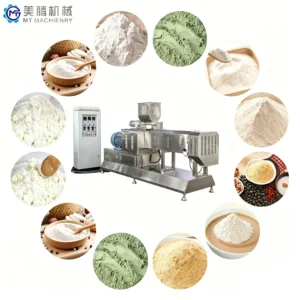
Máquina de hacer harina de arroz para bebés con extrusora de doble tornillo de 150-500kg/h
¥9,500.00 Select options This product has multiple variants. The options may be chosen on the product page -
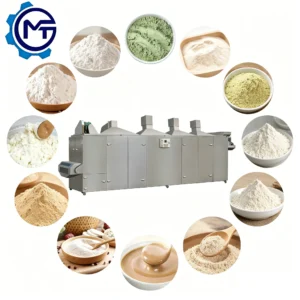
Máquina automática de hacer harina de arroz en polvo de nutrición para bebés de la marca MT de pequeña escala con capacidad de producción de 500 kg/h y control PLC.
¥9,500.00 Add to cart -
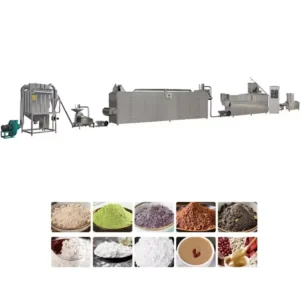
Línea de Producción de Alimentos Saludables para Bebés Equipos de Polvo Nutricional para Suplementos Alimenticios para Bebés para Maquinaria de Procesamiento de Harina
¥8,500.00 Select options This product has multiple variants. The options may be chosen on the product page -
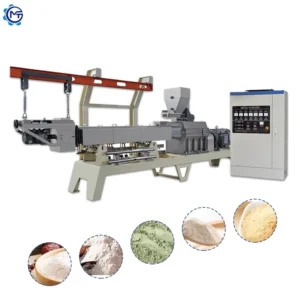
CE cerelac Máquina de producción de línea de elaboración de papilla instantánea para bebés
¥35,000.00 Select options This product has multiple variants. The options may be chosen on the product page