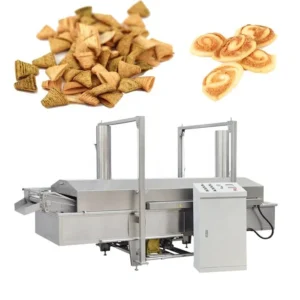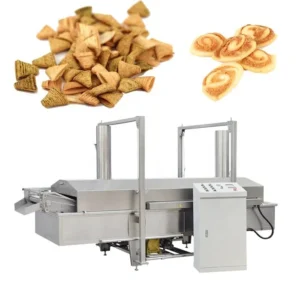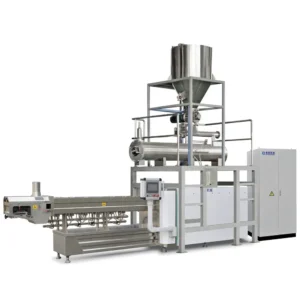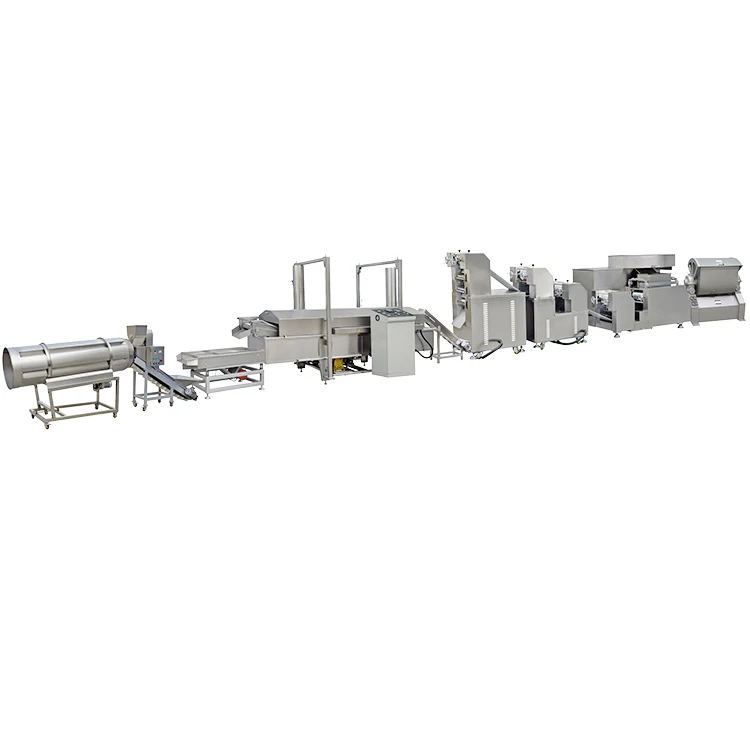


Fried Puffed Snack Production Line, Single-Screw Extruder, 12000-26000 × 1200 × 2200 mm, Food-Grade SS 304 — engineered as a complete turnkey project from batching through frying and flavouring.
- Single-screw extruder with high and low pressure screw configuration adapts to potato starch, corn starch and wheat flour blends for tortilla chips, corn chips and multi-layer crispy snacks
- Every station throughput-matched under one supplier, with drying and frying energy options configurable to local utility
- Line layout and capacity calculation documented against your raw material formulation before production begins
Description
Integrated Project Engineering — Every station on this fried tortilla chip production line turnkey is throughput-matched under one supplier, so extrusion output aligns with drying and frying capacity before the line ships.
Technical Specifications
| Parameter | Value |
|---|---|
| Product Type | Fried Puffed Snack Production Line |
| Extruder Type | Single-screw extruder (high and low pressure screw configuration) |
| Rated Power | 50–70 kW (electricity); 50–60 kW (gas/diesel) |
| Voltage & Frequency | Three phases 380V/50Hz, Single phase 220V/50Hz (customizable to local voltage) |
| Output Capacity | 120 kg/h (basis not stated in source — confirm raw material formulation / moisture content) |
| Overall Dimensions (L×W×H) | 12000–26000 × 1200 × 2200 mm |
| Construction Material | Food-grade stainless steel 201/304 |
| Line Stations | Mixing → Extrusion → Cutting → Drying → Frying → Flavoring → Packing |
| Energy Options | Electricity / Gas / Diesel / Steam |
| Electrical Components | Siemens (China) or China top-brand motors; Delixi or Delta inverters |
| Standards | CE, ISO 9001 |
Application Suitability
| Application | Material or Output |
|---|---|
| Fried tortilla chips and corn chips | Corn starch, potato starch, wheat flour blends |
| Multi-layer crispy snacks (taco shells, tostadas) | Starch-based dough with variable fat content |
| Golgappa and pani puri | Wheat flour and semolina formulations |
| Secondary puffing shapes (screw shell, round tube, ring) | Potato starch and corn starch mixtures |
What "120 kg/h" Means When Your Starch Blend Changes
A rated capacity only holds when the raw material matches the screw configuration and die geometry used during testing.
I have watched lines run beautifully on standard corn flour at the factory, then arrive at a buyer’s plant where the actual recipe carries higher fat or different moisture — and the puffing rate collapses. The extruder barrel fills unevenly, the die pressure drops, and chips come out dense instead of crisp. A fried tortilla chip production line turnkey project must account for your specific formulation from the start, not after installation. When the starch-to-water ratio shifts, the entire expansion behaviour changes, which is why trial runs on the buyer’s actual raw material remain the only reliable verification method [NEED_CITE: starch gelatinisation behaviour under varying moisture and shear conditions in single-screw extrusion].
Line Throughput Matching from Mixing Through Frying
The extruder does not operate in isolation. If the drying tunnel cannot remove moisture fast enough to match extrusion output, the cutting station receives product that tears rather than snaps. This fried tortilla chip production line turnkey configuration engineers each station — mixing, extrusion, cutting, drying, frying, flavouring, cooling, and packing — so that throughput at every transfer point stays balanced. The single-screw extruder with high and low pressure screw configuration broadens the raw material range, allowing cost adjustments in starch sourcing without forcing a hardware change.
Energy Source Configuration for Local Utility Conditions
Drying and frying stations draw the heaviest thermal load on the line. Depending on whether your facility has reliable natural gas supply, diesel storage, or industrial steam boilers, the energy source for these stations can be specified before production begins. Running a fryer on electricity in a region with unstable three-phase supply introduces batch inconsistency and risks heating element burnout. Matching the energy option — electricity, gas, diesel, or steam — to your local utility infrastructure is a decision that belongs in the layout phase, not after the equipment arrives on site [NEED_CITE: industrial energy source selection for food processing thermal equipment].
Screw Geometry and Starch Gelatinisation
The single-screw extruder in this line uses a high and low pressure configuration, which controls how starch granules absorb moisture and shear energy as they move through the barrel. Higher pressure zones compress the dough mass, forcing water into the starch structure; lower pressure zones allow controlled expansion at the die face. The barrel temperature profile, combined with screw flight depth, determines the degree of gelatinisation — the single most important factor in whether a tortilla chip fries up crisp or stays tough. Die design then controls the sheet thickness and shape before cutting, setting the geometry that the frying oil will ultimately expand.
The Cost of Skipping Raw Material Trial Runs
When a line ships without testing on the buyer’s actual formulation, the first week of production becomes an expensive experiment. Screw combinations get swapped, barrel temperatures adjusted in increments, and die plates replaced — all while raw material runs to waste and delivery deadlines slip. I have seen a four-layer crispy snack line lose an entire commissioning week because the buyer’s corn flour had a different particle size distribution than the standard test material. That gap between factory trial and real production is the most common source of commissioning disputes in snack extrusion projects [NEED_CITE: commissioning challenges in food extrusion lines using non-standard raw materials].
Why Source This Line as a Single Project
Every station on this line is configured and supplied under one responsibility, so throughput calculations, utility planning, and control logic stay consistent across the full layout. The in-house testing workshop runs trial production on your raw material before shipment, producing a documented test report rather than a generic capacity claim. Screw configuration and die design are specified to your target chip format and starch blend, not copied from a standard build. Electrical schematics confirm voltage and frequency before fabrication begins, preventing the delays that surface when a 380V machine arrives at a 440V facility. Food-grade stainless steel 201/304 construction across all product contact surfaces meets hygiene requirements for export markets with strict sanitation standards.
Documentation & Verification
- Line layout and capacity calculation based on your starch formulation and target chip geometry
- Machine specification sheet recording screw configuration and die design for your product format
- Electrical schematic with confirmed voltage, frequency, and control language before production
- Trial run report produced on your raw material in the testing workshop prior to dispatch
- CE declaration of conformity and ISO certificate included with shipment documentation
- Wear parts list specifying screws, dies, and cutting blades with recommended initial inventory
Installation, Commissioning & Support
- Foundation and floor space planning based on the 12000–26000 mm line length and 2200 mm height clearance
- Dedicated circuit sizing for the 50–70 kW extruder motor and thermal stations
- Assembly from shipped modules with station-by-station alignment verification
- First-run parameter setting on your raw material with screw speed and barrel temperature calibration
- Operator training covering die changes, screw cleaning, and fryer temperature management
- Initial spare inventory of high and low pressure screws, die plates, and cutting blades
Starting the Project Conversation
To configure a line that matches your production target, share your raw material formulation including starch type and moisture range, the chip format and thickness you intend to produce, and your local voltage and frequency. Let us know which energy source your facility supports for the drying and frying stations, and whether you can send a raw material sample for trial runs before the quotation stage.
Frequently Asked Questions
Q: How is throughput balanced between extrusion, drying, and frying to avoid line bottlenecks?
A: Each station’s capacity is calculated from the extruder output and adjusted for moisture removal rate in the dryer and oil absorption rate in the fryer. The layout document shows matched throughput at every transfer point so no single station queues product or starves the next.
Q: Which starch formulations does the single-screw extruder support?
A: The high and low pressure screw configuration handles potato starch, corn starch, and wheat flour blends. Screw flight depth and barrel temperature are adjusted to the specific formulation, and trial runs on your raw material confirm expansion behaviour before the line ships.
Q: What utility information is needed before the layout is finalised?
A: We require your local voltage and frequency, available energy source for thermal stations, and workshop dimensions including ceiling height. The line footprint ranges from 12000 to 26000 mm in length depending on configuration and dryer type selected.
Q: Does commissioning include operator training and spare parts planning?
A: On-site commissioning covers first-run parameter calibration, die and screw change procedures, and fryer safety protocols. A wear parts list is provided with recommended initial stock of screws, dies, and cutting blades to cover the first replacement cycle.
Q: How is the fryer energy source selected for different export markets?
A: Electricity, gas, diesel, and steam options are available for the frying and drying stations. Selection depends on local utility reliability, fuel cost, and plant infrastructure. This decision is confirmed during the layout phase before fabrication begins.
Related products
-
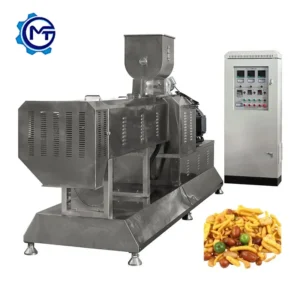
Nueva máquina extrusora automática de Nimko frita de 100-200 kg/h de acero inoxidable de grado alimenticio para el procesamiento de snacks fritos de alta productividad
¥8,575.00 Select options This product has multiple variants. The options may be chosen on the product page -

Electric Heating Fried Puffed Food Production Line – Salad Sticks Making Equipment
¥65.00 Select options This product has multiple variants. The options may be chosen on the product page -
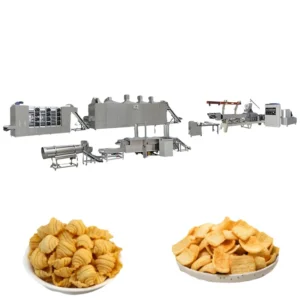
Nueva máquina de equipo de fritura de chips Doritos Línea de producción automática de chips de maíz tortilla portátil de alta productividad
¥100.00 Select options This product has multiple variants. The options may be chosen on the product page -
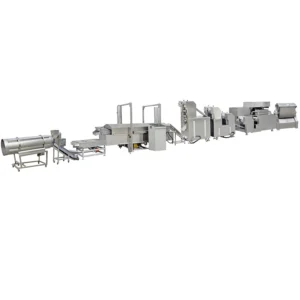
Orion TURTLE CHIPS Maquinaria de Snack Puffing Línea de Producción Crujiente de Cuatro Capas de Celebridad de Internet
¥65.00 Select options This product has multiple variants. The options may be chosen on the product page