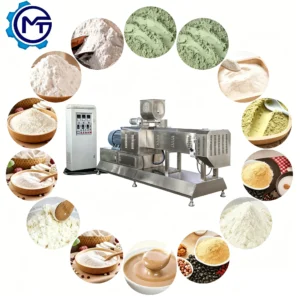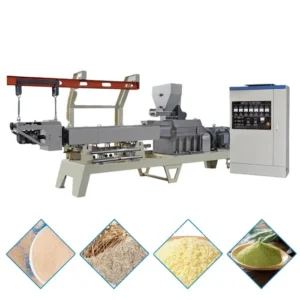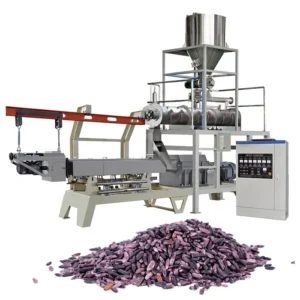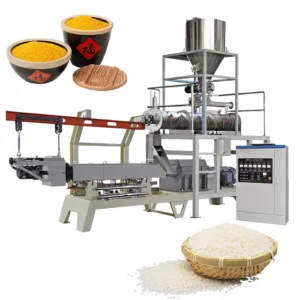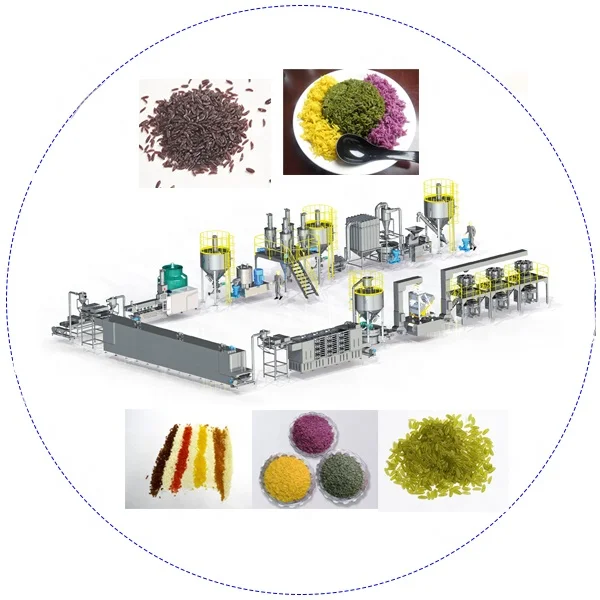
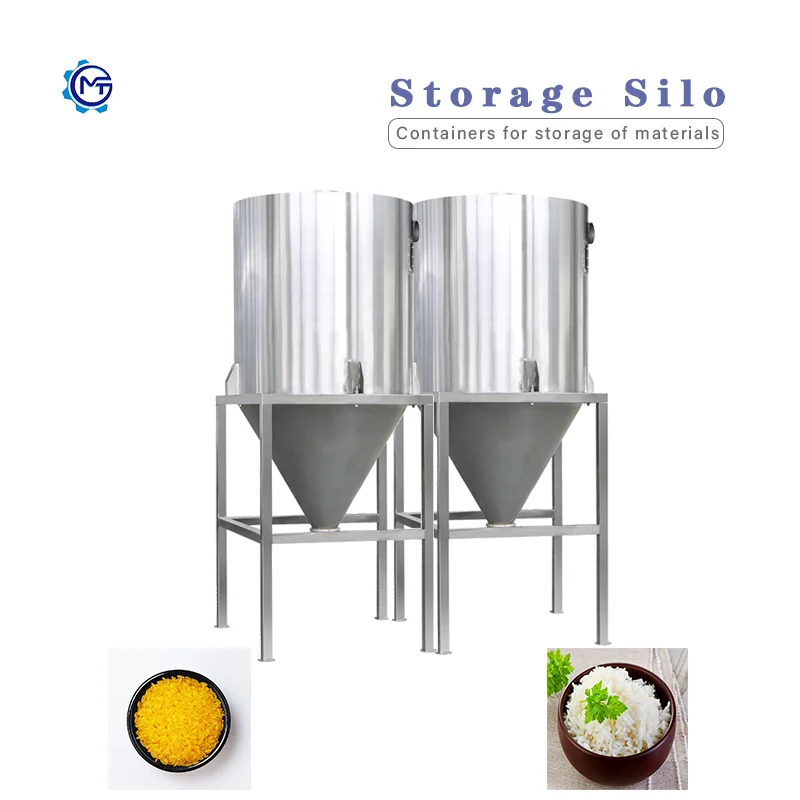
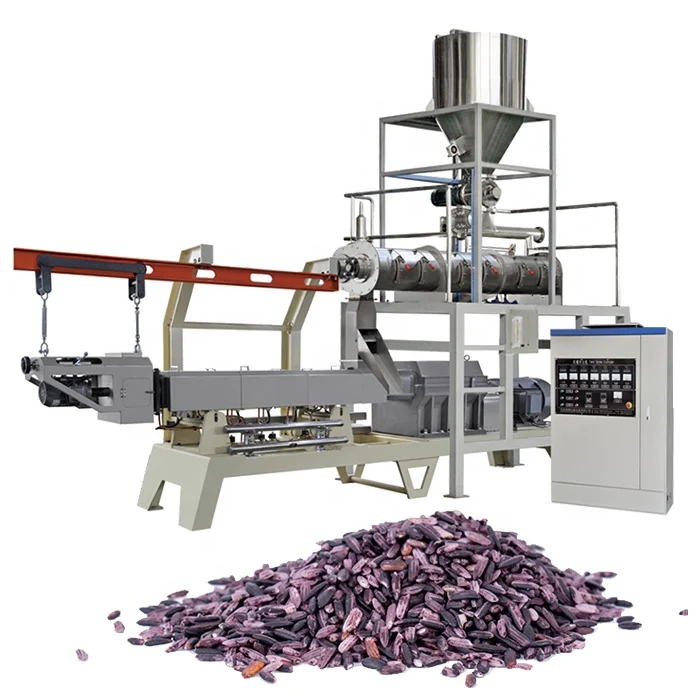
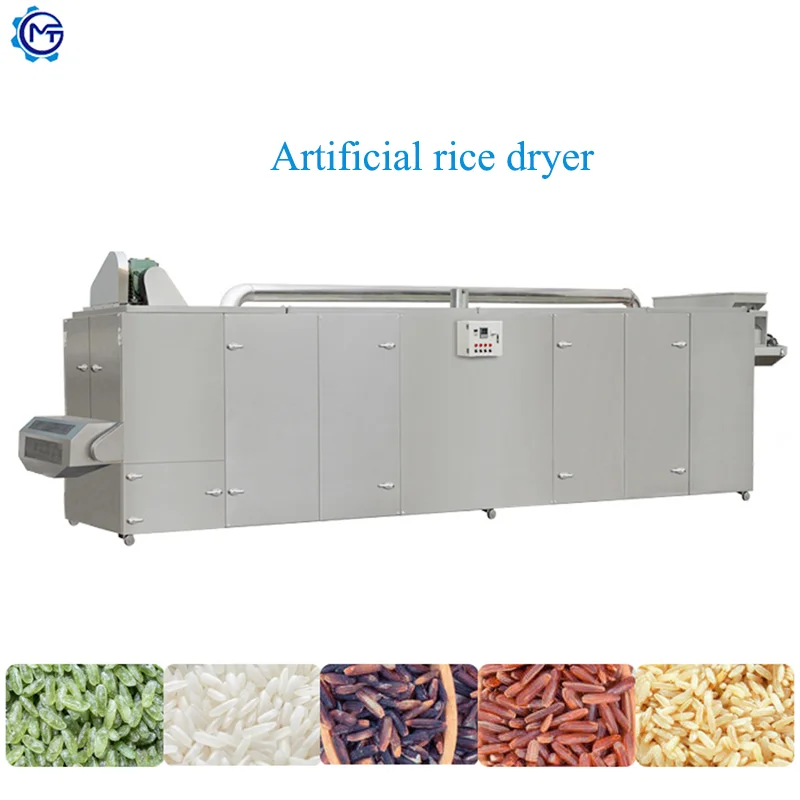
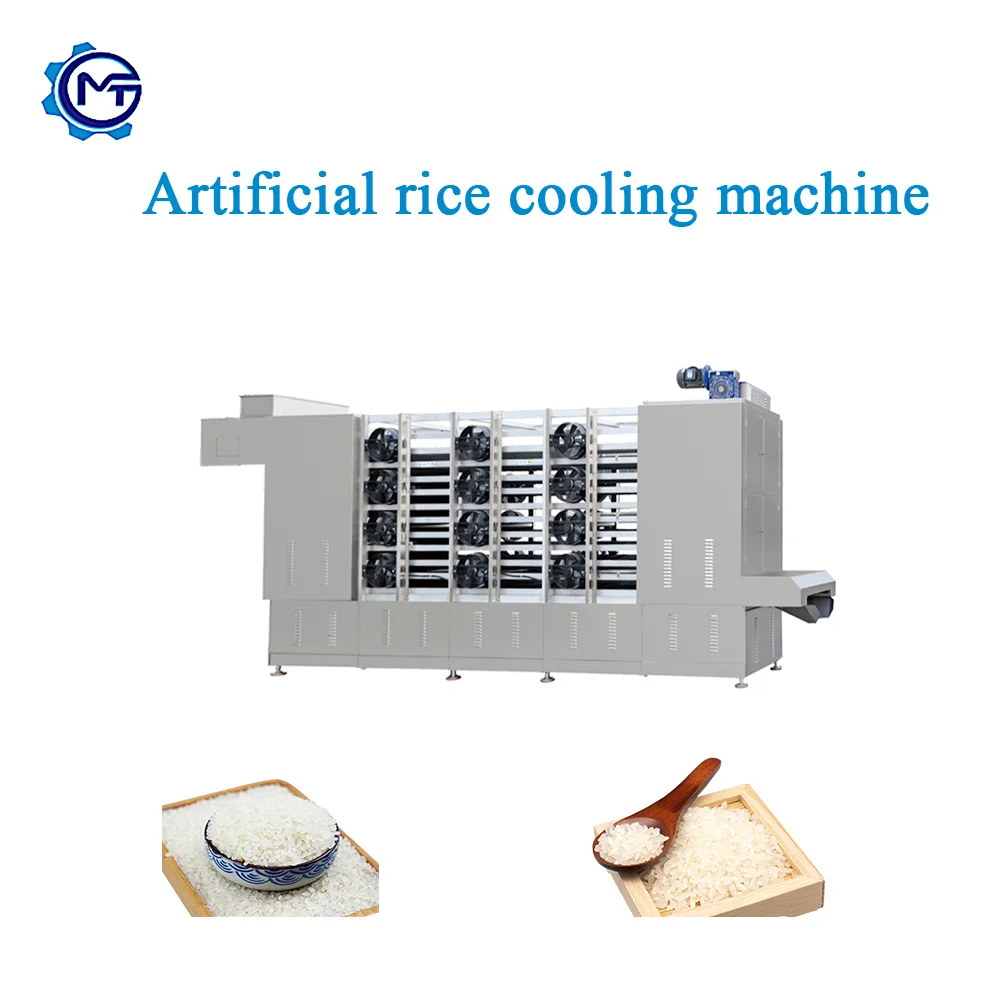
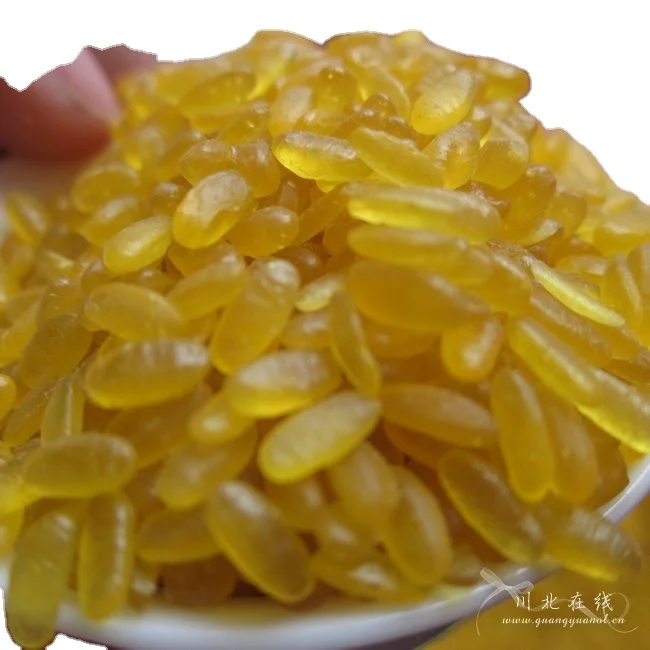
Fortified Rice Extrusion Line, Twin-Screw, 85–260 kW Installed Power, CE & ISO Certified — engineered as a complete turnkey project from mixing through extrusion, drying, roasting, cooling and packing with every station throughput-matched. Screw configuration and die design specified to your raw material blend, ensuring consistent kernel density and micro-nutrient retention across production runs. Trial runs on customer raw material conducted in-house before shipment, with full line layout, electrical schematics and commissioning support included.
Description
Integrated Turnkey Delivery — Every station from batching to packing is throughput-matched within a single supplier scope, eliminating the bottleneck risk that arises when extruders, dryers, and roasters are sourced from separate vendors and forced to work together on-site for the first time.
Technical Specifications
| Parameter | Value |
|---|---|
| Product Type | Nutritional Fortified Rice Processing Line |
| Extruder Models Available | MT65 / MT70 / MT75 / MT85 / MT95 |
| Screw Configuration | Twin-screw |
| Capacity Range | 80–1000 kg/hr (basis not stated in source — confirm raw material formulation and moisture content) |
| Installed Power | 85 kW (MT65) / 120 kW (MT70) / 180 kW (MT75) / 235 kW (MT85) / 260 kW (MT95) |
| Power Consumption | 60 kW (MT65) / 85 kW (MT70) / 135 kW (MT75) / 165 kW (MT85) / 195 kW (MT95) |
| Overall Dimensions (L×W×H) | 28×1.2×2.2 m (MT65) to 36×3.5×4.3 m (MT95) |
| Control System | Frequency speed controlling (PLC/MCC options to be confirmed) |
| Line Stations | Mixing → Extruding → Vibrating → Low-temperature drying → Cooling → High-temperature roasting → Cooling → Packing |
| Dryer Heating Source | Electric or gas |
| Feeding System | Single or double screw feeding, selectable by material type |
| Screw Material | Wear-resistant alloy |
| Lubrication | Automatic lubricating and cooling system |
| Basic Raw Materials | Broken rice, rice, corn, millet, wheat, oats, buckwheat, bean, starch; vitamins and minerals as partial ingredients |
| Assembly State | Complete processing line (turnkey) |
| Voltage & Frequency | To be confirmed per destination market |
| Certification | CE, ISO |
Application Suitability
| Application | Material or Output |
|---|---|
| Government and NGO nutritional fortification programs | Fortified rice kernels with consistent micro-nutrient dosing from broken rice and starch blends |
| Rice milling by-product valorization | High-value fortified kernels produced from broken rice, rice bran, and grain fractions |
| Grain processing line expansion | Extruded nutritional rice from corn, millet, wheat, oats, buckwheat, and bean formulations |
| Infant and nutritional formula production | Grain-based kernels with added vitamin and mineral premix blends |
Why Nominal Capacity Figures Fail on Actual Formulations
The rated output of any fortified rice extrusion production line turnkey is only meaningful when tied to the specific raw material blend, moisture content, and target kernel density you intend to produce.
I spent two weeks on-site in the Middle East re-tuning screw combinations and temperature profiles because the client’s steamed rice and broken rice flour ratio shifted between the trial run and actual production. The extruder simply could not hold the quoted throughput on their formulation. That is a discovery you want to make before the line ships, not after the containers arrive at your port [NEED_CITE: twin-screw extrusion output variability by raw material formulation]. A fortified rice extrusion production line turnkey configured without a prior trial run on your exact ingredient blend is a financial risk that no amount of on-site adjustment can fully recover.
Throughput Matching Across Every Station in the Line
A fortified rice extrusion production line turnkey only performs when the extruder output, dryer residence time, roaster capacity, and packing speed are all calculated against the same throughput figure. If the dryer cannot remove moisture fast enough to keep pace with the extruder, product backs up and gelatinization quality degrades. This line sequences eight stations — mixing, extruding, vibrating, low-temperature drying, cooling, high-temperature roasting, a second cooling stage, and packing — with each unit sized to the line’s target output rather than selected from independent catalogs.
Screw Configuration Matched to Your Grain Blend
The twin-screw extruder at the heart of this line is configured after reviewing your raw material table. Different ratios of broken rice, starch, and fiber-rich grains like buckwheat or oats demand different screw element arrangements, compression ratios, and barrel temperature zones. The goal is to achieve the viscosity and elasticity that produce kernels with a natural rice-like cooking behavior while retaining added micro-nutrients through the extrusion shear and heat cycle.
Reading the Power and Dimension Data Correctly
The installed power ranges from 85 kW on the MT65 to 260 kW on the MT95, but the actual power consumption during steady-state operation is lower — 60 kW and 195 kW respectively — because the main drive motor does not run at full load continuously. This gap between installed and consumed power matters for your transformer sizing and monthly utility cost projection. The overall dimensions expand from 28 m line length on the smallest model to 36 m on the largest, and the width jumps from 1.2 m to 3.5 m when you move into the mid-range models, which changes the floor plan and utility routing requirements significantly. The dryer’s electric or gas heating option also shifts the utility planning — gas-heated dryers need combustion air intake and exhaust routing that electric units do not [NEED_CITE: industrial dryer heating source selection for food processing lines].
The Cost of Skipping Pre-Shipment Material Trials
When an extruder arrives configured for a generic grain blend rather than your specific formulation, the commissioning period stretches from days into weeks. Operators experiment with screw speed, barrel temperature, and moisture addition rates while producing off-spec product that cannot be sold or packaged. In some cases, the screw elements themselves must be swapped — a process that requires opening the barrel, extracting the shaft, and rebuilding the screw combination from spare segments [NEED_CITE: twin-screw element replacement procedures in food extrusion]. All of this happens on your factory floor, on your timeline, with your raw material inventory being consumed without generating saleable output.
Why This Line Is Built as One Project
The line is supplied as a single turnkey project rather than a collection of independent machines, which means one supplier is accountable for throughput matching, utility coordination, and commissioning. The in-house testing workshop runs your raw material formulation before shipment, generating a documented trial report that serves as the baseline for on-site setup. Electrical schematics are prepared with your destination voltage and frequency confirmed in advance, so the control panels arrive wired for your local grid rather than requiring field modifications. Spare wear parts — screws, dies, and barrel liners — are documented with a first-replacement schedule so you are not caught without inventory when consumable components reach end of life.
Documentation & Verification
- Line layout drawing with throughput calculation for each station matched to your target output
- Trial run report on your specific grain and micro-nutrient formulation conducted before shipment
- Screw and die configuration record documenting the element arrangement used during your material trial
- Electrical schematic with voltage, frequency, and control language confirmed for your destination market
- Factory test record with production parameters logged during the pre-shipment run
Installation, Commissioning & Support
- Floor plan review based on line dimensions from 28 m to 36 m length depending on model selected
- Dedicated power circuit sizing confirmed against installed power of 85 kW to 260 kW per model
- On-site assembly supervision covering station alignment and utility connection across all eight stages
- First production run supervised with screw speed and barrel temperature tuned to your local raw material batch
- Operator training on the frequency speed controlling system and feeding system adjustment procedures
- Wear parts inventory review covering screw elements, dies, and barrel liners with replacement intervals
What We Need to Build Your Line Proposal
To configure a fortified rice extrusion production line turnkey that holds its rated output on your actual materials, share your raw material formulation table including grain types, starch ratios, and micro-nutrient premix composition. Confirm your destination voltage and frequency, your target daily output in finished kilograms, and the available floor space with ceiling height in your production hall. If you have existing upstream milling or downstream packing equipment, include those specifications so the line interfaces can be planned.
Frequently Asked Questions
Q: How is line capacity verified against my specific raw material formulation?
A: Your ingredient blend is run through the extruder in the testing workshop before shipment. The trial documents the actual throughput achieved, the screw configuration used, barrel temperature settings, and moisture content at each stage. This report travels with the machine and becomes the baseline for on-site commissioning, so capacity is verified against your materials — not a generic benchmark.
Q: How do you prevent bottlenecks between the extruder, dryer, and packing station?
A: Each station is selected based on the same throughput target rather than quoted independently. The dryer residence time, roaster belt speed, and packing machine cycle rate are all calculated against the extruder’s verified output on your formulation. If one station cannot keep pace, it is upsized within the line proposal before the order is finalized.
Q: What electrical and control specifications are confirmed before production begins?
A: Voltage, frequency, plug type, and control panel language are confirmed during the specification review stage and documented on the electrical schematic. This ensures the frequency speed controlling system and all motor drives arrive configured for your local grid and readable by your operators without field rewiring.
Q: What does the commissioning and training program cover on-site?
A: Engineers supervise station alignment, utility connections, and the first production run using your local raw material batch. Training covers screw speed adjustment, feeding system operation, dryer temperature control, and routine wear part replacement procedures. The goal is independent operation by your team before the engineers depart.
Q: Can the line start at a smaller model and scale up later within the same layout?
A: The five available extruder models share a common line architecture, so the downstream stations — dryer, roaster, cooling conveyors, and packing — can be specified with future capacity headroom. When you scale up the extruder, the supporting equipment is already in place to handle the increased throughput.
Related products
-
Máquina extrusora automática de alimentos para bebés controlada por PLC de 500 kg/h para el procesamiento de cereales de arroz
¥9,500.00 Add to cart -
Línea de Producción de Alimentos Saludables para Bebés Equipos de Polvo Nutricional para Suplementos Alimenticios para Bebés para Maquinaria de Procesamiento de Harina
¥8,500.00 Select options This product has multiple variants. The options may be chosen on the product page -

Línea de Producción Automática Instantánea de Polvo Máquina Extrusora de Polvo Nutricional
¥10,000.00 Select options This product has multiple variants. The options may be chosen on the product page -
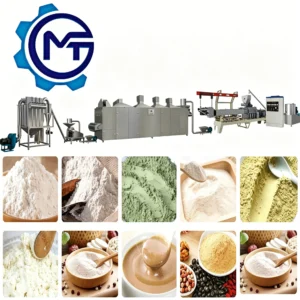
Línea de procesamiento de producción automática de 500 kg/h de polvo de nutrición de arroz para bebés orgánico y sin gluten
¥8,238.27 Add to cart