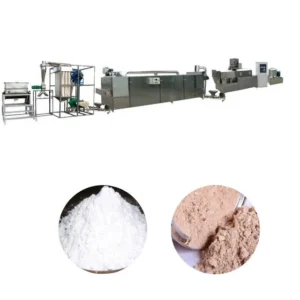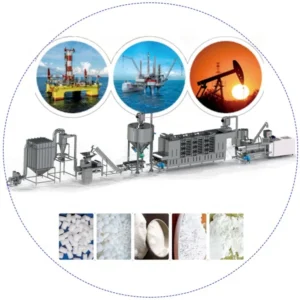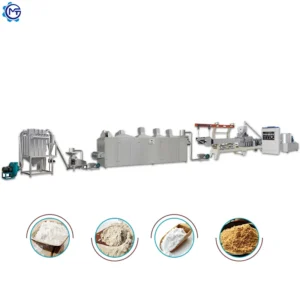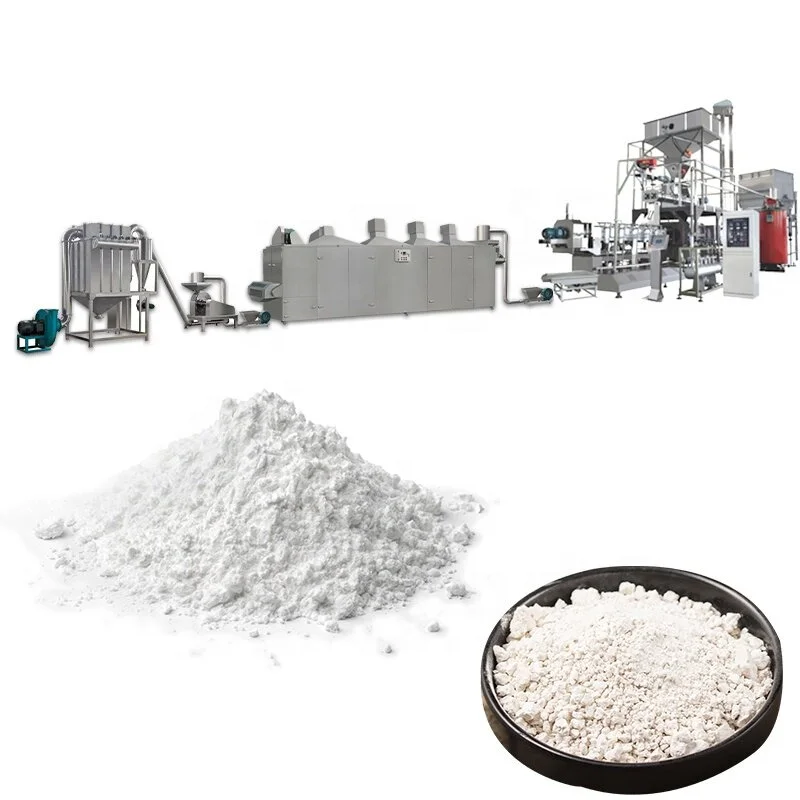


Modified Starch Processing Line, Twin-Screw Extrusion, PLC Touchscreen Control — engineered for pregelatinized, cross-linked, oxidized and cationic starch variants from corn, potato, tapioca and wheat sources.
- Segmented barrel temperature zones and screw configuration matched to your specific starch raw material and target modification type
- SUS304/316 stainless steel contact surfaces throughout, supporting food-grade hygiene and quick changeover between product runs
Every station from feeding through drying and packing is throughput-matched under one supplier, with trial runs on your actual raw material completed in our testing workshop before shipment.
Description
Turnkey line integration under one supplier — throughput at every station from feeding to packaging is matched against the buyer’s actual starch raw material, eliminating bottlenecks that arise when extruders, dryers and mixers are sourced separately.
Technical Specifications
| Parameter | Value |
|---|---|
| Product Type | Modified Starch Processing Line |
| Extruder Type | High-torque self-cleaning twin-screw extruder |
| Raw Material Compatibility | Corn starch, potato starch, tapioca starch, wheat starch |
| Barrel Temperature Control | Segmented multi-zone control |
| Control System | PLC touchscreen automation, full-line from feeding to packaging |
| Product Types Supported | Pregelatinized starch, cross-linked starch, oxidized starch, cationic starch |
| Material Contact Parts | SUS304/316 stainless steel, food-grade |
| Process Stages | Raw material feeding, mixing, reaction, extrusion, drying, final packaging |
| Output Capacity | (basis to be confirmed) |
| Rated Power | (basis to be confirmed) |
| Voltage & Frequency | Configurable to buyer’s site utility (basis to be confirmed) |
| Overall Dimensions | (basis to be confirmed) |
| Net Weight | (basis to be confirmed) |
Application Suitability
| Application | Material or Output |
|---|---|
| Food-grade modified starch production | Pregelatinized corn and potato starch for bakery, sauce and instant food formulations |
| Industrial starch for textile sizing | Oxidized and cross-linked starch from tapioca and wheat feedstock |
| Paper-making wet-end additives | Cationic starch processed from potato and corn sources |
| Adhesive and binder manufacturing | Cross-linked and oxidized variants on corn and wheat starch |
| Oil drilling fluid modifiers | Pregelatinized starch from corn and tapioca for viscosity control |
| Pharmaceutical excipient production | High-purity pregelatinized starch on corn-based feedstock |
Why "Nominal Capacity" Means Nothing Without Raw Material Context
A modified starch processing line turnkey must be validated against the buyer’s exact starch source before the quotation is finalized.
I have watched a buyer commission a line that was quoted at a certain hourly output, only to discover on day one that their local corn starch had a different amylose ratio than the supplier’s test batch. Viscosity stayed too low, expansion never matched the sample, and four days of troubleshooting followed before the screw profile and barrel temperature zones were completely reworked. [NEED_CITE: starch gelatinisation behaviour varies by botanical source and amylose content] That experience is why we now require every modified starch processing line turnkey to undergo a trial run on the customer’s own raw material in our testing workshop before shipment.
Barrel Zoning and the Starch Reaction Window
Every modified starch variant demands a different thermal profile inside the barrel. Pregelatinized starch requires rapid heat transfer to push past the gelatinisation threshold without burning the outer layer of the granule. Cross-linked starch, by contrast, needs a sustained mid-range temperature hold to let the cross-linking agent react uniformly across the residence time. The segmented barrel zones on our twin-screw extruder allow each section to be set independently, so a single modified starch processing line can switch between pregelatinized and oxidized production by adjusting zone temperatures rather than replacing hardware.
Screw Configuration Dictates Which Modification You Can Actually Run
The screw elements determine shear intensity, residence time and mixing thoroughness — all of which change the final starch properties. A high-shear configuration works well for oxidized starch where rapid reagent distribution is critical, while a gentler conveying profile suits cross-linked variants that need longer reaction windows at lower mechanical stress. Our engineers specify the screw combination based on the buyer’s target product and starch source, recording the configuration so that the same results can be reproduced batch after batch. [NEED_CITE: twin-screw element arrangement and its effect on starch reaction kinetics]
What the Control System Actually Does During a Production Run
The PLC touchscreen manages every station on this modified starch processing line — feeding rates, mixer cycle times, barrel zone temperatures, dryer inlet and outlet conditions, and packaging triggers. This matters because starch modification is not a single-machine process; if the feeder delivers faster than the dryer can handle moisture removal, product quality drops regardless of how well the extruder performs. Full-line PLC automation keeps each station synchronized so that viscosity, solubility and particle size stay within specification across long production runs. The operator can adjust parameters directly on the screen and save recipes for different starch variants, reducing changeover time between product types.
Reading the Specs That Actually Matter
The SUS304/316 stainless steel contact surfaces are not just a hygiene checkbox — they resist corrosion from the acidic and alkaline reagents used in oxidized and cationic starch production, extending the service life of barrels and screws. Segmented barrel temperature control gives operators independent command over each heating zone, which directly affects whether the starch reaches full gelatinisation or suffers partial degradation. The high-torque twin-screw design handles viscous, high-moisture doughs that would stall a lower-torque extruder, keeping throughput stable even when processing potato starch pastes that tend to gum up standard configurations. The self-cleaning screw geometry means residue from one batch does not contaminate the next, an essential feature when a single line produces both food-grade and industrial-grade starch variants.
The Cost of Skipping Screw and Die Specification
When a line ships with a generic screw build copied from a different application, the consequences surface during commissioning. Floating feed pellets sink, kibble density drifts outside market expectations, and modified starch viscosity lands far from the target. Retooling the screw combination on-site costs time, delays market entry and burns raw material through failed batches. [NEED_CITE: consequences of incorrect screw configuration in starch extrusion] Buyers who skip the pre-shipment trial run often discover these problems only after the equipment is bolted to their factory floor.
Why Procurement Teams Place This Line With One Supplier
A single supplier engineers the entire modified starch processing line turnkey from raw material feeding through mixing, extrusion, drying and packaging, so each station is sized to the actual throughput rather than assembled from mismatched vendor quotes. The screw configuration and die design are specified to the buyer’s starch source and modification target, not pulled from a generic catalogue. An in-house testing workshop runs the customer’s own material before the line ships, catching viscosity or expansion issues early. Pre-sales consultation covers layout, utility planning and phased commissioning scheduling so the project stays on track from order to first production run. Electrical schematics confirm voltage, frequency and control language before manufacturing begins, preventing delays that typically surface during installation.
Documentation & Verification
- Line layout showing throughput matched across feeding, mixing, extrusion, drying and packing stations
- Screw and die configuration record specified to buyer’s starch source and target modification
- Trial run report on customer’s actual raw material from in-house testing workshop
- Electrical schematic with confirmed voltage, frequency and control language
- Operation and maintenance manual covering all process stages
- Wear parts list with replacement intervals for screws, dies and seals
Installation, Commissioning & Support
- Foundation plan accounts for the twin-screw extruder’s high-torque dynamic loads and segmented barrel weight distribution
- Dedicated electrical circuit sized to the line’s total rated power, confirmed against local voltage and frequency before shipment
- Equipment arrives in modular sections for staged assembly matching the buyer’s facility access constraints
- First-run parameter setting covers barrel zone temperatures, screw speed and feeder rates for the buyer’s specific starch type
- Operator training covers PLC touchscreen navigation, recipe saving and troubleshooting across all process stations
- Wear parts package includes spare screws, dies and seals matched to the documented configuration
What We Need Before Quoting Your Line
Send us the botanical source of your starch (corn, potato, tapioca or wheat), the specific modification type you intend to produce, and your target output range. Include your site’s voltage, frequency and preferred control language so the electrical design is finalized before production. If you already operate upstream mixing or downstream packaging equipment, share those specifications so the line interfaces correctly. We can arrange a trial run on your raw material in our testing workshop to validate screw configuration and barrel profiling before the quotation is locked in.
Frequently Asked Questions
Q: How is line capacity verified against the buyer’s specific starch raw material and target modification type?
A: We conduct a trial run using the customer’s actual starch in our in-house testing workshop before the line ships. Engineers measure viscosity, solubility, expansion and particle size against the target specification, adjusting screw configuration and barrel zone temperatures until the product meets requirements. The trial run report is shared with the buyer before final acceptance.
Q: How is screw configuration and barrel temperature profile matched to produce pregelatinized versus cross-linked versus oxidized starch?
A: Each modification type demands different shear levels, residence times and thermal profiles. Pregelatinized starch needs rapid heat past the gelatinisation point, while cross-linked starch requires a sustained mid-range temperature hold. Our engineers select screw elements and set each barrel zone independently, documenting the full configuration so it can be replicated on every future batch.
Q: What voltage, frequency and control language options are confirmed before production begins?
A: During the specification phase we collect the buyer’s site utility details — voltage, phase, and frequency — along with the preferred PLC interface language. The electrical schematic is drawn and confirmed before manufacturing starts, so the control cabinet arrives ready for connection without on-site rewiring or transformer procurement delays.
Q: What is the phased installation, commissioning schedule and operator training process for a complete turnkey line?
A: Equipment arrives in modular sections aligned with the buyer’s facility access. Installation follows a phased plan covering mechanical assembly, electrical connection, dry testing and wet commissioning. Operator training runs alongside commissioning, covering PLC navigation, recipe management and daily maintenance across every station from feeder to packer.
Related products
-
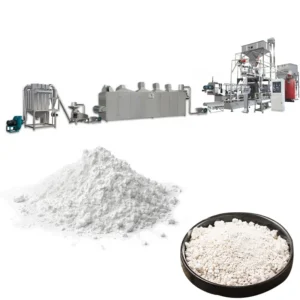
High-Efficiency Customizable Modified Starch Production Line – Automatic Corn Pellet Adhesive Making Equipment
¥65.00 Select options This product has multiple variants. The options may be chosen on the product page -
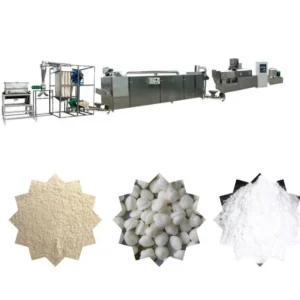
Pregelatinized Low-Cost Modified Starch Line – High-Efficiency Automated Starch Processing Machine
¥65.00 Select options This product has multiple variants. The options may be chosen on the product page -
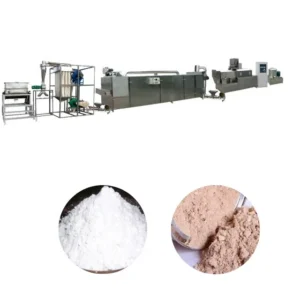
Línea de Producción de Almidón Modificado Extrusora de Doble Tornillo de Perforación Industrial Acero Inoxidable 304 Molino de Harina de Alta Eficiencia CE
¥50.00 Select options This product has multiple variants. The options may be chosen on the product page -
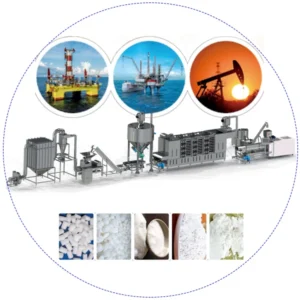
Línea de producción de almidón modificado para perforación industrial Extrusora de doble tornillo de gran salida Máquina de fabricación de almidón modificado
¥50.00 Select options This product has multiple variants. The options may be chosen on the product page