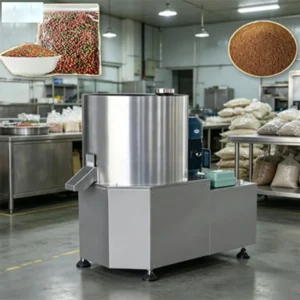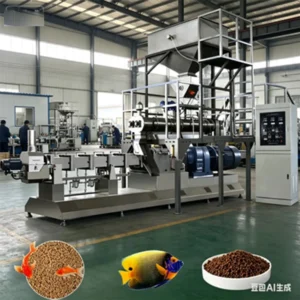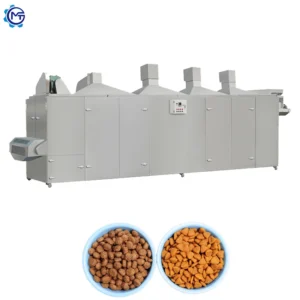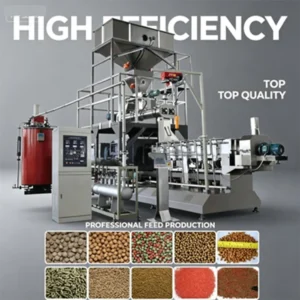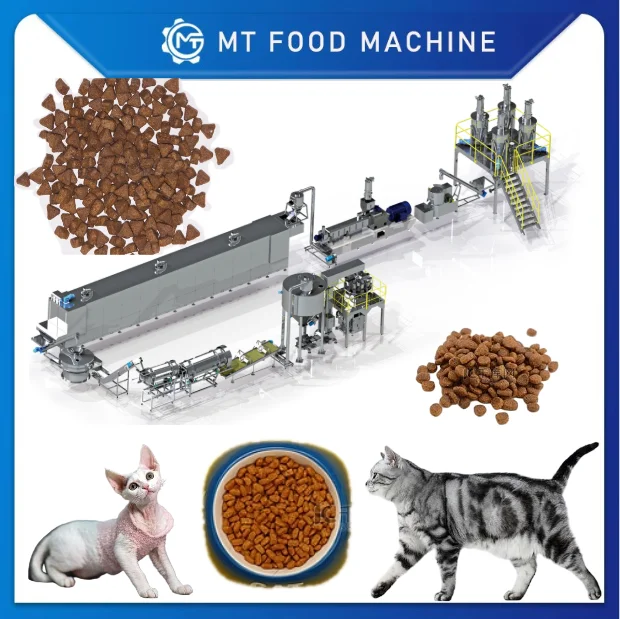


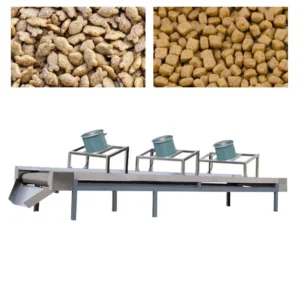
MT100 Pet Food Processing Line, Twin-Screw, PLC Control — configured for multi-species dry kibble production from batching through extrusion to packing.
- Screw configuration and die design matched to your raw material formulation and target pellet density
- Throughput balanced across extruder, dryer, and coating stations to eliminate line bottlenecks
- Trial run on your actual raw material completed in our testing workshop before shipment
Description
Matched Throughput Across Stations — every segment from batching through extrusion to packing is sized to the same continuous output target, eliminating the bottleneck that forms when standalone machines are linked without capacity calculation.
Technical Specifications
| Parameter | Value |
|---|---|
| Model | MT100 |
| Product Type | Pet Food Processing Line |
| Output Capacity | 550 kg/h (basis not stated in source — confirm raw material formulation, moisture content, and specific kibble size) |
| Nominal Capacity Range | 1.5–2.0 t/h (basis not stated in source — confirm continuous operation hours and raw material specification) |
| Extruder Type | Twin-screw |
| Control System | PLC |
| Line Stations | Batching, extrusion, drying, coating/flavoring, cooling, packing |
| Assembly State | Complete production line |
| Certification | CE |
Application Suitability
| Application | Material or Output |
|---|---|
| Dry kibble for dogs and cats | Corn, poultry meal, fish meal, wheat gluten, vitamin premix |
| Floating aquatic feed pellets | Soybean meal, starch binder, fish oil for tilapia and catfish |
| Sinking aquatic feed for shrimp | High-protein aquatic formulations requiring controlled density |
| Bird and cattle feed supplements | Grain-based mixtures with mineral and protein additives |
Why the Trial Run Decides If Your Pet Food Processing Line Turnkey Actually Runs
A quoted capacity means nothing until the extruder processes your specific raw material formulation at the target moisture level.
Buyers regularly receive lines that hit nameplate output during the factory acceptance test on the supplier’s reference material, then lose throughput once the real recipe enters the barrel. The screw combination, barrel temperature profile, and die geometry must all respond to the fat content, starch source, and protein level actually in your mixer. When I stood in a workshop outside Guadalajara watching a batch of locally sourced fish meal produce hollow, crumbly kibble, the issue was not the extruder motor or the dryer belt speed — it was a screw pitch that sheared the material before gelatinisation could complete. [NEED_CITE: starch gelatinisation temperature thresholds in extrusion processing]
Screw and Die Selection for Your Actual Formulation
The twin-screw configuration on the MT100 is not a fixed catalogue build. The screw elements — conveying sections, kneading blocks, and reverse-flight segments — are sequenced to match the residence time your specific pet food processing line turnkey recipe demands. A high-fat kibble formula requires a different shear profile than a lean aquatic feed, and the die plate aperture count and land length are specified to produce the target pellet diameter and expansion ratio. This configuration is documented in the screw and die record before the line leaves the factory.
Barrel Temperature Profiling and Moisture Control
Each barrel zone is independently heated and cooled, allowing the temperature to climb through the gelatinisation window and then stabilise before the die. Moisture injection points are positioned to match the hydration needs of your starch source, whether the recipe relies on corn, rice, or cassava. Consistent moisture distribution across the barrel cross-section is what separates uniform kibble density from a batch where some pellets float and others sink in the bowl — a visible defect that retail buyers reject on sight. [NEED_CITE: moisture distribution impact on extrudate density uniformity]
Interpreting the Capacity and Control Specifications
The rated 550 kg/h figure and the 1.5–2.0 t/h nominal range both carry conditions that must be confirmed against your formulation and shift pattern before they translate into a production plan. The PLC control system manages screw speed, barrel zone temperatures, feeder rates, and dryer conveyor speed from a single interface, which is what keeps kibble density within specification across long production runs. Without centralised automation, manual adjustments at each station introduce drift that accumulates over a shift. The twin-screw design provides self-wiping action between the screws, reducing residue buildup when switching from a poultry formula to a fish-based recipe on the same day.
What Happens When Stations Are Mismatched
An extruder that outpaces its dryer forces wet kibble into the coating drum, where seasoning clumps on damp surfaces and flakes off during packing. Conversely, an oversized dryer running at partial load burns fuel without improving moisture removal. I have walked onto floors where the extruder and dryer were sourced from different vendors with no throughput reconciliation, and the result was a line that ran at a fraction of its paid-for capacity. [NEED_CITE: throughput balancing in multi-station food processing lines] These mismatches are not apparent in individual machine quotations — they only surface when the line runs continuously under real production conditions.
Why This Build Approach Works
Every station from the batching system to the packing belt is specified under a single line layout, so the extruder output, dryer residence time, coating drum volume, and cooler conveyor length are calculated against the same throughput target. The screw and die configuration is chosen after reviewing your raw material data sheet, not copied from a standard build. Before the line ships, your actual formulation runs through the in-house testing workshop, generating a trial run report that documents kibble density, expansion ratio, and surface texture. Electrical schematics confirm voltage, frequency, and PLC language to your destination market before production begins, so commissioning is not delayed by a transformer swap or a rewired control panel.
Documentation & Verification
- Line layout drawing with throughput matched across batching, extrusion, drying, coating, cooling, and packing stations
- Trial run report on your raw material documenting kibble density and expansion before dispatch
- Screw and die configuration record tied to your target product specification
- Electrical schematic with voltage, frequency, and PLC language confirmed to destination market
- CE declaration of conformity covering the complete assembled line
Installation, Commissioning & Support
- Foundation plan accounts for extruder mass and vibration isolation at the twin-screw bearing block
- Electrical supply specification details dedicated circuit requirements for the PLC cabinet and barrel heaters
- Line arrives in sectional modules for staged assembly aligned with your facility readiness schedule
- First-run commissioning validates screw speed, barrel temperature zones, and dryer belt rate against trial report data
- Operator training covers formulation changeover procedures on the PLC interface
- Wear parts list identifies screw elements, die plates, and dryer belt sections with recommended replacement intervals
What We Need to Configure Your Line
To prepare a layout and quotation for this pet food processing line turnkey system, share your target kibble formulation including primary protein and starch sources, the pellet diameter and density your market requires, and your planned daily production volume. We also need the voltage and frequency at your facility, the preferred PLC operating language, and whether you have existing upstream batching or downstream packing equipment that the new line must integrate with.
Frequently Asked Questions
Q: How is the MT100 line capacity verified against my specific raw material formulation?
A: Your raw material is run through the in-house testing workshop before shipment. The trial documents extrusion temperature, screw speed, moisture addition, and resulting kibble density and expansion ratio. This report accompanies the line and serves as the baseline for commissioning at your facility.
Q: What screw configuration and die design is selected for my product?
A: The screw element sequence and die aperture geometry are chosen based on your formulation’s protein, fat, and starch content. The configuration is recorded in the documentation package and validated during the pre-shipment trial run on your actual material.
Q: How is throughput matched between the extruder, dryer, and coating stations?
A: Each station is sized during the line layout phase against a single throughput target. The dryer belt length, coating drum volume, and cooler conveyor speed are all calculated to handle the extruder’s continuous output without material backlog or idle capacity.
Q: What voltage, frequency, and control language options are confirmed before production?
A: Your facility’s electrical supply specification and preferred PLC language are confirmed during the quotation stage. The electrical schematic and control panel labels are produced to match those parameters before the line enters assembly.
Q: What is included in the turnkey installation package?
A: The package covers on-site assembly, first-run commissioning against the trial report baseline, operator training on the PLC interface, a documented wear parts list, and a maintenance schedule tied to the specific screw, die, and belt components installed on your line.
Related products
-
Línea de procesamiento de alimento para peces de alta capacidad de 4-5t/h para producir alimento para peces
¥65,000.00 Select options This product has multiple variants. The options may be chosen on the product page -
MT70 100-200kg/h Dog & Cat Pet Food Processing Line with 380V 50Hz Three Phase Power
¥35,000.00 Select options This product has multiple variants. The options may be chosen on the product page -
Línea de procesamiento de alimentos para perros de múltiples especies controlada por PLC con capacidad de 200-250kg/h y extrusora MT-70
¥35,000.00 Select options This product has multiple variants. The options may be chosen on the product page -
Línea de producción de alimentos para mascotas completamente automática Máquina de extrusión de grano de doble tornillo grande
¥9,500.00 Select options This product has multiple variants. The options may be chosen on the product page