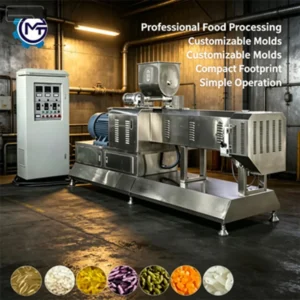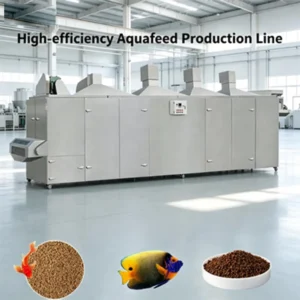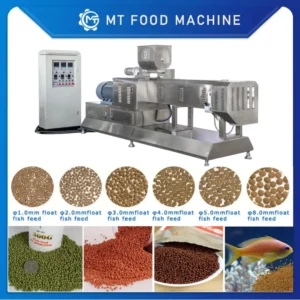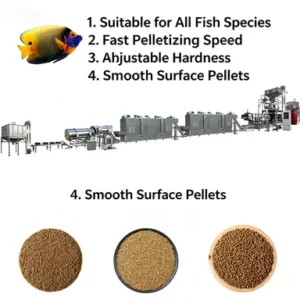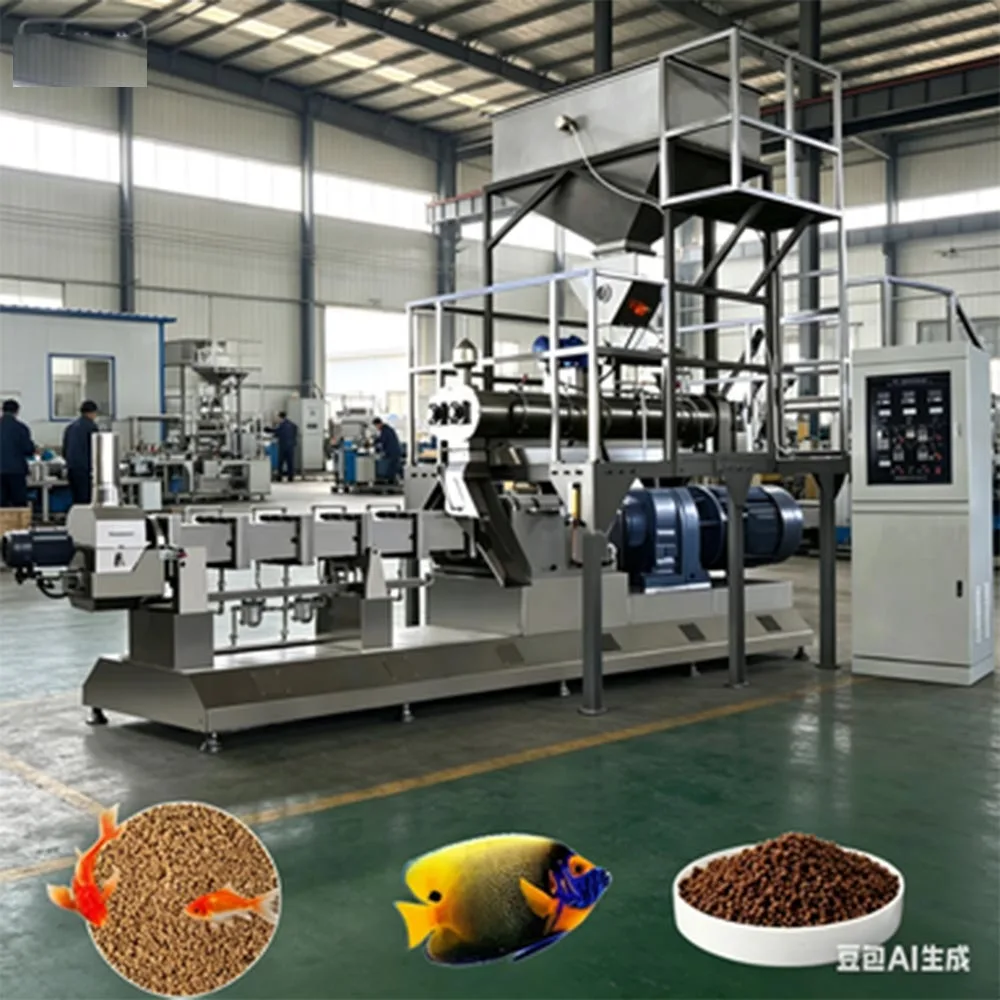


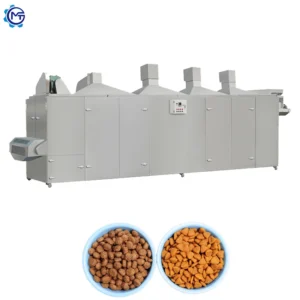
Multi Layer Fish Feed Pellet Dryer, PLC Control, Food-Grade 304 Stainless Steel — engineered as a matched station within turnkey aquatic feed processing lines, this multi-layer dryer removes moisture from floating and sinking pellets continuously. Throughput is balanced with upstream extruder output and downstream seasoning capacity to prevent bottlenecks, supporting uninterrupted production for medium to large scale fish feed operations.
- Line layout and capacity calculation provided to verify dryer-extruder throughput matching against your specific raw material and pellet formulation before order confirmation.
Description
Integrated throughput matching — Every station from mixing through packing is engineered to the same output target, so the dryer never becomes the constraint on your extruder.
Technical Specifications
| Parameter | Value |
|---|---|
| Product Type | Fish Feed Pellet Dryer / Aquatic Feed Drying Equipment |
| Drying Structure | Multi-layer design |
| Control System | PLC automatic control system |
| Contact Material | Food-grade 304 stainless steel (body and material contact parts) |
| Heating System | Optimized energy-saving heating system (basis to be confirmed — steam / electric / gas options) |
| Rated Power | Basis to be confirmed |
| Voltage & Frequency | Basis to be confirmed for target market |
| Overall Dimensions (L×W×H) | Basis to be confirmed |
| Net Weight | Basis to be confirmed |
| Output Capacity | Large stable processing capacity for medium to large scale production (basis to be confirmed with pellet size and moisture content) |
| Operating Environment | Continuous long-time uninterrupted operation |
| Standards | CE, ISO (per company profile) |
Application Suitability
| Application | Material or Output |
|---|---|
| Floating fish feed pellet drying | Fish meal, soybean meal, corn powder, compound additives |
| Sinking aquatic feed pellet drying | High-protein formulations targeting bottom-feeding species |
| Koi and goldfish feed production | Pigmented compound feed requiring controlled moisture removal |
| Tropical and freshwater species feed | Variable protein formulations with specific buoyancy targets |
| Medium to large scale commercial aquatic feed lines | Integrated twin-screw extrusion-based processing configurations |
Why an Undersized Dryer Silently Caps Your Entire Line
The dryer is the bottleneck most buyers discover only after commissioning.
When I first started commissioning aquatic feed lines in the field, a recurring problem kept showing up: the extruder was pushing out pellets at full rated output, but the dryer could not remove moisture fast enough to meet the target specification. The result was a line that technically ran but never hit the contracted throughput. Buyers assumed the extruder was underperforming when the real constraint sat two stations downstream. With a multi-layer fish feed pellet dryer production line, the drying capacity must be calculated against the extruder output, the pellet diameter, the initial moisture content, and the final moisture target the market demands [NEED_CITE: moisture specifications for commercial floating fish feed].
How Multi-Layer Architecture Sustains Continuous Pellet Drying
A multi-layer fish feed pellet dryer production line moves pellets across several conveyor tiers inside a single insulated chamber. This configuration extends the residence time available for moisture removal without increasing the machine footprint on the factory floor. Hot air circulates across each layer, contacting pellets from multiple directions as they cascade from one belt to the next. For floating and sinking feed formulations that exit the extruder at high moisture levels, this staged exposure allows gradual and uniform drying that protects pellet structure and buoyancy characteristics.
Matching Dryer Throughput to Upstream and Downstream Stations
The dryer does not operate in isolation. Its throughput must align with the extruder discharge rate and the downstream seasoning or coating capacity. If the dryer processes slower than the extruder, wet pellets accumulate and degrade. If it runs faster than the coater can handle, dried pellets sit exposed and absorb ambient humidity. In a turnkey aquatic feed drying system, each station is sized during the layout phase so that material flow remains balanced at the target line speed [NEED_CITE: throughput balancing principles in continuous food processing lines]. The PLC control system coordinates belt speed, air temperature, and airflow volume across all layers to maintain this balance during production changes.
Reading the Specification Sheet Beyond the Headline Numbers
Several parameters on the spec sheet directly shape real-world drying performance. The multi-layer structure determines how long pellets remain inside the drying zone; more layers generally mean longer residence time and greater moisture reduction per pass. Food-grade 304 stainless steel across all material contact surfaces resists the corrosive environment created by hot, humid air carrying fish meal residues over long production runs. The heating system type — whether steam, electric, or gas — affects both energy cost per kilogram of dried pellet and the temperature uniformity inside the chamber. The PLC automatic control system allows operators to store recipes for different pellet sizes and formulations, switching between floating and sinking feed profiles without manual recalibration of every heating zone.
What Happens When Dryer Configuration Is Left to Chance
I have visited production sites where the dryer was selected based on nominal capacity alone, without accounting for the buyer’s actual raw material blend or pellet geometry. The consequences were predictable: floating feed that sank because residual moisture altered the pellet density, surface cracking from drying too aggressively on a single layer, and entire batches rejected by quality control. On one project, the producer spent weeks adjusting extruder parameters to compensate for a drying problem that was never the extruder’s fault [NEED_CITE: relationship between post-extrusion drying conditions and pellet buoyancy in aquatic feed].
Why Sourcing the Dryer Within the Full Line Matters
Our engineering approach treats the fish feed pellet dryer production line as a single integrated system rather than a collection of independent machines. Throughput is calculated across every station — mixing, extrusion, drying, seasoning, sieving, and packing — so no single unit limits the output of the others. Screw configuration and die design are specified to the buyer’s raw material, which directly determines the moisture content entering the dryer and therefore the drying capacity required. Before shipment, we conduct trial runs on customer raw material in our in-house testing workshop, verifying that the dryer achieves the target moisture specification at the intended line speed. This pre-shipment validation eliminates the scenario where product development begins only after installation. Documentation including line layout, capacity calculation, and electrical schematics is confirmed with the buyer before production begins.
Documentation & Verification
- Line layout and capacity calculation showing dryer throughput matched to your extruder and coater
- Electrical schematic with voltage and frequency confirmed for your installation country
- Trial run report on your raw material demonstrating target moisture at rated line speed
- Screw and die configuration record linked to dryer input moisture conditions
- Wear parts list covering dryer belts, seals, and heating elements with first-replacement schedule
- CE declaration of conformity and ISO certificate included with shipment
Installation, Commissioning & Support
- Foundation and floor space planning based on confirmed multi-layer dryer overall dimensions
- Dedicated electrical circuit sized to the confirmed rated power and local voltage specification
- Assembly and leveling of multi-layer conveyor structure with belt tension calibration on site
- PLC parameter setup and recipe programming for your specific pellet size and moisture targets
- Operator training on recipe switching between floating and sinking feed drying profiles
- Spare dryer belts and heating elements dispatched with initial shipment for first maintenance cycle
What We Need to Configure Your Drying Station
To size the dryer correctly within your aquatic feed line, share your raw material formulation including the primary protein and starch sources, the target pellet diameter range, and the required final moisture percentage. Confirm your local voltage, frequency, and preferred heating medium. If you are integrating into an existing line, provide the make and output rate of your current extruder so we can match the dryer capacity to your actual upstream conditions.
Frequently Asked Questions
Q: How is dryer capacity matched to extruder output to prevent line bottlenecks?
A: We calculate the moisture load entering the dryer based on your extruder output rate, pellet diameter, and raw material moisture content. The multi-layer belt length, air volume, and heating capacity are then specified to remove that moisture within the required residence time, ensuring the dryer never limits your line throughput.
Q: What voltage, frequency, and control language options are confirmed before shipment?
A: Before production begins, we confirm your site voltage and frequency, then configure the electrical system and PLC accordingly. The HMI language is set to your preference so operators can navigate recipes and alarms in their working language from the first day of commissioning.
Q: Can a trial run be conducted on our raw material and pellet formulation before delivery?
A: Yes. We run your actual raw material through the extruder and dryer in our testing workshop before shipment. The trial run report documents the moisture reduction achieved at line speed, confirming that the dryer meets your specification under real production conditions.
Q: How are dryer heating method and energy consumption specified for our local utility conditions?
A: The heating system is selected based on your local energy costs and utility infrastructure. Whether your site favors steam, electric, or gas heating, we configure the dryer accordingly and provide energy consumption data so you can project operating costs accurately before installation.
Q: What spare wear parts are included, and how is availability guaranteed for the first replacement cycle?
A: Each shipment includes a wear parts list covering dryer belts, seals, and heating elements. The first set of spares is dispatched with the machine so that your initial replacement cycle is covered without waiting for international shipping after commissioning.
Related products
-
Línea de procesamiento de alimentos para mascotas de múltiples especies controlada por PLC MT Brand 450-550kg/h
¥40,000.00 Select options This product has multiple variants. The options may be chosen on the product page -
Marca Línea de Procesamiento de Comida para Gatos Multiespecies Controlada por PLC de 1.5-2.0t/h¥45,000.00
Select options This product has multiple variants. The options may be chosen on the product page -
Línea de procesamiento de alimento para peces multi-especies de alta capacidad de 1.0-1.2t/h para producir alimento para peces
¥45,000.00 Select options This product has multiple variants. The options may be chosen on the product page -
Equipo Premium para Procesamiento de Alimentos para Mascotas Máquina para Fabricar Alimento para Perros y Gatos
¥9,500.00 Select options This product has multiple variants. The options may be chosen on the product page