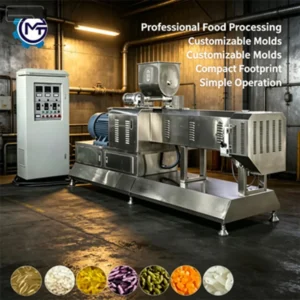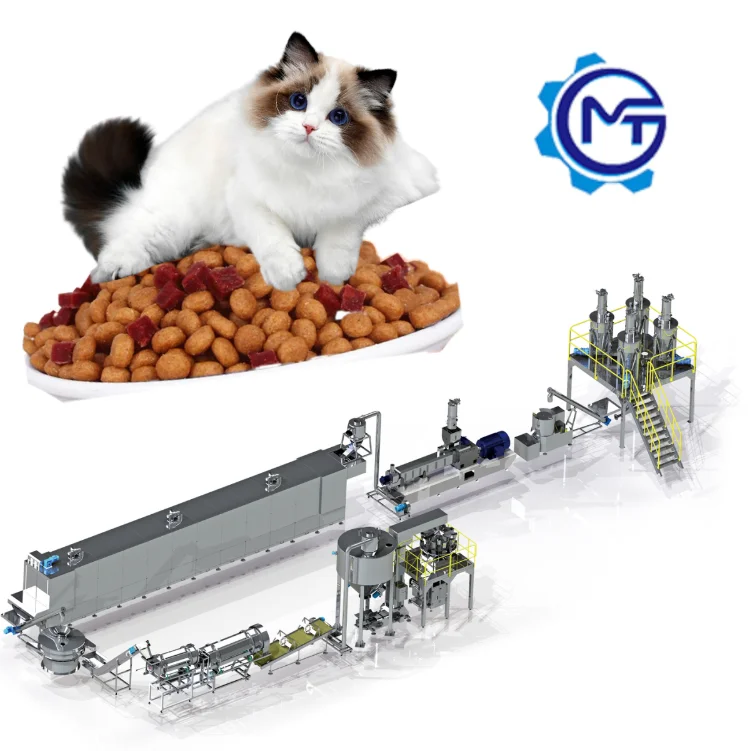
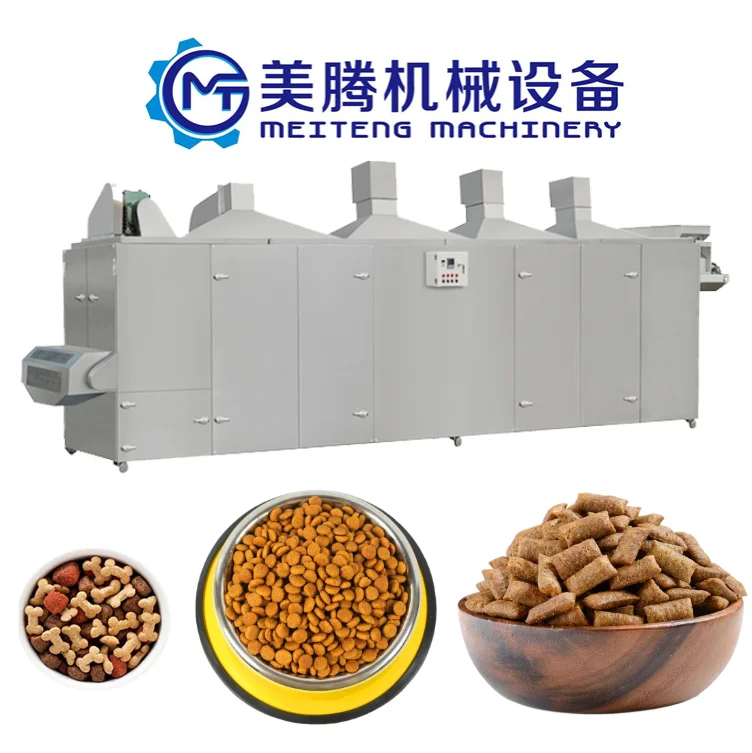


MT70 Pet Food Processing Line, Twin-Screw Extruder, 45KW, 380V 50HZ Three Phase — engineered as a turnkey project with throughput matched across mixing, extrusion, drying, and packaging stations to prevent bottlenecks common in multi-vendor setups.
- Screw configuration and die design specified to your raw material and target kibble density
- In-house testing workshop validates output on your actual formulation before shipment
- Complete line layout, electrical schematic, and voltage confirmation provided for your facility
Description
Integrated Line Engineering — A complete pet food processing line built from raw material handling through final packaging under one supplier, matching throughput at every station to prevent bottlenecks that arise when machines are sourced from separate vendors.
Technical Specifications
| Parameter | Value |
|---|---|
| Model | MT70 |
| Product Type | Pet Food Processing Line |
| Rated Power | 45 kW |
| Voltage & Frequency | 380V 50HZ Three Phase |
| Output Capacity | 200–250 kg/h (basis not stated in source) |
| Control System | Fully automated with advanced sensors and precision controls |
| Screw Configuration | Twin-screw |
| Line Stations | Raw material mixing, extrusion, drying, packaging |
| Material Compliance | Food-grade contact materials throughout |
| Standards | CE, FDA (verify against manufacturer certificate) |
Application Suitability
| Application | Material or Output |
|---|---|
| Dry kibble production | Corn, meat meal, grain blends for dogs and cats |
| Semi-moist pet food | Higher moisture formulations with glycerin or meat slurries |
| Pet treats and bites | Small-format extruded shapes requiring precise die cutting |
| Multi-formula adaptation | Variable protein, fat, and starch ratios across dietary lines |
Why the Voltage Question Should Come Before the Price on Any pet food production line turnkey
Confirming local voltage, frequency, and control panel language before the purchase order is signed prevents weeks of idle machinery on the factory floor.
A few years ago I specified a kibble line for a customer in West Africa. The extruder and dryer arrived on schedule, but the local grid ran 415V 60Hz. The motor contactors tripped immediately, and the PLC threw fault codes the operator could not read because the HMI was set to Chinese. Three weeks passed before a step-down transformer and a reprogrammed panel got the line running. Since then, every pet food production line turnkey project I touch gets a signed electrical confirmation sheet before steel is cut [NEED_CITE: voltage and frequency standards by export market].
Matching Every Station to the Same Throughput Target
The most frequent failure mode on a pet food production line turnkey installation is not the extruder itself but the mismatch between upstream mixing capacity and downstream drying throughput. When a 250 kg/h twin-screw extruder feeds a dryer rated for only 180 kg/h, the line either backs up or the dryer runs overloaded, producing kibble with residual moisture above safe storage levels. Our line layouts calculate residence time and belt load at each station so the entire sequence moves at a single, verified rate.
Screw Profile and Die Geometry Dictate Kibble Density
Twin-screw extrusion relies on the interplay between screw element arrangement, barrel temperature zones, and die land length to control starch gelatinisation and expansion. A floating aquatic feed screw profile will not produce the dense, slow-sinking kibble that certain premium dog food brands require. On this line, the screw configuration record and die drawing are specified against the buyer’s raw material formulation and target bulk density before the barrel sections are machined [NEED_CITE: twin-screw extrusion screw element design principles].
Reading the Specs That Actually Matter
The 45 kW main drive motor provides the torque headroom needed for high-protein formulations where meat meal content raises dough viscosity substantially. Operating the extruder near its full torque range on a weaker motor causes screw stall and barrel surging, which shows up as inconsistent kibble size and color variation between batches. The automated control system with precision sensors monitors barrel temperature and motor amperage in real time, adjusting feed rate to maintain a stable process window. Food-grade stainless steel contact surfaces prevent iron contamination that can oxidize fats in the finished kibble, shortening shelf life and triggering rancidity complaints from end consumers.
What Happens When Configuration Is Left to Chance
I have walked onto factory floors where a generic screw build produced kibble that was either too porous, crumbling during packaging, or too dense, failing the float test that the buyer’s market expected for premium positioning. Re-cutting screws and ordering new die plates after installation adds weeks of downtime and costs more than getting the configuration right before the machine leaves the workshop [NEED_CITE: CE machinery directive requirements for industrial equipment]. The hidden cost is not just the replacement parts but the lost production time and the buyer’s damaged reputation with distributors who received off-spec product.
Why Procuring the Full Line from One Supplier Changes the Outcome
Throughput matching across mixing, extrusion, drying, and packaging is calculated on a single line layout rather than negotiated across three separate purchase orders from different vendors who do not communicate with each other. The in-house testing workshop runs your actual raw material formulation through the MT70 before shipment, producing a trial run report that documents kibble density, expansion ratio, and moisture content at the dryer exit. Electrical schematics and voltage compatibility are confirmed against your facility’s power supply before the control cabinet is wired, eliminating the transformer-and-reprogram scenario described earlier. Pre-sales engineering covers phased installation scheduling so the line can be commissioned in stages if your building construction is still finishing. Wear parts lists ship with the line, identifying screw elements, die plates, and dryer belt sections by part number so replacements can be ordered before the first scheduled changeover.
Documentation & Verification
- Line layout drawing showing throughput balance across mixing, extrusion, drying, and packaging stations
- Screw and die configuration record matched to your raw material formulation and target kibble density
- Electrical schematic with voltage, frequency, and HMI language confirmed for your facility
- Trial run report documenting expansion ratio and moisture content on your actual raw material
- Factory test record capturing motor amperage and barrel temperature profiles before dispatch
Installation, Commissioning & Support
- Foundation plan accounts for the MT70 extruder vibration isolation and dryer belt length clearance
- 380V 50HZ three-phase supply requires dedicated circuit breaker sizing confirmed before cable pull
- Line arrives in modular skids; extruder barrel sections and dryer modules bolt on site
- Commissioning includes first-run parameter logging across all 45 kW drive zones
- Operator training covers HMI navigation, screw changeover procedure, and emergency stop sequences
- Wear parts list identifies screw elements and die plates by part number for reorder scheduling
What to Prepare Before Requesting a Quotation
Share your raw material formulation including protein, fat, and starch percentages along with the target kibble size range and bulk density your market requires. Confirm the local voltage, frequency, and whether the control panel needs to display in a specific language for your operators. Provide your available factory floor dimensions and ceiling height so the line layout can be drafted to fit your building before the proposal is finalized.
Frequently Asked Questions
Q: How is actual line capacity verified against my specific raw material?
A: Before shipment, your raw material formulation is run through the MT70 in the testing workshop. The trial run report records extruder motor load, barrel temperature profile, kibble expansion ratio, and dryer exit moisture, giving you documented output figures based on your actual ingredients rather than generic benchmark materials.
Q: What if my facility uses a different voltage or frequency standard?
A: Voltage and frequency are confirmed during the specification stage before the control cabinet is built. The 380V 50HZ three-phase configuration can be adjusted to match your local grid, and the electrical schematic is issued for your electrician’s review before production begins.
Q: How do you prevent bottlenecks between the extruder and the dryer?
A: Each station’s throughput is calculated on the line layout so the dryer belt load and residence time match the extruder output rate. This prevents the common situation where a faster extruder overwhelms a smaller dryer, leaving kibble with unsafe residual moisture.
Q: What does the trial run process look like before the machine ships?
A: Your raw material is fed through the complete mixing, extrusion, and drying sequence in the workshop. Engineers adjust screw speed, barrel temperature, and die selection until the kibble meets your density and size specification, then document every parameter in the trial run report you receive with the shipment.
Related products
-
Marca Línea de Procesamiento de Comida para Gatos de Múltiples Especies Controlada por PLC de 2.5-3.0t/h¥55,000.00
Select options This product has multiple variants. The options may be chosen on the product page -
Línea de procesamiento de alimento para peces de múltiples especies con capacidad de 300-600kg/h para producir alimento para peces
¥45,000.00 Select options This product has multiple variants. The options may be chosen on the product page -
Línea de producción de extrusión de alimentos para mascotas de alta capacidad adecuada para perros, gatos, aves, peces y alimento para ganado.
¥9,500.00 Select options This product has multiple variants. The options may be chosen on the product page -

Línea de procesamiento de alimento para peces multi-especies de alta capacidad de 1.0-1.5t/h para producir alimento para peces
¥45,000.00 Select options This product has multiple variants. The options may be chosen on the product page