

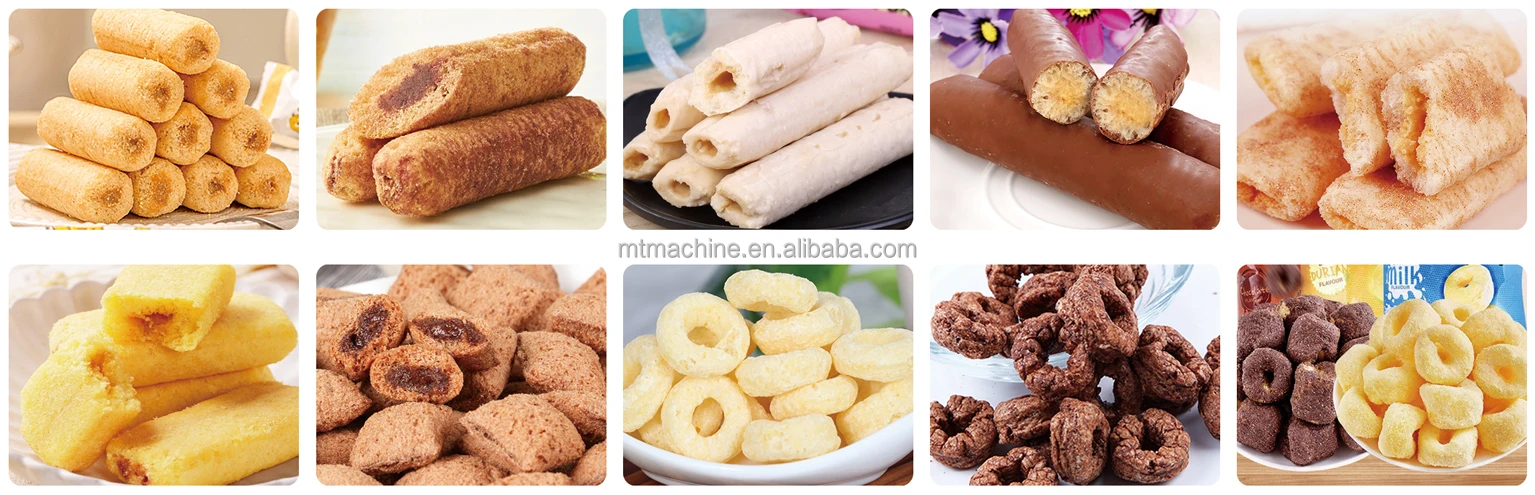
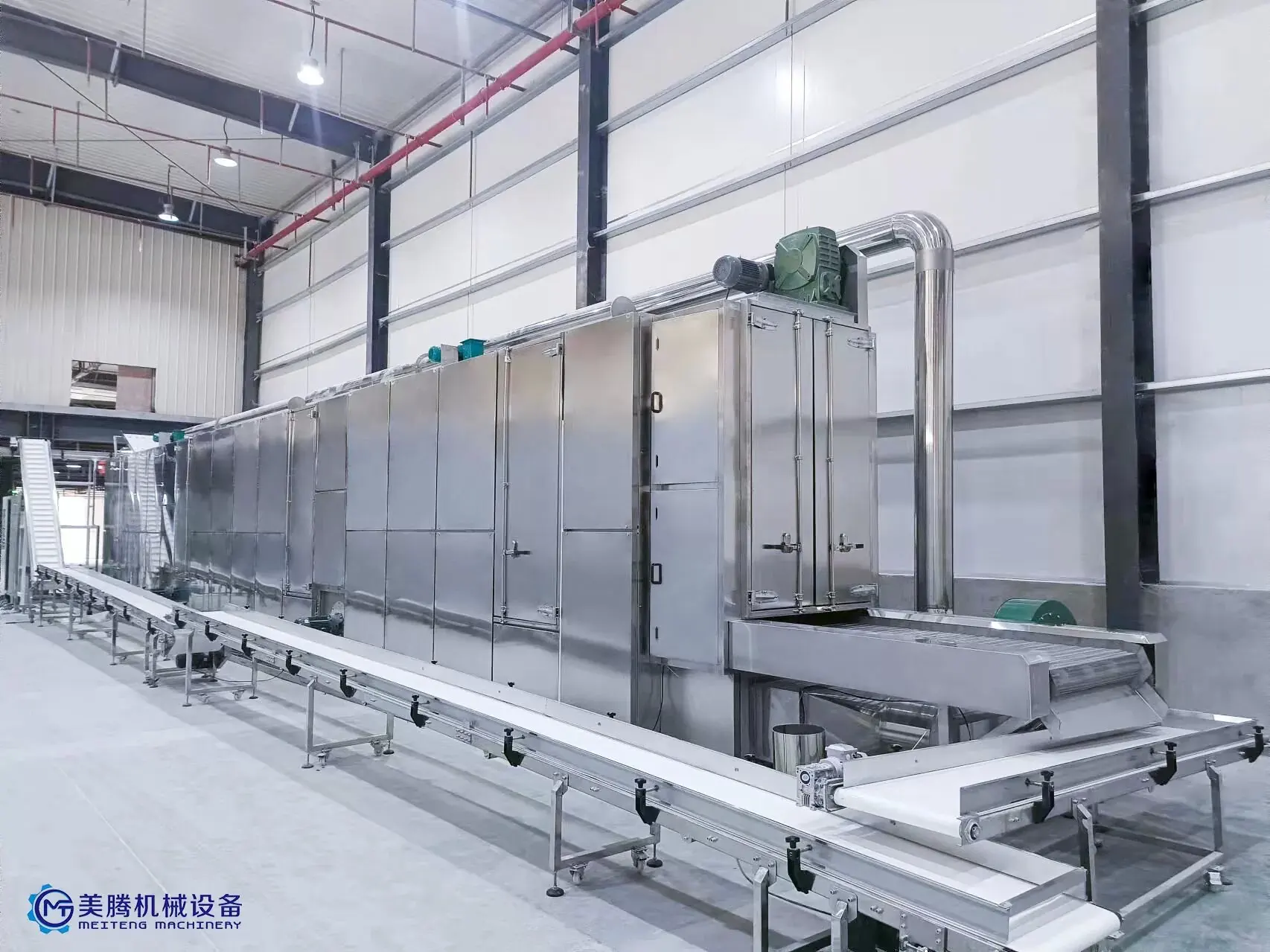
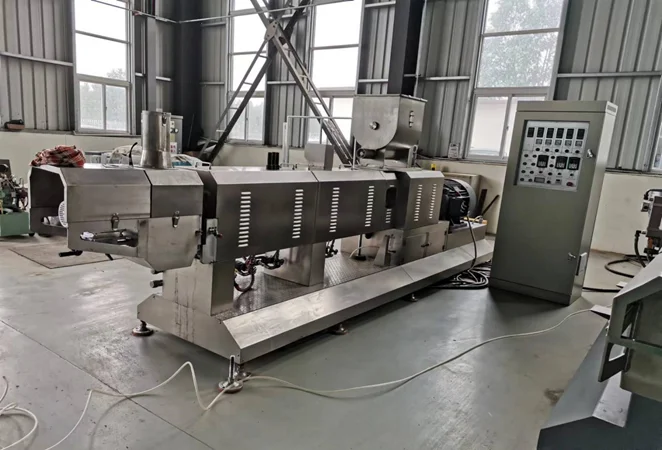
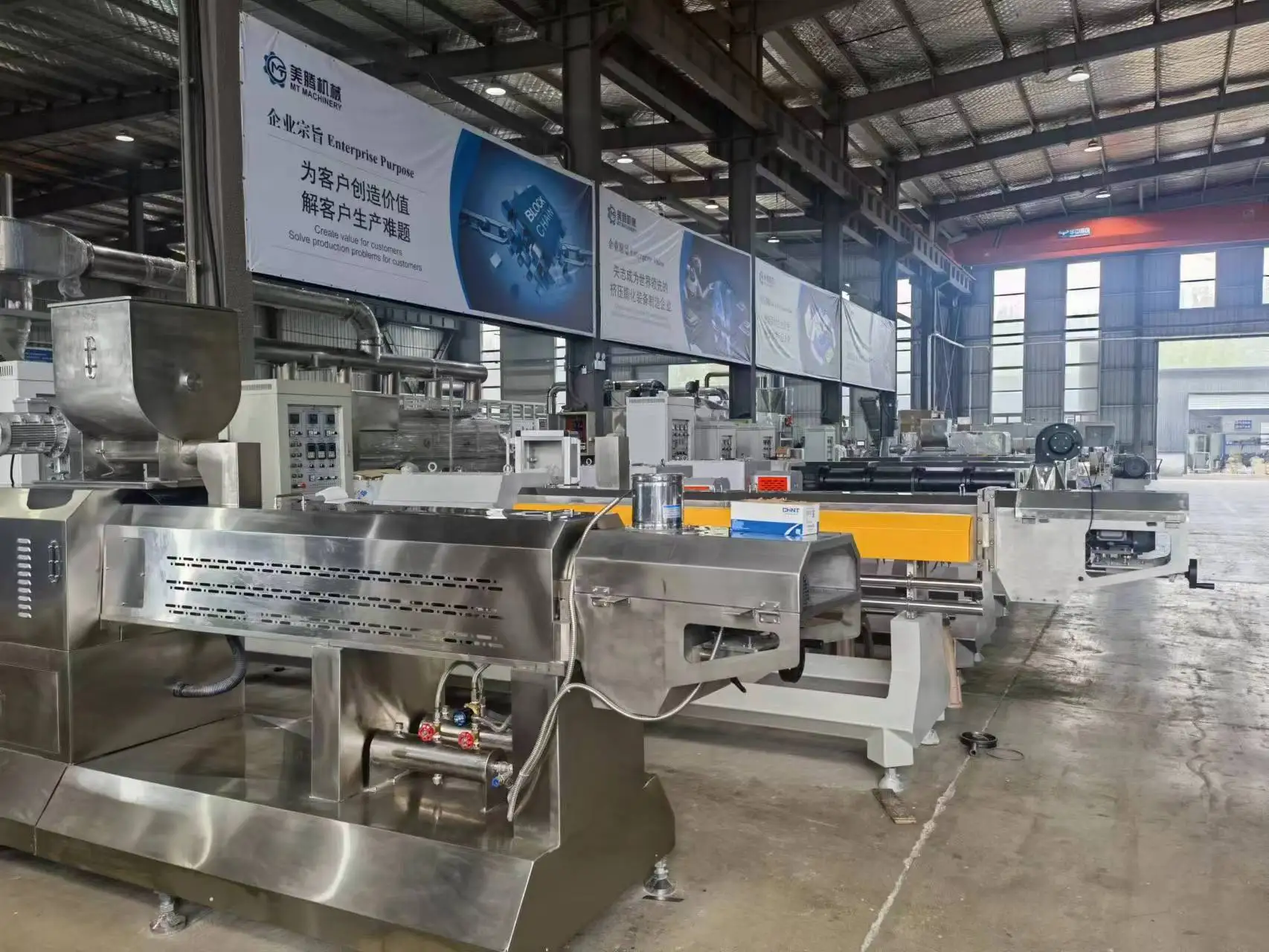
Puffed Snack Food Extrusion Line, Twin-screw, Automatic PLC Control — engineered for corn, maize and rice puff production with screw configuration and die design matched to your raw material and target density.
- Fully automatic one-pass operation from mixing through extrusion, drying to flavoring with throughput matched across every station
- Food-grade stainless steel contact materials, CE and ISO certified
Turnkey layout from batching to packing under one supplier ensures no single machine bottlenecks your output, backed by in-house trial runs on your actual raw material before shipment.
Description
Whole-Line Throughput Matching — every station from the mixer to the packer is sized against the extruder’s real output on your corn or maize flour, not a catalog figure.
Technical Specifications
| Parameter | Value |
|---|---|
| Product Type | Puffed Snack Food Extrusion Line |
| Extruder Type | Twin-screw (Double Screw) |
| Line Configuration | Mixing → Extruding → Shaping → Cutting → Drying → Flavoring → Cooling → Packing |
| Control System | Automatic PLC and MCC control |
| Contact Materials | Food-grade stainless steel |
| Screw and Die Configuration | Customized to raw material and target product shape |
| Automation Level | Fully automatic one-pass operation |
| Supporting Equipment | Dryer, flavoring system (sugar, oil, powder seasoning) |
| Output Capacity | (basis to be confirmed — dependent on raw material, moisture, and target shape) |
| Voltage & Frequency | Configurable to target market standard |
| Certification | CE (since 2014), ISO certified |
Application Suitability
| Application | Material or Output |
|---|---|
| Puffed corn and maize snacks | Corn grits, maize flour, rice flour blends at controlled moisture |
| Rice puff snacks | Rice flour, broken rice meal, multi-grain blends |
| Core-filled snacks | Cereal outer shell with cream, chocolate, or fruit paste filling |
| Various extruded puffed shapes | Different die plates producing rings, balls, tubes, stars, and custom profiles |
What "Nominal Capacity" Leaves Out About Your Puffed Snack Line
A line rated at a certain throughput on one flour blend will not deliver the same output on a different formulation.
When a snack manufacturer quotes a capacity figure without naming the exact raw material, moisture level, and target product density, that number is a starting point — not a guarantee. I have watched buyers sign off on a puffed snack extrusion production line turnkey project based on a catalog number, only to find during commissioning that high-fiber or high-protein flour blends reduce actual extruder output noticeably. The dryer then runs half-empty, the flavoring drum cycles below its designed load, and the whole line rhythm breaks down. The result is weeks of on-site re-tuning that should have been resolved before the machines left the factory [NEED_CITE: twin-screw extrusion throughput variability across raw material formulations].
How Screw Configuration Shapes Your Puffed Corn Snack
The twin-screw extruder at the heart of this line does not run a generic screw profile. The screw elements — conveying, kneading, and reverse-flight sections — are arranged based on the starch content, particle size, and moisture of your specific corn or maize flour. A high-starch corn grit requires a different shear profile than a rice-flour-dominant blend to achieve the same expansion ratio and cell structure. Getting this wrong means dense, under-expanded snacks that do not meet the crunch expectation of your retail market.
Why the Dryer and Flavoring Drum Must Be Sized to the Extruder’s Real Output
A common mismatch in assembled-from-separate-vendors lines is a dryer that cannot keep pace with the extruder. When wet, freshly extruded puffed corn pieces exit the die and cutting station, they carry a significant moisture load. If the dryer belt length and airflow are calculated on a nominal extruder output rather than the actual throughput achieved on your flour, moisture remains trapped inside the snack. Downstream, the flavoring drum receives product that is still slightly soft, causing seasoning to clump rather than coat evenly. This puffed snack extrusion production line turnkey configuration sizes every downstream station against verified extruder data, not a brochure figure [NEED_CITE: moisture removal rates in multi-pass snack dryers].
Reading the Specs That Actually Matter for Puffed Snack Quality
The twin-screw design allows a wider raw material window than single-screw extruders, handling corn grits, maize flour, rice blends, and multi-grain formulations with varying fat and fiber content. The screw length-to-diameter ratio determines how long the material stays inside the barrel — longer residence allows more complete starch gelatinization, which directly controls the expansion and final crunch of the puffed snack. Die plate selection governs the cross-section shape, while the cutter speed sets the piece length; together they define the product format your market expects. The PLC and MCC control system stores process parameters — barrel zone temperatures, screw speed, feeder rate, and cutter timing — so that once a recipe is dialed in, it can be recalled for repeat production with consistent density and texture across batches.
The Hidden Cost of Skipping a Pre-Shipment Trial Run
Lines that ship without a trial run on the buyer’s actual flour force all product development into the commissioning window. Screw elements get swapped, barrel temperatures are adjusted, and die plates are changed while the entire production crew waits. What should take a few days of fine-tuning stretches into weeks, burning raw material and delaying the first commercial shipment. Every day of on-site troubleshooting is a day the line is not generating revenue [NEED_CITE: commissioning delays in food extrusion projects without pre-shipment trials].
Why Buyers Source This Line From a Single Supplier
Throughput matching across every station — mixer, extruder, dryer, flavoring drum, cooler, and packer — is engineered at the layout stage, not patched together from separate purchase orders. The screw configuration and die design are specified against your raw material sample and target snack density before production begins. An in-house testing workshop runs your actual corn or maize flour through the extruder before the line ships, generating a trial run report that confirms product shape, expansion, and texture. The PLC control system is programmed in the control language your operators read, and the electrical schematic reflects your facility’s voltage and frequency. CE and ISO certification documentation accompanies every shipment for customs and regulatory clearance.
Documentation & Verification
- Line layout showing throughput calculation for every station matched to your target capacity
- Screw and die configuration record detailing the exact element arrangement for your snack shape
- Trial run report on your corn or maize flour sample conducted before dispatch
- Electrical schematic confirming voltage, frequency, and control language for your market
- CE declaration of conformity and ISO certificate for import and regulatory compliance
- Operation and maintenance manual with wear parts list for screws, dies, and dryer belts
Installation, Commissioning & Support
- Foundation plan accounting for the twin-screw extruder’s weight and vibration isolation requirements
- Dedicated electrical circuit sized for the combined load of extruder main motor, dryer heaters, and MCC panel
- Assembly sequence covering extruder barrel alignment, dryer belt tensioning, and flavoring drum mounting
- First-run parameter setting including barrel zone temperatures, screw speed, and cutter timing on your flour
- Operator training covering PLC recipe recall, screw element inspection, and die plate changeover procedures
- Wear parts supply schedule for screw elements, die plates, and dryer belt sections based on production hours
Before You Request a Quote
Share the specific corn, maize, or rice flour formulation you plan to run — including any fiber, protein, or fat additions — along with the target snack shape, piece size, and expected density range. Specify your facility’s voltage, frequency, and preferred control panel language. If you have existing upstream batching or downstream packing equipment, provide the model and throughput so the line can be configured to integrate rather than duplicate.
Frequently Asked Questions
Q: How is the line’s output capacity verified on my actual raw material before shipment?
A: Your corn or maize flour sample is run through the twin-screw extruder in our in-house testing workshop. We record screw speed, barrel temperatures, moisture input, and die configuration, then measure the actual throughput and product density. The trial run report ships with the line so you can compare commissioning results against a known baseline.
Q: How do you ensure the dryer and flavoring system match the extruder’s throughput?
A: During line layout design, we calculate the moisture load exiting the extruder based on your specific flour and target expansion. The dryer belt length, airflow volume, and residence time are then sized to handle that exact load. The flavoring drum diameter and rotation speed are matched to the verified piece count per minute.
Q: What voltage, frequency, and control language options are confirmed before the line ships?
A: Before production starts, we confirm your facility’s voltage and frequency — typically 380V/50Hz, 415V/50Hz, or 440V/60Hz depending on market. The PLC interface language is set to match your operators’ preference. The electrical schematic reflecting these choices is approved by your team before the MCC panel is wired.
Q: Can screw and die configuration be customized for a specific snack shape and density?
A: Yes. The screw element arrangement — conveying, kneading, and shear zones — is selected based on your flour’s starch and fiber content to control gelatinization and expansion. The die plate is chosen for the cross-section profile, and cutter speed sets piece length. We document the full configuration for future reorders.
Q: What is included in on-site installation, commissioning, and operator training?
A: Our engineers supervise extruder barrel assembly, dryer and flavoring drum installation, and full-line electrical connection. Commissioning includes running your actual raw material to match the trial run report results. Operator training covers PLC recipe management, screw and die inspection intervals, and daily maintenance routines for all stations.
Related products
-

Línea de Procesamiento Automático de Copos de Maíz Maquinaria para Fabricación de Cereales para el Desayuno y Snacks de Coco Pops
¥7,500.00 Select options This product has multiple variants. The options may be chosen on the product page -

Línea de producción de palitos de bocadillo de maíz inflado automático Equipos en nueva condición
¥100.00 Select options This product has multiple variants. The options may be chosen on the product page -

Máquina para hacer copos de maíz de cereal de desayuno crujiente y inflado.
¥1,000.00 Select options This product has multiple variants. The options may be chosen on the product page -

Máquina Extrusora de Snacks de Maíz Pequeña de Puffs de Maíz de Doble Tornillo
¥100.00 Select options This product has multiple variants. The options may be chosen on the product page


