

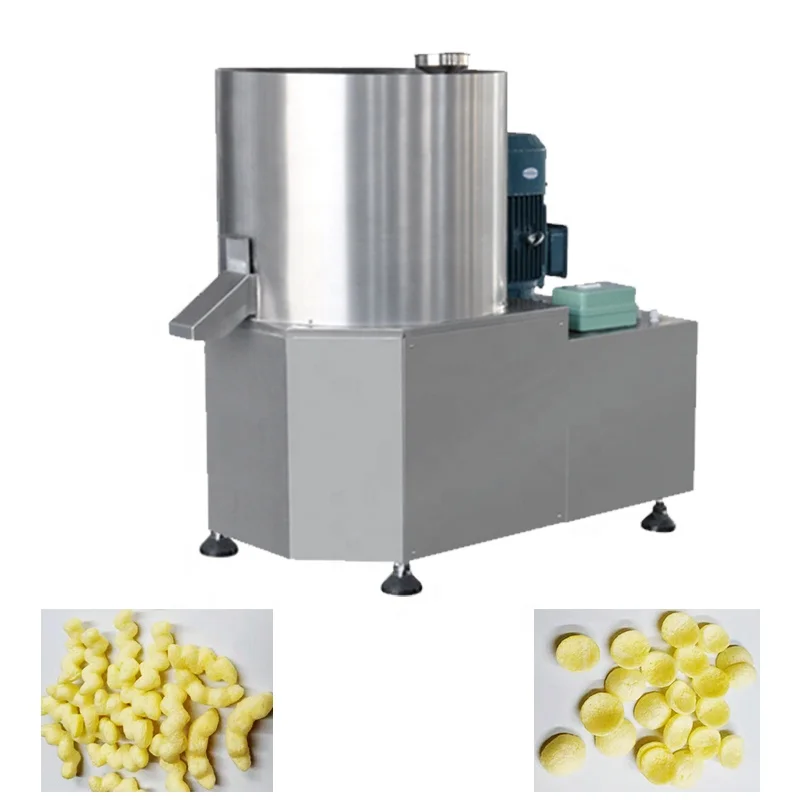
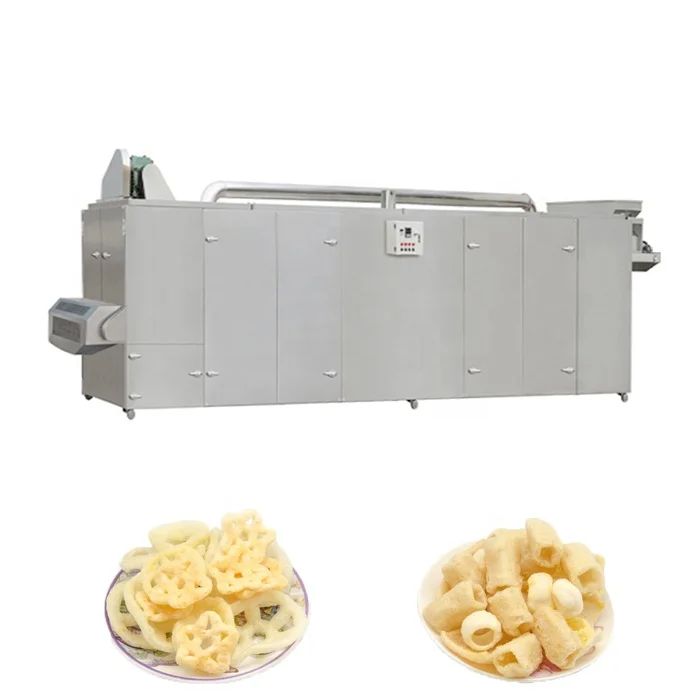
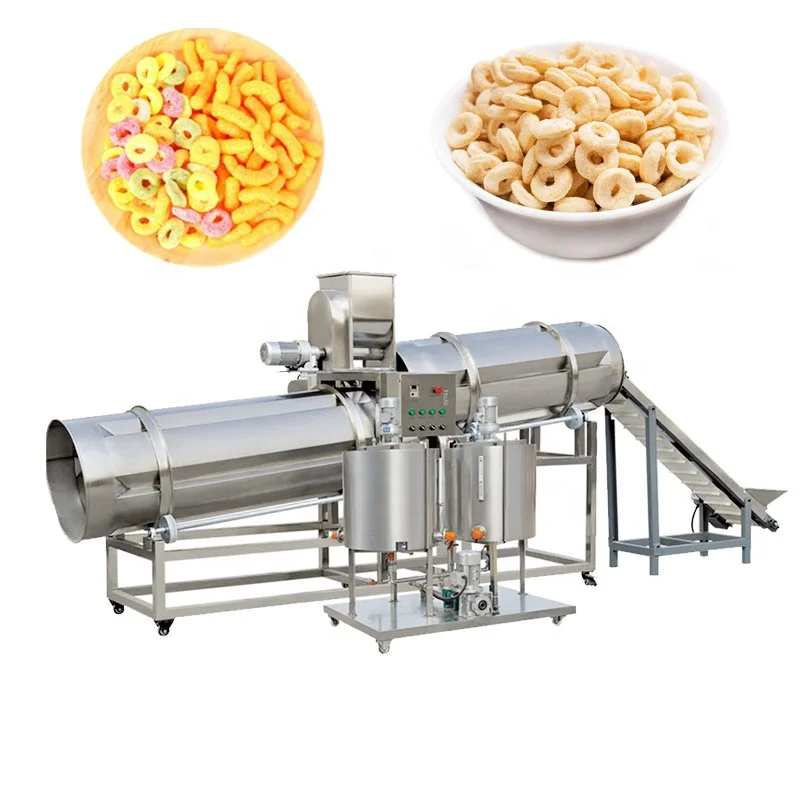
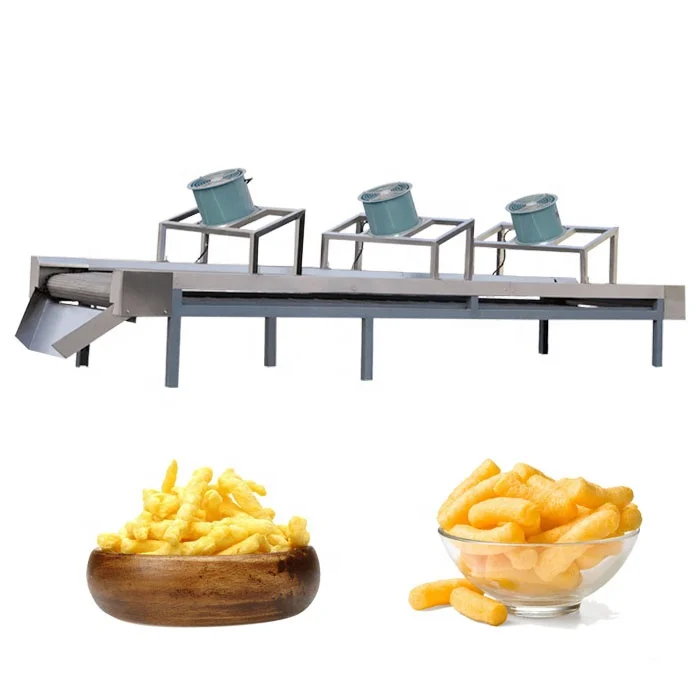
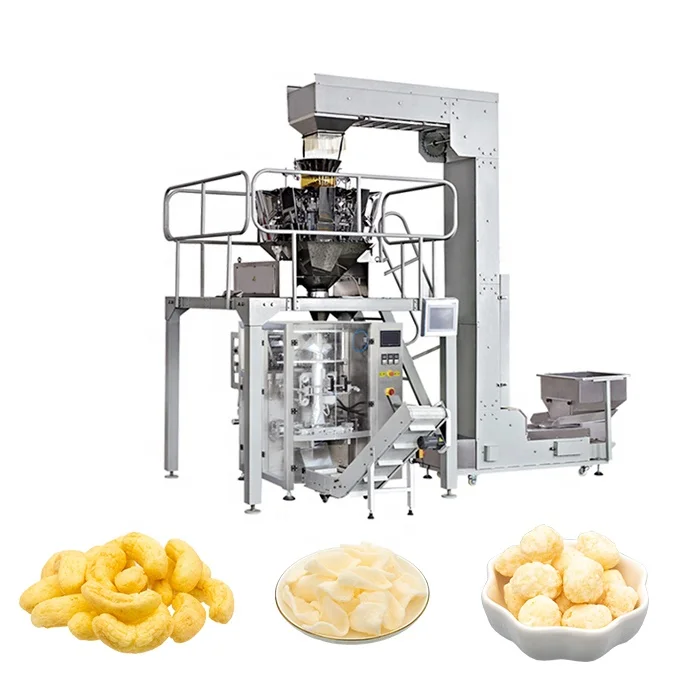
Twin Screw Food Extrusion Production Line, 380V/50Hz, Food-Grade Stainless Steel — configured for corn chips, maize puffs, puffed rice, and core-filled snack formats. Screw configuration and die design are matched to your raw material’s moisture, starch behavior, and target density, ensuring consistent texture across every batch. Energy-flexible roasting supports electricity, gas, diesel, or steam to suit local utility conditions.
- Complete line from mixer through extruder, vibrate cooler, roasting machine to packing — throughput balanced at every station
- Trial run on your actual raw material in our testing workshop before shipment
Delivered with line layout, capacity calculation, screw and die configuration record, and electrical schematic confirmed for your destination voltage.
Description
Turnkey integration under one roof — every station from the mixer through to the packing unit is throughput-matched so the line runs at its rated tempo without one section starving or choking the next.
Technical Specifications
| Parameter | Value |
|---|---|
| Product Type | Twin Screw Food Extrusion Production Line |
| Extruder Type | Double screw extruder machine |
| Contact Material | Food grade stainless steel 201/304 |
| Voltage & Frequency | Three phases 380V/50Hz, Single phase 220V/50Hz (customizable to local voltage) |
| Rated Power (Electric Heating) | About 100 kW |
| Rated Power (Gas/Diesel Heating) | About 50-60 kW |
| Energy Options | Electricity / gas / diesel / steam |
| Motor | Siemens motor (made in China) or China top brand |
| Inverter | Delixi or Delta |
| Line Stations | Mixer → Extruder → Vibrate cooler machine → Roasting machine → Packing machine |
| Product Formats | Core-filling snacks, chocolate filled bar, cream filled pillow, rice cake, cereal bar, sheet snacks, cheese ball, corn puff, puffed rice |
| Raw Materials | Rice, millet, brown rice, buckwheat, wheat, maize, corn and other cereals |
| Assembly State | Complete line (batching to packing) |
| Certification | CE, ISO (electronic edition available on request) |
Application Suitability
| Application | Material or Output |
|---|---|
| Small-scale corn chip and maize puff production | Maize grits, corn flour, wheat blends |
| Puffed rice and rice cake manufacturing | Rice, brown rice, millet |
| Core-filled snack bars and cream pillows | Cereal base with chocolate, cream or fruit filling |
| Fortified snack production | Cereal blends with added vitamins, proteins and minerals |
| Contract packing and start-up snack lines | Multi-grain formulations including buckwheat and sorghum |
Why "Nominal Capacity" Means Nothing Without Your Raw Material
A line only produces what the material allows, not what the nameplate promises.
Every twin screw food extrusion production line turnkey quote I have reviewed from competing suppliers lists a capacity figure that assumes ideal moisture content and particle size. In practice, maize grits arriving at a workshop in a humid coastal climate carry two or three percentage points more moisture than the same grain stored in a dry interior region. That extra moisture changes the gelatinisation behaviour inside the barrel, and the extruder that was supposed to deliver a certain output simply cannot hold it. The dryer downstream then receives product that is denser and wetter than designed for, creating a bottleneck that no amount of operator adjustment can fix [NEED_CITE: moisture content impact on extrusion throughput and gelatinisation].
Matching the Screw Profile to the Target Texture
The twin screw food extrusion production line turnkey configuration starts with the screw elements themselves. Forward-conveying segments, kneading blocks and reverse-flight sections each control how much shear energy goes into the dough. A corn puff that needs a light, open-cell structure requires a different screw profile than a dense cereal bar base, even when both run on the same extruder frame. Selecting the right combination before the machine ships avoids weeks of trial and error on the buyer’s floor.
Energy Source Flexibility at the Roasting Stage
Not every installation site has cheap electricity or a gas supply line running to the production hall. This line offers the roasting station in electric, gas, diesel or steam-heated versions, allowing the buyer to match the energy source to local utility costs. For a workshop where diesel is readily available but three-phase power is limited, switching the dryer to a diesel burner keeps the extruder on the available electrical capacity without requiring a transformer upgrade [NEED_CITE: industrial energy cost comparison for food drying equipment].
Reading the Specifications That Actually Matter
Voltage and frequency sit at the top of any checklist because a motor wound for 380V/50Hz will overheat and fail on a 440V/60Hz supply, and the cost of rewinding or replacing motors after arrival is never small. The inverter brand — Delixi or Delta — matters for local serviceability; a technician in Lagos or Jakarta can source Delta drives locally, whereas an obscure brand means waiting weeks for a replacement. The stainless steel grade (201 or 304) determines how well contact surfaces resist the mild acids produced during cereal gelatinisation over years of continuous operation. Power ratings split between electric heating at roughly 100 kW and gas or diesel heating at 50-60 kW, so the buyer must know which energy source the workshop can support before placing the order.
The Cost of Skipping a Trial Run
When an extrusion line ships without a documented trial run on the buyer’s actual raw material, the first production shift becomes an expensive experiment. Screw combinations have to be swapped, die apertures re-cut, and dryer temperatures re-profiled — all while raw material is being wasted and delivery deadlines are slipping. I once saw a maize puff line where the supplier used generic screw elements copied from a rice application; the resulting puffs were so dense that the buyer’s packaging machine could not fill the bags to the target weight. That single oversight cost the buyer more in lost material and delayed shipments than the trial run would have taken in a single afternoon [NEED_CITE: extrusion screw configuration and product density relationship].
Why This Line Stands Up to Inspection
Every station — mixer, extruder, vibrating cooler, roasting machine, packing — is specified as one project rather than assembled from separate vendors, so throughput is matched across the entire chain. The screw configuration and die design are documented to the buyer’s raw material and target snack format before production begins. An in-house testing workshop runs the buyer’s actual maize, rice or wheat blend through the extruder before the line is crated. Pre-sales engineering consultation carries through to on-site installation, commissioning, operator training and ongoing maintenance support. Food-grade stainless steel contact parts across all wet zones meet the hygiene expectations of snack food buyers in regulated markets.
Documentation & Verification
- Line layout drawing showing throughput balance from mixer to packing station
- Screw and die configuration record matched to your cereal blend
- Electrical schematic confirming voltage, frequency and control language
- Factory trial run report using your raw material before dispatch
- CE declaration of conformity and ISO certificate in electronic edition
Installation, Commissioning & Support
- Floor plan review to confirm space for the full mixer-to-packer footprint
- Three-phase 380V/50Hz supply verification or local voltage adaptation before wiring
- Section-by-section assembly with alignment checks on the extruder barrel
- First-run parameter setting including barrel temperature zones and screw speed
- Operator training covering die changes, screw cleaning and daily inspection routines
- Wear parts list for screws, dies and seals with recommended stock quantities
Starting the Conversation
Before a line proposal can be drafted, the buyer needs to share the specific cereal or grain blend, its typical moisture content at the factory gate, the target snack format (corn puff, core-filled bar, rice cake or sheet snack), and the daily output expectation. Equally important are the local voltage and frequency, the available energy source for the roasting station, and whether the workshop has existing upstream milling or downstream packaging equipment that the new line must interface with.
Frequently Asked Questions
Q: How is line capacity verified against my specific raw material and moisture content?
A: Before the twin screw food extrusion production line turnkey ships, your raw material is run through our in-house testing workshop. We measure throughput, expansion ratio and product density at the actual moisture level your grain arrives at, then document the results in a trial run report so you know the realistic output before the machine leaves the factory.
Q: How do you match screw configuration and die design to my target snack texture and density?
A: We build the screw element combination — forward flights, kneading blocks and reverse sections — around your specific cereal blend and the texture your market expects. The die aperture is then matched to that screw profile so expansion, cell structure and final density all land within your product specification rather than a generic default.
Q: What voltage, frequency and control language options are confirmed before shipment?
A: The electrical schematic is prepared to your destination country’s supply standard — whether 380V/50Hz, 440V/60Hz or another combination — and the control panel language is set to match your operators. Both are confirmed in writing before the twin screw food extrusion production line turnkey enters final assembly, eliminating commissioning delays on site.
Q: Can I do a trial run on my raw material before the line ships?
A: Yes. Our testing workshop is equipped with extruders of the same class as your ordered line. You send a representative sample of your maize, rice or wheat blend, and we run it through with the exact screw and die configuration specified for your order. The trial run report is shared with you before crating.
Q: How do you ensure throughput balance between the extruder, dryer and flavoring stations?
A: Each station is specified as part of one integrated project, not sourced independently. The vibrating cooler capacity, roasting machine belt length and flavoring drum volume are all calculated from the extruder’s verified output on your material, so no single station becomes a bottleneck that holds back the rest of the line.
Related products
-

Nueva línea de procesamiento de maíz inflado para alimentos, extrusora automática de maquinaria para snacks de acero inoxidable de alta calidad para la industria alimentaria.
¥12,350.00 Select options This product has multiple variants. The options may be chosen on the product page -

Máquina de Extrusión Automática de Crujientes de Maíz para Chips de Maíz y Palitos de Maíz en Nueva Condición
¥8,000.00 Select options This product has multiple variants. The options may be chosen on the product page -

Máquina de Comida Snack Inflada Máquina de Comida Snack Máquina de Snack Inflado
¥11,050.00 Select options This product has multiple variants. The options may be chosen on the product page -

Línea de producción de equipos industriales para el procesamiento de cereales de desayuno Crispy Maize Chocos Corn Flakes totalmente automática
¥1,000.00 Select options This product has multiple variants. The options may be chosen on the product page


