

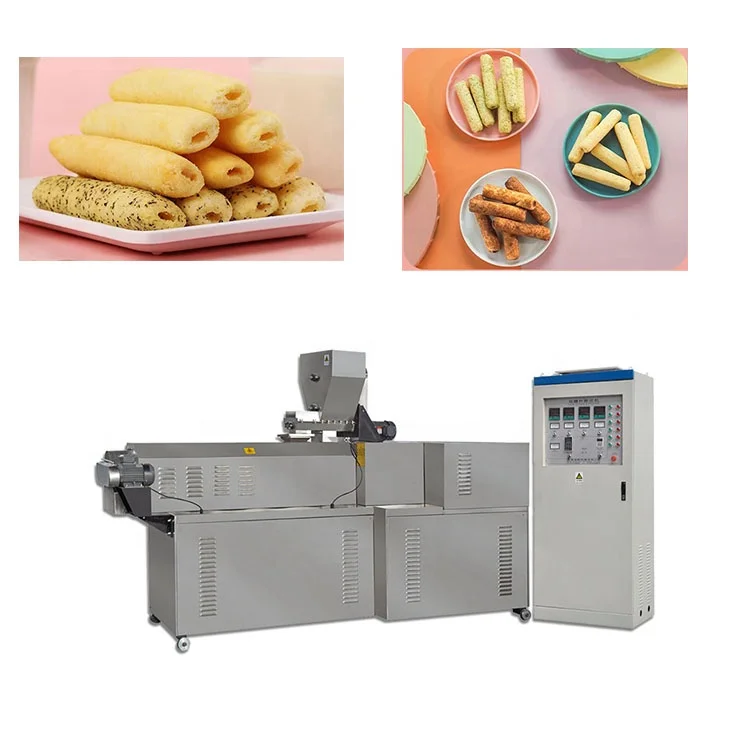
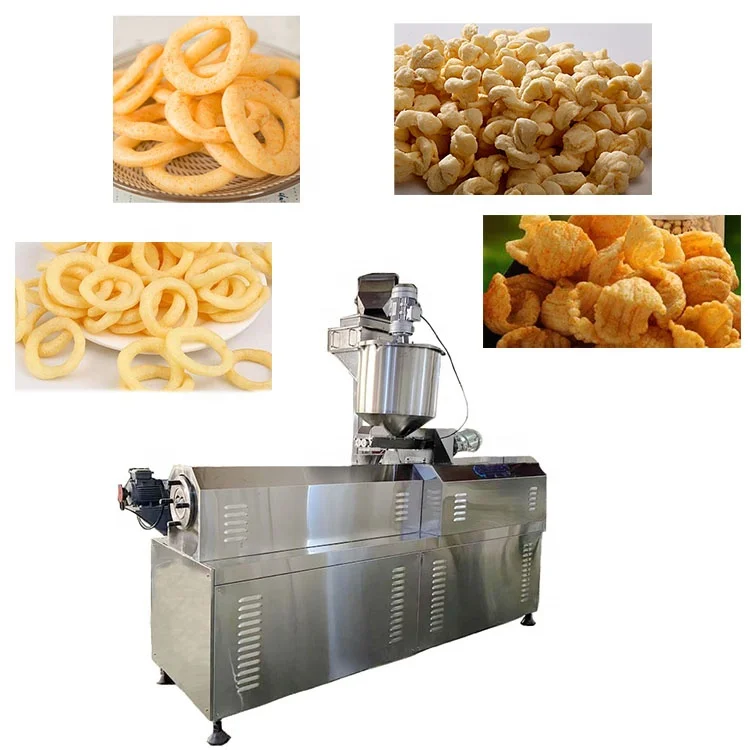
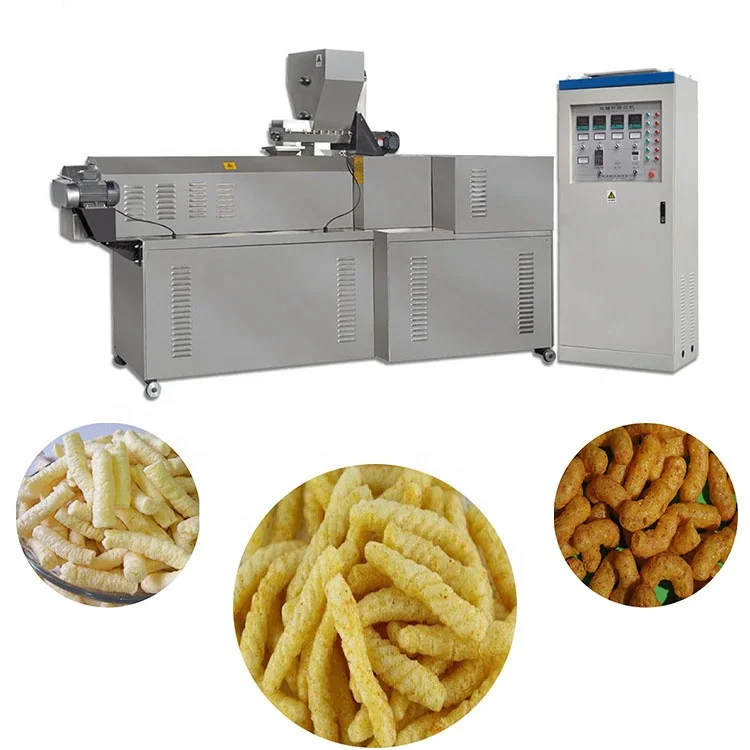
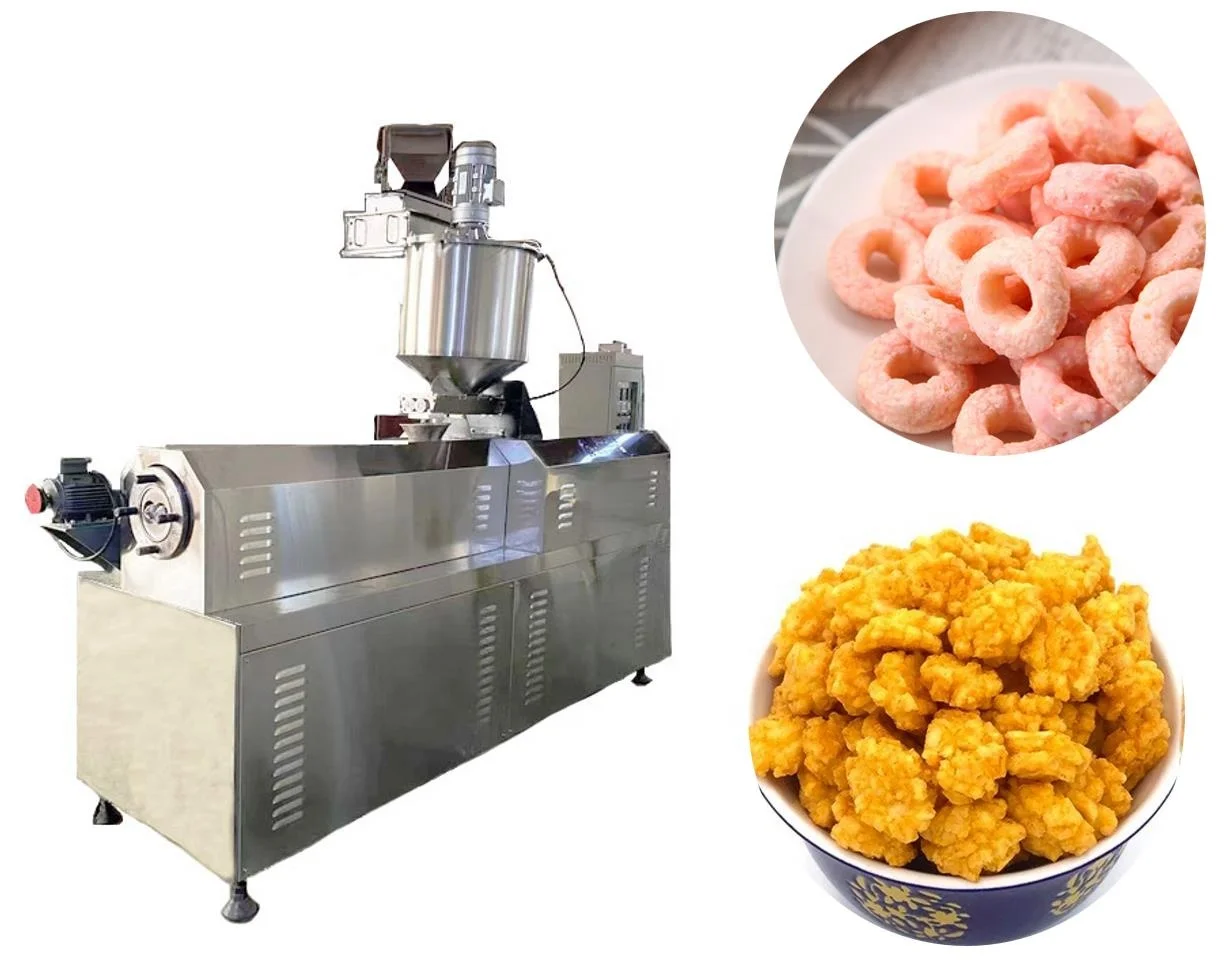
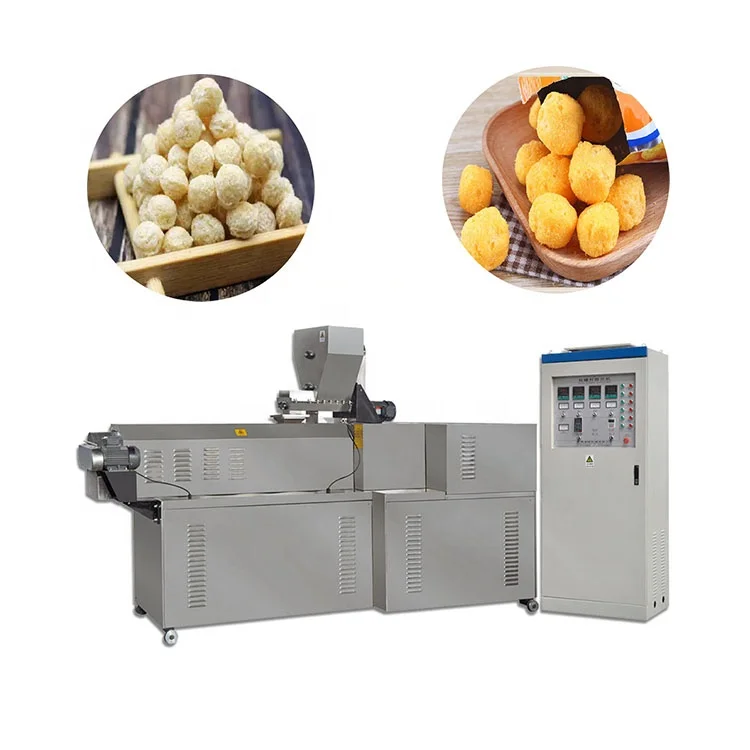
Corn Puff Snack Production Line, Twin-Screw Extruder, PLC & MCC Control — engineered for puffed snacks, core-filled products and cereal bars using corn, rice, millet and other cereals.
- Screw configuration and die design matched to your raw material recipe and target product density
- Every station — mixer, extruder, dryer, flavouring drum, cooler, packing — throughput-balanced to eliminate bottlenecks
In-house trial runs on your actual raw material are completed before shipment, with full line layout and capacity documentation provided.
Description
Throughput-Matched Turnkey Lines — Every station from mixer to packing is calculated against your actual raw material so no single unit bottlenecks the puffed snack food extrusion production line turnkey you specified.
Technical Specifications
| Parameter | Value |
|---|---|
| Product Type | Puffed Snack Food Extrusion Line |
| Extruder Type | Twin-screw (double screw) |
| Construction Material | Food grade stainless steel 201/304 |
| Voltage & Frequency | Three phase 380V/50Hz; Single phase 220V/50Hz (customizable to local voltage) |
| Rated Power | Approx. 100 kW (electric heating); 50–60 kW (gas or diesel heating) (basis to be confirmed) |
| Energy Options | Electricity / Gas / Diesel / Steam |
| Control System | PLC and MCC (configurable per project) |
| Line Stations | Mixer → Extruder → Vibrate Cooler → Roasting Machine → Packing Machine |
| Additional Stations | Dryer, Flavoring System (semi-automatic or automatic) |
| Screw Configuration | Configured to raw material and target product |
| Die Configuration | Interchangeable moulds for various shapes |
| Raw Materials | Corn, rice, millet, brown rice, buckwheat, other cereals |
| Product Formats | Puffed snacks, core-filled snacks, rice cake, cereal bar, sheet snacks, cheese balls |
| Assembly State | Complete production line (turnkey) |
| Certification | CE, ISO |
Application Suitability
| Application | Material or Output |
|---|---|
| Puffed corn snack production | Corn grits, rice, millet blended cereals |
| Core-filled snack manufacturing | Chocolate bar, cream pillow formats with cereal shell |
| Cheese ball and extruded pellet lines | Corn-based dough with post-extrusion cheese coating |
| Cereal bar and rice cake forming | Brown rice, buckwheat, fortified grain blends |
| Sheet snack and 2D/3D pellet formats | Starch-rich cereal mixes requiring die-cut shaping |
What "Nominal Capacity" Leaves Out on a Snack Extrusion Line
A line rated on paper can stall on your actual recipe if screw geometry, barrel zones, and dryer length are never matched to your specific cereal blend.
I once walked into a facility where a brand-new twin-screw extruder was pushing product faster than the downstream dryer could handle. Half-puffed corn pieces piled up on the conveyor, absorbing moisture from the ambient air and turning into a sticky mass before they ever reached the flavouring drum. The buyer had selected the extruder on nominal output alone, without anyone calculating the residence time the dryer would need at that throughput [NEED_CITE: drying curve requirements for extruded cereal products at varying moisture levels]. When we plan a puffed snack food extrusion production line turnkey, the starting point is always the raw material behaviour and the target density the market expects, not a catalogue number.
Balancing Every Station Against Your Cereal Recipe
Extrusion output means nothing if the vibrate cooler, roasting machine, or flavouring system cannot keep pace. We calculate the mass flow at each transfer point so that a puffed snack food extrusion production line turnkey runs continuously without product backlog or idle stations waiting on upstream feed.
Screw Geometry Decides Texture Before the Die Ever Cuts
Barrel temperature profile, screw pitch, and moisture injection together determine whether a corn-based mix expands into a light puff or collapses into a dense pellet. We configure the screw elements and die aperture to the starch gelatinisation window of your specific grain blend, then document that configuration before fabrication begins [NEED_CITE: twin-screw extrusion parameter effects on starch gelatinisation in cereal snacks].
Reading the Specs That Actually Matter for Snack Extrusion
Twin-screw construction gives processors the shear control needed to handle a wider range of cereal inputs — from high-fat corn grits to sticky rice flour — compared to single-screw designs that can surge or stall on variable recipes. The interchangeable die system lets you shift between cheese ball, core-filled pillow, and flat sheet formats without swapping the entire barrel assembly. PLC and MCC control, paired with confirmed voltage and language settings, means the operator interface speaks the same language as your floor staff from day one. Food-grade stainless steel 201 or 304 contact surfaces meet hygiene expectations in markets that audit processing lines against recognised food-safety schemes [NEED_CITE: food contact material standards for snack processing equipment]. Energy flexibility across electric, gas, diesel, and steam heating lets you align the roasting and drying stages with whichever utility is most economical at your site.
The Hidden Cost of Mismatched Downstream Equipment
When dryer capacity falls short of extruder output, partially expanded snacks sit in humid air and lose the crispness your brand promises. When the flavouring drum runs slower than the cooler discharge, seasoned product queues up and absorbs excess oil, pushing fat content outside labelling limits. These imbalances rarely show up in a quotation summary; they surface weeks after commissioning when the line cannot sustain its nameplate rate [NEED_CITE: common causes of throughput loss in extruded snack lines post-installation].
Why Source This Line From a Single Project Supplier
Every station — mixer, extruder, vibrate cooler, roasting machine, packing — is specified under one layout document, so throughput figures connect across the entire chain rather than arriving as isolated machine brochures. Screw and die records are tied to your raw material sample, not copied from a generic build sheet. An in-house testing workshop runs your actual cereal blend before the line ships, generating a trial report that confirms expansion ratio and density targets. Voltage, frequency, and control language are locked in before production starts, avoiding commissioning delays caused by mismatched electrical standards. Ongoing maintenance support covers screw and die wear parts with a documented replacement schedule so the first changeover does not catch your team off guard.
Documentation & Verification
- Line layout showing throughput calculation at every station from batching to packing
- Screw and die configuration record matched to your cereal blend and target snack density
- Trial run report on customer-supplied raw material conducted before shipment
- Electrical schematic confirming voltage, frequency, and PLC language for destination country
- CE declaration of conformity and ISO certificate included with shipping documents
- Operation and maintenance manual with illustrated wear parts list
Installation, Commissioning & Support
- Foundation and floor-space plan aligned to the full line footprint including cooler and roaster
- Dedicated electrical circuit sized for the confirmed rated power and local voltage standard
- Modular station delivery allowing phased assembly in workshops with limited overhead clearance
- First-run parameter setting on your cereal recipe with extruder barrel zone and screw speed logged
- Operator training covering PLC navigation, die changeover, and flavouring drum adjustment
- Wear parts list for screws and dies with recommended replacement intervals and stock quantities
Planning Your Inquiry
To size a puffed snack food extrusion production line turnkey correctly, share your target cereal recipe, the snack formats you intend to produce, and the daily output your market demands. Include your workshop dimensions, available utility types, and local voltage and frequency so the electrical and heating configuration can be finalised before quotation.
Frequently Asked Questions
Q: How is line capacity verified on my actual raw material before shipment?
A: Your cereal sample is run through our in-house testing workshop on a twin-screw extruder configured with the screw elements and die specified for your project. We record expansion ratio, density, and throughput, then issue a trial run report before the line is cleared for dispatch.
Q: How do you ensure dryer and flavouring capacity matches extruder output?
A: Each station is calculated against the mass flow leaving the extruder at your confirmed recipe. Dryer belt length, airflow, and flavouring drum volume are specified so that no product queues or cools below seasoning temperature during continuous operation.
Q: What voltage, frequency, and control language options are confirmed before production?
A: We collect your site electrical standard and operator language preference during the layout stage. The PLC interface, MCC labelling, and motor ratings are then built to those specifications and verified on the electrical schematic before fabrication.
Q: What does on-site installation, commissioning, and operator training include?
A: Our engineers oversee station assembly, utility connections, and first-run parameter tuning on your recipe. Training covers PLC operation, die changeover procedures, and daily maintenance routines so your team can run the line independently after handover.
Q: How are spare wear parts supplied and what is the first replacement timeline?
A: A wear parts list covering screws, dies, and barrel liners ships with the line. We recommend stocking the first replacement set before commissioning and provide lead times so reorder points align with your production schedule.
Related products
-

Línea de procesamiento de bocadillos inflados completamente automática
¥8,500.00 Select options This product has multiple variants. The options may be chosen on the product page -

Máquina para hacer pasteles de maíz de puff de acero inoxidable Máquinas de alimentos de bocadillos de maíz Máquina de snacks más vendida
¥8,560.00 Select options This product has multiple variants. The options may be chosen on the product page -

Nueva máquina automática para hacer snacks de harina de arroz inflado de acero inoxidable, alta productividad y multifuncional.
¥11,050.00 Select options This product has multiple variants. The options may be chosen on the product page -

Equipo de producción de extrusión de bocadillos de maíz inflado de alta productividad automático en nueva condición Máquina para hacer alimentos de bocadillos inflados
¥11,050.00 Select options This product has multiple variants. The options may be chosen on the product page


