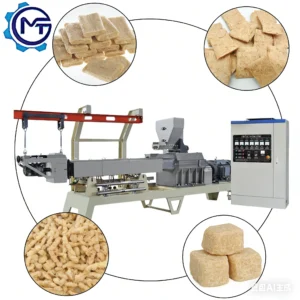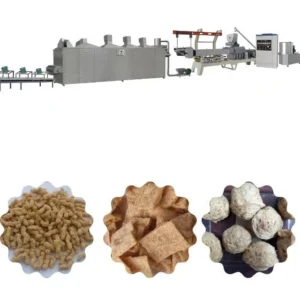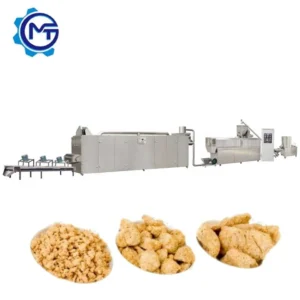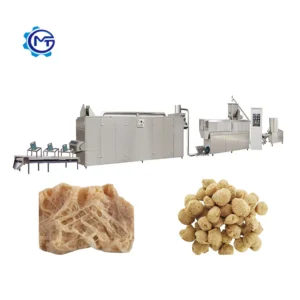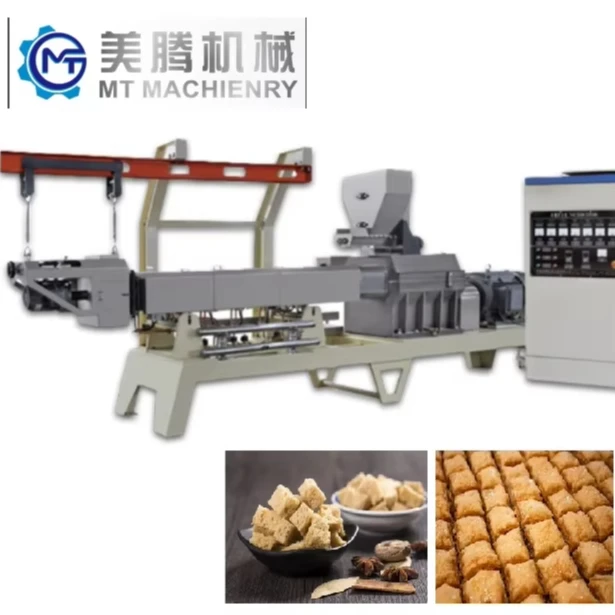
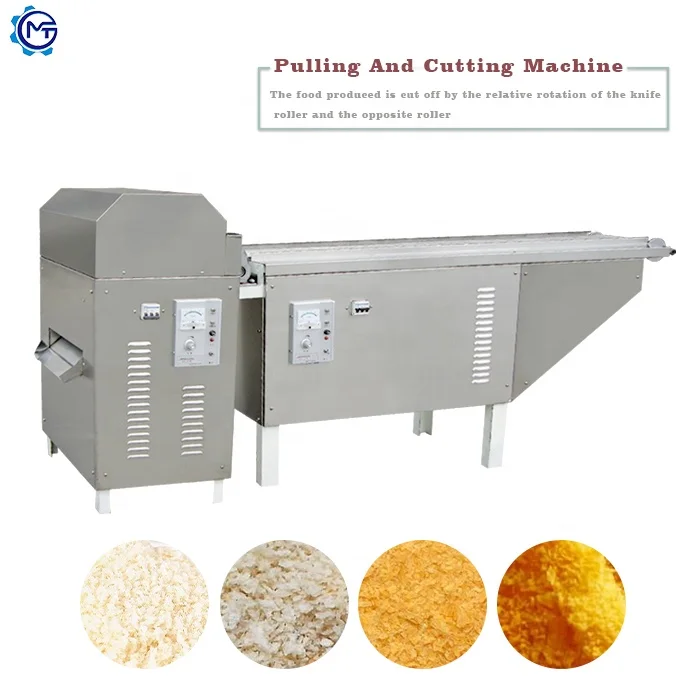



MT65 / MT70 / MT75 / MT85 Twin Screw Extrusion Line for TVP, 84–210 kW installed power, interchangeable die moulds — engineered as a complete turnkey plant based meat production line from batching through extrusion, drying and cooling.
- Screw configuration and die design matched to defatted soya flour or low-temperature soya flakes for consistent texture and density
- Multi-layer dryer with selectable heating source and adjustable drying time to meet target moisture specification
- Mixer, extruder, dryer and cooling stations throughput-balanced under single-supplier accountability to prevent line bottlenecks
- In-house trial run on buyer’s actual raw material before shipment verifies capacity, expansion and product format upfront
Description
Integrated Line Throughput Balancing — Mixer batch size, extruder output, dryer capacity and cooling rate are calculated together so no single station chokes the plant based meat production line turnkey.
Technical Specifications
| Parameter | Value |
|---|---|
| Model | MT65 / MT70 / MT75 / MT85 |
| Product Type | Twin Screw Extrusion Line for Texturized Vegetable Protein (TVP) |
| Screw Type | Twin Screw |
| Installed Power | 84 kW (MT65) / 160 kW (MT70) / 190 kW (MT75) / 210 kW (MT85) |
| Power Consumption | 59 kW (MT65) / 120 kW (MT70) / 140 kW (MT75) / 140 kW (MT85) |
| Output Capacity | 100–150 kg/h (MT65) / 150–200 kg/h (MT70 & MT75) / 250–300 kg/h (MT85) (basis not stated in source) |
| Main Motor Power | 22 kW / 30 kW / 45 kW (varies by model) |
| Screw Length | 1050 mm / 1520 mm (varies by model) |
| Heating Power | 10 kW (MT65) / 14 kW (MT70/MT75) |
| Mixer Capacity | 20–30 kg / 70–80 kg / 170–180 kg per batch |
| Mixer Power | 4 kW / 7.5 kW / 15 kW |
| Dryer Drive | Double pitch roller chain, round-trip drying |
| Dryer Heating Source | Fuel / gas / electricity (selectable) |
| Overall Dimensions (L×W×H) | 40000×1200×2200 mm to 45000×1500×3500 mm |
| Standards | CE, ISO |
Application Suitability
| Application | Material or Output |
|---|---|
| Texturized vegetable protein (TVP / TSP) | Defatted soya flour, low-temperature soya flakes |
| Soya nuggets and soya chunks | High-protein soya meal with controlled moisture |
| Vegetarian meat analogues | Blended plant proteins for retail or food-service formats |
| Fortified cereal and snack bases | Grain-protein blends with adjusted screw and die setup |
Why Nominal Capacity Figures Mislead Buyers on a Plant Based Meat Production Line Turnkey
A line rated at a given throughput on one protein source may deliver far less on a different raw material.
Capacity numbers on twin-screw extruder quotations typically reflect a test run on a standard reference material such as defatted soya flour at a fixed moisture level. When a buyer switches to pea protein isolate, fava bean concentrate, or a blend with added starch, the melt viscosity inside the barrel changes completely. The screw combination that ran smoothly on the reference material may struggle to maintain pressure at the die, causing density drift and a drop in usable output. I recall a plant based meat production line turnkey project where the buyer used a protein blend very different from what we tested with; the output dropped sharply and texture targets were missed until we reconfigured the screw elements on site [NEED_CITE: effect of protein source on extrusion melt viscosity]. This is why verifying capacity on the buyer’s actual raw material in a testing workshop before shipment is the only way to make the quoted number meaningful.
Screw Configuration Matched to Protein Behaviour
Protein sources respond differently to shear and temperature inside the extruder barrel. Soya flour gelatinises and aligns into fibrous strands under a specific screw element sequence, while pea protein requires a different balance of conveying, kneading and reverse-shear elements to develop the same layered texture. On this plant based meat production line turnkey, screw configuration is not taken from a generic catalogue build. Each element arrangement is selected based on the buyer’s protein type, fat content and target fibre structure, then recorded in the configuration document supplied with the machine.
Die Geometry and Fibre Orientation
The die plate determines how the protein melt expands and how fibres align as the product exits the barrel. A single-hole die with a long land length produces dense, meat-like chunks, while a multi-hole die with shorter lands creates lighter nugget structures. Interchangeable moulds on this line allow the same extruder to switch between soya chunks, nuggets and smaller TVP granules without replacing the barrel assembly. Correct die selection directly affects rehydration behaviour downstream, which is critical for food-service buyers who expect consistent bite and water absorption [NEED_CITE: die land length influence on TVP rehydration rate].
Reading the Power and Dimension Data
Main motor power scales from 22 kW on the MT65 to 45 kW on the larger models, reflecting the torque needed to push high-protein dough through restrictive die plates. Screw length varies between 1050 mm and 1520 mm; the longer barrel gives the protein melt more residence time for hydration and fibre alignment, which matters when processing low-temperature soya flakes that need extended conditioning. Installed power figures include heating zones, feeding motors and the rotary cutter, so the power consumption column shows the realistic draw during steady-state running. Overall line length ranges from 40 metres to 45 metres, which sets the minimum workshop length before accounting for raw material staging and finished product packing areas.
The Cost of Mismatched Station Throughput
When the extruder is sized correctly but the dryer is not, product piles up wet at the dryer infeed and moisture levels drift outside specification. Undersized cooling conveyors then pass warm TVP into packing, causing condensation inside bags and shortened shelf life. These bottlenecks are rarely visible on a quotation that lists each machine separately. Buyers discover the problem only after commissioning, when the line cannot sustain the quoted hourly output without product quality falling out of spec [NEED_CITE: throughput balancing in multi-stage food processing lines]. Correcting the mismatch later means replacing or adding dryer sections, which costs more than specifying matched capacity from the start.
Why Procurement Through This Line Works
Every station from the vertical mixer through the twin-screw extruder, multi-layer dryer and cooling conveyor is supplied under one contract, so throughput calculations are performed across the entire chain rather than per machine. Screw and die configurations are documented against the buyer’s specific raw material and target product format, not copied from a generic template. Before shipment, the line runs a trial on the buyer’s actual protein source in an in-house testing workshop, generating a test report that confirms output, texture and density. Electrical schematics, voltage and control language are confirmed to the destination market before production begins, preventing commissioning delays.
Documentation & Verification
- Line layout showing throughput matched across mixer, extruder, dryer and cooler
- Screw and die configuration record tied to your protein source and target format
- Trial run report on your raw material before dispatch
- Electrical schematic with confirmed voltage, frequency and control language
- CE declaration of conformity and ISO certificate
- Wear parts list covering screws, dies and seals
Installation, Commissioning & Support
- Foundation plan reflecting 40–45 metre line length and station load points
- Dedicated power circuit sized to 84–210 kW installed capacity depending on model
- Modular station delivery with on-site assembly and belt alignment
- First-run parameter setting for barrel temperature zones and screw speed
- Operator training on die changeover and screw element replacement
- Spare screw and die elements shipped with initial order for first replacement cycle
What We Need to Configure Your Line
Share the protein source you plan to run — whether defatted soya flour, pea protein or a custom blend — along with target moisture and fibre density in the finished TVP. Confirm your workshop length and ceiling height so the 40–45 metre layout fits without compromise. Provide local voltage, frequency and preferred control language so the electrical cabinet is built to match before it leaves the factory.
Frequently Asked Questions
Q: How is line capacity verified on my specific raw material before shipment?
A: Your actual protein source is shipped to our testing workshop where the extruder runs a production trial using the screw and die combination specified for your product. Output weight, texture density and moisture readings are recorded in a trial report that accompanies the machine, so you know the realistic throughput before the line arrives at your factory.
Q: How do you match throughput between the extruder, dryer and cooling stations?
A: Each station is sized during the layout stage based on the extruder output confirmed in the trial run. The multi-layer dryer belt speed and heating zone length are calculated to remove the required moisture within the residence time available, and the cooling conveyor is matched to bring product temperature down before packing without backlog.
Q: What voltage, frequency and control language options are confirmed before production?
A: We collect your site electrical specification during the quotation stage and confirm voltage, phase, frequency and control panel language in the electrical schematic document. The cabinet is built and tested to those parameters before dispatch so no rewiring or reprogramming is needed on arrival.
Q: Can the same line produce both TVP chunks and snack formats by changing screw and die configuration?
A: Yes. The twin-screw extruder accepts interchangeable die moulds, and the screw element arrangement can be reconfigured between runs. Switching from soya chunks to a cereal snack format requires a documented change in screw elements, die plate and barrel temperature profile, all of which are covered in the operation manual.
Q: What does on-site installation, commissioning and operator training include?
A: An engineer assembles the line on your foundation, connects utilities and runs the first production batch using your raw material. Operators are trained on daily start-up, die changeover, screw inspection and cleaning procedures. A wear parts list and maintenance schedule are handed over so your team can plan consumable replacements independently.
Related products
-
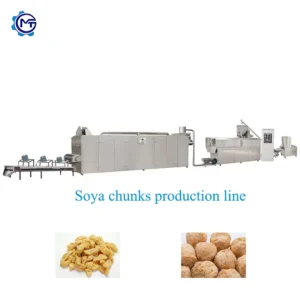
Nueva máquina de proteína de soja en condiciones para la producción de trozos de soja Línea de producción de proteína vegetal texturizada
¥30.00 Select options This product has multiple variants. The options may be chosen on the product page -
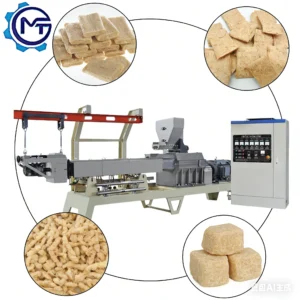
Máquina de Hacer Proteína de Soja Línea de Producción Automática de Trozos de Soja
¥30.00 Select options This product has multiple variants. The options may be chosen on the product page -
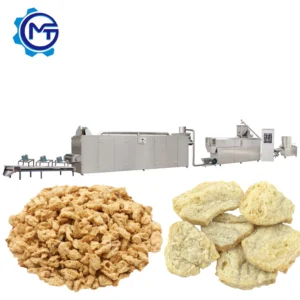
Extrusora de Doble Tornillo para Proteína Vegetal Texturizada (TVP)
¥9,500.00 Select options This product has multiple variants. The options may be chosen on the product page -
Máquina de procesamiento de proteína de soja texturizada con sabor a carne Máquina para hacer carne de soja vegetal
¥8,650.00 Select options This product has multiple variants. The options may be chosen on the product page