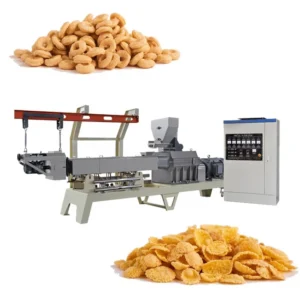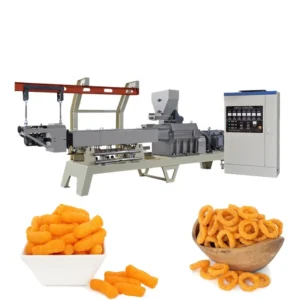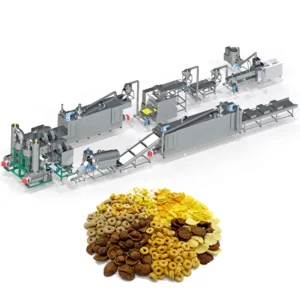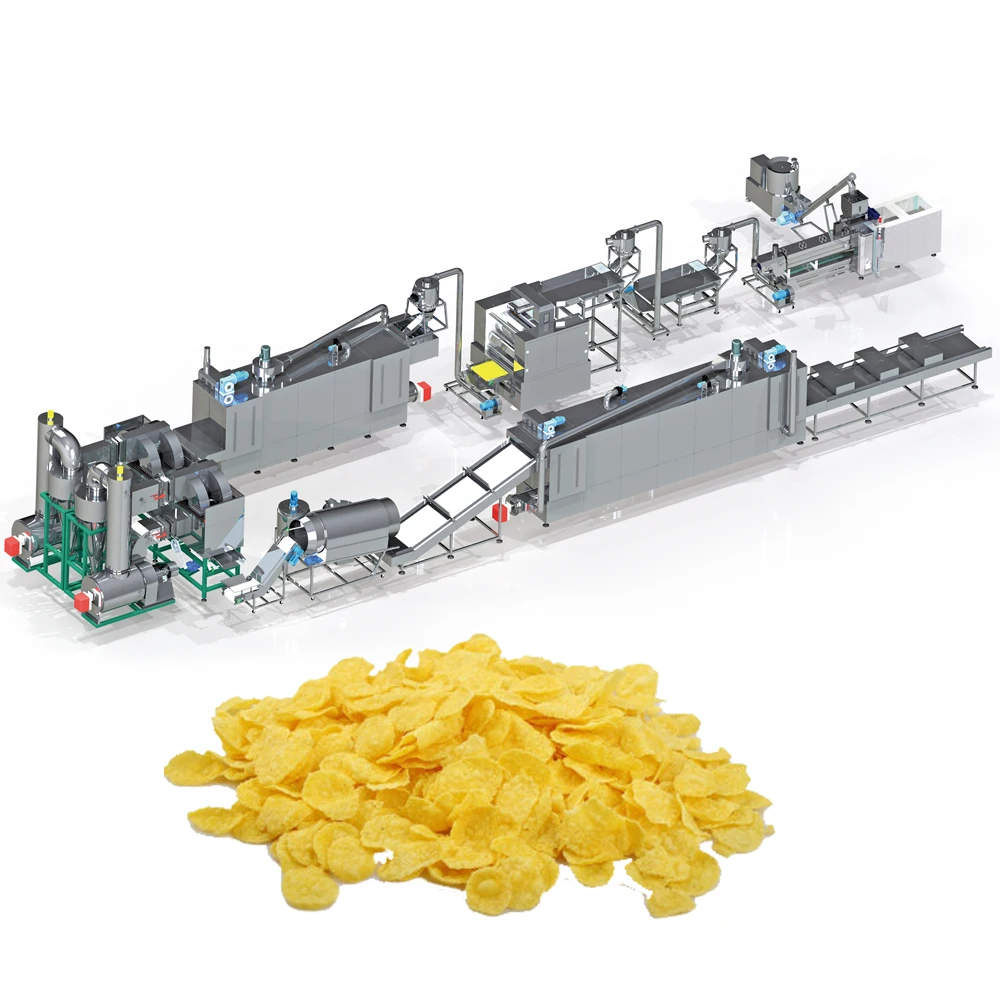
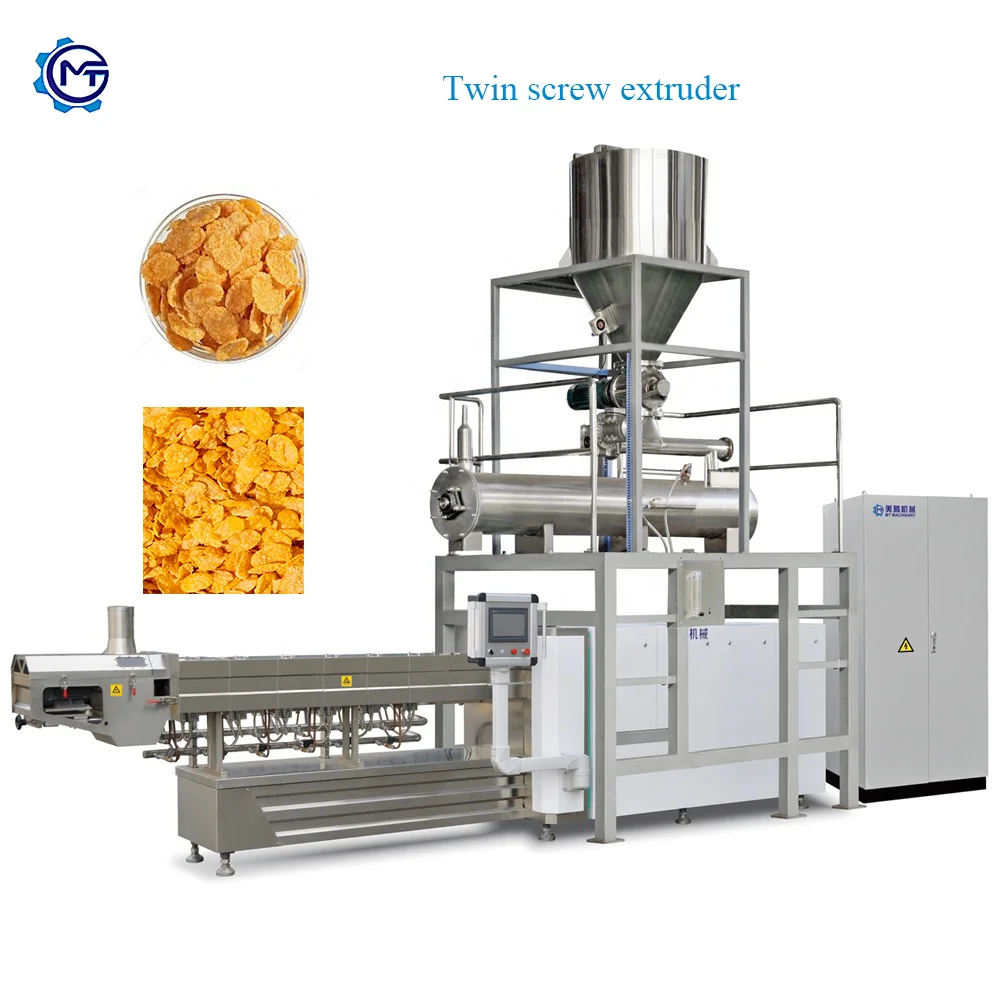
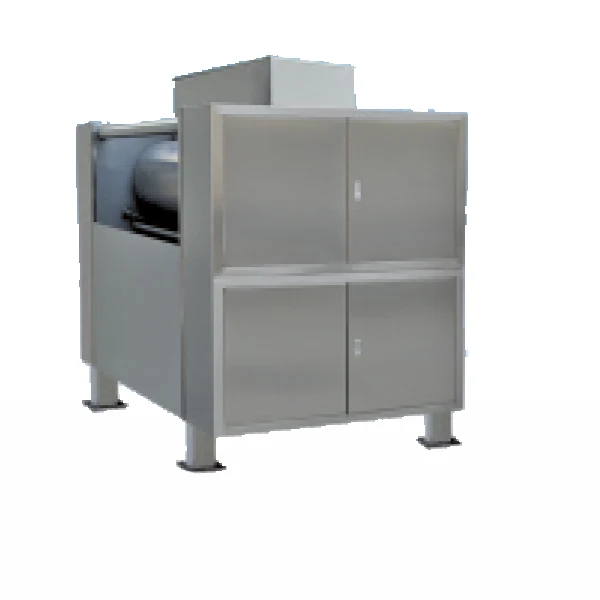
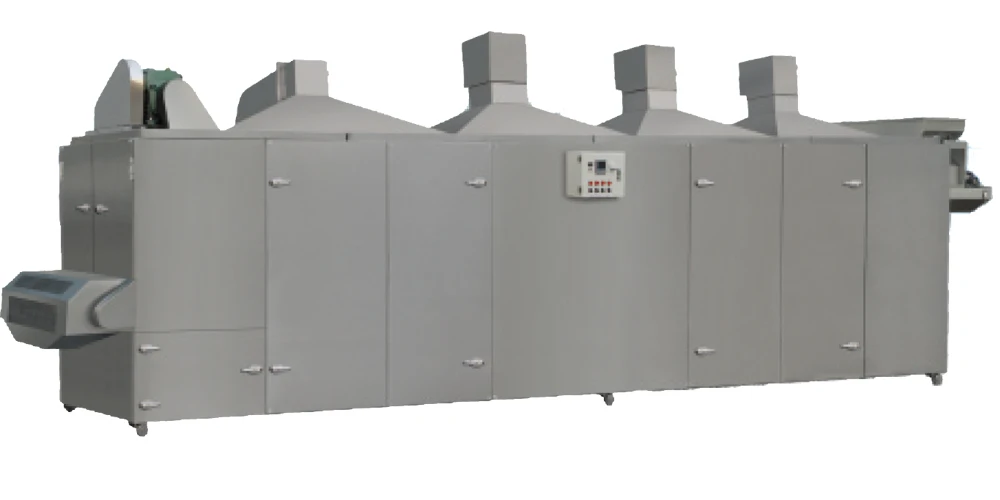
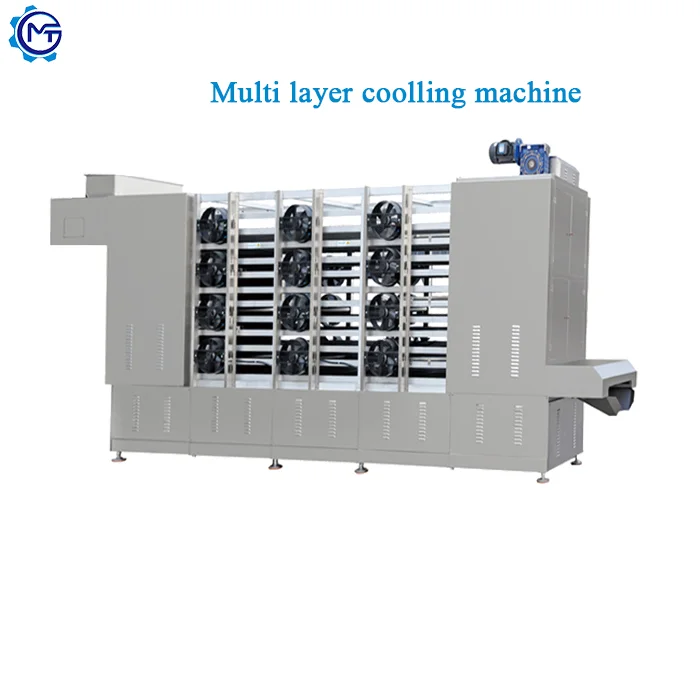

Corn Flakes Production Line, Twin Screw Extruder, Gas Oven, Sugar Coating — capacity-matched from batching through extrusion, flaking rolls, toasting, and final coating under one supplier.
- Co-rotating segmented screws ensure continuous gelatinization with adjustable die and roller gap for precise flake thickness control.
- Dual-side gas baking system and temperature-keeping sugar drum deliver uniform crispness and consistent coating across every batch.
In-house testing workshop runs your exact raw material before shipment, with screw configuration and electrical schematic confirmed to your market voltage and control language requirements.
Description
Capacity-matched turnkey engineering — Every station from batching through sugar coating is sized against the extruder’s real output on your raw material, preventing the flaking or toasting bottlenecks that appear when line components are sourced separately.
Technical Specifications
| Parameter | Value |
|---|---|
| Product Type | Corn Flakes Production Line |
| Extruder Model Options | MT-65 / MT-70 / MT-75 / MT-85 |
| Screw Type | Twin Screw (co-rotating) |
| MT-65 Installed / Real Power | 84 kW / 59 kW |
| MT-65 Output | 120–150 kg/h (basis not stated in source — confirm raw material and moisture content) |
| MT-65 Dimension | 12000 × 1200 × 2200 mm |
| MT-70 Installed / Real Power | 132 kW / 92 kW |
| MT-70 Output | 200–250 kg/h (basis not stated in source — confirm raw material and moisture content) |
| MT-70 Dimension | 23000 × 1500 × 2200 mm |
| MT-75 Installed / Real Power | 186 kW / 140 kW |
| MT-75 Output | 300–400 kg/h (basis not stated in source — confirm raw material and moisture content) |
| MT-75 Dimension | 24000 × 1500 × 2800 mm |
| MT-85 Installed / Real Power | 239 kW / 167 kW |
| MT-85 Output | 400–500 kg/h (basis not stated in source — confirm raw material and moisture content) |
| MT-85 Dimension | 28000 × 1500 × 2800 mm |
| Mixer Capacity / Power | 10–30 kg per load / 4 kW |
| Mixer Tank / Dimension | φ600 × 500 mm / 1000 × 800 × 1200 mm |
| Screw Conveyor Power / Dimension | 0.75 kW / 2700 × 500 × 2400 mm |
| Corn Flakes Press Machine Power | 16.12 kW |
| Press Machine Roller / Dimension | 510 × 310 × 1050 mm / 1550 × 1300 × 2000 mm |
| High-temperature Oven Dimension | 4.5 × 1.4 × 1.8 m |
| Oven Power / Heating | 3.75 kW / Gas, dual-side baking |
| Sugar Spraying System Power | 28.75 kW |
| Sugar Spraying System Dimension | 4000 × 1900 × 1880 mm |
| Sugar Spraying Roller | Ø600 × 2700 mm |
| Control System | Separate Controller Box |
| Line Stations | Mixer, Screw Conveyor, Twin Screw Extruder, Corn Flakes Press Machine, High-temperature Oven, Sugar Spraying System |
| Assembly State | Complete Line |
| Certification | CE |
Application Suitability
| Application | Material or Output |
|---|---|
| Traditional corn flakes breakfast cereal | Corn grits, corn flour |
| Oat flake and multigrain cereal | Oats, rice flour, wheat flour blends |
| Fortified breakfast cereal programs | Grain blends with vitamin-mineral premix |
| Puffed corn snack chips | Corn flour, soya bean, peanut, walnut |
| Sweetened and coated cereal flakes | Sugar-coated corn and oat flakes |
Why Nominal Throughput Rarely Survives Contact with Your Raw Material
A Corn Flakes Production Line turnkey quoted on nameplate capacity will underperform the moment it meets your specific corn grits, moisture level, and local ambient humidity.
I spent four days in a Mexican breakfast cereal plant watching a freshly installed line fail to produce intact flakes. The corn flour particle size from their local mill was completely different from the sample used during factory testing. Gelatinisation inside the barrel was incomplete, the sheet coming off the press rolls crumbled before it reached the oven, and the toasting stage could not compensate. The extruder was running at its rated speed, but everything downstream was choking on off-spec material [NEED_CITE: raw material variability in grain processing across Latin American markets]. That is the gap between a machine spec sheet and a working production floor. A Corn Flakes Production Line turnkey must be validated on the buyer’s actual supply chain, not a generic benchmark.
Matching the Barrel Profile to Grain Particle Size
The co-rotating twin-screw extruder in this line handles continuous gelatinisation and forming of corn-based and oat-based doughs. Segmented screw elements are arranged to control residence time and shear profile inside the barrel, which directly determines how thoroughly starch granules absorb water and swell before reaching the die. When particle size or moisture deviates from the original test sample, the screw combination must be reconfigured — something that only becomes apparent during a trial run on the actual raw material rather than during generic factory acceptance.
Where Flaking, Toasting, and Coating Capacity Break Away from Extruder Output
The corn flakes press machine uses adjustable roller gaps to set flake thickness, with an integrated cooling circuit that manages sticky dough on the roller surface. Downstream, the high-temperature gas oven applies heat from both sides simultaneously, which is necessary to achieve even crisping across the full belt width without scorching the edges. The sugar spraying system maintains coating temperature through a dedicated melting tank and a heated roller approximately 600 mm in diameter. If the oven belt speed or the coating drum volume is sized for a nominal extruder output rather than the real throughput achievable on a specific grain formulation, material piles up at the press or cools prematurely before entering the sugar drum [NEED_CITE: throughput balancing in multi-stage cereal processing lines].
Reading the Specs That Actually Determine Flake Quality
Installed power versus real power tells a more useful story than nameplate capacity. The MT-75, for example, lists 186 kW installed against 140 kW real draw — that gap represents motor headroom for startup surges and for running higher-moisture formulations that demand more torque from the twin screws. The press machine’s 16.12 kW drive must maintain constant roller pressure across a 510 × 310 × 1050 mm roller set; any inconsistency here produces uneven flake density that the oven cannot correct later. Gas heating in the 4.5-meter oven with dual-side baking allows temperature zoning, so operators can set a higher inlet zone for rapid moisture removal and a gentler exit zone for colour development. The separate controller box manages these zones independently, giving process engineers the ability to adjust toasting profiles for different cereal formulations.
What Happens When Line Stations Are Sourced Separately
When a buyer assembles the extruder, flaking rolls, oven, and coating drum from different vendors, each supplier sizes their equipment to its own nameplate standard rather than to the real throughput of the upstream station. The result is a press machine that cannot keep pace with the extruder, an oven belt that runs half-empty, or a sugar drum that overflows because the coating system was rated for a higher capacity than the actual flake flow. These mismatches surface only after installation, when re-engineering the line layout costs far more than integrated planning would have [NEED_CITE: turnkey versus fragmented equipment sourcing risks in food processing].
Why Procurement Here Reduces Commissioning Risk
Capacity calculations are built around your raw material sample, not a generic flour specification. The in-house testing workshop runs your corn grits, oat blend, or multigrain formulation through the extruder and press before shipment, producing a trial report that documents achievable throughput and flake density. Screw configuration and die design are recorded against your specific material, so replacements can be reordered without re-development. Electrical schematics confirm voltage, frequency, and control language for your facility before production begins, avoiding the commissioning delays that arise when a 60 Hz market receives 50 Hz wiring. Pre-sales consultation continues through on-site installation, operator training, and ongoing wear parts supply.
Documentation & Verification
- Line layout and capacity calculation matched to your corn or oat raw material
- Screw and die configuration record specific to your target flake density and thickness
- Trial run report on your raw material conducted in the testing workshop before dispatch
- Electrical schematic with voltage, frequency, and control language confirmed for your market
- CE declaration of conformity and ISO certificate included with shipment
- Wear parts list covering screws, dies, and press roller sleeves with reorder codes
Installation, Commissioning & Support
- Floor space planning based on selected extruder dimension up to 28000 × 1500 × 2800 mm for the MT-85
- Dedicated electrical circuit sized to the installed power of the chosen model, up to 239 kW
- Gas supply connection and ventilation planning for the dual-side high-temperature oven at 3.75 kW fan power
- Roller gap calibration and cooling circuit commissioning on the press machine before production runs
- Operator training on screw configuration changes for different grain formulations and moisture levels
- Wear parts stock covering twin-screw segments, die plates, and press roller sleeves for the first replacement cycle
What We Need to Size Your Line Correctly
Provide the specific grain type, particle size distribution, and typical moisture content from your local mill so we can configure the screw profile and validate throughput in the testing workshop. Share your facility voltage, frequency, and preferred control language to ensure the electrical package matches your site before the line ships. Include your workshop dimensions and ceiling height so the layout accounts for the full line length and the oven ventilation requirements.
Frequently Asked Questions
Q: How is line output verified on our actual raw material before shipment?
A: Your corn grits, oat blend, or multigrain sample is shipped to the testing workshop, where the twin-screw extruder and press machine run a full trial. The resulting report documents real throughput, flake density, and moisture at each station, forming the basis for final line configuration.
Q: How is throughput matched between the extruder, flaking rolls, and oven?
A: Each downstream station is sized against the extruder’s verified output on your raw material rather than its nameplate rating. The press roller speed, oven belt width, and sugar drum volume are calculated together to prevent material backlog or idle capacity at any point.
Q: What voltage and control options are confirmed before production?
A: Electrical schematics are prepared with your facility’s voltage, frequency, and phase confirmed in writing. The separate controller box is configured with the operator language you specify, and all motor ratings are matched to the local power standard before the line enters assembly.
Q: How are screw and die designs selected for corn versus oat formulations?
A: Co-rotating twin-screw segments are arranged to control shear and residence time based on the starch behaviour of your specific grain. Corn flour requires a different gelatinisation profile from oat or wheat blends, so the screw combination and die geometry are documented for your formulation and can be replicated for future production runs.
Q: What spare wear parts are supplied with the first shipment?
A: The initial spare package covers twin-screw segments, die plates, and press roller sleeves — the components that experience the highest wear during corn flake and oat flake production. A wear parts list with reorder codes is included so replacements can be sourced without line downtime.
Related products
-
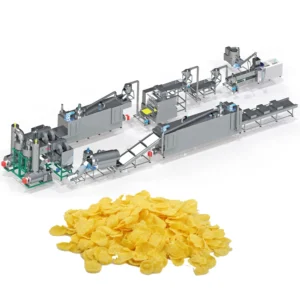
Nueva Máquina Automática de Fabricación de Copos de Maíz Línea de Procesamiento de Extrusión de Snacks de Avena y Chips
¥30.00 Select options This product has multiple variants. The options may be chosen on the product page -
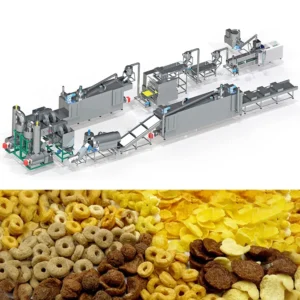
Máquina automática para la fabricación de cereales de desayuno instantáneos y alimentos para bocadillos
¥10,000.00 Select options This product has multiple variants. The options may be chosen on the product page -
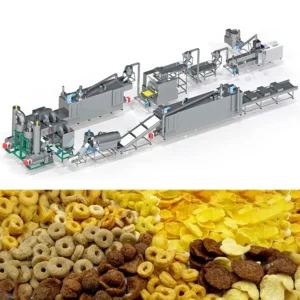
Línea de producción de cereales para el desayuno Corn Flakes Máquina automática
¥8,000.00 Select options This product has multiple variants. The options may be chosen on the product page -
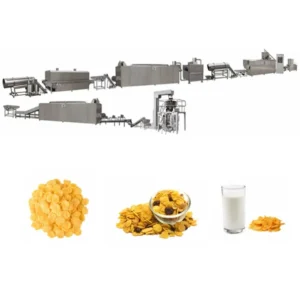
Cereales Copos de Maíz con Azúcar Máquina de Extrusión de Copos de Maíz Línea de Producción de Cereal para Desayuno
¥23,000.00 Select options This product has multiple variants. The options may be chosen on the product page