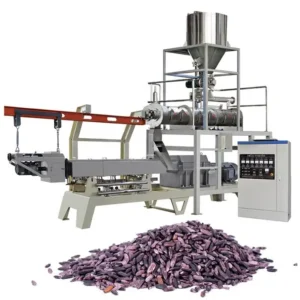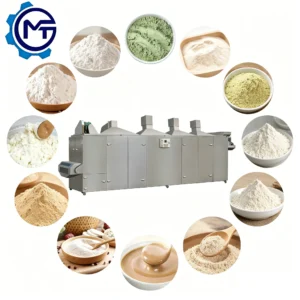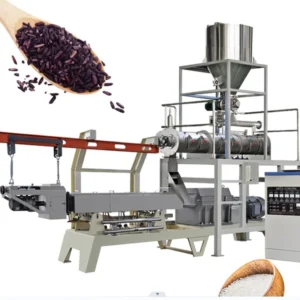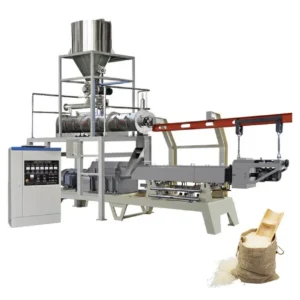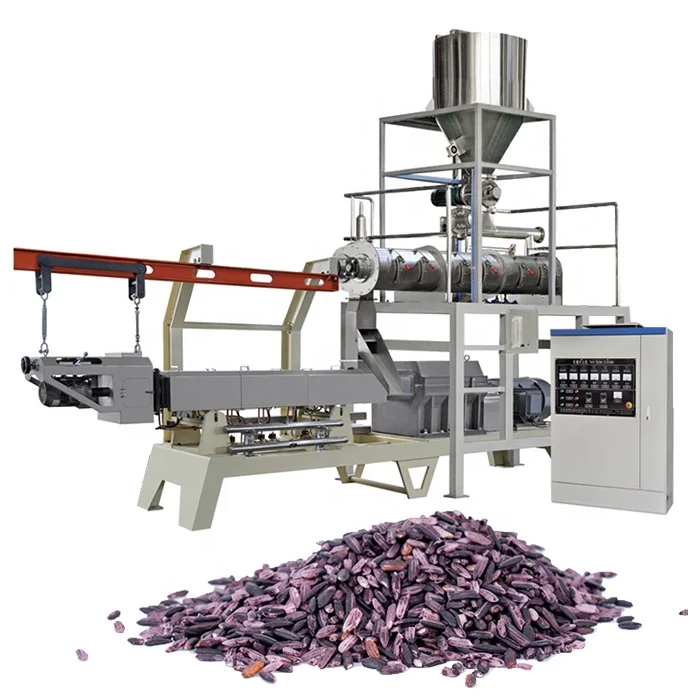
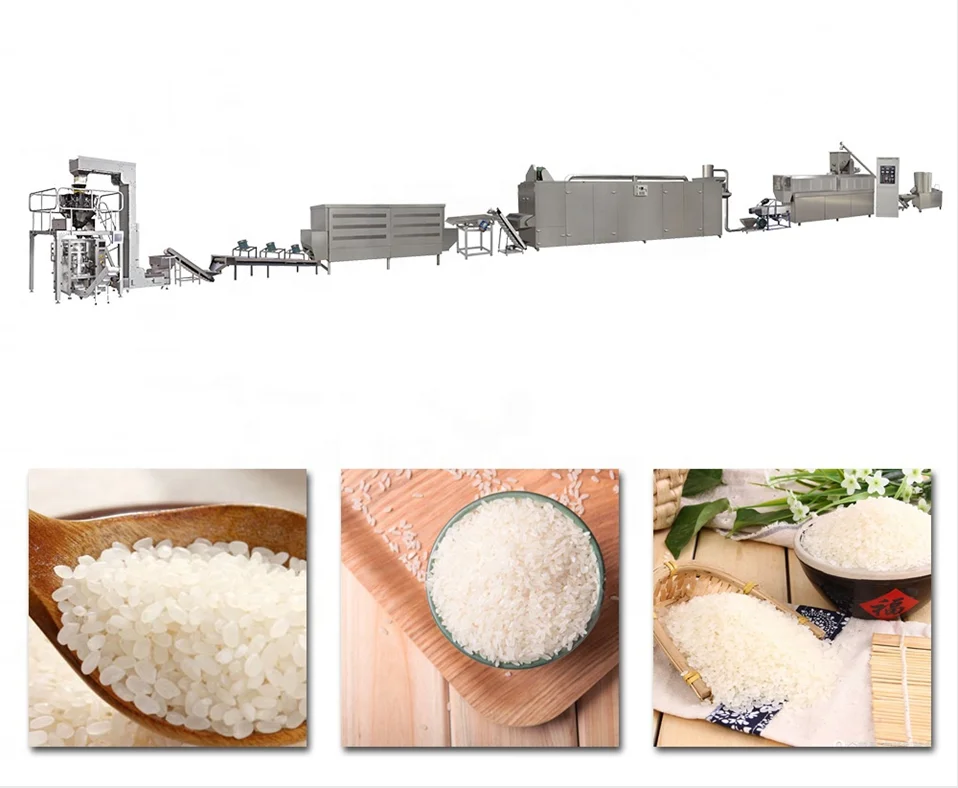
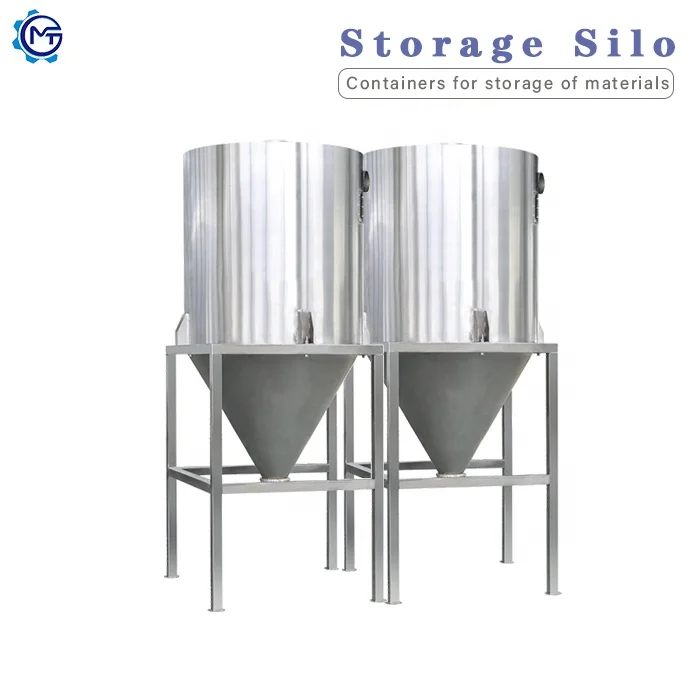
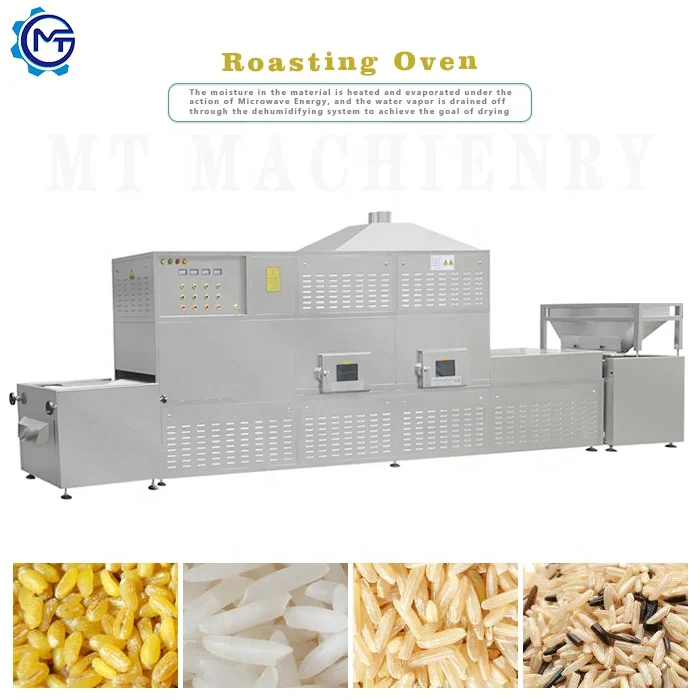
Fortified Rice Production Line, 100kW, PLC Control, Food-Grade Stainless Steel — engineered as a complete turnkey system from batching through extrusion to packing, with throughput matched across every station. Twin-screw extrusion features screw configuration and die design specified to your raw material formula and target grain shape, ensuring consistent density and nutritional profile. In-house trial runs on your actual formulation verify real output before shipment, supported by full layout documentation and ongoing wear parts supply.
- CE certified with electrical schematics confirmed to your market’s voltage and frequency
- Trial run report, screw configuration record, and operation manual included
- On-site installation, commissioning, and operator training available
Description
Throughput Matching — every station from batching to packing is engineered as one coordinated system, preventing the bottlenecks that occur when extruders, dryers, and coolers are sourced separately.
Technical Specifications
| Parameter | Value |
|---|---|
| Product Type | Fortified Rice Production Line |
| Rated Power | 100 kW |
| Output Capacity | 100–500 kg/hr (basis not stated in source — confirm raw material composition, moisture content and target grain size) |
| Voltage & Frequency | 380V / 50Hz (configurable to local grid standards) |
| Construction Material | Food-grade stainless steel |
| Control System | Available with PLC or MCC control |
| Certification | CE |
| Assembly State | Complete production line |
Application Suitability
| Application | Material or Output |
|---|---|
| Fortified rice manufacturing | Rice flour blended with micronutrient premix, vitamins and minerals |
| Artificial rice production | Broken rice, corn flour, or composite grain flours reshaped into rice-shaped kernels |
| Nutrition programme supply | Grain-based formulations meeting government or NGO micronutrient specifications |
| Instant rice processing | Pre-gelatinised starch bases requiring controlled expansion and quick-cook properties |
Why "Nominal Capacity" Fails on Real Fortified Rice Formulations
The rated output means nothing if the extruder was never tested on your actual flour blend.
I once watched a client in Colombia run three tons of local rice flour through a newly installed line, only to see throughput stall at roughly half the quoted number. Their flour had a different starch-to-amylose ratio than the test material, and the screw profile could not generate enough shear to gelatinise it at the rated feed speed. Situations like this appear more often than buyers expect when they accept a line configured on generic assumptions [NEED_CITE: variability in starch composition across regional rice cultivars]. The fortified rice production line turnkey should be validated against the buyer’s own raw material before any commitment to delivery schedules.
Matching Every Station to Prevent Line Chokepoints
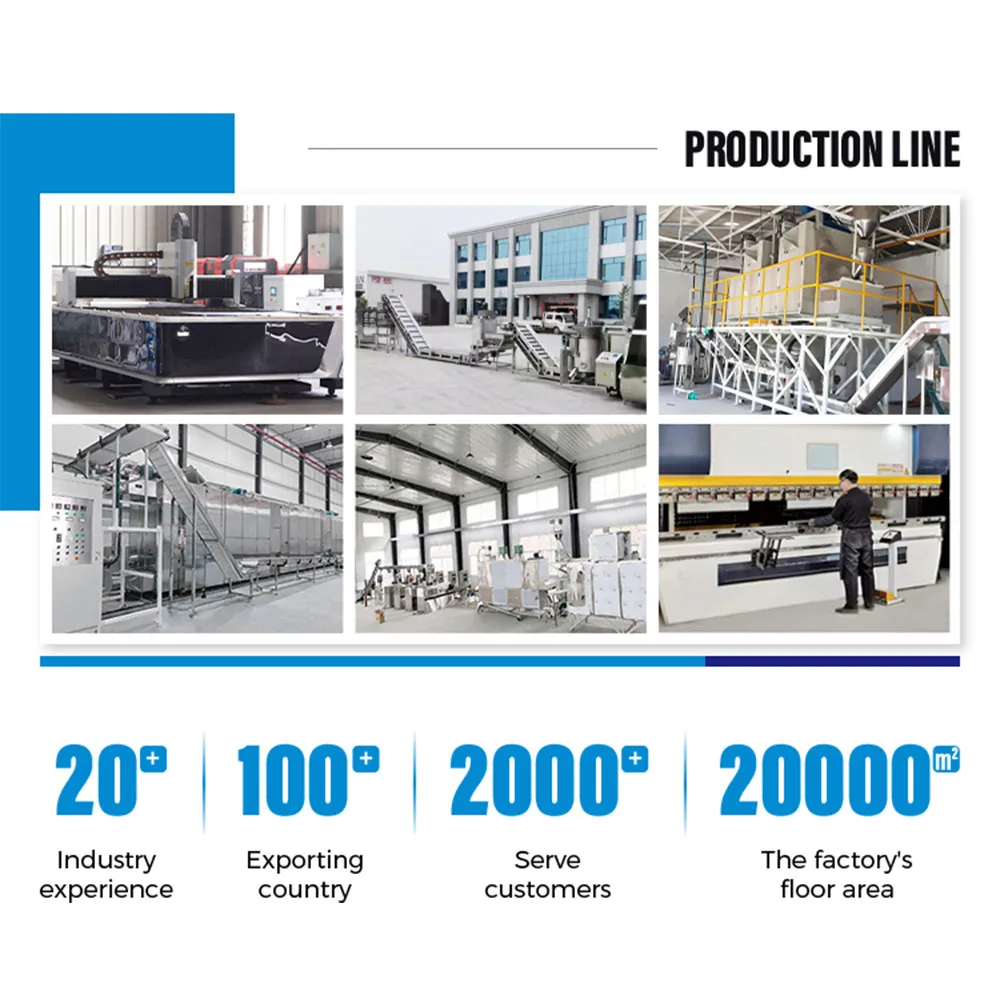
A complete fortified rice production line turnkey is only as fast as its slowest station. When the extruder pushes material faster than the dryer can reduce moisture to safe storage levels, the downstream conveyor backs up and product quality drops. Our line configurations balance extruder throughput, dryer residence time, and cooling conveyor speed so that each stage hands off to the next without accumulation or starvation. This coordination is calculated during layout design and confirmed during trial runs, not guessed from catalogue ratings.
Screw Profile and Die Geometry for Grain-Based Formulations
Fortified rice demands precise control over expansion and kernel density. The screw configuration determines how much mechanical shear the dough receives, which in turn governs starch gelatinisation and the final texture of the extruded kernel. Die geometry sets the cross-section shape — whether the output mimics long-grain, short-grain, or a custom profile. On this fortified rice production line turnkey, screw elements and die plates are selected after reviewing the buyer’s flour composition, target moisture at the die face, and the shape the end market expects [NEED_CITE: relationship between screw L/D ratio and residence time in food extrusion].
Reading the Specs That Actually Matter
The 100 kW rated power tells you the main extruder motor has enough torque to handle viscous, high-starch doughs typical of fortified rice blends, but power alone does not guarantee throughput — screw speed and feed rate must be matched to it. The food-grade stainless steel construction ensures contact surfaces resist corrosion from acidic vitamin premixes and meet hygiene standards required in food processing. Voltage at 380V / 50Hz is standard for many markets, but Latin American and some Southeast Asian grids run on different frequencies; confirming voltage and frequency before production avoids commissioning delays. The PLC control system maintains batch-to-batch consistency by holding barrel temperature zones, screw speed, and feed rate within set tolerances, reducing the operator variance that causes density fluctuations in the finished kernels.
The Cost of Skipping a Trial Run
When a line ships without a trial run on the buyer’s own raw material, the first production attempt becomes the experiment. Material waste, unplanned screw swaps, and die re-cutting add up quickly — not just in flour and premix costs, but in delayed market entry and eroded buyer confidence. I have seen projects lose weeks because the local voltage was never confirmed and the control cabinet had to be rewired on site [NEED_CITE: electrical standards and voltage variations in industrial export markets]. These are avoidable costs that surface only when the project is treated as a catalogue purchase rather than a coordinated line build.
Why Buyers Choose This Line Configuration
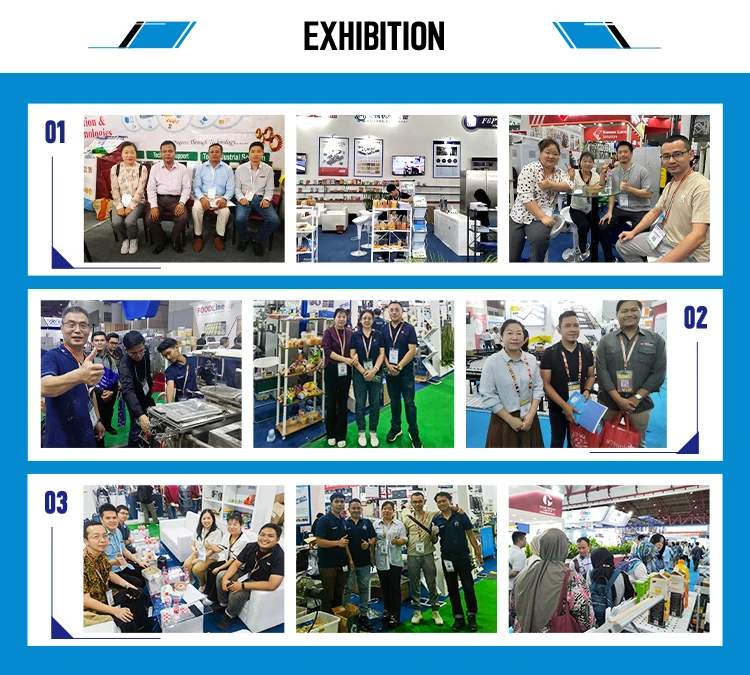
Every station — mixer, extruder, dryer, cooler, packing — is sourced and balanced under one supplier, so throughput calculations carry through the entire line instead of breaking at station boundaries. Screw and die sets are specified to the buyer’s flour blend and target kernel shape, not copied from a generic template. The in-house testing workshop runs the buyer’s actual raw material before the line ships, producing a documented trial report rather than a promise. Electrical schematics are confirmed against the target country’s grid before the control cabinet is wired. Wear parts — screws, die plates, seals — are listed and shipped with the initial order so the first replacement cycle does not halt production.
Documentation & Verification
- Line layout drawing showing throughput balance from batching hopper through packing station
- Trial run report generated on your fortified rice flour blend before dispatch
- Screw element and die configuration record matched to your formulation
- Electrical schematic with voltage, frequency, and control language confirmed for your market
- Factory acceptance test record covering extruder, dryer, and cooling conveyor
- CE declaration of conformity and ISO certificate for the complete line
Installation, Commissioning & Support
- Foundation plan specifying load points for the 100 kW extruder and dryer assembly
- Dedicated power circuit sizing based on confirmed voltage and frequency
- Modular station delivery allowing phased assembly in limited-ceiling workshops
- First-run parameter logging to establish baseline screw speed, barrel temperatures, and feed rate
- Operator training covering PLC setpoints, die changeover, and emergency shutdown sequence
- Initial spare set of screw elements, die plates, and barrel liners included with shipment
- Scheduled maintenance intervals for gearbox oil, barrel wear inspection, and heater element checks
What to Share Before Requesting a Quote
Provide your fortified rice flour composition — base grain type, starch content, and the micronutrient premix ratio — along with the target kernel shape and daily output goal. Share your workshop dimensions and ceiling height so we can draft a layout that fits. Confirm the local voltage and frequency at the installation site, and specify the preferred control language for the PLC interface.
Frequently Asked Questions
Q: How is output capacity verified on the buyer’s actual fortified rice raw material formulation?
A: The buyer ships a representative sample of their flour blend to the in-house testing workshop. We run the material through the configured extruder and document throughput, expansion ratio, and kernel integrity in a trial report. This report becomes part of the shipment documentation, so the buyer knows the verified capacity before the line leaves the factory.
Q: How are extruder, dryer, and packing stations balanced to prevent line bottlenecks?
A: During layout design, we calculate the mass flow at each station based on the buyer’s formulation and target moisture reduction. Dryer belt length, airflow volume, and cooling conveyor speed are then sized so no station accumulates or starves material. The balanced throughput figures are recorded in the line layout document provided before production begins.
Q: What trial runs are conducted before shipment and how are results documented?
A: The testing workshop runs the buyer’s raw material on the configured extruder, recording screw speed, barrel zone temperatures, die pressure, and output rate. The finished kernels are measured for shape, density, and moisture content. All data is compiled into a trial run report that accompanies the shipping documents.
Q: How is voltage, frequency, and control language confirmed for the target installation country?
A: Before the control cabinet is wired, the buyer confirms local grid specifications and preferred HMI language. We then produce an electrical schematic reflecting those values and share it for approval. This step prevents on-site rewiring and commissioning delays once the line arrives.
Q: What spare wear parts such as screws and dies are supplied with the initial shipment?
A: A wear parts list is included in the quotation, typically covering one full replacement set of screw elements, die plates, and barrel liners. This ensures the buyer can schedule the first maintenance changeover without waiting for international shipping on small components.
Related products
-
Línea de producción de polvo de reemplazo de comida para bebés segura, saludable y nutritiva en condiciones nuevas de alta productividad.
¥30.00 Select options This product has multiple variants. The options may be chosen on the product page -
Máquina extrusora automática de alimentos para bebés controlada por PLC de 500 kg/h para el procesamiento de cereales de arroz
¥9,500.00 Add to cart -
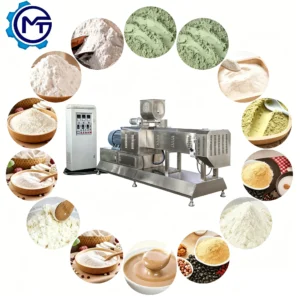
Línea de producción de alimentos para bebés en polvo de nutrición fortificada totalmente automática
¥8,238.27 Select options This product has multiple variants. The options may be chosen on the product page -
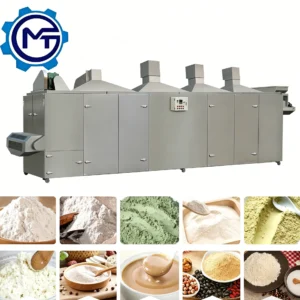
Línea de producción de extrusión de polvo de nutrición de arroz orgánico para bebés de la marca MT, aprobada por CE, con capacidad de 500 kg/h y grado automático.
¥9,500.00 Add to cart