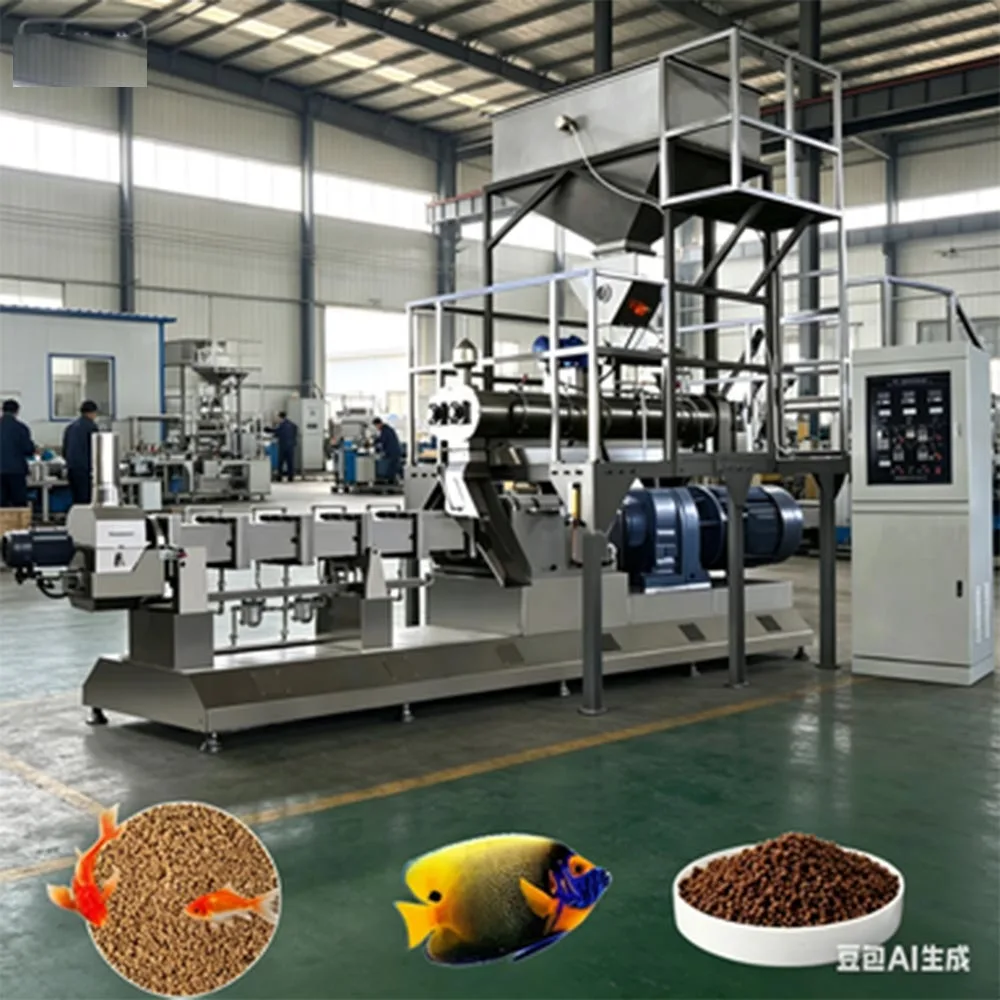


Twin Screw Extrusion Aquatic Pellet Fish Feed Production Line, 0.5–12 mm pellet range, stainless steel contact parts — engineered as a complete turnkey layout where every station from feeding through extruding to pelletizing is throughput-matched to eliminate bottlenecks. Twin-screw configuration and die design are specified to your raw material formulation and target pellet density, whether floating or sinking.
- In-house trial run on your actual raw material before shipment, with screw and die configuration record provided
- Line layout and capacity calculation document confirming matched throughput at every station
- On-site installation, commissioning and operator training included with ongoing wear parts support
Description
Engineering Throughput Alignment — Every station from feeding to pelletizing is calculated against your actual aquatic feed formulation, so the line runs at the verified rate rather than the brochure number.
Technical Specifications
| Parameter | Value |
|---|---|
| Product Type | Aquatic Feed Production Line |
| Output Capacity | 500 kg/h (basis not stated in source — confirm raw material composition / moisture content / pellet diameter) |
| Pellet Size Range | 0.5 mm – 12 mm |
| Extruder Type | Twin-screw |
| Control System | Simple control panel (PLC / MCC available on request) |
| Structure Material | Stainless steel on main contact parts |
| Automation Level | Fully automatic, continuous operation |
| Line Stations | Feeding, mixing, extruding, pelletizing |
| Rated Power | To be confirmed based on line configuration |
| Voltage & Frequency | Configurable per destination market |
| Screw Configuration | Matched to raw material and target pellet density |
| Dryer / Cooling / Coating / Packing | Available as integrated downstream stations |
Application Suitability
| Application | Material or Output |
|---|---|
| Floating fish feed for pond aquaculture | Corn flour, soybean meal, fish meal, rice bran with starch gelatinisation for buoyancy control |
| Sinking pellet for bottom-feeding species | High-protein formulations with reduced expansion, targeting catfish and shrimp |
| Juvenile and fry feed production | Fine-grind raw materials compressed through small-diameter dies down to 0.5 mm |
| Grow-out pellet for tilapia and carp | Standard grain-protein blends extruded at 4–8 mm diameter for open-cage and pond systems |
What a Nominal "500 kg/h" Actually Means on Your Raw Material
Capacity is only real when tested against your specific formulation, moisture content, and target pellet density.
I watched a tilapia feed plant in Southeast Asia shut down for two weeks because their extruder was rated at a capacity measured on pure corn starch, but their actual formula ran forty percent fish meal with high fat content. The material slipped through the barrel without building enough pressure, and throughput dropped to nearly half the quoted figure. Buyers who purchase an aquatic feed production line turnkey based on the nameplate number alone face the same risk. The twin-screw extrusion system on this line is configured after reviewing your ingredient list and running a trial on your actual blend before shipment, so the capacity figure you see is the one you will get on your factory floor [NEED_CITE: standard practice for extrusion line capacity verification].
Throughput Matching Across Every Station
The core engineering challenge on any aquatic feed production line turnkey project is keeping every station running at the same rhythm. A twin-screw extruder pushing out a steady volume of hot, moist pellets means nothing if the downstream dryer cannot remove enough moisture before the pellets reach the cooler. We calculate the moisture extraction load based on your recipe’s starting water content and target shelf-stable moisture level, then size the dryer bed area and airflow accordingly. This prevents the backlog that causes pellet deformation and surface cracking.
Screw Geometry Dictates Pellet Behaviour
Whether you need a pellet that floats for surface-feeding tilapia or sinks for bottom-dwelling catfish depends largely on the screw configuration and die geometry. Forward-pitch screw elements generate higher shear and starch gelatinisation, trapping air cells inside the pellet for buoyancy. Reverse-pitch elements and restricted die openings produce denser, slower-expanding pellets that sink. On this line, the screw arrangement and die plate are specified after the trial run confirms your raw material responds correctly to the selected geometry. This is where the aquatic feed production line turnkey concept earns its name — the configuration is not copied from a generic template [NEED_CITE: twin-screw extrusion principles for aquatic feed density control].
Reading the Specification Sheet Correctly
The pellet size range of 0.5 mm to 12 mm covers everything from fry feed to large grow-out pellets, but the actual die change procedure and throughput at each diameter vary significantly. Small-diameter dies create higher back-pressure, which reduces output volume compared to the maximum figure quoted at larger diameters. Stainless steel contact parts resist corrosion from high-moisture, high-salt aquatic formulations — a material choice that directly affects die life and pellet surface quality. The simple control panel manages barrel temperature zones and screw speed; buyers requiring batch-to-batch recipe storage or remote monitoring can specify PLC or MCC control instead. Fully automatic continuous operation means the feeding and mixing stations meter material without manual batching, but the operator still needs training on moisture adjustment and die changeover.
The Hidden Cost of a Mismatched Line
When the extruder and downstream stations are sourced from different suppliers, nobody takes responsibility for the throughput gap. Pellets exit the die hot and tacky; if the conveyor is too slow or the cooler undersized, they stick together in clumps that must be broken apart by hand or discarded entirely. I have visited plants where this mismatch cost them nearly half their daily output in wasted material and downtime. Every connection point — extruder discharge to conveyor, conveyor to dryer, dryer to cooler, cooler to coating drum — must be specified as a single engineered system [NEED_CITE: material handling requirements for freshly extruded aquatic pellets].
Why Procure the Complete Line from One Source
This aquatic feed production line turnkey package keeps every station under one engineering responsibility, so throughput is calculated end-to-end rather than pieced together from separate vendor quotes. The in-house testing workshop runs your raw material through the configured extruder and downstream stations before the line ships, producing a trial run report that confirms pellet density, floating rate, and output on your actual formula. Screw and die configuration records are documented and handed over so replacement wear parts match the original specification exactly. Electrical schematics are prepared with your destination voltage and frequency confirmed before production starts, not after the machine arrives and the motor will not start. Pre-sales consultation through on-site installation, commissioning, and operator training are included as part of the project scope rather than billed as afterthoughts.
Documentation & Verification
- Line layout drawing showing station spacing and utility connection points for your facility
- Capacity calculation sheet verified against your raw material composition and target pellet size
- Screw element arrangement and die plate configuration record matched to floating or sinking specification
- Trial run report documenting throughput, pellet density, and moisture content on your formulation before dispatch
- Electrical schematic with confirmed voltage, frequency, and control language for the destination market
- Wear parts list with screw segments, die plates, and barrel liners identified by part number for reorder
Installation, Commissioning & Support
- Foundation pad and floor load requirements calculated based on the line’s total footprint and operating weight
- Dedicated electrical circuit specification matched to the confirmed motor power and voltage for each station
- Modular station design allowing phased delivery and staged installation to match your construction schedule
- First-run parameter setting including barrel temperature profile, screw speed, and moisture injection calibrated to your formula
- Operator training covering die changeover procedures across the 0.5 mm to 12 mm pellet range
- Wear parts inventory recommendation based on screw and barrel life observed during the factory trial run
What to Prepare Before Your Inquiry
To configure the aquatic feed production line turnkey system correctly, we need your target species and whether you produce floating, sinking, or slow-sinking pellets. Provide your raw material list with approximate ratios and moisture content, plus your intended daily output in tons. Share your available workshop dimensions, ceiling height, and the local voltage and frequency standard so the electrical package matches your grid from day one.
Frequently Asked Questions
Q: How is the 500 kg/h output capacity verified, and on which raw material formulation?
A: The capacity figure is confirmed through a trial run using your actual raw material blend in our testing workshop before shipment. Different formulations — especially those with high fish meal or fat content — affect extrusion pressure and throughput differently than a starch-only test, so we document the verified output on your specific recipe.
Q: What screw and die configuration is specified for floating versus sinking pellet targets?
A: Floating pellets require screw elements that maximise shear and starch gelatinisation to trap air cells, paired with dies that allow controlled expansion. Sinking pellets use a different screw arrangement that reduces expansion and increases density. Both configurations are tested on your formula during the factory trial before the line ships.
Q: How are upstream and downstream station capacities matched to prevent line bottlenecks?
A: Each station — feeder, mixer, extruder, dryer, cooler, and coating drum — is sized based on the extruder’s verified throughput and your formulation’s moisture content. The dryer bed area and airflow are calculated to handle the water removal load so pellets reach the cooler at the correct moisture without queuing on the conveyor.
Q: What is included in on-site installation, commissioning, and operator training?
A: Our engineers oversee mechanical assembly, electrical connection, and first-run parameter adjustment on your floor. Operators are trained on barrel temperature management, die changeover across the pellet size range, and routine screw and barrel inspection so the line maintains its verified output from the first production shift onward.
Q: Which spare wear parts are supplied, and what is the reorder lead time?
A: The initial shipment includes a wear parts kit with screw segments, die plates, and barrel liners matched to your configuration. Reorder part numbers are listed in the documentation package, and typical multi-week lead times apply depending on the screw element profile and die diameter you require.
Related products
-
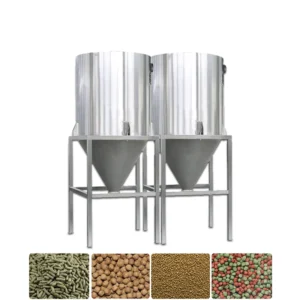
Línea de producción de alimentos para mascotas en stock / Máquina de extrusión de alimentos para perros y gatos
¥9,500.00 Select options This product has multiple variants. The options may be chosen on the product page -
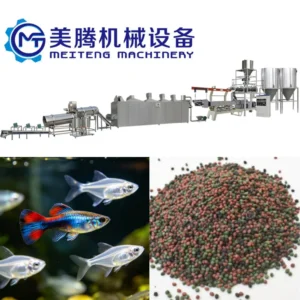
Línea de procesamiento de alimento para peces multi-especies con capacidad de 200-300kg/h para producir alimento para peces
¥34,000.00 Select options This product has multiple variants. The options may be chosen on the product page -
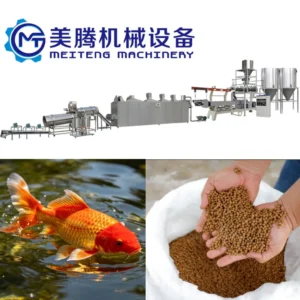
Línea de procesamiento de alimento para peces multi-especies de alta capacidad de 1.0-1.5t/h para producir alimento para peces
¥45,000.00 Select options This product has multiple variants. The options may be chosen on the product page -
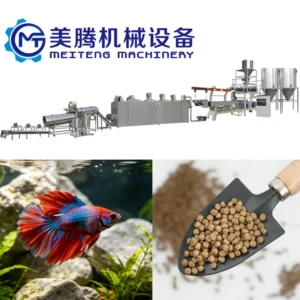
Línea de procesamiento de alimento para peces multi-especies de alta capacidad de 1.0-1.2t/h para producir alimento para peces
¥45,000.00 Select options This product has multiple variants. The options may be chosen on the product page