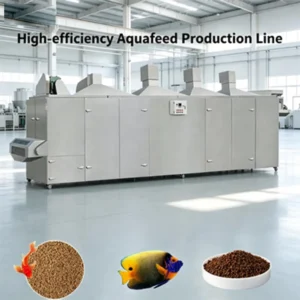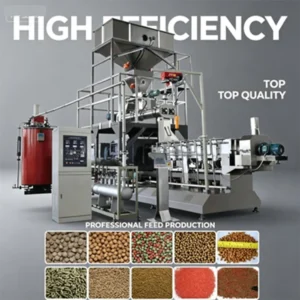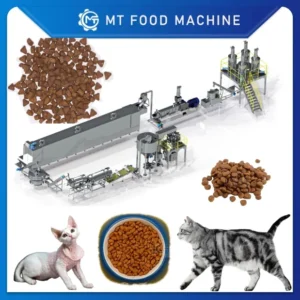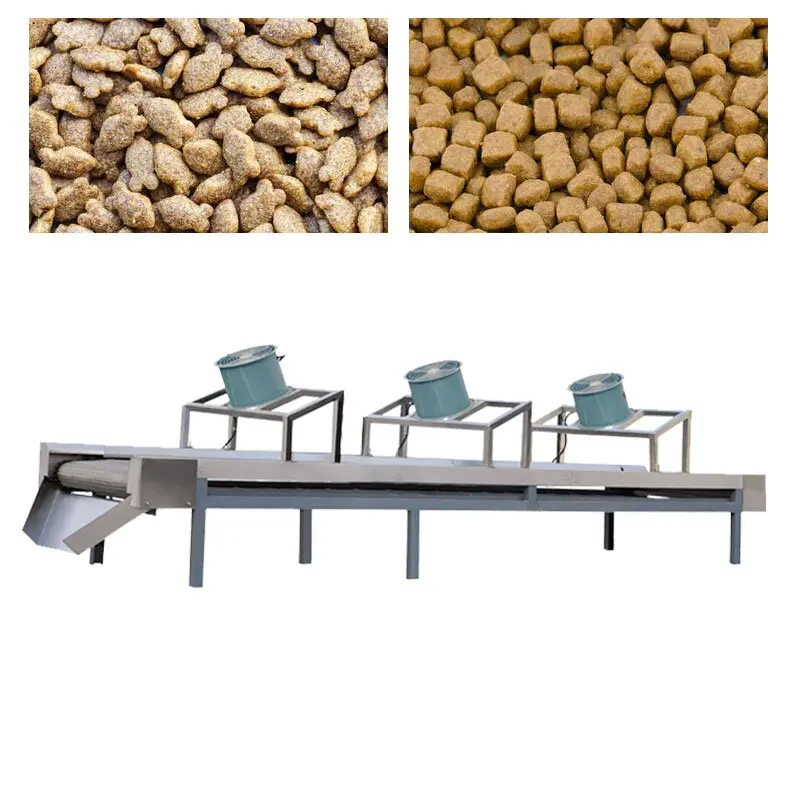


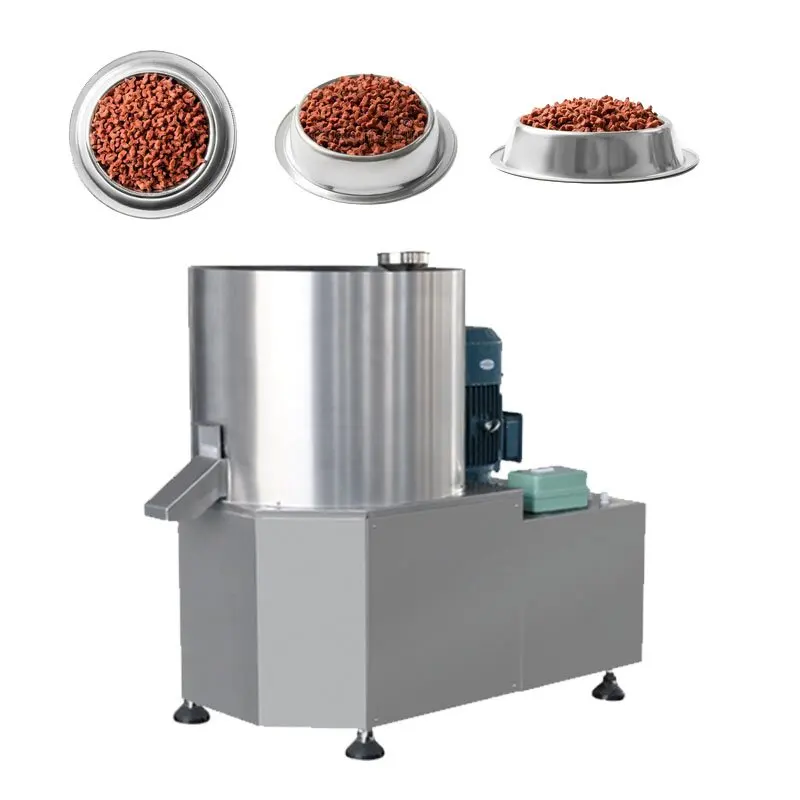

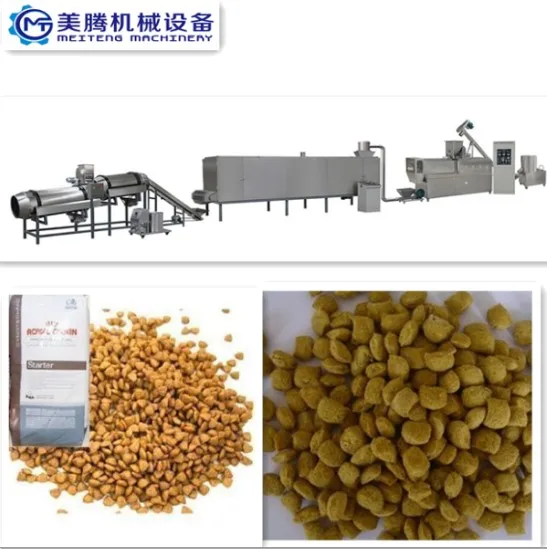
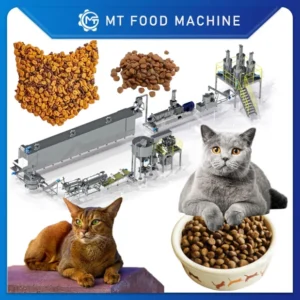
Twin Screw Pet Food Extrusion Production Line, up to 3 Tons/h, PLC Control, 1-Year Warranty — engineered as a single turnkey project where every station from mixing to packing is throughput-matched under one supplier. Screw configuration and die design are specified to the buyer’s raw material and target kibble density, preventing texture or expansion issues that arise from generic builds. Delivered with a process flow drawing for review before production and on-site installation support.
- Twin-screw extrusion with matched dryer and coating capacity to eliminate line bottlenecks
- Trial run on buyer’s actual raw material in our testing workshop before shipment
- Full electrical schematic with voltage and frequency confirmed to target market
Description
Integrated Line Engineering — Every station from batching to packing is throughput-matched under a single supplier, preventing the bottlenecks that arise when a pet food production line turnkey is assembled from disconnected vendors.
Technical Specifications
| Parameter | Value |
|---|---|
| Product Type | Twin Screw Pet Food Extrusion Production Line |
| Screw Configuration | Twin screw |
| Output Capacity | Up to 3 tons per hour (basis not stated in source — confirm raw material, moisture, pellet size) |
| Target Products | Dry dog and cat kibble, floating and sinking fish feed |
| Control System | Available with PLC or MCC control (confirm at inquiry) |
| Voltage & Frequency | Configurable to destination market (confirm at inquiry) |
| Process Documentation | Fish feed process drawing included with line proposal |
| Warranty | 1-year on complete line |
Application Suitability
| Application | Material or Output |
|---|---|
| Dry kibble for dogs and cats | Corn, meat meal, fish meal, soy protein, wheat flour, vitamin premix |
| Floating aquaculture feed | Fish meal, soybean meal, starch binder, oil coating |
| Sinking aquaculture feed | High-protein formulations with controlled density pellets |
| Premium pet food formats | Fresh meat inclusion, multi-grain blends, functional ingredient additions |
Why "Nominal Capacity" Rarely Survives First Contact With Your Actual Recipe
A line rated on standard corn meal will not hold that output when your recipe calls for 30% fresh meat slurry.
I have watched commissioning stall for weeks because the extruder was specified against a lab-friendly reference material, and the buyer’s actual formulation behaved completely differently under shear and heat. High fresh-meat recipes change viscosity, alter residence time, and shift expansion behaviour in ways that generic spec sheets never capture. When a pet food production line turnkey is quoted without anyone asking what you actually plan to run through it, the real output often drops significantly below the brochure number [NEED_CITE: impact of raw material composition on extruder throughput].
Layout and Throughput Matching Across Every Station
A twin-screw extruder running at full output is useless if the downstream dryer cannot remove moisture fast enough to keep kibble shelf-stable. Each station in a pet food production line turnkey must be sized so that nothing upstream waits and nothing downstream starves. The mixer must feed the extruder continuously, the dryer must handle the full moisture load, and the coating drum must season every pellet before packing begins. When these capacities are calculated independently by different vendors, mismatches are almost guaranteed.
Screw and Die Configuration Tied to Your Formulation
The screw profile determines how much shear, heat, and residence time your material receives before it reaches the die. A high-starch recipe needs a different screw element arrangement than a high-protein aquatic feed targeting a specific floating or sinking density. Die geometry then controls pellet shape, expansion ratio, and final bulk density — all of which your end market judges before reading the ingredient list. Specifying these components against the buyer’s actual raw material, rather than copying a generic build, is the difference between product that meets market expectations and product that gets returned [NEED_CITE: screw configuration and die design principles in twin-screw extrusion].
Reading the Specs That Actually Matter
The twin-screw design itself is the first meaningful specification. Compared to single-screw extruders, twin-screw configurations handle a wider range of ingredient moisture levels and fat contents, which matters when recipes include fresh meat or high-oil fish meal. The control system choice — PLC versus MCC — affects how precisely barrel temperature zones and screw speed can be adjusted between product changeovers. Voltage and frequency must be confirmed to match the destination facility’s electrical supply before the cabinet is wired; getting this wrong on site delays commissioning by weeks. The included process flow drawing lets you review every station’s position and utility connection point before fabrication starts, catching layout conflicts early.
The Hidden Cost of Skipping a Pre-Shipment Trial Run
Installing a full extrusion line only to discover that your flagship kibble recipe expands poorly at the specified screw speed is an expensive lesson. Post-installation product development burns raw material, delays market launch, and strains the relationship between buyer and supplier. A trial run in the supplier’s testing workshop, using the buyer’s own formulation, surfaces these issues while there is still time to adjust screw elements, die plates, or dryer settings before the machines are crated [NEED_CITE: importance of factory acceptance testing for extrusion lines].
What Makes This Line Different From an Assembled Package
Every station is specified and sourced by the same engineering team, so throughput calculations are coordinated rather than guessed. Screw and die configurations are documented against your raw material profile, not copied from a catalogue build. The in-house testing workshop allows your formulation to be extruded before shipment, generating a trial report you can review. Twin-screw expertise covers pet food, aquatic feed, and snack applications under one roof, so product diversification later does not mean finding a new supplier. Electrical schematics confirm voltage, frequency, and control language before the control panel is assembled, eliminating on-site wiring surprises.
Documentation & Verification
- Line layout drawing showing throughput at each station from mixer to packer
- Screw and die configuration record matched to your kibble or fish feed formulation
- Electrical schematic with voltage, frequency, and control language confirmed
- Trial run report on your raw material conducted in the testing workshop before dispatch
- CE declaration of conformity covering the complete extrusion line
- Operation and maintenance manual with wear parts list for extruder screws and dies
Installation, Commissioning & Support
- Foundation and utility plan provided, covering water, steam, and electrical drops for each station
- Voltage and frequency verified to site supply before control cabinet wiring begins
- Line arrives in staged modules for phased assembly matching your facility readiness
- On-site commissioning includes screw speed and barrel zone tuning to your recipe
- Operator training covers product changeover procedures and die plate swaps
- Wear parts list supplied with reorder lead times for screws, dies, and cutter blades
What We Need From You to Build a Real Proposal
Before any line configuration starts, share your target product formats, the ingredient list with approximate inclusion rates, and the daily output you need the line to sustain. Tell us the available floor space and ceiling height, the local voltage and frequency standard, and the preferred language for the control interface. If you have upstream milling or downstream packing equipment already installed, we need those specifications to match connection points and throughput.
Frequently Asked Questions
Q: How is line capacity verified against my specific raw material and recipe?
A: Your formulation is run in our testing workshop before the line ships. We document screw speed, barrel temperatures, moisture addition, and resulting pellet density in a trial report. If the output or product quality does not meet your target, we adjust screw configuration or die geometry and re-run until the numbers align with your production plan.
Q: What is the phased installation and commissioning schedule for the full line?
A: Installation follows a station-by-station sequence — extruder first, then dryer, coater, and packing — so each section can be tested independently. Commissioning begins with dry runs, progresses to wet runs with your raw material, and concludes with sustained production trials. The exact timeline depends on line size and your facility readiness.
Q: How are extruder, dryer, and coater capacities matched to prevent bottlenecks?
A: Every station’s capacity is calculated from the same production target and recipe data. The dryer is sized for the moisture load leaving the extruder, and the coating drum is sized for the full pellet flow rate plus seasoning addition. This coordinated approach prevents any single station from limiting overall line output.
Q: What operator training is included with on-site commissioning?
A: Training covers daily startup and shutdown procedures, recipe changeover steps including screw speed and die swaps, routine maintenance intervals for bearings and seals, and troubleshooting common issues such as uneven expansion or coating distribution. Operators work alongside our technician through multiple production runs.
Q: Which spare wear parts are supplied and what is the reorder lead time?
A: The initial shipment includes a wear parts set covering extruder screw elements, die plates, and cutter blades. A complete wear parts list with part numbers and typical reorder lead times is provided in the documentation package so you can plan inventory before your first scheduled replacement.
Related products
-
Línea de procesamiento de alimentos para perros de múltiples especies controlada por PLC con capacidad de 200-250kg/h y extrusora MT-70
¥35,000.00 Select options This product has multiple variants. The options may be chosen on the product page -
Línea de producción de alimentos para mascotas en stock / Máquina de extrusión de alimentos para perros y gatos
¥9,500.00 Select options This product has multiple variants. The options may be chosen on the product page -
Línea de procesamiento de alimentos para gatos de múltiples especies controlada por PLC con capacidad de 250-300 kg/h
¥35,000.00 Select options This product has multiple variants. The options may be chosen on the product page -
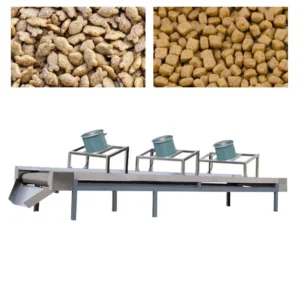
Línea de producción de alimentos para mascotas completamente automática Máquina de extrusión de grano de doble tornillo grande
¥9,500.00 Select options This product has multiple variants. The options may be chosen on the product page