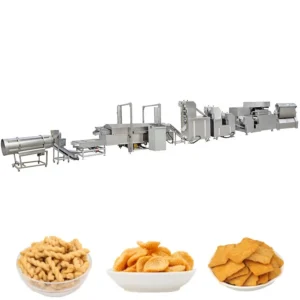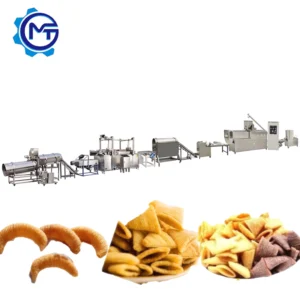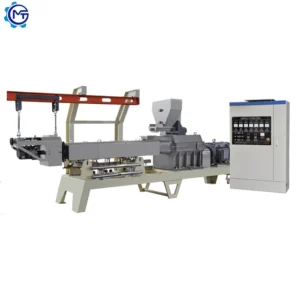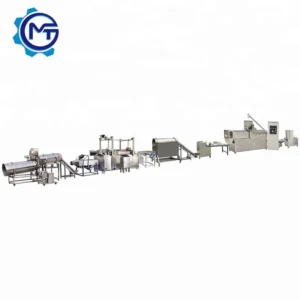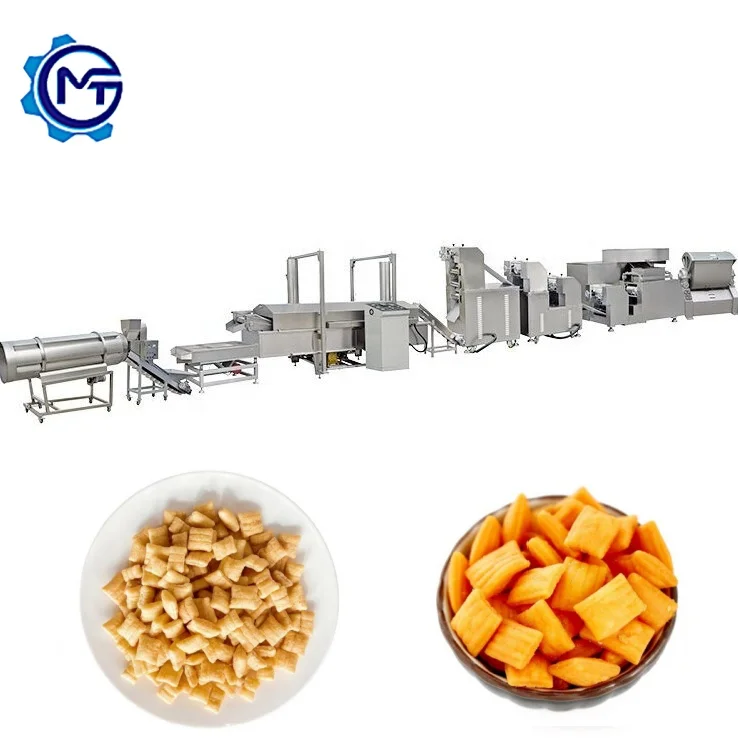


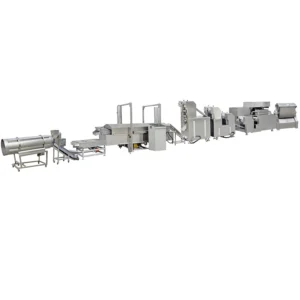
Continuous Deep Frying Machine, 304 Stainless Steel, PLC Control, Double-Layer Mesh Belt — designed for turnkey fried snack production lines where extruder output and fryer throughput must stay balanced. Oil circulation filtration continuously removes residue to maintain quality, while frequency conversion speed regulation controls frying time across formats like wheat flour bugles and fried dough.
- Line capacity calculation, electrical schematics, and in-house trial runs on your raw material provided before shipment.
Description
Integrated Throughput Engineering — Every station from extrusion through frying to seasoning is calculated against your actual raw material, so the Continuous Deep Frying Machine production line never creates a bottleneck where the extruder outpaces the fryer.
Technical Specifications
| Parameter | Value |
|---|---|
| Product Type | Continuous Deep Frying Machine |
| Power Source | Electric / Gas (heating method options) |
| Voltage | 380V/50HZ |
| Power (Drive System) | 2.6 kW |
| Heating Tube Power | 60 kW |
| Overall Dimensions (L×W×H) | 6700×2200×1200 mm |
| Net Weight | 2000 KG |
| Oil Capacity | 320 L |
| Capacity Range | 100-1000 kg/h (basis not stated in source) |
| Control System | PLC |
| Material | Food-grade 304 Stainless Steel |
| Mesh Belt System | Upper and lower double-layer, frequency conversion stepless speed regulation |
| Oil Filtration | Automatic circulation filtration system |
| Lifting System | Automatic lifting for upper hood and mesh belt |
| Slag Discharge | Bottom residue discharge system |
| Warranty | 1 Year (core components 1 Year) |
Application Suitability
| Application | Material or Output |
|---|---|
| Fried Bugles / Corn Chips | Wheat flour, corn grits, rice flour blends after extrusion |
| Fried Dough Snacks | Wheat flour dough, fermented dough strips, twisted shapes |
| Pellet Chips (2D/3D) | Potato starch, corn starch, tapioca starch pellets |
| Pet Food Treats | Extruded kibble or bite-sized meat-meal formulations requiring surface oil coating |
| Fortified Snack Bases | Blended grain and legume flour extrudates destined for seasoning |
Why Fryer Sizing Dictates the Entire Line Output
A fryer that cannot keep pace with upstream extrusion will force the whole line to idle, regardless of extruder capacity.
I once configured a line where the extruder was rated for a high nominal output, but the fryer’s belt length and oil recovery cycle could not handle that volume. The result was product stacking on the belt, uneven coloration, and operators manually throttling the extruder down to match the fryer. The Continuous Deep Frying Machine production line must be specified not just by its own belt speed, but by the moisture content, product density, and required fry time of your specific formulation [NEED_CITE: moisture migration rates during deep frying of extruded snacks]. When these variables are ignored, the bottleneck simply shifts from one station to another.
Balancing Oil Recovery with Belt Travel Speed
The frying stage is where product texture is finalized. If the oil temperature drops too sharply when cold, moist extrudate enters the bath, the surface fails to seal properly, leading to excessive oil absorption and a greasy mouthfeel. The 60 kW heating tube array in this unit is sized to maintain thermal stability when processing high-moisture extrudates. The frequency conversion stepless speed regulation on the double-layer mesh belt allows operators to fine-tune dwell time without stopping the line, which is critical when switching between a dense wheat flour bugle and a lighter starch-based pellet chip that requires a shorter fry cycle.
Controlling Residue Accumulation During Extended Runs
Fried dough and wheat flour products shed fine particulate matter into the oil bath continuously. Over a multi-hour production shift, this residue carbonizes on the heating elements and the tank floor, raising the free fatty acid level and altering product color. The automatic circulation filtration system continuously draws oil through a screen, pulling fines out before they can scorch. Combined with the bottom residue discharge system, the Continuous Deep Frying Machine production line maintains oil quality across long runs without requiring mid-shift oil changes or manual skimming, which protects both product consistency and edible oil expenditure.
Interpreting the Specifications for Line Integration
The 320 L oil capacity paired with the 6700 mm overall length indicates the thermal mass and belt travel available for a given throughput. A longer tank with higher oil volume provides more stable temperature recovery between product loads. The food-grade 304 stainless steel construction is necessary not just for hygiene compliance but for withstanding the thermal cycling and corrosive nature of hot oil and cleaning agents over years of service. The PLC control system allows the fryer to communicate with upstream extruder speed and downstream seasoning drum rotation, so when the extruder ramps up, the belt speed and oil temperature setpoints adjust in coordinated fashion rather than requiring separate manual intervention at each station [NEED_CITE: PLC coordination between extrusion and frying stations in snack food lines].
The Cost of Unmatched Station Capacities
When a fryer is specified in isolation, without calculating the mass flow from the extruder and the throughput of the coating drum, several failures emerge. Product piles up at the fryer infeed, causing pieces to fuse together. Oil degradation accelerates because the filtration system is overwhelmed by the volume of fines. Downstream, the seasoning drum receives product in surges rather than a steady stream, leading to uneven flavor application. These issues do not show up in a factory acceptance test running clean product for twenty minutes; they surface three weeks into production when the line is under real operational load [NEED_CITE: throughput mismatch effects in multi-station food processing lines].
Why This Configuration Approach Differs
The fryer is never quoted as a standalone unit disconnected from the rest of the line. The layout calculation starts with your target product’s fry time and moisture reduction curve, then works backward to the extruder output and forward to the cooling conveyor length. The in-house testing workshop runs your actual raw material through the complete sequence before shipment, so the screw configuration, die selection, and fryer belt speed are all documented in the trial run report rather than guessed at during commissioning. Every wear component, from the mesh belt segments to the heating tube assemblies, is listed in the spare parts schedule that ships with the line, preventing the situation where a broken belt halts production while replacement parts are sourced internationally.
Documentation & Verification
- Line layout drawing showing throughput balance between extruder output and fryer belt capacity
- Trial run report on your specific wheat flour or starch formulation before dispatch
- Electrical schematic confirming 380V/50HZ or your local voltage and frequency requirements
- Screw and die configuration record matched to the target bugle or pellet shape
- Factory test record documenting oil temperature stability across a sustained production run
Installation, Commissioning & Support
- Foundation must accommodate 2000 KG net weight plus oil load across the 6700×2200 mm footprint
- Dedicated electrical circuit required for 60 kW heating tubes separate from the 2.6 kW drive system
- Unit ships fully assembled; hood and mesh belt lifting system allows immediate access for inspection
- PLC parameters set during on-site commissioning to match your extruder speed and seasoning drum rate
- Operator training covers oil filtration maintenance, belt tension adjustment, and temperature profiling
- Spare mesh belt sections and heating elements itemized in contract to prevent production stoppages
What We Need to Configure Your Line
To prepare a layout that matches your actual production conditions, provide the specific flour blend or starch formulation you intend to run, the target moisture content entering the fryer, and the desired final product color and oil uptake level. We also need your facility’s available floor length for the frying and cooling section, your local voltage and frequency standard, and the preferred control language for the PLC interface. If you have existing upstream extrusion or downstream packaging equipment, share the make and rated output so the Continuous Deep Frying Machine production line can be engineered to integrate without capacity gaps.
Frequently Asked Questions
Q: How is frying line capacity verified against actual product formulation and moisture content?
A: We run your raw material through the in-house testing workshop before shipment. The extrudate enters the fryer at the moisture level your process will produce, and we document belt speed, oil temperature, and dwell time needed to reach your target color and texture. This trial run report ships with the equipment.
Q: What voltage and control language configurations are available for different target markets?
A: The electrical system is configurable beyond the standard 380V/50HZ to match your local grid requirements. The PLC interface language is set to your operator’s preference before commissioning. Electrical schematics and voltage confirmation documents are provided before production begins to prevent delays at installation.
Q: How is fryer throughput matched with upstream extruder and downstream seasoning line speeds?
A: The line layout calculation starts with your extruder’s actual output on your formulation, then specifies fryer belt length and speed range to absorb that volume without product stacking. The downstream cooling conveyor and seasoning drum are sized to the same mass flow rate.
Q: Can the line be configured for both floating and sinking product types with different frying profiles?
A: The double-layer mesh belt system with frequency conversion stepless speed regulation accommodates products that float and those that require submersion. The upper belt holds floating products below the oil surface, while belt speed adjusts for different dwell time requirements between product formats.
Q: What spare parts and wear components are included, and how are replacements sourced after installation?
A: The spare parts list is finalized in the contract before production, based on the specific configuration shipped. Mesh belt segments, heating tube assemblies, and filtration screens are typical wear items. We provide the complete list with part numbers so replacements can be ordered without production interruption.
Related products
-
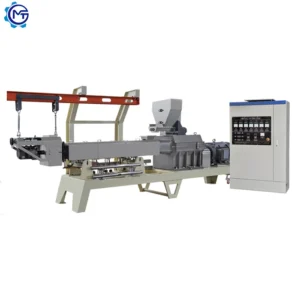
Industrial Wheat Flour Snacks Processing Equipment – Stainless Steel Fried Food Production Line
¥65.00 Select options This product has multiple variants. The options may be chosen on the product page -
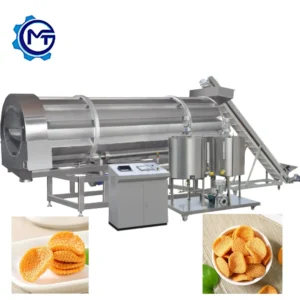
Máquina automática para la fabricación de chips de costra de arroz Bugles, línea de procesamiento de alimentos fritos de rollos de pizza.
¥8,570.00 Select options This product has multiple variants. The options may be chosen on the product page -
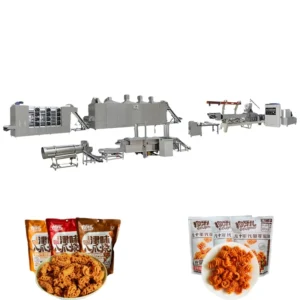
Línea de producción de máquina de alimentos para snacks Doritos, chips extruidos, pellets, Bugles de maíz frito.
¥100.00 Select options This product has multiple variants. The options may be chosen on the product page -
Orion TURTLE CHIPS Maquinaria de Snack Puffing Línea de Producción Crujiente de Cuatro Capas de Celebridad de Internet
¥65.00 Select options This product has multiple variants. The options may be chosen on the product page