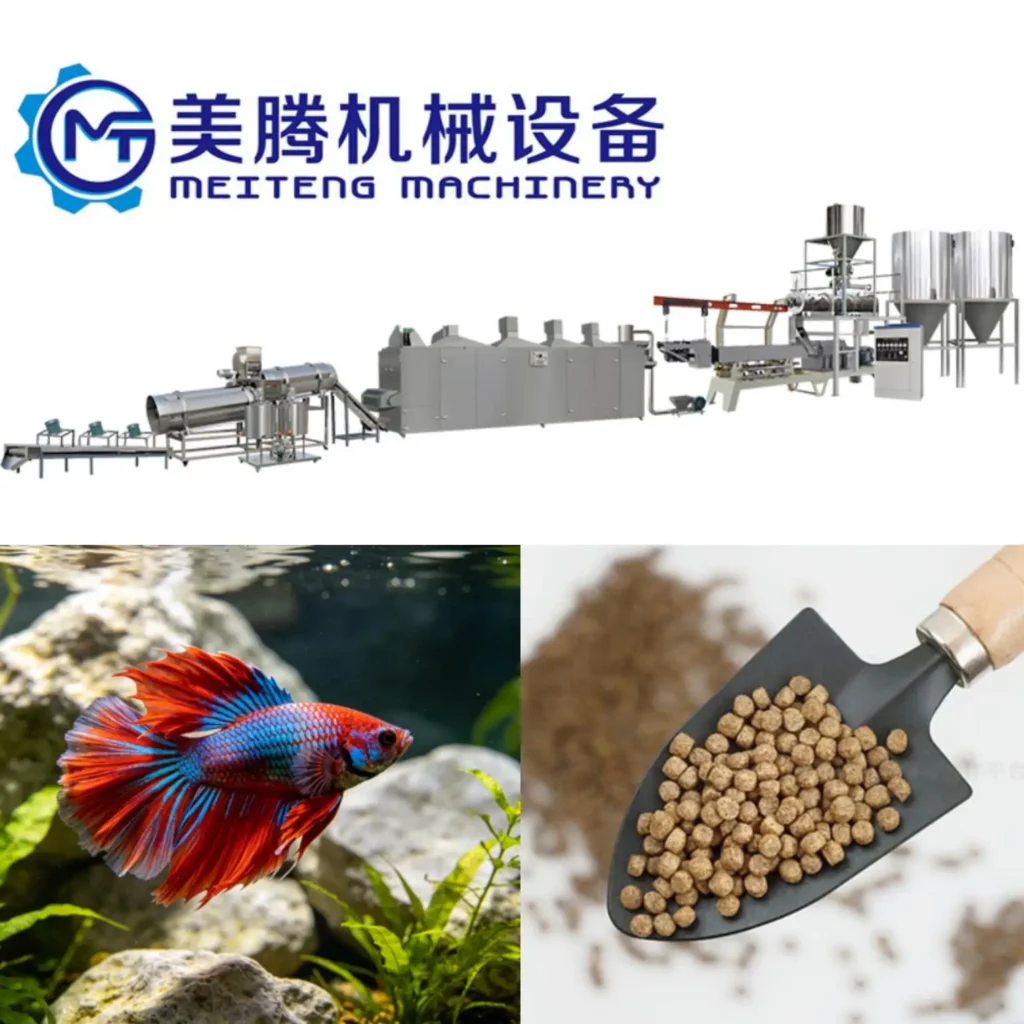


Backed by in-house trial runs on your raw material before shipment, matched throughput across all line stations, and on-site commissioning with operator training.
Description
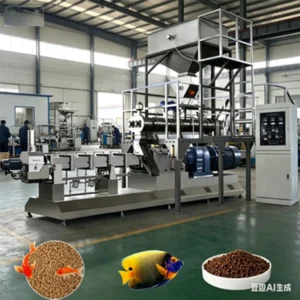
Integrated throughput engineering — Every station in this fish feed processing line from batching to packing is sized against the same raw material profile, so the dryer never waits on the extruder and the coater never starves.
Technical Specifications
| Parameter | Value |
|---|---|
| Product Type | Fish Feed Processing Line |
| Output Capacity | 1.0–1.2 t/h (basis not stated in source — confirm raw material formulation, moisture content, pellet size) |
| Extruder Type | Twin-screw extruder |
| Construction Material | Food-grade 304 stainless steel contact surfaces |
| Line Stations | Configuration to be confirmed: mixing, extrusion, drying, coating, cooling, packing |
| Control System | Options available: PLC, MCC, or manual control (basis to be confirmed) |
| Screw Diameter | To be confirmed based on capacity and pellet size target |
| L:D Ratio | To be confirmed based on formulation gelatinisation requirement |
| Barrel Zones | To be confirmed based on thermal profile needed |
| Die Configuration | To be confirmed based on pellet diameter and density target |
| Moisture Range | To be confirmed based on raw material and conditioning step |
| Voltage & Frequency | Configurable to destination market (basis to be confirmed) |
| Overall Dimensions | Dependent on final line layout and station count |
| Net Weight | Dependent on final configuration |
| Standards | CE compliant (line-level certification to be confirmed per order) |
Application Suitability
| Application | Material or Output |
|---|---|
| Floating pellet production for trout and salmon | Fish meal, soy protein concentrate, wheat flour, fish oil — pellet diameter 2–6 mm |
| Sinking pellet production for catfish and tilapia | Soybean meal, rice bran, corn flour, vitamin premix — pellet diameter 3–8 mm |
| Shrimp feed pellet production | Shrimp meal, squid liver meal, high-protein concentrates — pellet diameter 0.8–2.5 mm with high water stability |
| Multi-species hatchery feed | Micro-ingredient blends with lipid coating — crumble and mini-pellet formats |
What "1.0–1.2 Tons per Hour" Actually Requires From Your Formulation
Capacity is not a machine property — it is a negotiation between your raw material and every station on the line.
I once watched a line in Southeast Asia, quoted at a clean hourly figure on a standard fish meal formula, drop to barely sixty percent of that number once the operator switched to a high-rapeseed-meal blend the local market actually demanded. The extruder could not push the denser mash through the die at the rated screw speed, the dryer was suddenly underloaded, and the coating drum sat idle half the shift. A fish feed processing line turnkey only performs at its quoted rate when the capacity figure is anchored to your specific ingredient profile, pellet diameter, and target moisture at the bagger [NEED_CITE: aquatic feed formulation density variation by protein source]. Without that anchor, you are buying a machine, not a production rate.
Matching Screw Geometry to Your Protein Source
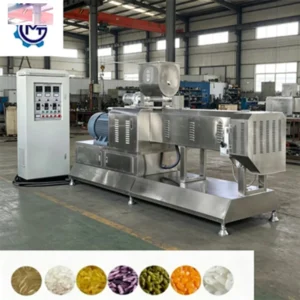
A twin-screw extruder gives you configurability that matters when your formulation shifts between fish meal, soy concentrate, and locally sourced by-product meals. The screw elements — conveying, kneading, reverse — are rearranged so the shear profile matches the gelatinisation temperature of the starch in your specific recipe, and the die plate is drilled to the pellet diameter your market expects. This is where a fish feed processing line turnkey either earns its name or becomes a collection of mismatched stations.
Balancing Dryer Residence Time Against Extruder Surge
The dryer must hold enough bed depth and airflow to handle the extruder at full output without scorching the pellet surface or leaving the core above safe storage moisture. On floating pellets for salmonids, the residence window is narrow — too short and the pellet sinks in the pond, too long and the heat-sensitive vitamin premix degrades. Each thermal zone on this line is specified so that throughput from the extruder to the cooling conveyor stays within a defined band rather than relying on operator guesswork [NEED_CITE: thermal degradation thresholds for aqua feed vitamin premixes].
Reading the Specs That Matter for Pellet Integrity
The L:D ratio of the extruder barrel determines how long the mash stays under pressure and heat; a longer ratio gives more residence for high-fat, hard-to-gelatinise formulations common in salmonid feeds, while a shorter one suits leaner tilapia recipes. The die configuration — hole diameter, land length, open area — directly sets pellet density and therefore whether the feed floats or sinks in the pond. Barrel zone count controls how precisely you can ramp temperature from the feed inlet to the die face, which matters when your recipe includes heat-sensitive attractants. Finally, moisture range at the conditioner dictates expansion behaviour inside the barrel and ultimately the water stability the pellet must show once it hits the grow-out pond.
The Cost of Ignoring Station-to-Station Sizing
Buyers who source the extruder from one vendor and the dryer from another frequently discover at commissioning that the dryer cannot handle peak extruder output without extending cycle time, which then backs up the coater and stalls the packing station. The downtime is rarely blamed on the line design — it surfaces as a maintenance issue or an operator error, and the real cost is counted in missed shipment windows and penalty clauses on supply contracts [NEED_CITE: turnkey line bottleneck root cause analysis in aqua feed plants]. A fish feed processing line turnkey avoids this only when one supplier carries the throughput calculation from the mixer all the way to the bagger.
Why Engineers Source the Whole Line From One Drawing
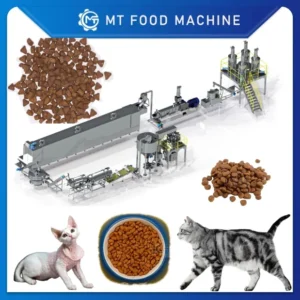
Every station in this line — batching, extrusion, drying, coating, cooling, packing — is laid out on a single set of drawings so the electrical load, compressed air demand, and floor space are calculated together rather than assembled from separate vendor submittals. Screw configuration and die geometry are documented against the buyer’s raw material sample before the extruder leaves the factory, not guessed at during commissioning. An in-house testing workshop runs your actual formulation through the twin-screw extruder before shipment, producing a trial report that sets the baseline parameters for your operators. PLC and MCC control panels are wired and labelled in the destination language, and voltage is confirmed to the local grid standard before the transformers are ordered. Food-grade 304 stainless steel is used on every product-contact surface from the mixer discharge to the packing hopper, meeting the sanitation expectations of export-market auditors.
Documentation & Verification
- Line layout drawing showing station spacing, utility drop points, and material flow direction
- Capacity calculation sheet tied to your pellet diameter, formulation density, and target moisture
- Screw element arrangement and die plate drilling record matched to your raw material sample
- Electrical schematic with voltage, frequency, and control language confirmed to destination market
- In-house trial run report on your raw material conducted before shipment
- CE declaration of conformity with machinery directive scope listed per line station
Installation, Commissioning & Support
- Floor plan with foundation loads for the twin-screw extruder, dryer, and cooling conveyor
- Dedicated circuit sizing for the extruder main drive and dryer heating banks at confirmed voltage
- Phased delivery schedule so foundation work and utility rough-in precede equipment arrival
- First-run commissioning with screw speed, barrel temperatures, and die pressure logged against trial baseline
- Operator training on die changes, screw element swaps, and daily sanitation of 304 stainless surfaces
- Wear parts list covering screw elements, barrel liners, and die plates with reorder part numbers
Before You Send the Inquiry
A meaningful quote on a fish feed processing line turnkey requires your current or target formulation with protein and lipid percentages, the pellet diameter range your market demands, and whether you need floating, sinking, or slow-sinking behaviour. Share your available power supply voltage and frequency, the control language your operators read, and whether an existing mixer or packing station must be integrated into the new layout. If your raw material sources are local and variable, say so — that determines whether the trial run should cover multiple formulations rather than a single recipe.
Frequently Asked Questions
Q: How is line capacity verified against my actual raw material formulation and pellet size?
A: Your raw material sample is run through our in-house twin-screw extruder before shipment. We log screw speed, barrel temperatures, die pressure, and output rate at your target pellet diameter, then compare those figures against the quoted capacity. The trial report becomes the baseline your operators use at commissioning, so the number on the contract is the number you see on the scale.
Q: What does the turnkey scope cover — from batching system through packing?
A: The scope includes raw material receiving, micro-ingredient batching, mixing, conditioning, twin-screw extrusion, drying, fat coating, cooling, screening, and packing — all on one set of layout drawings. Utility loads, floor space, and control wiring are calculated across every station so nothing is left to the buyer to source separately.
Q: How is throughput balanced between the extruder, dryer, and coating drum to prevent bottlenecks?
A: Each station is sized against the same capacity calculation. The dryer bed area and airflow are specified so it can handle peak extruder output at your target final moisture, and the coating drum cycle time is matched so it never waits on or holds up the cooler. Imbalance is caught on paper before any steel is cut.
Q: Can a trial run be done on my raw material before the line ships?
A: Yes. We run your formulation in our testing workshop and produce a written report covering output rate, pellet density, water stability, and recommended screw configuration. If the results fall outside your specification, we adjust screw elements or die geometry and re-test before the extruder is crated for shipment.
Q: What is the phased installation and commissioning schedule for a complete aquatic feed plant?
A: Foundation and utility rough-in proceed while the line is in production. Equipment arrives in a sequence that lets the extruder and dryer go on their pads first, followed by the coater, cooler, and packing station. Commissioning moves station by station, then as a continuous run, with operator training overlapping the final days.
Related products
-
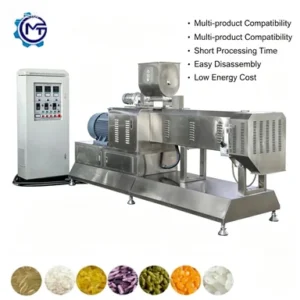
Durable Stainless Steel Twin Screw Extruder Floating Sinking Aquatic Fish Feed Processing Production Equipment
¥65.00 Select options This product has multiple variants. The options may be chosen on the product page -
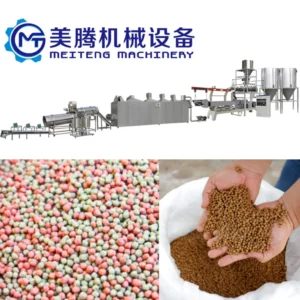
2-3t/h High Capacity Multi-Species Fish Feed Processing Line to Produce Fish Food
¥55,000.00 Select options This product has multiple variants. The options may be chosen on the product page -
In Stock Pet Feed Production Line / Dog Cat Food Extrusion Machine
¥9,500.00 Select options This product has multiple variants. The options may be chosen on the product page -
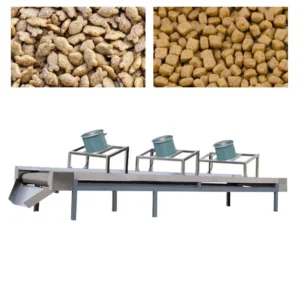
Full Automatic Pet Feed Production Line Large Twin Screw Grain Extrusion Machine
¥9,500.00 Select options This product has multiple variants. The options may be chosen on the product page