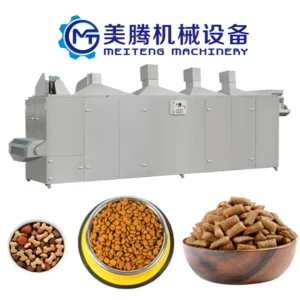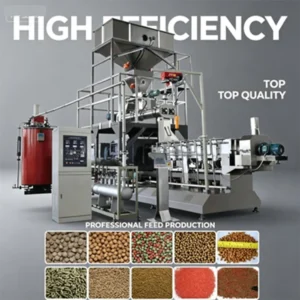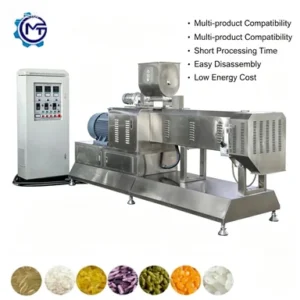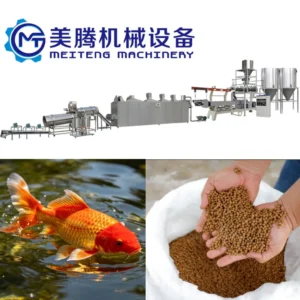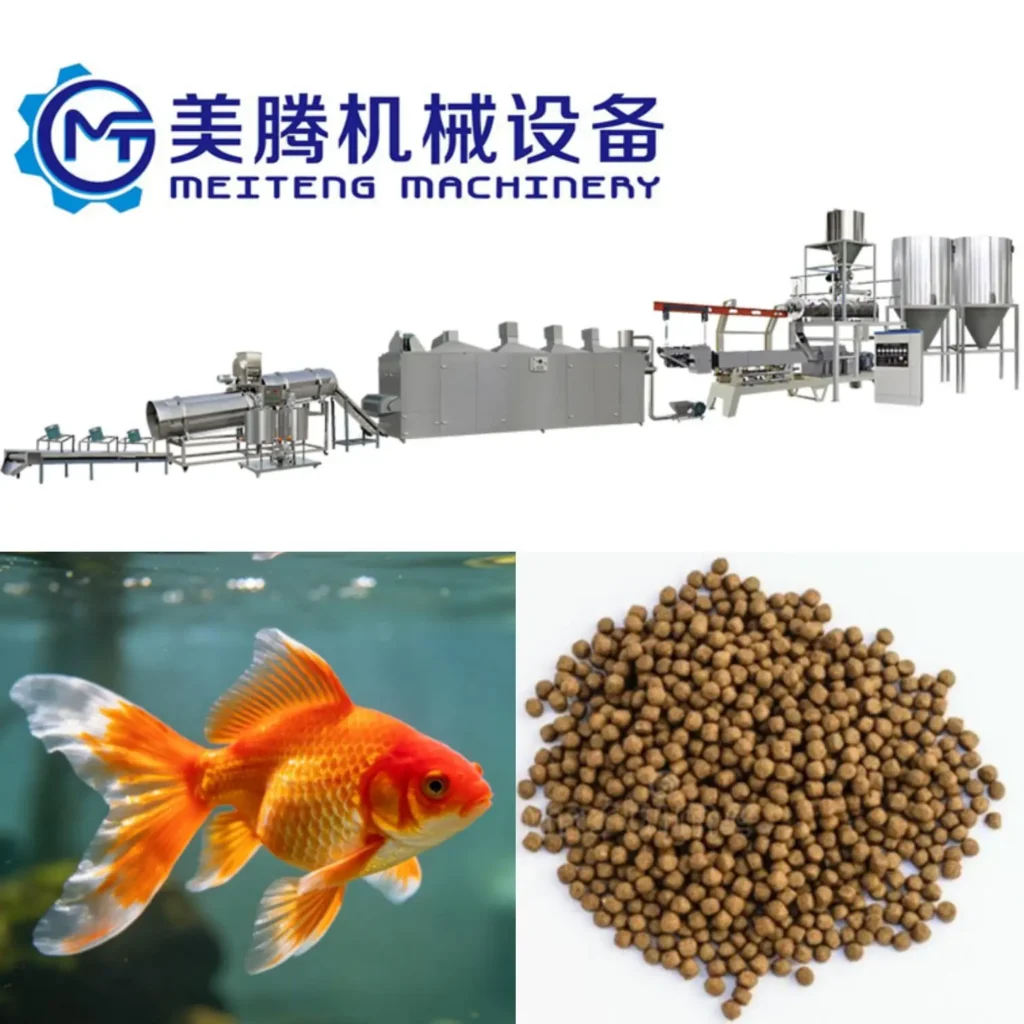
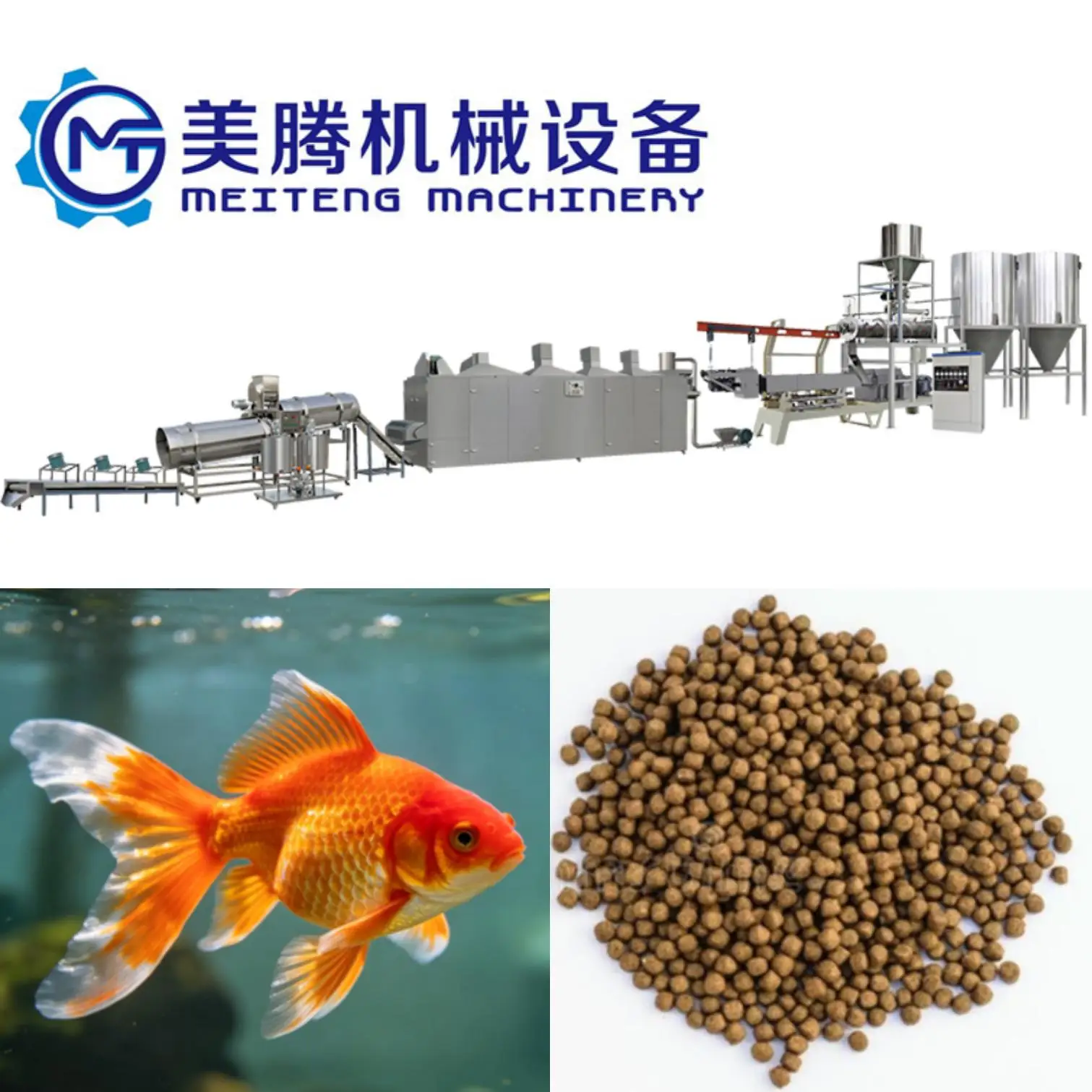


Multi-Species Fish Feed Processing Line, Twin-Screw, 300–600 kg/h — engineered as a turnkey project where every station is throughput-matched from batching to packing.
- Screw configuration and die design specified to your raw material, controlling pellet density for floating or sinking output across trout, salmon and catfish
- 304 stainless steel food-grade contact parts throughout all wet zones
- In-house testing workshop validates floatation rate, durability and capacity on your formulation before shipment
Layout, commissioning schedule and full documentation package delivered under single-supplier responsibility for your aquatic feed project.
Description
Throughput-Matched Engineering — Every station from batching to packing is sized against your specific raw material formulation, not a generic datasheet.
Technical Specifications
| Parameter | Value |
|---|---|
| Product Type | Twin-Screw Fish Feed Extrusion Production Line |
| Output Capacity | 300–600 kg/h (basis not stated in source — confirm raw material formulation, moisture content, pellet diameter) |
| Screw Configuration | Twin-screw |
| Construction Material | 304 stainless steel (food-grade contact parts) |
| Line Stations | Mixing, extrusion, drying, cooling, packaging |
| Control System | Available with PLC / MCC control (confirm automation level) |
| Voltage & Frequency | Configurable to target market electrical standard |
| Die Configuration | Options for various pellet diameters and shapes (confirm species requirement) |
Application Suitability
| Application | Material or Output |
|---|---|
| Freshwater Aquaculture Feed | Catfish and tilapia floating or sinking pellets |
| Marine Species Nutrition | Trout and salmon high-protein, high-lipid formulations |
| Multi-Species Hatchery Output | Flexible production across varying pellet densities and diameters |
Why Nominal Capacity Claims Sink Your Aquatic Feed Project
A fish feed production line turnkey is only as reliable as the formulation it was tested on.
The most frequent failure mode in aquatic feed projects is a line rated for a specific tonnage that collapses when the buyer’s actual recipe runs through the barrel. When a formulation contains high percentages of fish meal, heavy lipid loads, or unusual starch binders, the material behaves completely differently inside the extruder. I remember a project in the Middle East where a line specified for standard grain-based feed failed completely because the client’s recipe relied heavily on fish meal and added fats. The pellets lacked structural integrity, and the floatation rates were nowhere near acceptable. Until we physically reconfigured the screw profile and die geometry for their specific ingredients, the project stalled [NEED_CITE: impact of lipid content on extrusion expansion].
Managing Shear and Temperature for Pellet Density
The physical characteristics of the final pellet—whether it floats for surface-feeding trout or sinks for bottom-dwelling catfish—are dictated by the shear forces and temperature profile within the barrel sections. In twin-screw extrusion, the interaction between the screws and the barrel zones determines how thoroughly the starch gelatinizes. A properly configured fish feed production line turnkey allows operators to adjust the barrel heating zones and screw speed to manage the melt temperature precisely. This control prevents the over-expansion that leads to fragile floating pellets or the under-cooking that results in poor water stability.
Matching Dryer Capacity to Extruder Output
An extruder operating at its maximum mechanical output is useless if the downstream dryer cannot handle the moisture load. Aquatic feed formulations often enter the dryer with high moisture content to facilitate expansion and shaping. If the dryer’s thermal capacity and residence time are not calculated based on the specific moisture removal rate of your recipe, a bottleneck forms immediately. The entire line slows down to match the dryer’s actual capability, rendering the extruder’s rated capacity irrelevant. Proper engineering requires calculating the exact thermal load and matching the dryer footprint and burner output to the extruder’s maximum throughput [NEED_CITE: thermal engineering in aquatic feed drying].
Understanding the Role of Screw Geometry and Die Pressure
The choice of screw elements—conveying, kneading, or reverse elements—directly influences the residence time and the mechanical energy input into the dough. For high-protein aquatic feeds, the material requires significant mechanical shear to achieve proper texturization and binding. The L:D ratio of the screws determines how long the material stays under pressure and heat, which is critical for destroying anti-nutritional factors in raw soy or other plant proteins. Furthermore, the die configuration creates the backpressure necessary for expansion. If the die open area is too large for a low-starch recipe, the pressure drops, and the pellets fail to expand correctly, resulting in a product that does not meet the target bulk density specifications.
The Hidden Costs of Ignored Electrical Specifications
Overlooking the local voltage and frequency requirements before manufacturing begins leads to expensive delays and potential motor damage. A facility operating on 60Hz power will experience significant issues if it receives motors and drives calibrated for 50Hz operation. The extruder main drive, the feeder motors, and the dryer circulation fans will all run at incorrect speeds, altering the entire process balance. Rectifying this after the equipment arrives on site involves replacing motors, variable frequency drives, and control transformers, turning a scheduled commissioning into a prolonged troubleshooting exercise [NEED_CITE: industrial motor frequency compatibility].
Why Engineering Verification Matters Here
Our approach focuses on the entire line as a cohesive system rather than a collection of individual machines.
- Formulation-Based Layout: The throughput of the mixer, extruder, and dryer is calculated based on your specific ingredient density and moisture profile, ensuring no station restricts the flow.
- In-House Trial Validation: Before any equipment leaves the factory, we conduct trial runs using your actual raw materials in our testing workshop to verify pellet density, floatation, and durability.
- Twin-Screw Expertise: Our technical team adjusts screw configurations and die geometries specifically for aquatic applications, moving beyond generic builds to address the unique rheology of fish and shrimp feeds.
- Site-Specific Utility Planning: Electrical schematics and utility connections are confirmed against your facility’s actual power grid and steam availability prior to final assembly.
Documentation & Verification
- Line layout and capacity calculation matched to your specific aquatic feed formulation.
- Trial run report confirming pellet floatation and density on your raw material.
- Screw and die configuration record specific to target species and pellet size.
- Electrical schematic confirming voltage, frequency, and control language.
- Operation and maintenance manual with wear parts scheduling.
Installation, Commissioning & Support
- Foundation planning and utility connection points for the complete mixing-to-packing layout.
- Verification of main drive power and heater loads against your local electrical grid.
- On-site assembly and mechanical alignment of the twin-screw barrel sections.
- Parameter setting and screw profile adjustment during the initial production run.
- Operator training on die changes and moisture control for different species.
- Immediate availability of replacement screw elements and die plates.
Defining Your Production Requirements
To configure a line that actually meets your market demands, we need to understand the specifics of your operation. Please provide the target species you intend to farm, as this dictates the pellet size and density requirements. Include your base formulation, particularly the protein and fat percentages, along with your desired hourly output and the electrical standards at your facility.
Frequently Asked Questions
Q: How is the output capacity of this line verified?
A: Output capacity is not a fixed number but a variable dependent on your specific raw material formulation, moisture content, and the target pellet diameter. We verify the actual throughput by conducting trial runs with your supplied ingredients in our testing workshop, ensuring the line meets your required volume under real-world conditions.
Q: Can you guarantee the floatation rate for my specific fish species?
A: Yes, by adjusting the screw configuration, barrel temperature profile, and die geometry to match your recipe. We validate the floatation rate and sinking speed during the pre-shipment trial run, ensuring the pellets behave exactly as your target species requires in the water column.
Q: What does the turnkey scope actually include?
A: The scope covers the complete processing path from raw material batching and mixing through extrusion, drying, cooling, and packaging. It includes all necessary conveying systems, utility connection planning, and the engineering required to ensure every station is throughput-matched to prevent bottlenecks.
Q: Is it possible to test my raw materials before purchasing?
A: We strongly encourage sending your raw materials to our testing workshop. This allows us to demonstrate the line’s capability to produce your specific feed grade and provides you with a trial run report confirming density, durability, and capacity before the equipment is finalized.
Related products
-
1.0-1.2t/h High Capacity Multi-Species Fish Feed Processing Line to Produce Fish Food
¥45,000.00 Select options This product has multiple variants. The options may be chosen on the product page -
300-600kg/h Capacity Multi-Species Fish Feed Processing Line to Produce Fish Food
¥45,000.00 Select options This product has multiple variants. The options may be chosen on the product page -
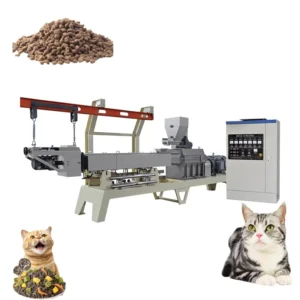
Premium Pet Food Processing Equipment Dog Cat Feed Making Machine
¥9,500.00 Select options This product has multiple variants. The options may be chosen on the product page -
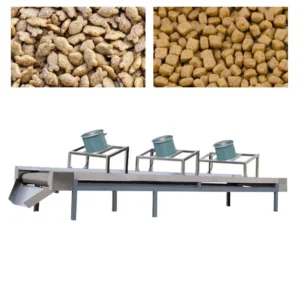
Full Automatic Pet Feed Production Line Large Twin Screw Grain Extrusion Machine
¥9,500.00 Select options This product has multiple variants. The options may be chosen on the product page