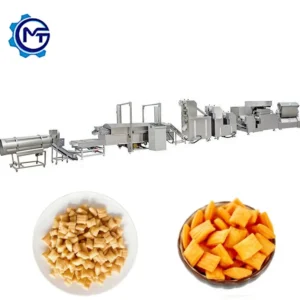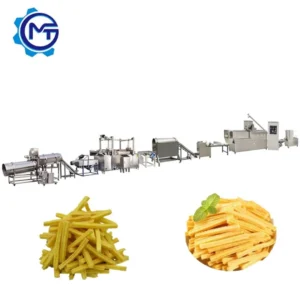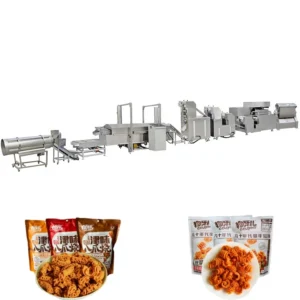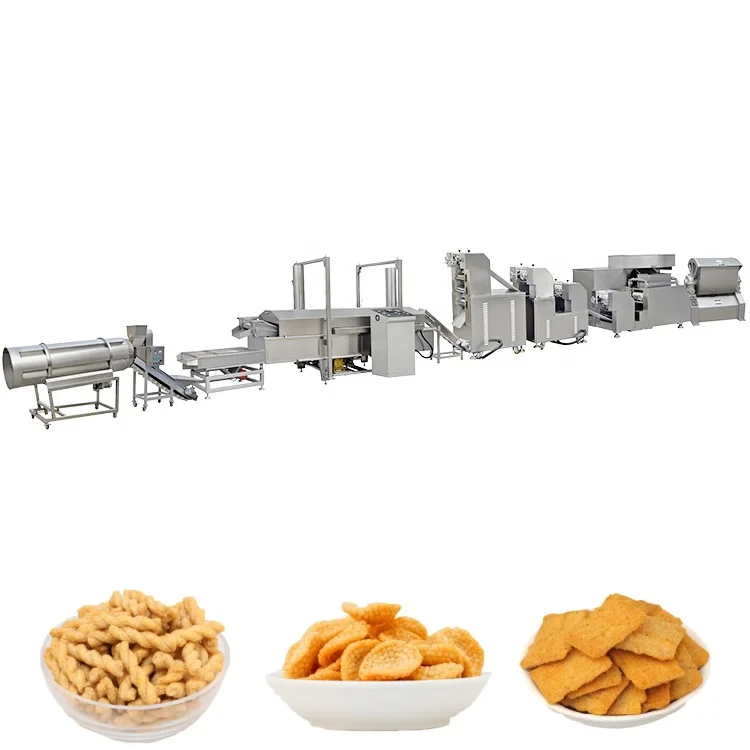

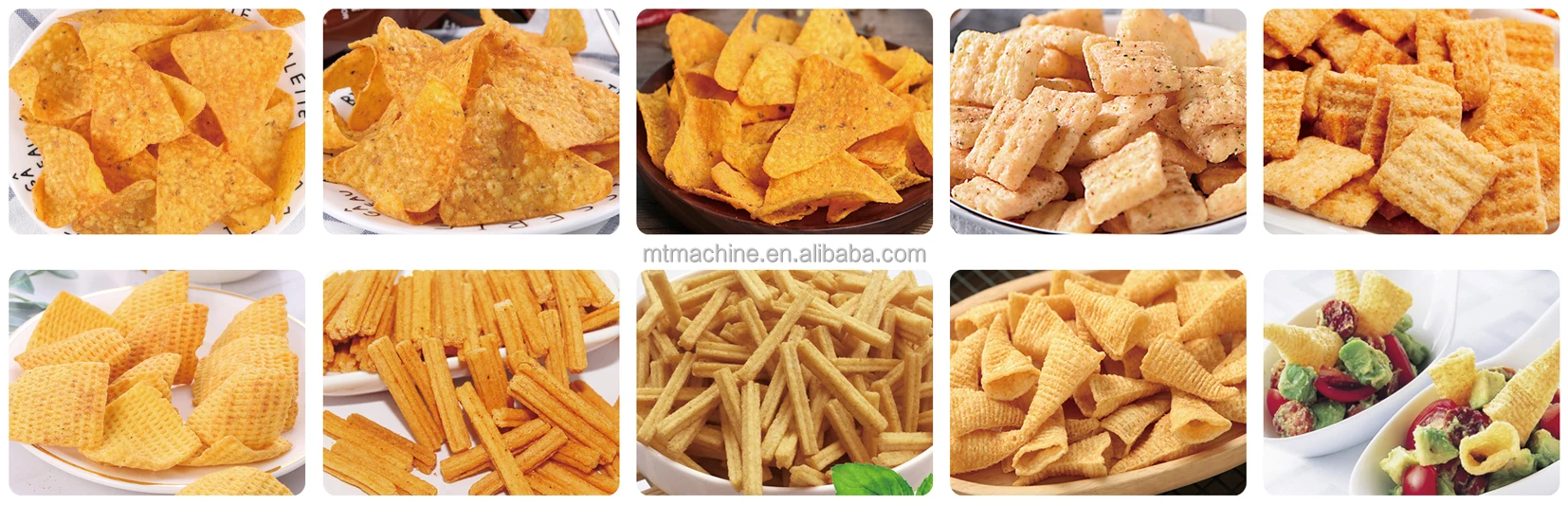
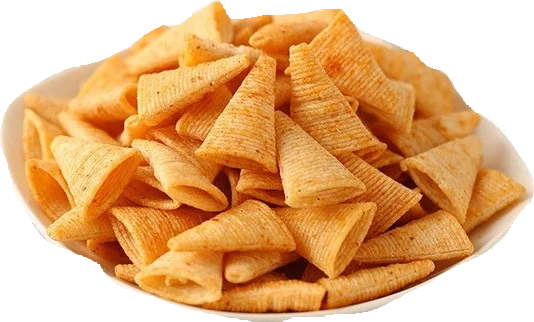

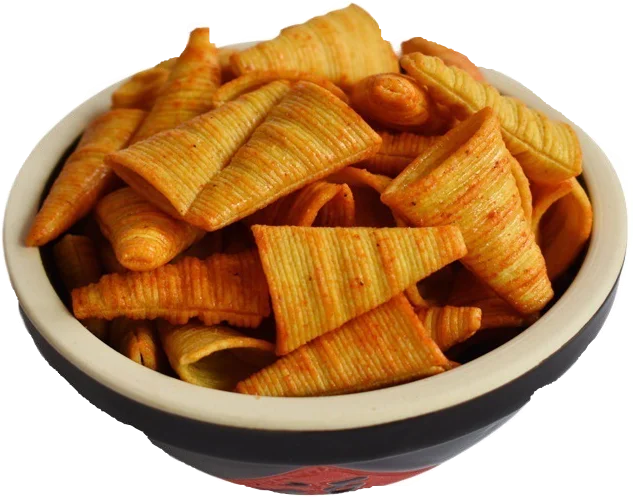
3D Pellet Fried Chips Snack Production Line, Twin-Screw Extruder, Gas/Electric Fryer, CE Certified — engineered for bugles, corn chips and 3D pellet formats from corn, wheat and potato-based raw materials.
The co-rotating twin-screw extruder uses sectional screw modules and matched die design to control gelatinisation, expansion and pellet density, with throughput balanced across cutting and frying stations to prevent bottlenecks.
Backed by pre-shipment trial runs on your raw material in our testing workshop, documented screw configuration records and on-site commissioning support.
Description
Integrated Line Throughput Matching — Extruder, cutting station and fryer are sized against one another so the 3D pellet fried chips production line turnkey runs at rated throughput without single-station bottlenecks on your actual raw material formulation.
Technical Specifications
| Parameter | Value |
|---|---|
| Product Type | 3D Pellet Fried Chips Snack Production Line |
| Screw Type | Co-rotating twin-screw, sectional modules |
| Main Motor Range | 100 kW to 280 kW across available models |
| Output Capacity | 120–1000 kg/h depending on model (basis to be confirmed on buyer raw material and moisture) |
| Line Stations | Mixer → Twin-screw Extruder → Cutting/Shaping → Fryer |
| Fryer Belt Width | 600 mm stainless steel mesh |
| Fryer Heating Option | Electricity or fuel gas |
| Cutting Machine Power | 1.47 kW |
| Cutting Machine Dimensions | 2500 × 600 × 1100 mm |
| Contact Material | Food-grade stainless steel |
| Voltage & Frequency | Configurable (e.g. 3ph 380V 50Hz, 3ph 415V 60Hz, 3ph 220V 60Hz) |
| Drying Method Option | Gas, electric or diesel heating |
| Assembly State | Complete line, turnkey |
| Standards | CE |
Application Suitability
| Application | Material or Output |
|---|---|
| Bugles and corn chips production | Corn powder, wheat flour blends |
| Pillow and wavy chip formats | Potato starch, potato powder, rice flour |
| Diamond and rib chip shapes | Corn starch with wheat flour formulations |
| Shell, screw and round tube snacks | Blended cereal and starch raw materials |
| Crisp pea and stick formats | Multi-grain flour with moisture adjustment |
| 3D pellet intermediates for secondary frying | Potato starch and corn flour blends |
What "Rated Capacity" Leaves Out on Fried Pellet Lines
A 3D pellet fried chips production line turnkey quoted on nominal output will underperform the moment your raw material deviates from the supplier’s test formula.
Early in my career I watched a Middle Eastern customer commission a fried corn chip line where the extruder was sized to catalog capacity, but their local corn flour ran coarser than assumed. Expansion dropped sharply, pellets sank instead of puffing, and the fryer ran half-empty while the extruder struggled to keep up. Two weeks of on-site screw reconfiguration brought throughput back, but those were two weeks the plant could not produce saleable product. [NEED_CITE: raw material particle size effect on extrusion expansion]
Matching Extruder Output to Cutter and Fryer Cadence
When a 3D pellet fried chips production line turnkey is assembled from individual machines rather than engineered as one system, the extruder may push more pellets than the cutter can shape cleanly, or the fryer belt may carry product faster than it can achieve target color and moisture removal. Each station must be matched to the same throughput figure calculated on your specific formulation and pellet geometry.
Screw Configuration Decides Pellet Density Before the Fryer Ever Starts
The co-rotating twin-screw extruder with sectional modules allows the screw profile to be built around your raw material’s gelatinisation temperature and starch content. Die selection then controls pellet wall thickness, which directly determines how much oil the pellet absorbs during frying and how consistently it expands. Getting this wrong means some pellets puff while others stay dense in the same batch. [NEED_CITE: twin-screw sectional module configuration for starch gelatinisation]
Reading the Spec Sheet Against Your Workshop Reality
Motor ratings from 100 kW to 280 kW across the available models indicate different throughput classes, but the meaningful number is the kg/h figure your specific flour blend can sustain at target moisture. The 600 mm fryer belt width sets a physical ceiling on how many pellets can pass through the oil bath per minute at a given residence time. Voltage configurability across 380V, 415V and 220V at 50 or 60 Hz means the motor windings and heater elements must be wound for your local supply before the line leaves the factory — a detail that delays commissioning by weeks if confirmed too late. Food-grade stainless steel contact surfaces throughout the line meet hygiene expectations in export markets where food safety audits trace every wetted surface. [NEED_CITE: food safety audit requirements for snack production equipment]
When Stations Are Mismatched by Default
A fryer sized too small forces the extruder to idle or dump product between runs, wasting raw material and energy. A cutter running faster than the extruder delivers produces irregular shapes because pellets arrive spaced too far apart on the belt. These mismatches rarely show up in a brochure because each machine individually meets its own catalog rating. The problem only surfaces during continuous production on your floor. [NEED_CITE: production line bottleneck identification methods]
Why Engineering the Whole Line Matters Here
The testing workshop runs your actual raw material through the extruder and cutter before the line ships, documenting the screw combination and die that produced acceptable pellets on your formulation. Line layout and capacity calculation is completed against your workshop footprint and target throughput rather than a generic template. Electrical schematics confirm voltage, frequency and control language before panel fabrication begins. Screw and die configuration records travel with the machine so replacement parts match the build that was validated during trial. CE documentation accompanies the shipment for customs and local compliance filing.
Documentation & Verification
- Line layout drawing matched to your workshop dimensions and utility connection points
- Trial run report on your raw material from the in-house testing workshop
- Screw and die configuration record for your target pellet shape and formulation
- Electrical schematic with confirmed voltage, frequency and panel language
- Factory test record showing continuous run performance before dispatch
- Packing photographs documenting crate condition at loading
Installation, Commissioning & Support
- Foundation plan sized to the full line length up to 30 metres with anchor bolt schedule
- Dedicated power circuit matched to main motor rating up to 280 kW plus heater load
- Extruder barrel and fryer delivered modular for assembly inside existing doorways
- First-run parameter setting including barrel temperature zones and fryer belt speed
- Operator training covering screw module changeover and die cleaning procedures
- Wear parts list with lead times for screws, dies and fryer belt segments
- Maintenance schedule tied to production hours for gearbox oil and seal inspection
Before You Request a Quote
Share your raw material specification including flour type, particle size distribution and typical moisture content. Confirm your target daily output and the pellet shapes you plan to run in the first year. Provide your local voltage, frequency and the language your operators need on the HMI screen. If you have existing upstream mixing or downstream packing equipment, send the interface dimensions so the line can tie in without modification.
Frequently Asked Questions
Q: How is line capacity verified on my raw material before shipment?
A: Your raw material is shipped to the in-house testing workshop where the extruder, cutter and fryer run a continuous trial. The output rate, pellet expansion and fry color are recorded against your target specification. If the result falls short, screw modules or die geometry are adjusted until the line meets throughput on your actual formulation.
Q: What screw and die configuration will be specified for my pellet shape?
A: The screw profile is built from sectional modules chosen to match your flour’s starch content and gelatinisation behavior. Die geometry is selected for wall thickness and pellet cross-section. Both are documented in a configuration record that ships with the line, so replacement parts replicate the validated build exactly.
Q: How are extruder, cutter and fryer throughput matched to prevent bottlenecks?
A: Each station is sized against the same throughput calculation based on your formulation and pellet geometry. The fryer belt speed and oil residence time are set so the cutter output is fully absorbed without queuing, and the extruder runs continuously without idle gaps.
Q: Can the electrical system be configured for my local voltage and frequency?
A: Yes. Motor windings, heater elements and control panels are built to your confirmed voltage and frequency before fabrication. Options include 380V 50Hz, 415V 60Hz and 220V 60Hz among others. Control language on the operator interface is set to your preference during panel assembly.
Q: What installation, commissioning and operator training is included?
A: Engineers arrive on site for assembly, utility connection and first production run. Barrel temperature zones, fryer temperature and belt speed are set against your raw material. Operators are trained on screw changeover, die maintenance and daily inspection routines before the team departs.
Related products
-
Automatic Fried Crispy Bugles Snacks Food Making Machines Wheat Flour Sala Food Extruder
¥100.00 Select options This product has multiple variants. The options may be chosen on the product page -
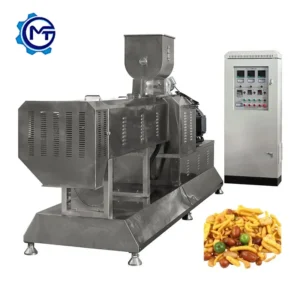
New 100-200kgh Automatic Fried Nimko Extruder Machine Food Grade Stainless Steel for High Productivity Fried Snacks Processing
¥8,575.00 Select options This product has multiple variants. The options may be chosen on the product page -
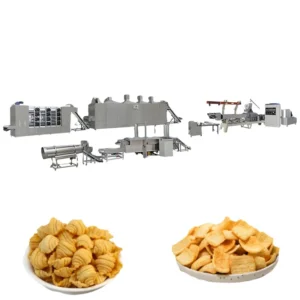
New Automatic Portable High Productivity Frying Salad Sticks Chips Snacks Food Production Line
¥100.00 Select options This product has multiple variants. The options may be chosen on the product page -
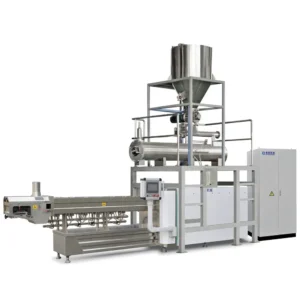
New Automatic 150-200kg/h Nimko Fried Pasta Snacks & Kurkure Making Machine Food Grade Stainless Steel High Productivity
¥8,585.00 Select options This product has multiple variants. The options may be chosen on the product page