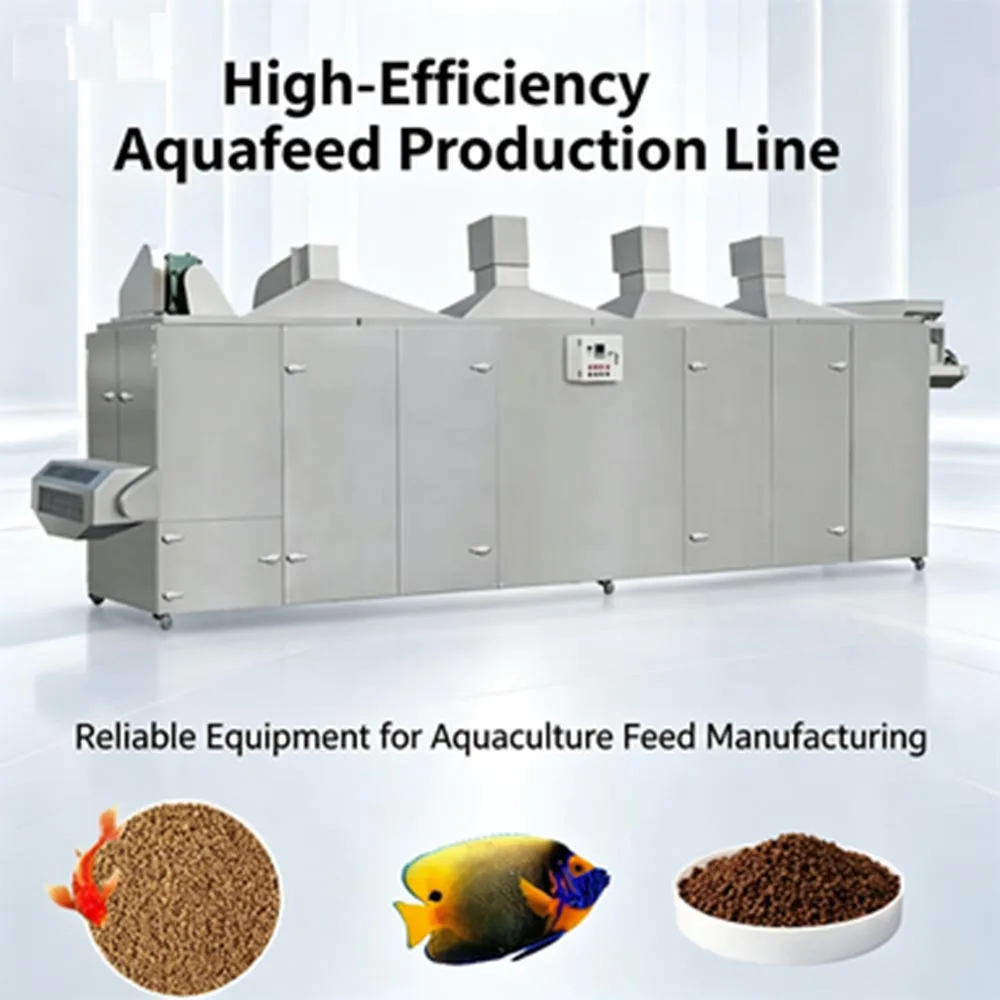
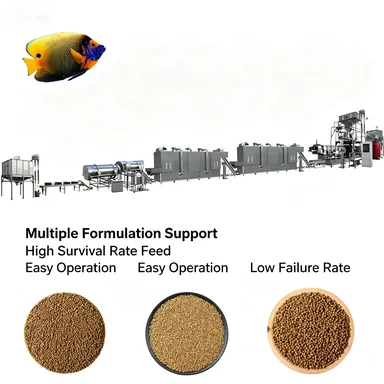
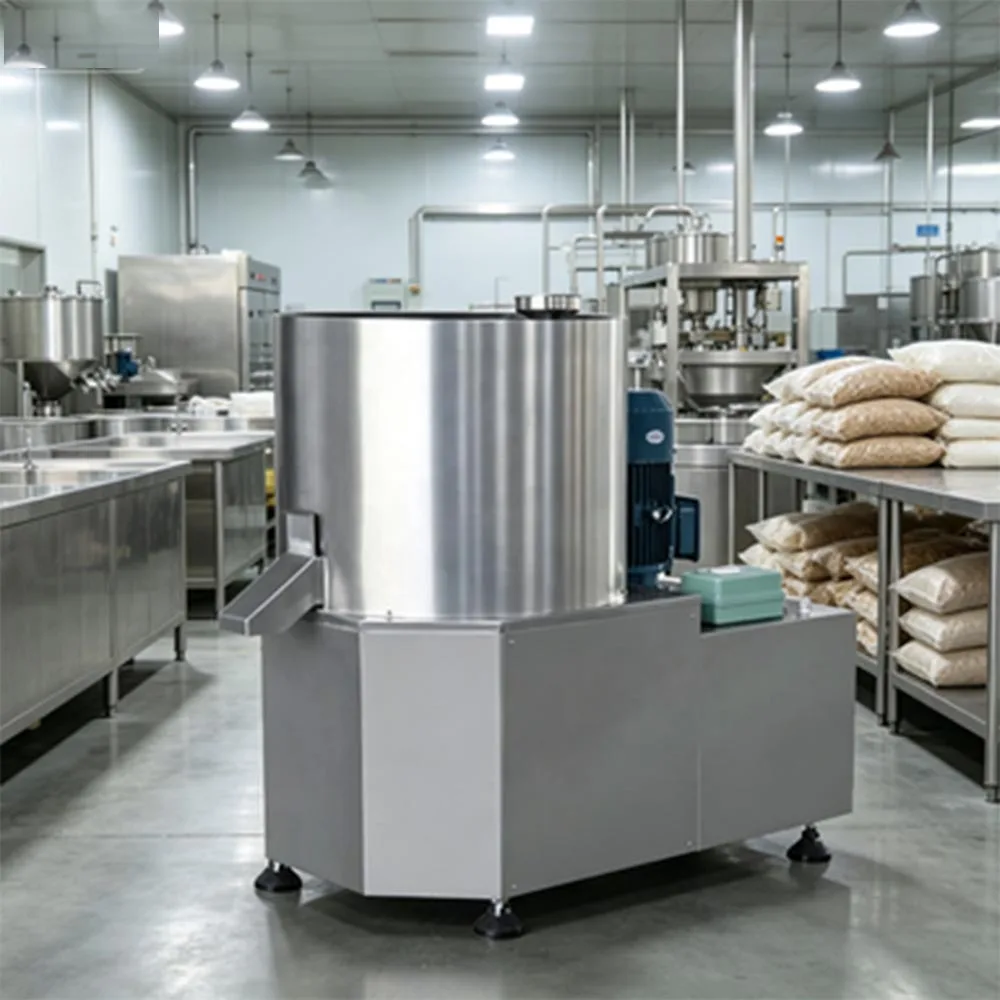
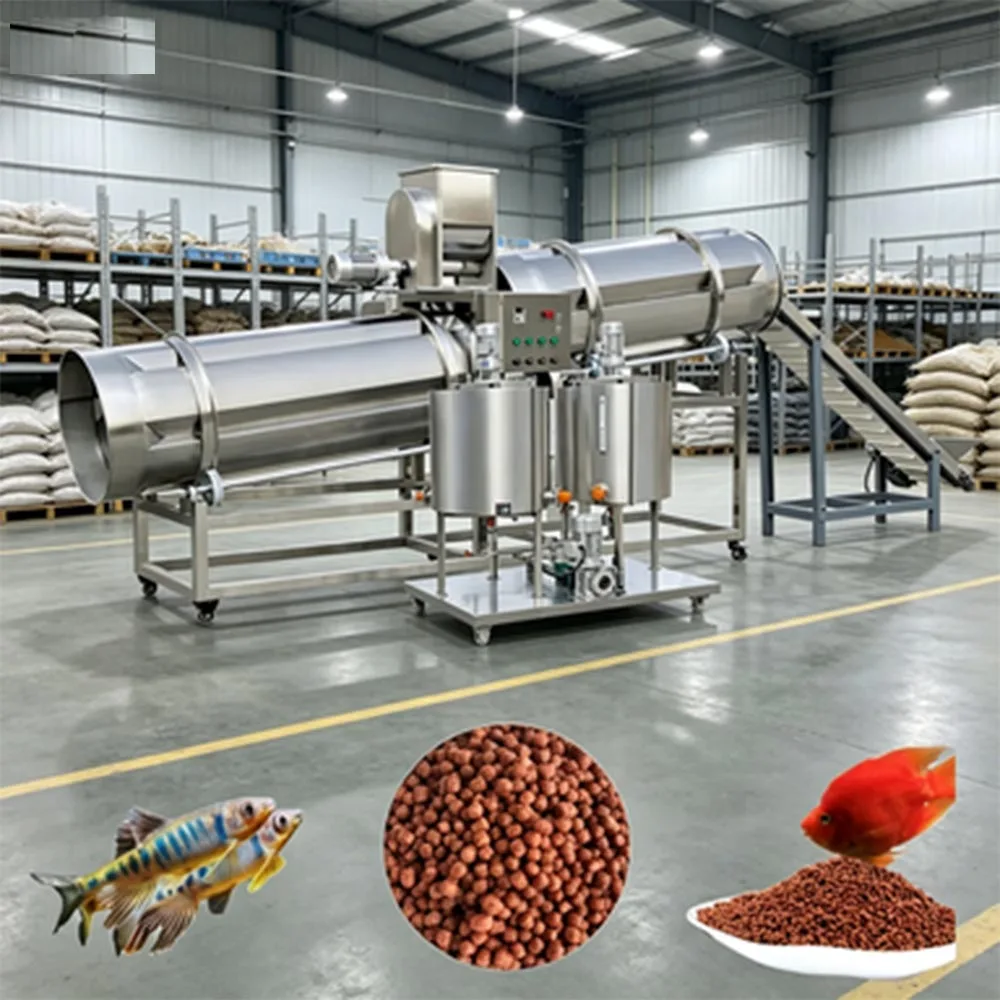


- In-house trial runs on your formulation validate capacity and texture before shipment, backed by full documentation and on-site commissioning.
Description
Throughput-matched extrusion lines — Every station from batching through packing is engineered against the buyer’s actual aquatic feed formulation, not catalog nominal values.
Technical Specifications
| Parameter | Value |
|---|---|
| Product Type | Aquatic Feed Extrusion Production Line |
| Output Capacity | 500 kg/h floating fish feed pellets (basis not stated in source — confirm raw material formulation, moisture content, pellet diameter) |
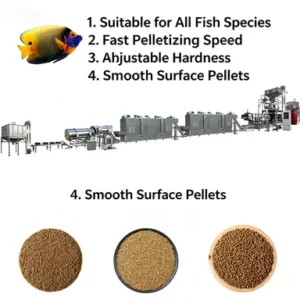
| Pellet Size Range | 0.5 mm to 12 mm adjustable via die plate change |
| Extruder Configuration | Twin-screw |
| Contact Material | Stainless steel on food-contact parts |
| Control System | Simple control panel (PLC or MCC available on request) |
| Automation Level | Fully automatic continuous production |
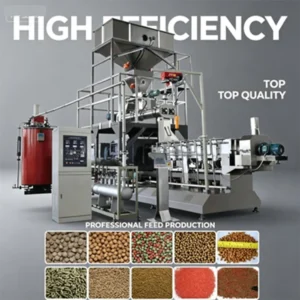
| Line Stations | Feeding, mixing, extruding, pelletizing, drying, coating, cooling, packing |
| Motor Power | To be confirmed based on line configuration |
| Voltage and Frequency | To be confirmed for target market before production |
| Certification | CE and ISO available (confirm documentation before order) |
Application Suitability
| Application | Material or Output |
|---|---|
| Floating fish feed for pond aquaculture | Corn, soybean meal, fish meal, vitamin premix |
| Sinking feed for bottom-feeding species | High-protein blends with adjusted moisture for density control |
| Starter pellets for fry and juvenile stages | 0.5–2 mm micro pellets from finely ground raw materials |
| Grow-out pellets for adult fish | 3–12 mm pellets with controlled starch gelatinisation |
| Shrimp feed production | Fine particle mixes requiring high shear and residence time |
Why the 500 kg/h Label Means Nothing Without the Formulation
Capacity only exists relative to a specific raw material recipe, moisture level, and target pellet diameter. I have watched aquaculture feed producers sign contracts based on a headline number, then discover during commissioning that their high-fish-meal recipe chokes the barrel at barely half the quoted throughput. The aquatic feed extruder production line turnkey rating you see on paper assumes a baseline formulation that may never match your actual ingredients. When the starch content drops and protein goes up, viscosity inside the barrel changes, expansion collapses, and the downstream dryer suddenly has too much product or too little. [NEED_CITE: raw material impact on twin-screw extrusion throughput in aquaculture feed manufacturing]
Throughput Matching Between Extruder and Downstream Stations
An aquatic feed extruder production line turnkey project succeeds or fails at the interfaces. The extruder may hold a steady output, but if the dryer belt is too short for the moisture load, pellets leave the line still wet enough to spoil in the bag. We calculate drying residence time from the exact exit moisture of your pellet, not from a generic table. The same principle applies to the cooler, the coating drum, and the packing scale — each station is specified against the real mass flow that precedes it.
Screw Configuration Against Raw Material Behaviour
The twin-screw geometry determines how long material stays in the barrel and how much shear it receives. A formulation heavy in starch demands a different screw element sequence than one dominated by fish meal and oil. We configure the screw profile and die geometry after running your actual raw material through our testing workshop, recording barrel temperature at each zone and measuring pellet density at the die exit. This eliminates guesswork at your site. [NEED_CITE: screw element arrangement and residence time distribution in twin-screw food extrusion]
What the Pellet Size Range Demands from the Die
Moving from 0.5 mm fry feed to 12 mm grow-out pellets is not a simple die swap. Smaller dies increase backpressure, which forces the extruder motor to work harder and alters the expansion ratio. The control panel must allow operators to adjust screw speed and feed rate together so that pellet density stays within specification across the full size range. Without that coordination, a line rated for 500 kg/h on large pellets may produce only a fraction of that on micro pellets.
The Hidden Cost of Skipping the Trial Run
I once walked into a plant where the aquatic feed line had been installed and wired, but the floating pellets kept sinking because nobody had validated the formulation against the screw profile before shipment. The owner spent weeks adjusting moisture and barrel temperature on the factory floor, burning raw material and labour while the line sat idle. A trial run in the manufacturer’s testing workshop costs a fraction of that downtime and lets you lock the screw configuration before the machine ever leaves the factory. [NEED_CITE: cost of post-installation product development versus pre-shipment trial runs]
Why Buy This Line Here
The batching-to-packing scope sits under a single supplier, so throughput is matched across every station rather than assembled from separate vendors who blame each other when the line bottlenecks. Screw and die configurations are specified to your raw material, not copied from a generic build. Our in-house testing workshop runs your actual ingredients before shipment, producing a documented trial report. Voltage, frequency, and control language are confirmed against your local grid and operator preference before production starts. CE and ISO documentation is prepared per shipment, not handed over as a generic certificate.
Documentation & Verification
- Line layout and capacity calculation matched to your aquatic feed formulation
- Screw and die configuration record tied to your trial run results
- Electrical schematic with confirmed voltage, frequency, and control language
- Trial run report on customer raw material showing pellet density and output
- Factory test record documenting full line run before packing
- Wear parts list with first-replacement availability timeline
Installation, Commissioning & Support
- Foundation drawing provided with load points for the twin-screw extruder and dryer
- Dedicated circuit sizing confirmed for total line motor power before wiring
- Extruder barrel and screw elements shipped separately for safe assembly on site
- First production run supervised with barrel temperature and feed rate logged
- Operator training covers die changeover across the 0.5–12 mm pellet range
- Screw, barrel, and die spare parts shipped with initial order if requested
What to Include in Your Inquiry
Send your raw material recipe, target pellet diameters, and desired moisture content at the bag so we can size the extruder and dryer correctly. Specify your local voltage, frequency, and preferred control language so the electrical package is built right the first time. If you have existing upstream milling or downstream packing equipment, share the interface dimensions and throughput so the new line ties in without a gap.
Frequently Asked Questions
Q: How is the 500 kg/h capacity verified against my specific raw material and pellet size?
A: We run your actual formulation through our testing workshop, measuring throughput, pellet density, and expansion at the die exit. The verified output is recorded in a trial report and becomes the contractual capacity, not a catalog number based on a generic recipe.
Q: How do you ensure throughput is matched between the extruder and downstream dryer and cooler?
A: Each downstream station is calculated from the extruder’s verified mass flow and exit moisture. Dryer belt length, cooler airflow, and coating drum cycle time are all specified so no single station becomes a bottleneck during continuous production.
Q: What voltage, frequency, and control language are confirmed before shipment?
A: We collect your local electrical standard and operator language preference during the quotation stage. The electrical schematic, motor nameplates, and control panel labels are built to those values and confirmed with you before production starts.
Q: Can I send my raw material for a trial run before the line ships?
A: Yes. We ask you to ship a representative sample of your formulation to our testing workshop. The trial records screw speed, barrel temperature profile, pellet density, and output rate, and the full report accompanies your shipment.
Q: What does on-site installation, commissioning, and operator training cover?
A: Our engineers supervise mechanical assembly, electrical connection, and the first production runs. Training covers daily startup, die changeover across the pellet size range, screw and barrel inspection, and routine maintenance intervals specific to your line configuration.
Related products
-
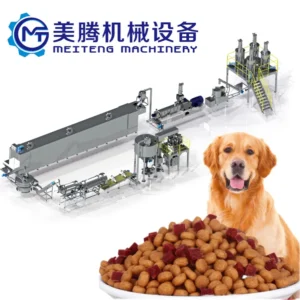
High Capacity Pet Food Extrusion Production Line Suitable for Dog. Cat. Bird. Fish and Cattle Feed
¥9,500.00 Select options This product has multiple variants. The options may be chosen on the product page -
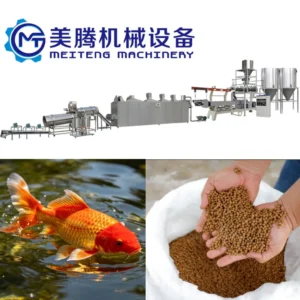
1.0-1.5t/h High Capacity Multi-Species Fish Feed Processing Line to Produce Fish Food
¥45,000.00 Select options This product has multiple variants. The options may be chosen on the product page -
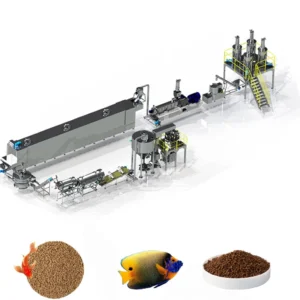
Automatic Fish Feed Production Line Machine Floating Sinking Pellet Manufacturing High Capacity Energy Saving Design
¥9,500.00 Select options This product has multiple variants. The options may be chosen on the product page -
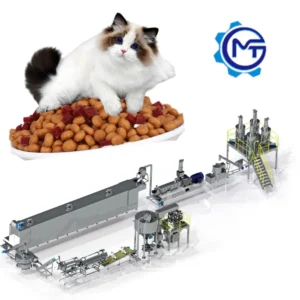
MT70 200-250kg/h Dog Cat Pet Food Processing Line 380V 50HZ Three Phase 45KW
¥35,000.00 Select options This product has multiple variants. The options may be chosen on the product page