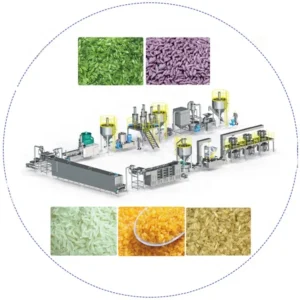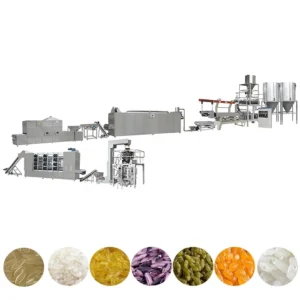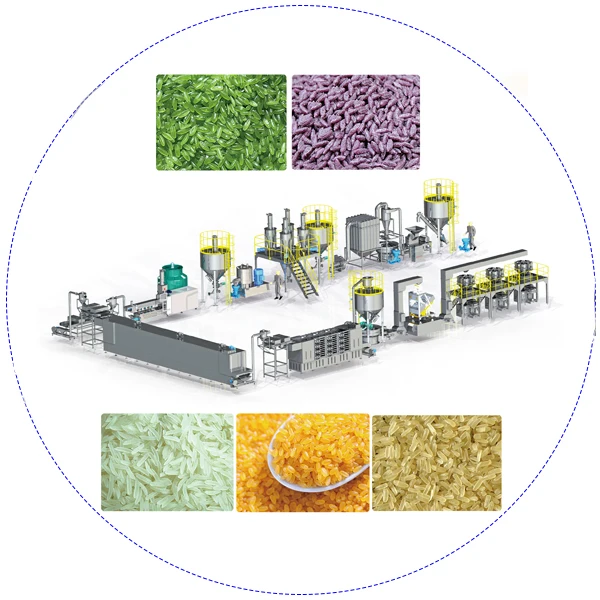

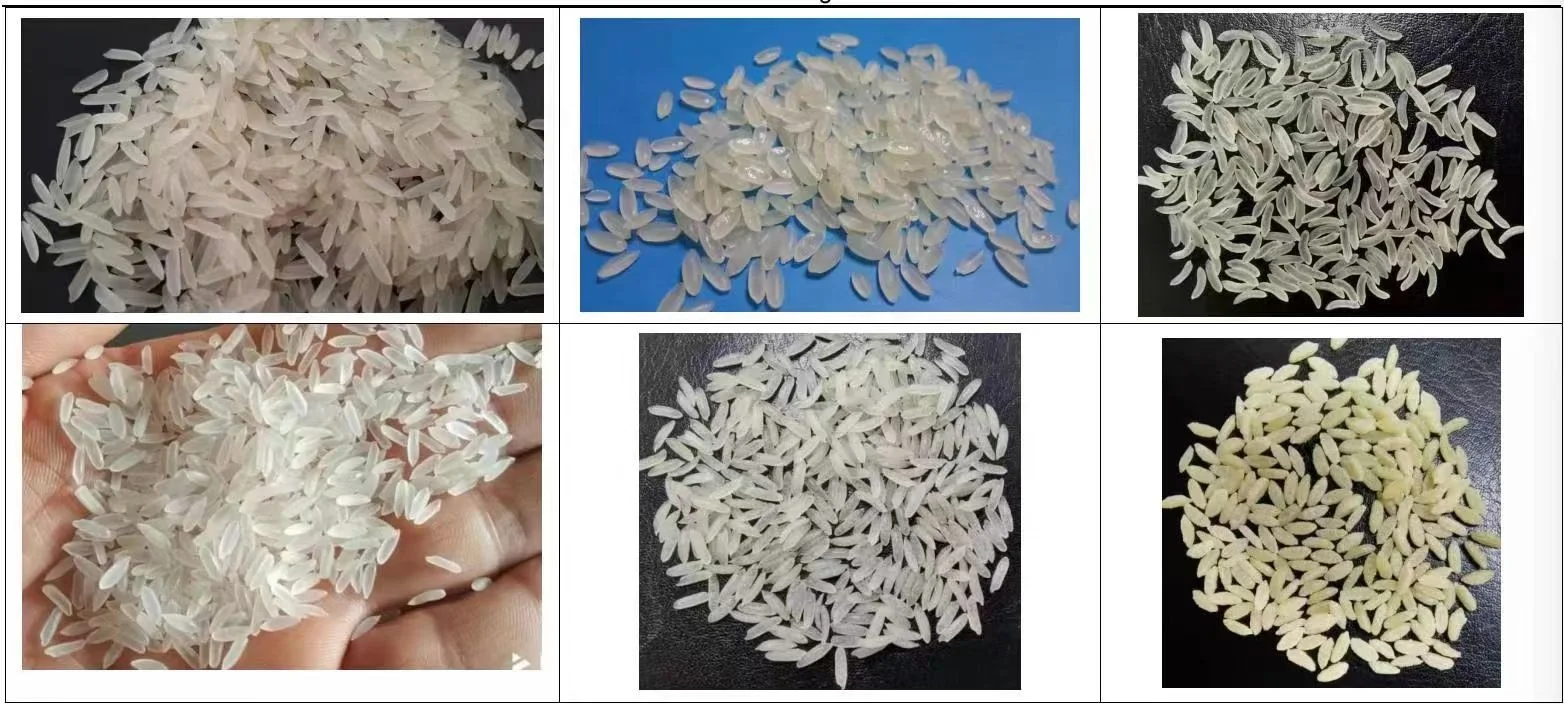
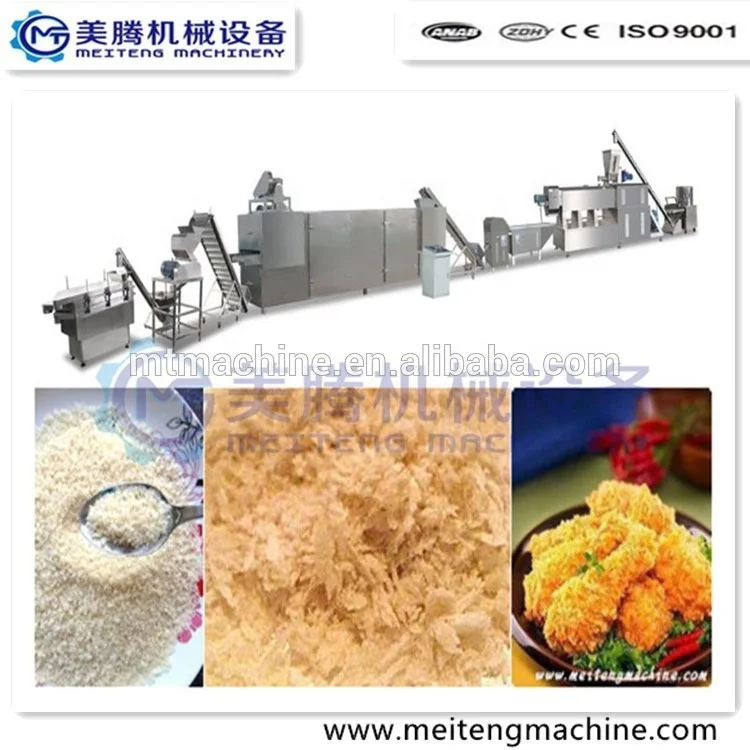
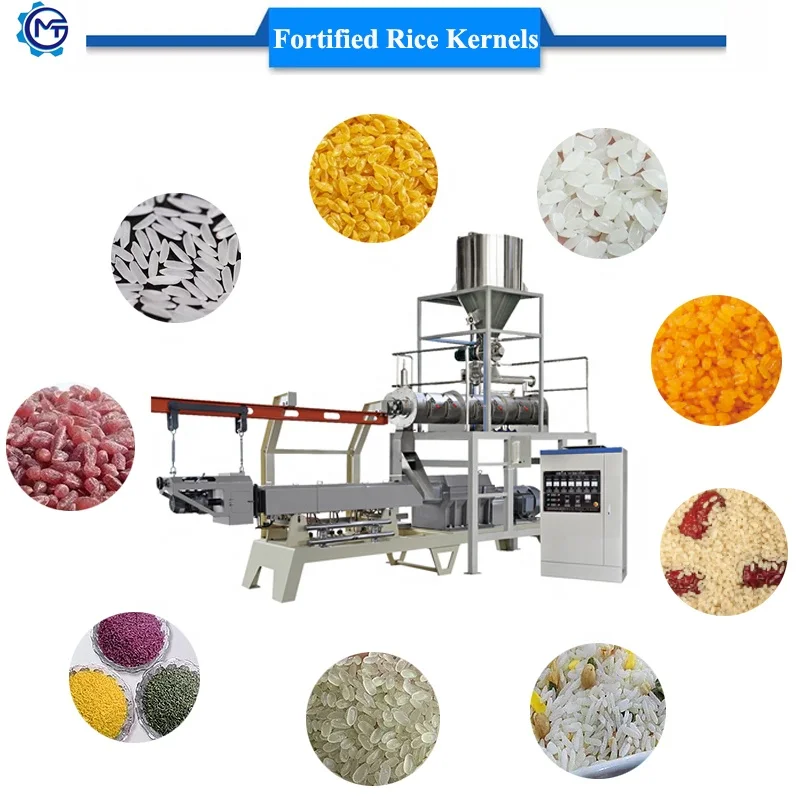

MT65 / MT70 / MT85, Fortified Rice Kernel Extrusion Production Line, Twin-Screw, 85–235 kW — configured for broken rice, corn, millet and starch-based formulations with added micro-nutrients.
- Screw configuration and die design matched to raw material viscosity and target kernel density
- Circulation drying with low- and high-temperature stages controls moisture uniformly across batches
In-house testing workshop verifies output on your exact formulation before shipment, with throughput balanced from mixing through packing under one supplier.
Description
Throughput Matching Across Stations — Every dryer, cooler and extruder is sized against your actual raw material formulation, so the line runs at its rated pace without one station choking the next.
Technical Specifications
| Parameter | Value |
|---|---|
| Product Type | Fortified Rice Kernel Extrusion Production Line |
| Extruder Models Available | MT65, MT70, MT85, MT75, MT95 |
| Screw Configuration | Twin-screw extruder series |
| Feeding System | Single or double screw, selected per material flow |
| Installed Power | 85 kW (MT65) to 260 kW (MT95) |
| Power Consumption | 60 kW (MT65) to 195 kW (MT95) |
| Output Capacity | 80–100 kg/h (MT65) up to 800–1000 kg/h (MT95) (basis to be confirmed) |
| Overall Dimensions | 28 × 1.2 × 2.2 m (MT65) to 36 × 3.5 × 4.3 m (MT95) |
| Control | Frequency speed control with high automation |
| Drying Oven Heating | Electric or gas |
| Drying Method | Circulation process, frequency motor on mesh belt |
| Certifications | CE, ISO |
Application Suitability
| Application | Material or Output |
|---|---|
| Nutritional programme fortified kernels | Broken rice with added vitamins and minerals |
| Restructured artificial rice | Rice bran, corn, millet and starch blends |
| Grain-based breakfast ingredients | Oats, buckwheat and wheat with micro-nutrients |
| Institutional rice supply | Reformed kernels from bean and starch bases |
What "800 kg/h Capacity" Actually Means on Your Formula
Nominal output is only the starting point; verified output on your specific raw material is what counts.
Quoted capacities for artificial rice processing lines are often based on a standard rice flour recipe. The moment a buyer introduces whey protein isolate or high-fibre bran into the mix, the extrusion behaviour shifts. Expansion ratio drops, kernel density misses the target, and a line rated for high throughput suddenly needs to slow down to maintain product shape. This mismatch is one of the most common reasons installation schedules slip past the first week [NEED_CITE: CE machinery directive requirements for industrial equipment].
Matching the Line to the Turnkey Project Schedule
A turnkey artificial rice processing line involves more than dropping machines onto a factory floor. The extruder output must feed the vibrating conveyor at a rate the drying oven can absorb, and the cooling section must handle the same volume before packing begins. When these stations are sourced from separate vendors, throughput mismatches emerge during commissioning. Sizing every station against the buyer’s target kernel specification keeps the project on its phased installation timeline.
Why Factory Trials Matter Before Dispatch
Running a trial on the buyer’s actual formulation inside the testing workshop exposes screw and die issues before the machines are crated. A nutritional powder processing line we dispatched was tested on standard rice flour, but the end user’s formula contained a high proportion of whey protein. On site, the kernel density was completely outside specification, and the team spent three days reconfiguring the screw profile and die just to bring the output back into range. A pre-shipment trial would have caught that mismatch in the factory, not on the buyer’s floor [NEED_CITE: industrial extrusion trial run standards].
How Screw Geometry and Drying Stages Shape the Kernel
Twin-screw extrusion allows operators to adjust the screw element sequence — conveying, kneading and shearing zones — to control how thoroughly the starch gelatinises inside the barrel. The installed power range across the MT65 to MT95 series reflects the torque needed for different formulations: a starch-heavy blend demands less energy than one loaded with fibre and protein. After extrusion, the kernels pass through a low-temperature circulation drying stage that pulls moisture from the surface without cracking the shell, followed by high-temperature roasting that sets the final texture. Frequency control on the mesh belt speed lets operators fine-tune residence time, which directly affects the moisture gradient inside each kernel.
The Cost of Skipping the Layout Calculation
When a turnkey artificial rice processing line is assembled without a throughput calculation, the consequences surface during the first production run. An undersized dryer creates a backlog of wet kernels that stick together on the belt, while an overpowered extruder pushes material faster than the cooling station can stabilise. The result is unplanned downtime, wasted raw material and a commissioning period that stretches well beyond the planned schedule [NEED_CITE: turnkey food line commissioning benchmarks].
Why Source the Full Line from One Project Partner
Every station in this artificial rice processing line is specified under one supply contract, which means the extruder, dryer, cooler and packing interface are engineered together rather than bolted on afterwards. Screw configuration and die design are documented against the buyer’s raw material before production begins. An in-house testing workshop allows trial runs on the actual formulation, producing a written report that travels with the shipment. Electrical schematics confirm voltage, frequency and control language for the destination market, reducing on-site wiring disputes. Documentation packages include CE and ISO certificates aligned with the machinery directive requirements of the import country.
Documentation & Verification
- Line layout drawing showing throughput balance between extruder, dryer and packing stations
- Screw and die configuration record matched to your raw material formulation
- Trial run report on your actual recipe conducted in the testing workshop before crating
- Electrical schematic confirming voltage, frequency and PLC language for your market
- CE declaration of conformity and ISO certificate for customs and local compliance
Installation, Commissioning & Support
- Floor plan showing the 28 m to 36 m line footprint and utility connection points
- Dedicated power circuit sized to the selected model’s installed power rating
- Assembly sequence from modular sections to full-line alignment on your foundation
- First-run parameter setting covering barrel temperature, screw speed and mesh belt rate
- Operator training on frequency drive adjustment and automatic lubrication checks
- Wear parts list identifying screws, dies and barrel segments with replacement intervals
What We Need to Size Your Line
Share your raw material formulation, including the percentage of starch, protein and fibre, along with the target kernel size and daily output requirement. Provide the available workshop length and ceiling height so the layout can be drafted around your existing space. Confirm the local voltage and frequency standard, and specify whether your operators will need the control interface in a language other than English.
Frequently Asked Questions
Q: How is line capacity verified on my raw material before the machines ship?
A: Your exact formulation is run through the extruder in our testing workshop. We measure kernel expansion, density and moisture at each station, then adjust screw elements and dryer settings until output meets the agreed specification. A written trial report is included with your shipment.
Q: How do you match screw configuration to my target kernel density?
A: We select kneading and conveying elements based on your starch-to-protein ratio and desired texture. The die geometry is then matched to control expansion as the kernel exits the barrel, ensuring consistent density across every batch.
Q: What voltage and control options are confirmed before production starts?
A: We confirm your site’s voltage, frequency and phase before the electrical panel is built. Control language and HMI layout are set to match your operators’ requirements, and the final schematic is reviewed with your engineering team.
Q: How do you prevent bottlenecks between the extruder and the dryer?
A: Each station’s capacity is calculated against the extruder’s verified output on your formulation. The dryer belt width, residence time and cooling conveyor speed are all sized so material flows continuously without backlog or idle time.
Q: What spare wear parts should I stock for the first year?
A: We supply a wear parts list with the shipment, identifying screws, dies and barrel segments that experience the highest abrasion. Recommended stock levels are based on your planned production hours and raw material abrasiveness.
Related products
-
Commercial Stainless Steel Baby Rice Powder Grinding Mixing Machine
¥8,238.27 Select options This product has multiple variants. The options may be chosen on the product page -
Industrial Instant Corn Paste Production Line Nutritional Powder Processing Equipment Meal Replacement Nutrition Powder Machine
¥65.00 Select options This product has multiple variants. The options may be chosen on the product page -

Full Automatic Complete Baby Food Nutrition Powder Porridge Processing Production Line for Infant Nutrition Factory
¥9,500.00 Add to cart -
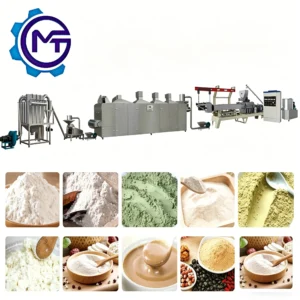
Fully Automatic 500kg/h Baby Cereal Nutrition Powder Extrusion Drying Line with PLC Control
¥9,500.00 Add to cart