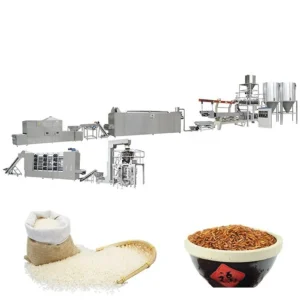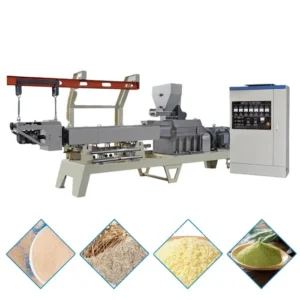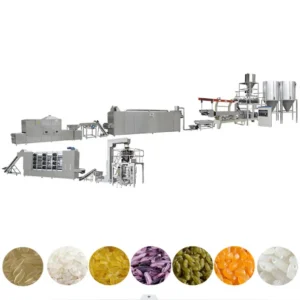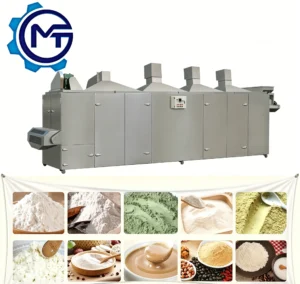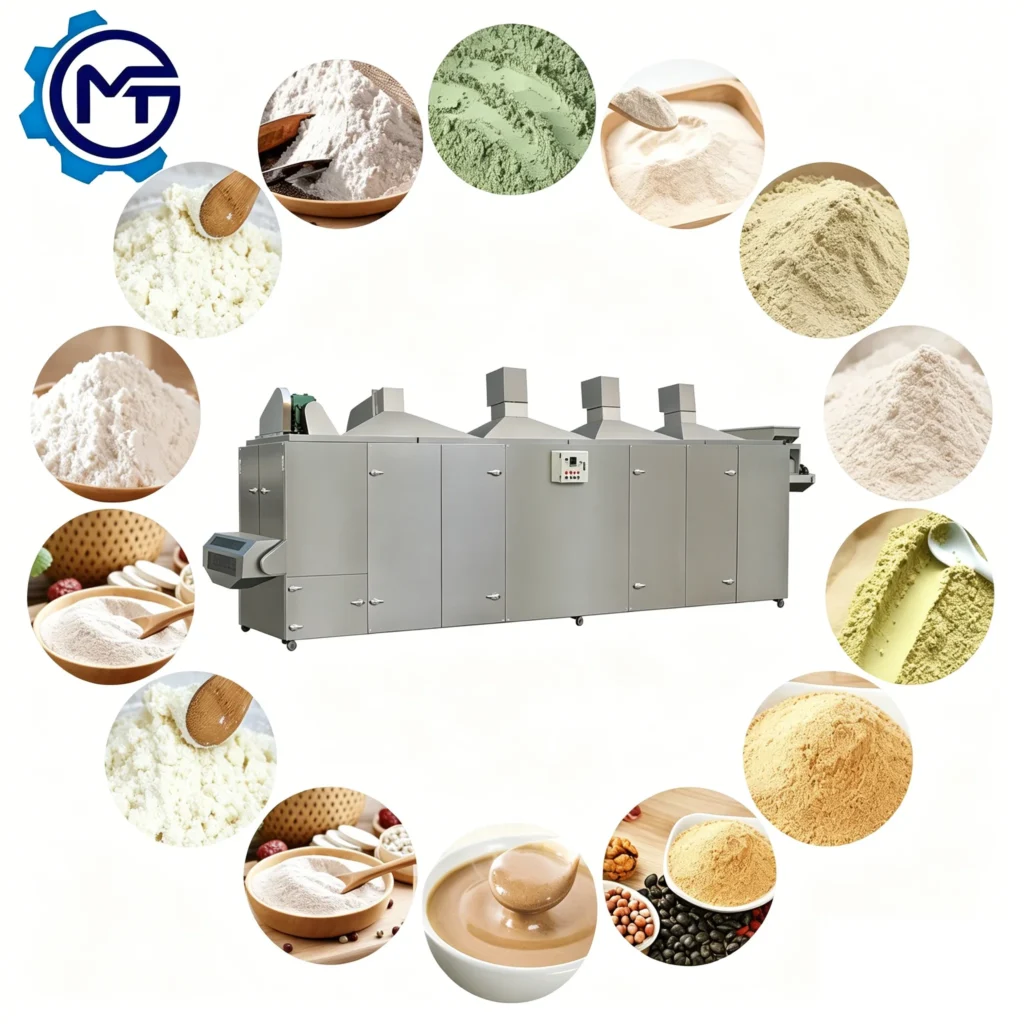
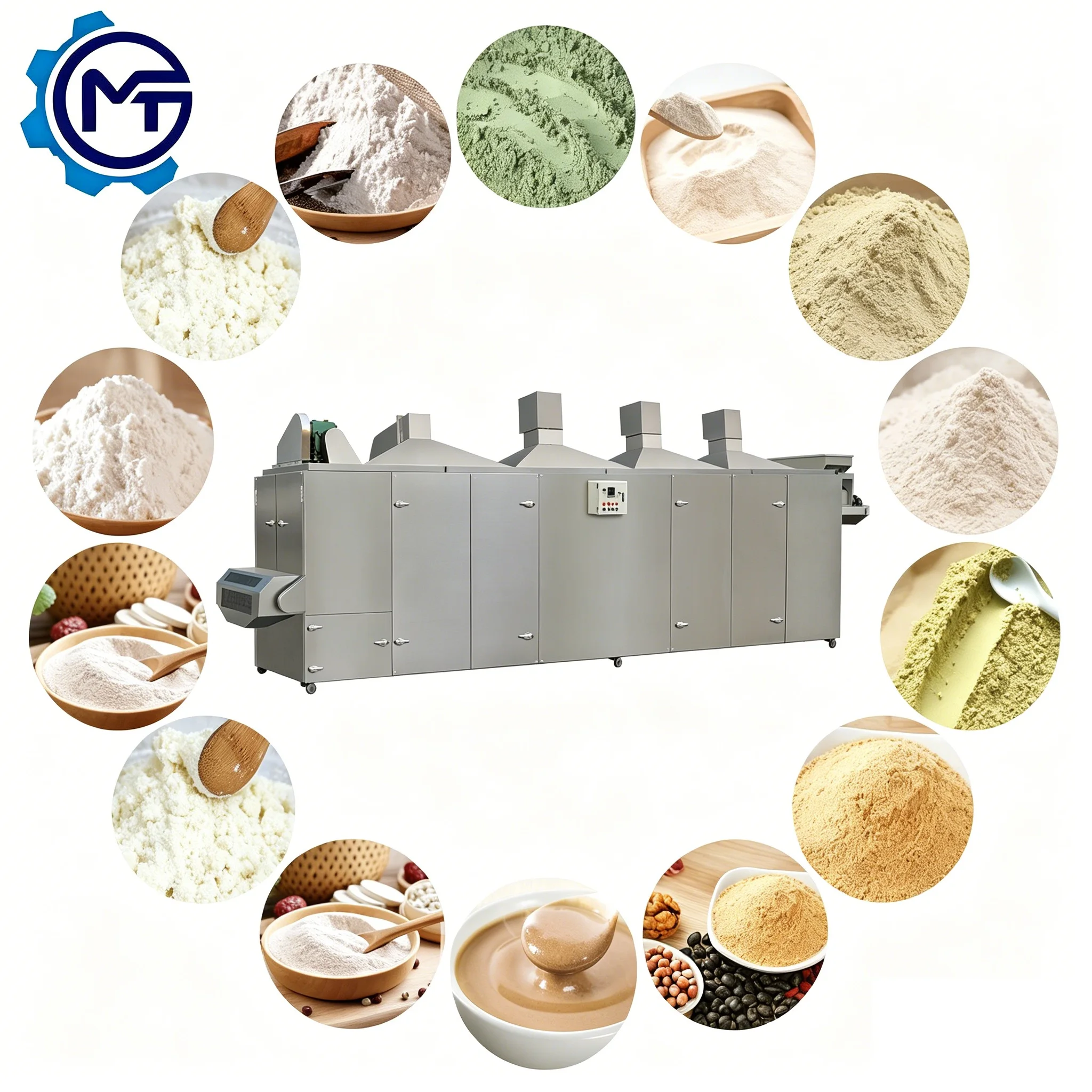


MT65 / MT70 / MT75 / MT85 Twin-screw Nutritional Powder Processing Line, PLC & MCC Control — covers mixing, extrusion, drying and pulse grinding as one integrated turnkey system.
- Screw configuration and die design matched to your grain raw material and target powder fineness
- Line station throughput aligned across mixer, extruder, multi-layer dryer and grinder to prevent bottlenecks
Trial runs on customer raw material are completed in our testing workshop before shipment, with full documentation provided.
Description
Turnkey integration across every station — we calculate mixer batch rhythm, extruder throughput, dryer residence time and grinder capacity together so the nutritional powder processing line runs without buffer stoppages.
Technical Specifications
| Parameter | Value |
|---|---|
| Product Type | Nutritional Powder Processing Line |
| Line Stations | Mixer → Screw Conveyor → Extruder → Air Conveyor → Dryer → Air Conveyor → Pulse Grinder |
| Screw Type | Twin-screw |
| Model Range | MT65 / MT70 / MT75 / MT85 |
| Installed Power | 84 kW (MT65) / 160 kW (MT70) / 190 kW (MT75) / 210 kW (MT85) |
| Power Consumption | 59 kW (MT65) / 120 kW (MT70) / 140 kW (MT75) / 150 kW (MT85) |
| Output Capacity | 120–150 kg/h (MT65, basis to be confirmed) / 150–200 kg/h (MT70, basis to be confirmed) / 200–250 kg/h (MT75, basis to be confirmed) / 300–400 kg/h (MT85, basis to be confirmed) |
| Overall Dimensions (L×W×H) | 20000×1500×2200 mm (MT65) / 21000×1500×2200 mm (MT70) / 23000×1500×3200 mm (MT75) / 25000×1500×3500 mm (MT85) |
| Voltage & Frequency | 380 V / 50 Hz, Three Phase (configurable to site supply) |
| Control System | PLC and MCC (integrated across all stations) |
| Mixer Power | 4 kW / 7.5 kW / 15 kW (options) |
| Mixer Batch Capacity | 20–30 kg/time / 70–80 kg/time / 170–180 kg/time (options) |
| Mixer Dimensions | 1000×900×1300 mm / 1300×1200×1500 mm / 1500×1400×1600 mm (options) |
| Mixer Material | 304 Stainless Steel |
| Dryer Type | Multi-layer oven; fuel / gas / electric heating options; double pitch roller chain drive |
| Pulse Grinder Power | 11 kW |
| Pulse Grinder Dimensions | 3000×900×2200 mm |
| Pulse Grinder Weight | 1500 kg |
| Standards | CE, ISO |
| Warranty | One year |
Application Suitability
| Application | Material or Output |
|---|---|
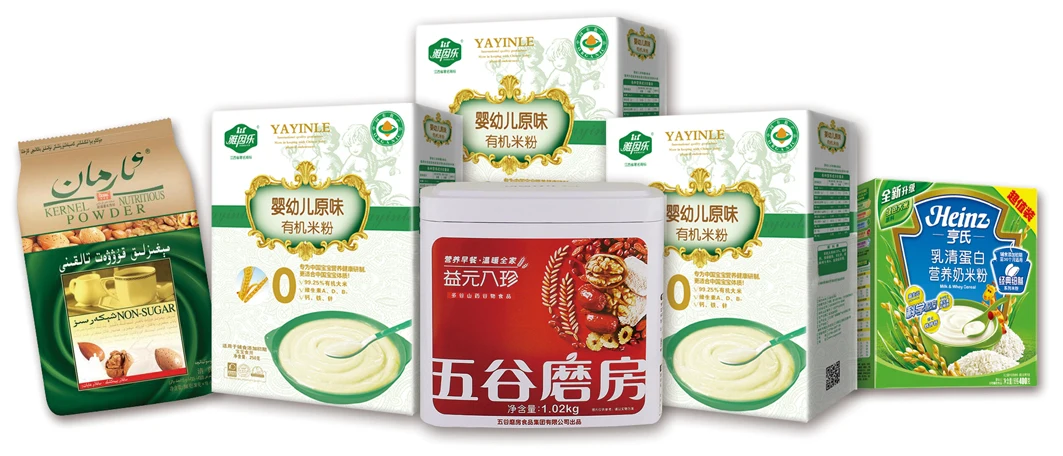
| Nutritional baby rice powder | Rice flour, grain blends with vitamin and mineral premix |
| Modified and pregelatinised starch | Corn, cassava, potato starch converted to functional ingredients |
| Fortified food powder for nutrition programmes | Cereal-legume blends fortified with micronutrients |
| Health care and functional food powder | High-protein, high-fibre grain formulations |
| Artificial rice production | Broken rice or grain flour reconstituted into rice-shaped kernels |
| Grain-based nutritional powder recycling | Off-spec or surplus grain reprocessed into usable powder |
What a Bottleneck in the Grinder or Dryer Costs Your Schedule
A nutritional powder processing line turnkey project fails most often at the junction between stations, not inside any single machine. When the extruder pushes material faster than the dryer can remove moisture, the downstream grinder chokes on wet agglomerates; when the mixer dumps a batch too quickly, the extruder starves and barrel temperature swings ruin gelatinisation consistency.
I have stood in commissioning rooms where the line technically worked but could not sustain its nameplate rhythm because someone sized the dryer to a different moisture curve than the raw material actually demanded. The operators spent every shift chasing stoppages rather than tuning the process [NEED_CITE: CE machinery directive requirements for industrial equipment]. That is why throughput matching is the first calculation we do, before we quote a single motor rating.
Station Rhythm Alignment from Mixer to Grinder
Every nutritional powder processing line turnkey project we configure starts with the mixer discharge cycle mapped against extruder intake. If the mixer delivers 70 kg batches and the extruder draws material continuously, we insert a screw conveyor buffer sized to absorb the gap. The same logic applies downstream: the dryer belt speed and residence time are set so that material exits at the moisture level the pulse grinder needs to achieve target fineness without clogging. This alignment is the backbone of line reliability.
Screw Configuration Specified to Your Raw Material
The twin-screw profile, kneading block arrangement and die geometry are chosen after reviewing the buyer’s specific grain blend, fat content and target powder particle size. A starch-heavy formulation behaves differently in the barrel than a high-fibre legume mix — shear, residence time and barrel temperature zones all shift. We document the screw and die configuration so that reorder parts match the production setup exactly, and so that any future product changeover starts from a known baseline [NEED_CITE: starch gelatinisation parameters in twin-screw extrusion].
Reading the Key Parameters
The installed power figures across the MT65 to MT85 range reflect the motor load required to maintain screw speed under different material viscosities. Power consumption values are typically lower than installed capacity because the extruder does not run at peak torque continuously; however, the mixer and dryer loads must be added to the total site demand. The 304 stainless steel mixer contact surfaces prevent iron contamination in infant formula applications. The multi-layer dryer’s adjustable temperature and chain-driven transport allow residence time tuning without stopping the line, which matters when you switch from a high-moisture to a low-moisture formulation mid-run. The pulse grinder’s 11 kW motor and 3000 mm footprint give it enough stage length to classify particles before they reach the collection cyclone.
The Hidden Cost of Mismatched Dryer and Grinder Capacity
If the dryer cannot bring extruded pellets below the moisture threshold the grinder requires, screens blind and hammer mill hammers wear unevenly, forcing unplanned shutdowns. Operators then reduce extruder feed rate to compensate, which drops barrel fill level and degrades gelatinisation — meaning more material goes out of spec. Over a production week, these micro-stoppages accumulate into significant lost output, and the root cause is rarely obvious to maintenance teams who only see the grinder as the problem [NEED_CITE: industrial drying equipment performance standards].
Why Source This Line from One Integration Point
Every station — mixer, conveyor, extruder, dryer, grinder — is specified under one project scope, so throughput calculations are internally consistent rather than assembled from separate vendor quotes. Screw and die configurations are documented per buyer raw material before the extruder leaves the factory. An in-house testing workshop allows trial runs on the customer’s actual grain blend prior to shipment, catching formulation issues early. PLC and MCC integration across all stations means one control language and one set of alarm protocols for the operators. Pre-sales engineering covers line layout, utility planning and phased installation scheduling so the site is ready when the machines arrive.
Documentation & Verification
- Line layout and capacity calculation showing throughput match from mixer batch to grinder output
- Screw and die configuration record tied to buyer’s raw material and target powder fineness
- Trial run report on customer grain blend conducted in testing workshop before shipment
- Electrical schematic with voltage and frequency confirmed against buyer site utility supply
- CE declaration of conformity and ISO certificate included with shipping documentation
Installation, Commissioning & Support
- Overall line length up to 25000 mm requires clear floor path and leveled foundation strip
- 380 V three-phase supply with dedicated breaker sized to installed power up to 210 kW
- PLC and MCC panels configured to buyer’s control language before on-site commissioning
- First production run supervised to verify mixer-to-grinder throughput alignment
- Operator training covers screw and die changeover for future product formulations
- Wear parts list with screw elements, die plates and grinder screens provided at handover
What to Prepare Before Your Inquiry
To move from a general discussion to a line configuration, we need your target product type (baby rice powder, modified starch, fortified blend or other), the raw material composition including fat and moisture content, and your required output rate. Please also confirm your site voltage, frequency and preferred control language, as well as the available floor area and ceiling height for the full line footprint. If you have existing upstream batching or downstream packing equipment, share its capacity so we can size the interface correctly.
Frequently Asked Questions
Q: How is line throughput verified against my specific raw material and target powder specification?
A: We run a trial on your actual grain blend in the in-house testing workshop before shipment. The trial covers extruder screw speed, barrel temperature profile, dryer residence time and grinder screen size. Results are documented in a trial run report that records output rate, moisture reduction and powder fineness against your target specification.
Q: What voltage, frequency and control language options are confirmed before commissioning?
A: The standard configuration is 380 V / 50 Hz three-phase, but voltage and frequency are configurable to match your site utility supply. The PLC and MCC control panels are programmed in your preferred language before dispatch. Electrical schematics are reviewed and signed off during the specification confirmation stage of the project.
Q: How are dryer residence time and grinder fineness matched to the extruder output?
A: We calculate the extruder output based on your formulation, then set the multi-layer dryer belt speed and temperature zones so pellets exit at the moisture level your grinder requires. The pulse grinder screen aperture is selected to achieve the target particle size at that throughput. This chain of calculations prevents bottlenecks at any junction.
Q: Is a trial run performed on my raw material before shipment, and what does the report cover?
A: Yes. The trial run uses your supplied raw material in our testing workshop. The report documents screw and die configuration used, barrel temperature settings, extruder throughput observed, dryer moisture reduction achieved and final powder particle size distribution. Any adjustments needed before shipping are made at the factory.
Q: What is included in the on-site installation, commissioning schedule and operator training?
A: Our engineer supervises station placement, utility connections and line startup. Commissioning includes running your production formulation through the full line to verify throughput alignment. Operator training covers daily startup and shutdown procedures, screw and die changeover, dryer adjustment, grinder screen replacement and routine maintenance intervals for all stations.
Related products
-

High Quality Automatic PLC Controlled 500kg/h Twin Screw Extruder Machine for Baby Rice Nutrition Powder
¥8,238.27 Add to cart -
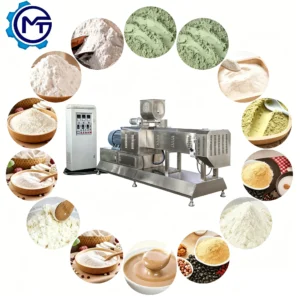
Fully Automatic Fortified Nutrition Powder Baby Food Production Line
¥8,238.27 Select options This product has multiple variants. The options may be chosen on the product page -
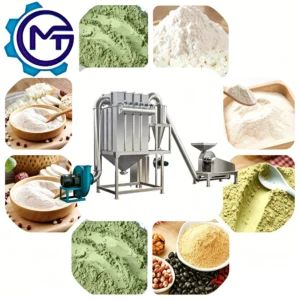
Automatic Iron Fortified Baby Rice Cereal Nutrition Powder Making Machine 500kg/h PLC Controlled
¥8,238.27 Add to cart -
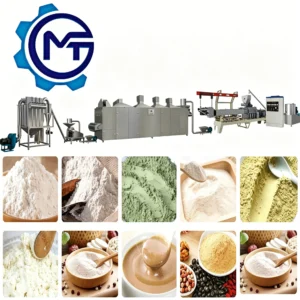
Organic Gluten Free Baby Rice Nutrition Powder Automatic 500kg/h Production Processing Line
¥8,238.27 Add to cart